


Secondary sourceSculpturec. 1790
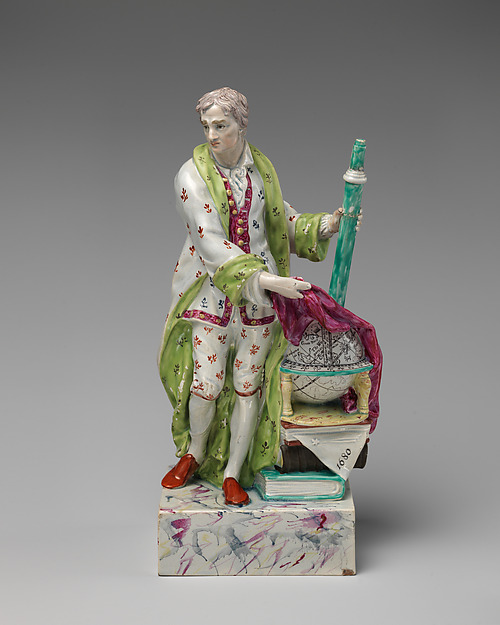
Lead-Glazed Earthenware Figure of Sir Isaac Newton
Ralph Wood the Younger · c. 1790
A decorative Staffordshire-style pottery figure depicting Newton, made decades after his death to celebrate his fame.
This figurine shows how Newton was remembered and celebrated as a popular scientific hero decades after his death.
About this source
What it is
This is a glazed earthenware figurine showing a standing man in a coat, holding a telescope-like rod, next to a globe resting on a book. It was made around 1790 by Ralph Wood the Younger and is now held by The Metropolitan Museum of Art.
Why it matters
Isaac Newton died more than sixty years before this figure was made, so it does not show his real appearance but his popular image. By the late 1700s, Newton had become a celebrated national hero, and pottery makers produced figures like this for ordinary households, showing how science could become part of popular culture.
Look closer
- What objects in the figure's hands tell you he is a scientist?
- Why might a potter choose to make a decorative figure of a scientist rather than a king or soldier?
- What does this object tell us about Newton's fame long after his death, rather than about Newton himself?
This sculpture is part of the curated material that grounds the AI version of Isaac Newton on Humy.ai — when students ask about related events, the AI can quote it and cite it.
More Isaac Newton sources
Meet the AI Isaac Newton →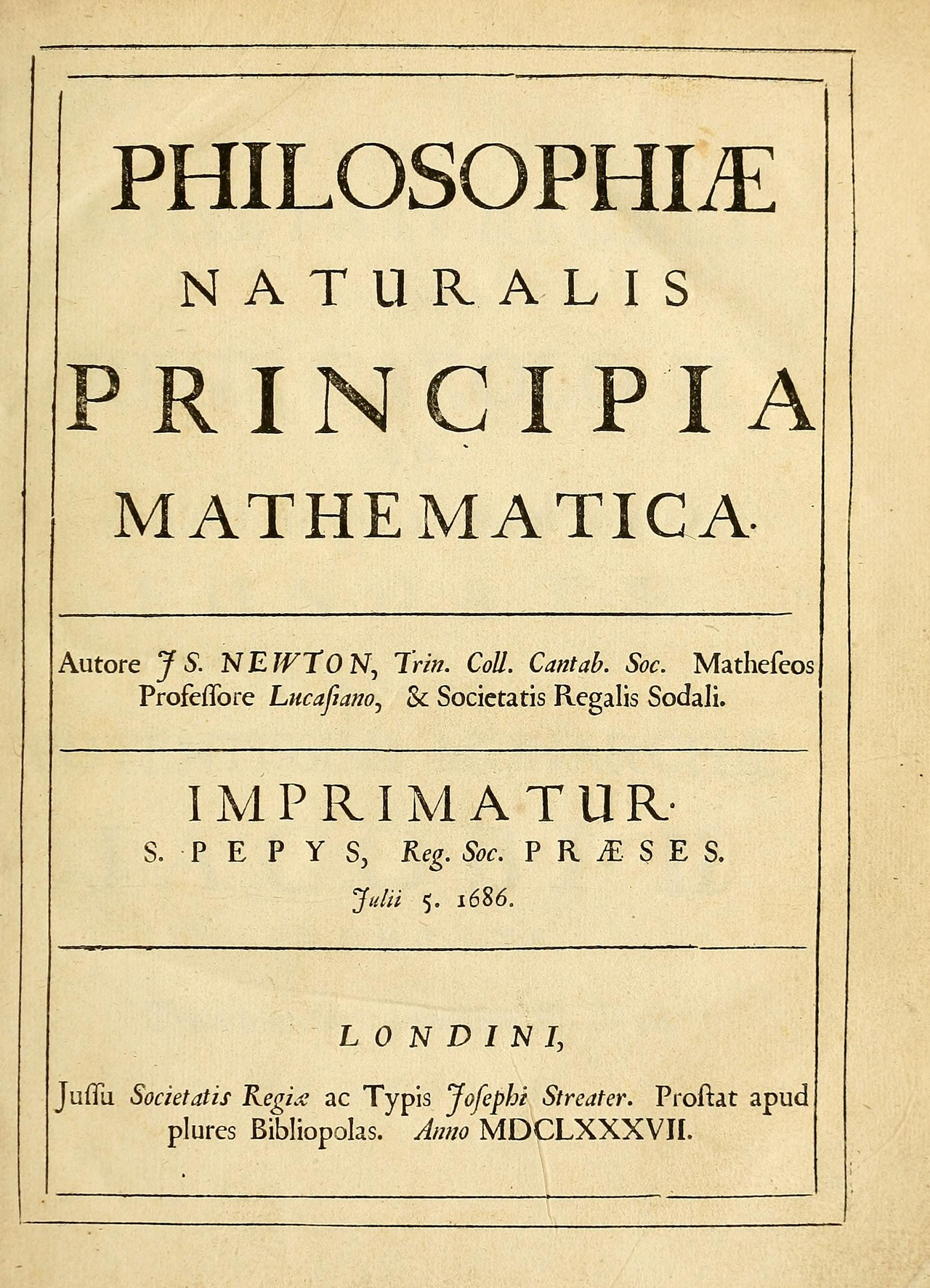 Book
Primary source
Philosophiæ Naturalis Principia Mathematica
Isaac Newton · 1687
 Book
Primary source
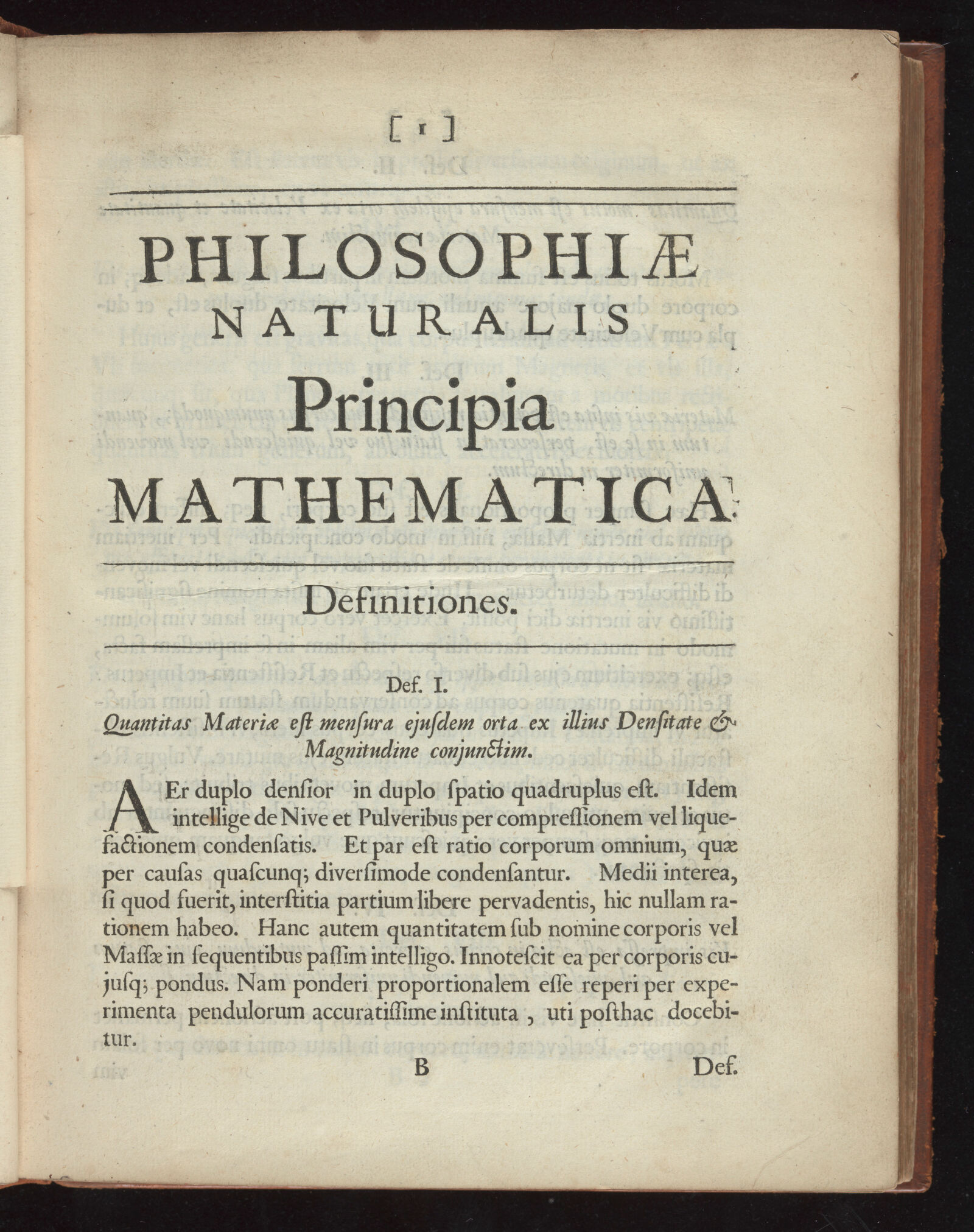
Principia Mathematica, Page 1: Definitions
Isaac Newton · 1687
 Painting
Primary source
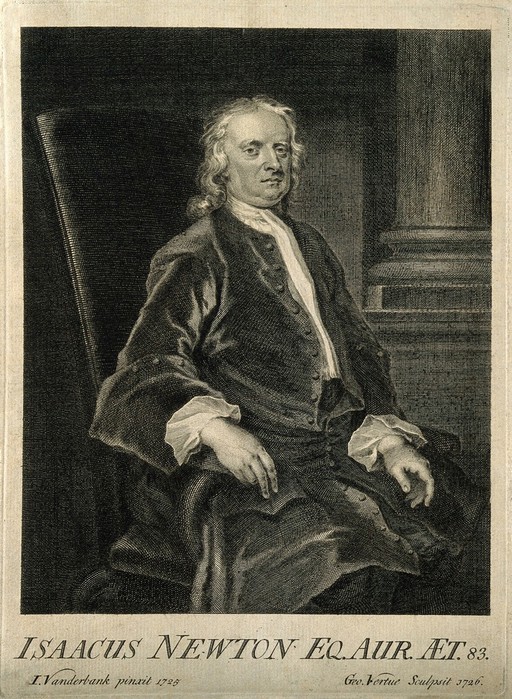
Sir Isaac Newton, line engraving by Vertue, 1726
George Vertue · 1726
 Document
Primary source
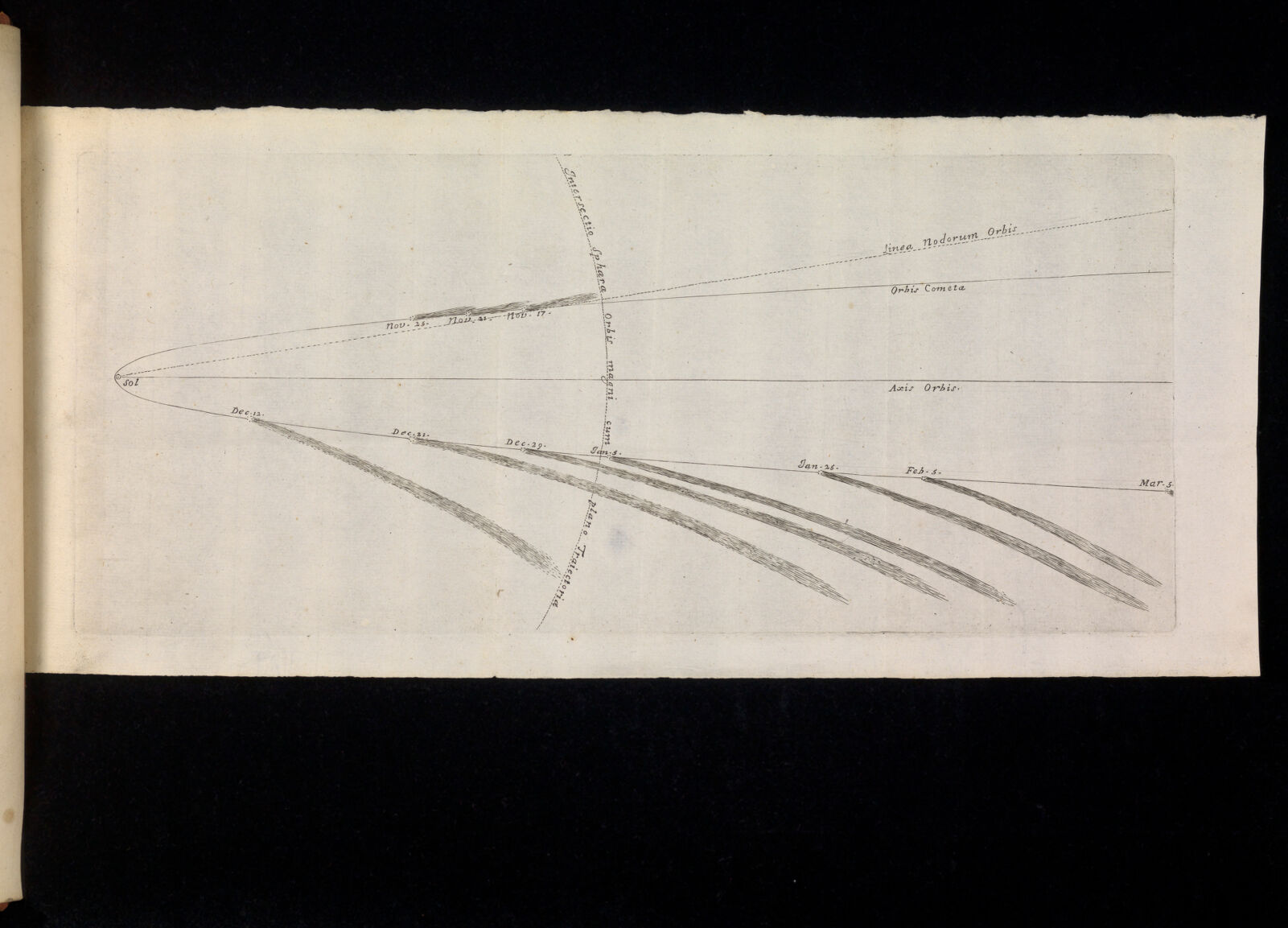
Principia Mathematica, Fold-out Diagram
Isaac Newton · 1687
 Painting
Primary source
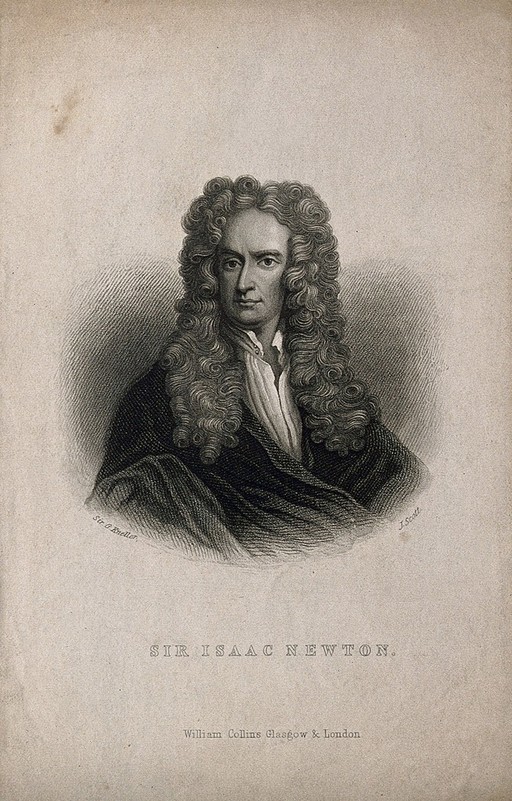
Sir Isaac Newton, stipple engraving by J. Scott after Kneller, 1702
J. Scott, after Sir Godfrey Kneller · 1702 (print made later)
Ready when you are
Start chatting with Isaac Newton now.
20 messages free · No credit card · Available in 50+ languages.