


Primary sourcePhotograph1935
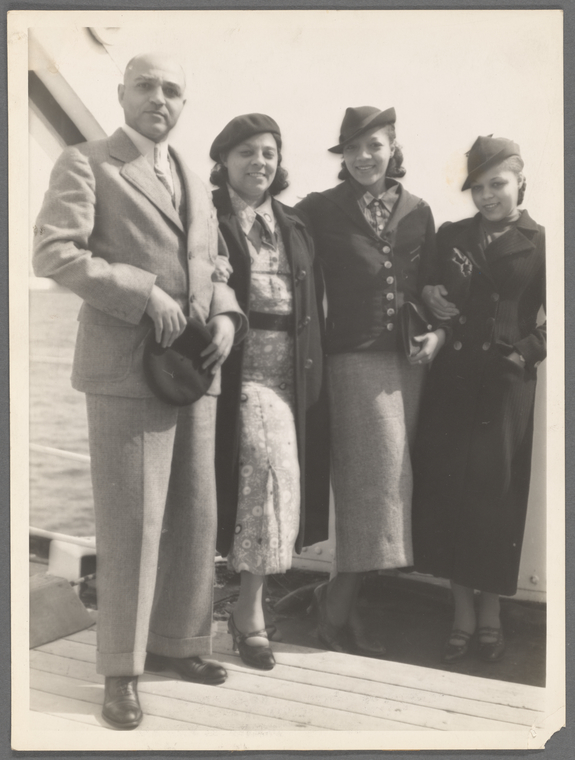
Lester A. Walton and Family en Route to Liberia
1935
A 1935 photograph of Harlem Renaissance critic and diplomat Lester A. Walton with his wife and daughters, taken as he traveled to serve as U.S. Minister to Liberia.
Shows a contemporary of Hughes from the Harlem Renaissance circle, illustrating the era's wider Black achievement.
About this source
What it is
This 1935 photograph shows Lester A. Walton, an arts critic, civil rights advocate, composer, and diplomat, with his wife Gladys and daughters Marjorie and Gladys Odile. It was taken aboard a ship as the family traveled to Liberia after President Roosevelt appointed Walton as U.S. Minister there.
Why it matters
Walton was part of the wider Harlem Renaissance world that Langston Hughes belonged to. This photograph shows the achievements of African Americans in diplomacy and public life during the same era Hughes was writing, giving context to the broader Black cultural and political movement of the time.
Look closer
- What does the formal setting and clothing in this photo suggest about the importance of Walton's appointment?
- Why might a photograph like this have been taken and kept?
- What does this image not tell you about Walton's work or his connection to other Harlem Renaissance figures?
This photograph is part of the curated material that grounds the AI version of Langston Hughes on Humy.ai — when students ask about related events, the AI can quote it and cite it.
More Langston Hughes sources
Meet the AI Langston Hughes →
Ready when you are
Start chatting with Langston Hughes now.
20 messages free · No credit card · Available in 50+ languages.