


Primary sourceArtifact1651
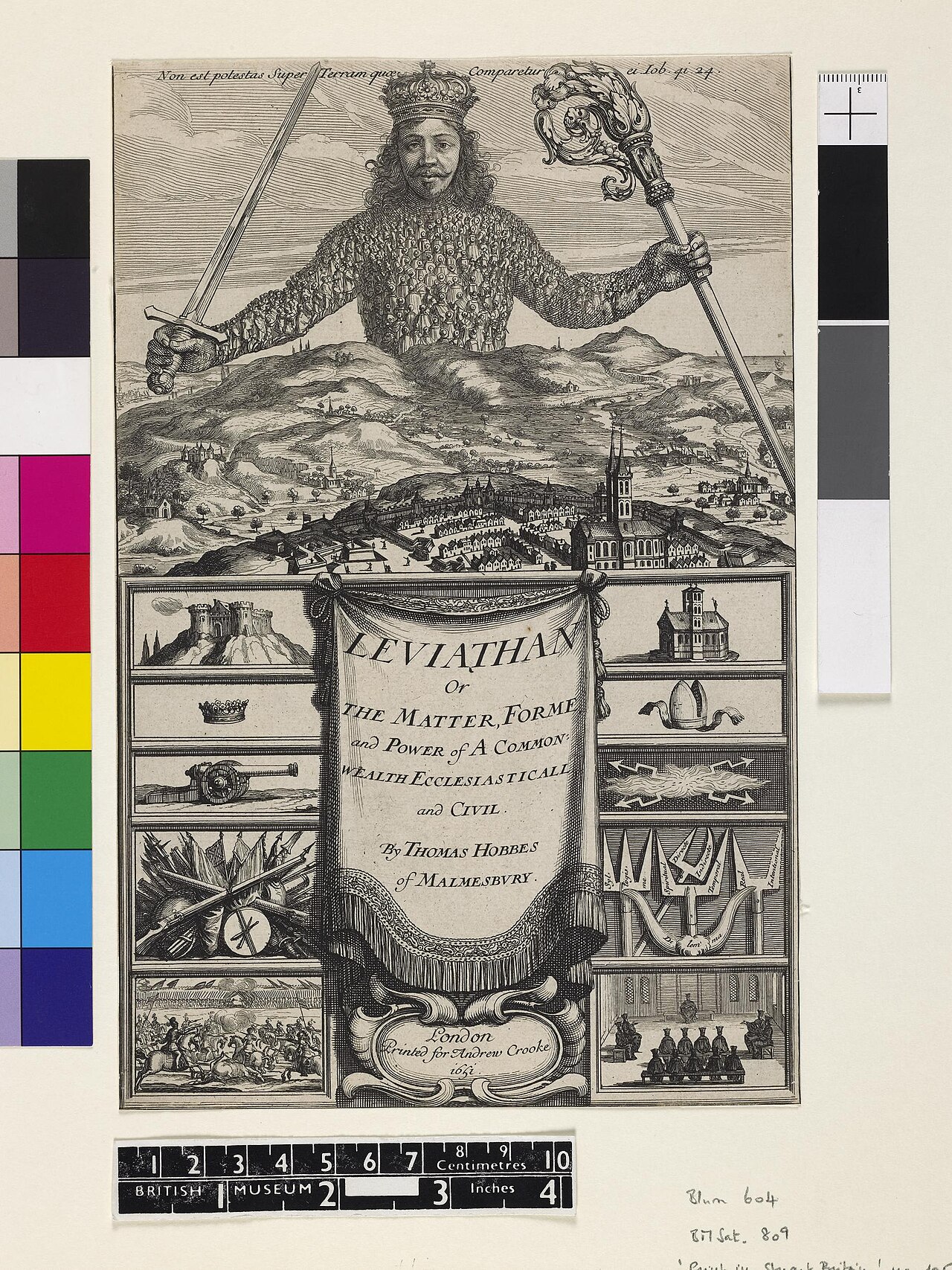
Leviathan Frontispiece
Abraham Bosse · 1651
The famous 1651 engraved title-page of Hobbes's Leviathan, showing a giant sovereign made of many human bodies ruling over the land.
This frontispiece from Hobbes's own 1651 book visually captures his central political theory.
About this source
What it is
This is the engraved frontispiece designed by Abraham Bosse for the first edition of Thomas Hobbes's Leviathan, published in 1651. It shows a huge crowned figure, made up of many smaller human bodies, standing over hills and towns, holding a sword and a bishop's crozier. Around the title panel are small scenes of war, government, and church life.
Why it matters
This image is one of the most famous pieces of political art in English history. It visually sums up Hobbes's central idea in Leviathan: that a powerful sovereign, made legitimate by the consent of the people who form his 'body,' is necessary to prevent chaos and civil war. The combination of the sword (civil power) and crozier (church power) reflects Hobbes's argument that both authorities should rest in one ruler.
Look closer
- Why do you think the giant's body is made up of many smaller people?
- What might the sword and crozier represent, and why does the figure hold both?
- What do the small scenes around the border suggest about the dangers Hobbes wanted to avoid?
This artifact is part of the curated material that grounds the AI version of Thomas Hobbes on Humy.ai — when students ask about related events, the AI can quote it and cite it.
More Thomas Hobbes sources
Meet the AI Thomas Hobbes →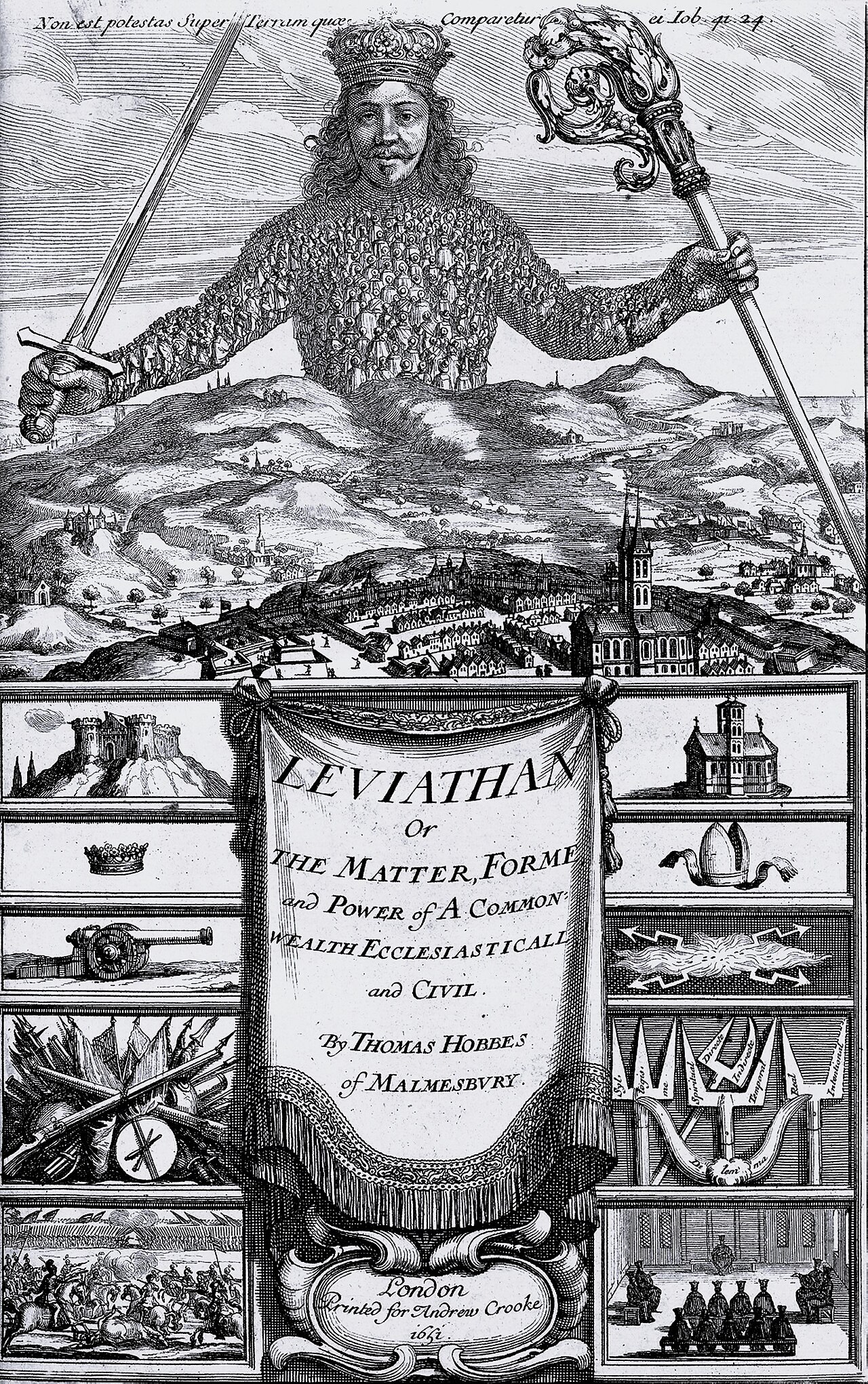 Book
Primary source
Leviathan
Thomas Hobbes · 1651
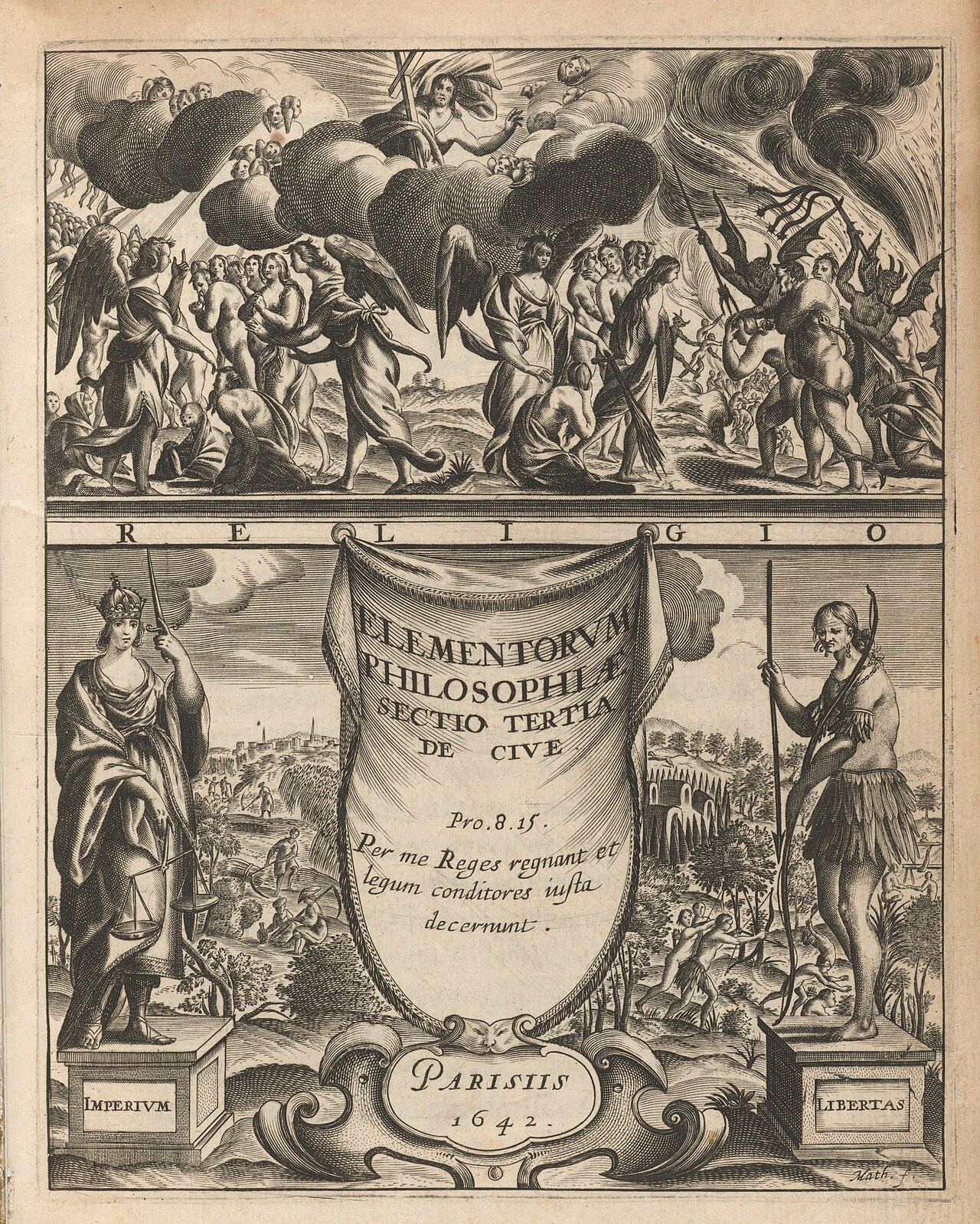 Book
Primary source
De Cive
Thomas Hobbes · 1642
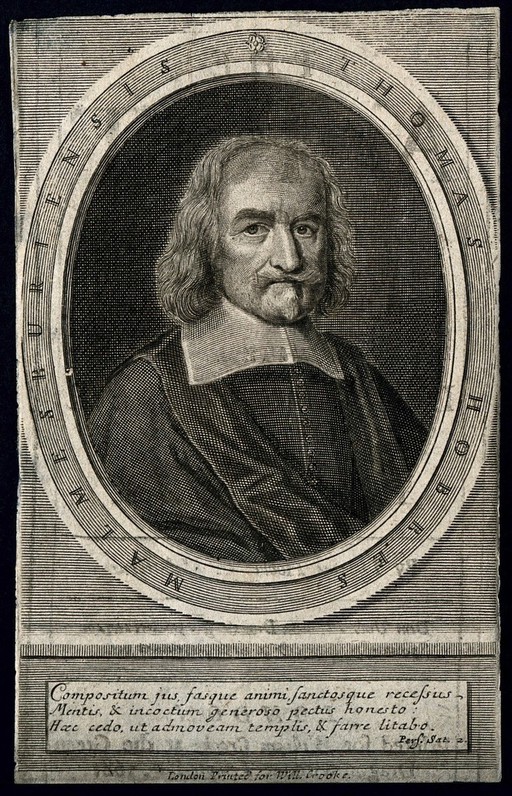 Painting
Secondary source
Portrait of Thomas Hobbes, Line Engraving
Primary source
The Elements of Law
Thomas Hobbes · 1640
 Artifact
Secondary source
Title Page of The Workes of Homer, Translated by Thomas Hobbes
1677
Ready when you are
Start chatting with Thomas Hobbes now.
20 messages free · No credit card · Available in 50+ languages.