


Primary sourceBook1819
L'Infinito
Giacomo Leopardi · 1819
A short lyric poem written by Leopardi around 1819, describing the view from a hedge-topped hill near Recanati that opens into thoughts of boundless space and time.
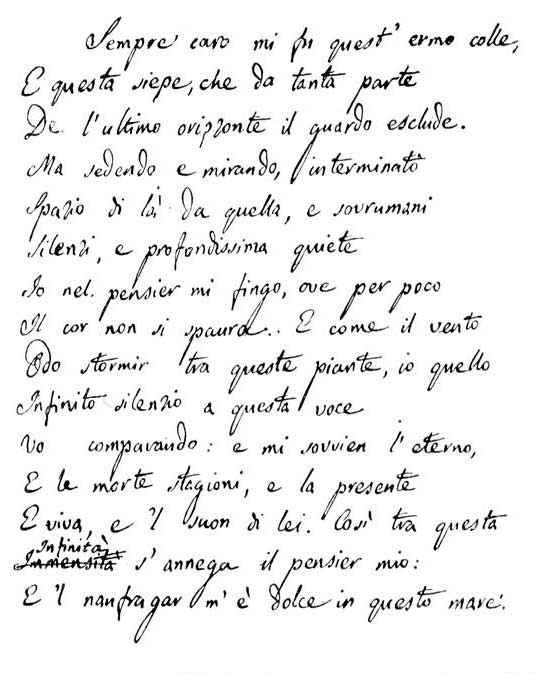
This is Leopardi's own poem, surviving in his own handwritten manuscript with his revisions.
Free Humy account · No credit card · 120,912 sources to read
About this source
What it is
This is one of Leopardi's most famous poems, probably written in the autumn of 1819. The image shown is a manuscript version in his own handwriting, with crossed-out words and corrections visible. The poem describes a hill and a hedge near his hometown of Recanati that block his view of the horizon, pushing his imagination toward endless space and time.
Why it matters
The poem is central to understanding Leopardi's poetic style, built around vague and undefined images rather than precise description. It reflects his restless desire to escape his restrictive home town and experience the wider world he had only read about, and shows his early fascination with infinity, silence, and mortality.
Look closer
- Why might Leopardi have chosen a simple hedge, rather than something grand, to trigger thoughts of infinity?
- What do the crossed-out words and corrections in the manuscript tell you about how he wrote?
- How does the poem's ending, where 'shipwreck' feels 'sweet,' complicate the idea of fear versus peace?
This book is part of the curated material that grounds the AI version of Giacomo Leopardi on Humy.ai — when students ask about related events, the AI can quote it and cite it.
More Giacomo Leopardi sources
Browse all 92 →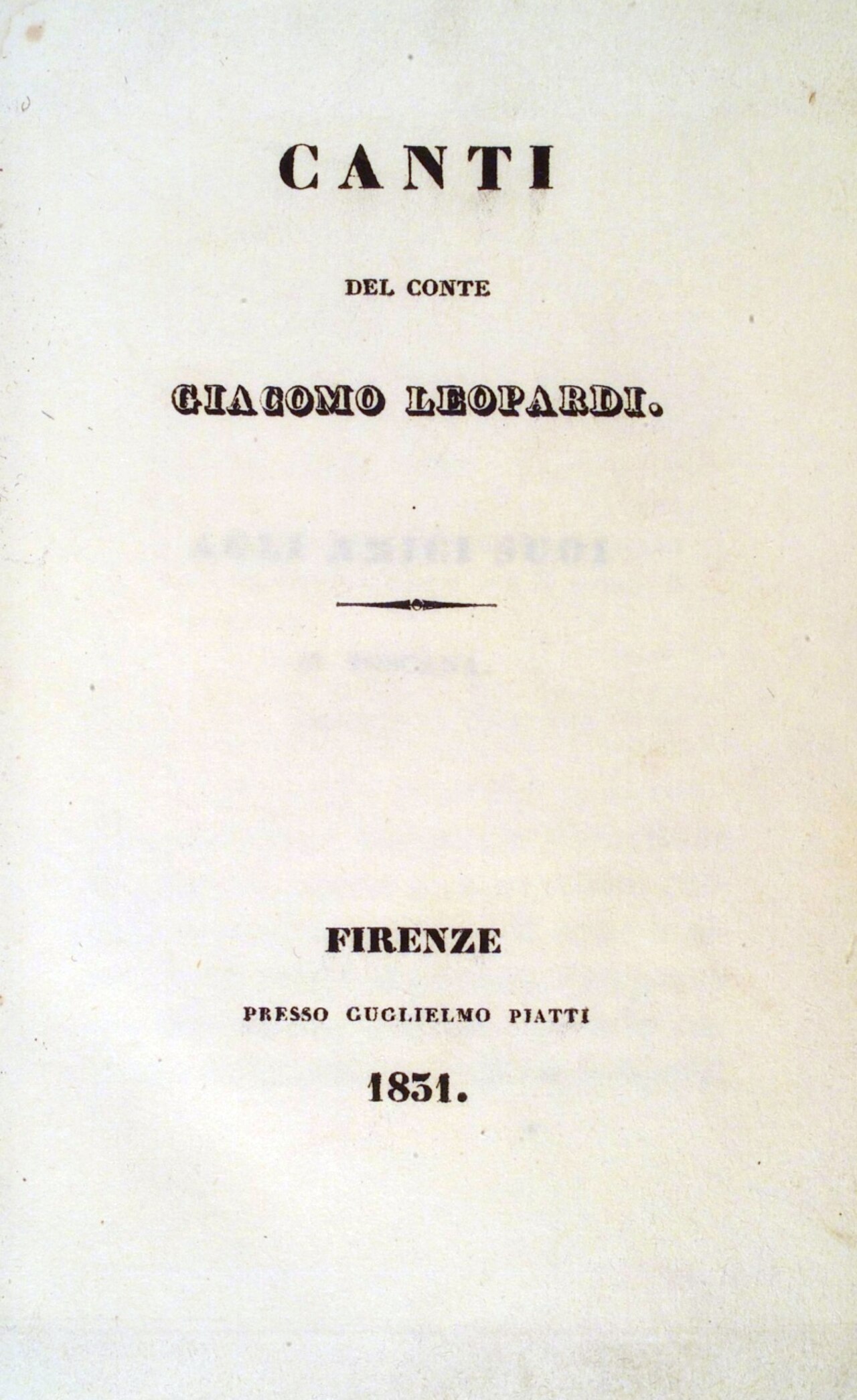 Book
Primary source
Canti
Giacomo Leopardi · 1831
 Diary entry
Primary source
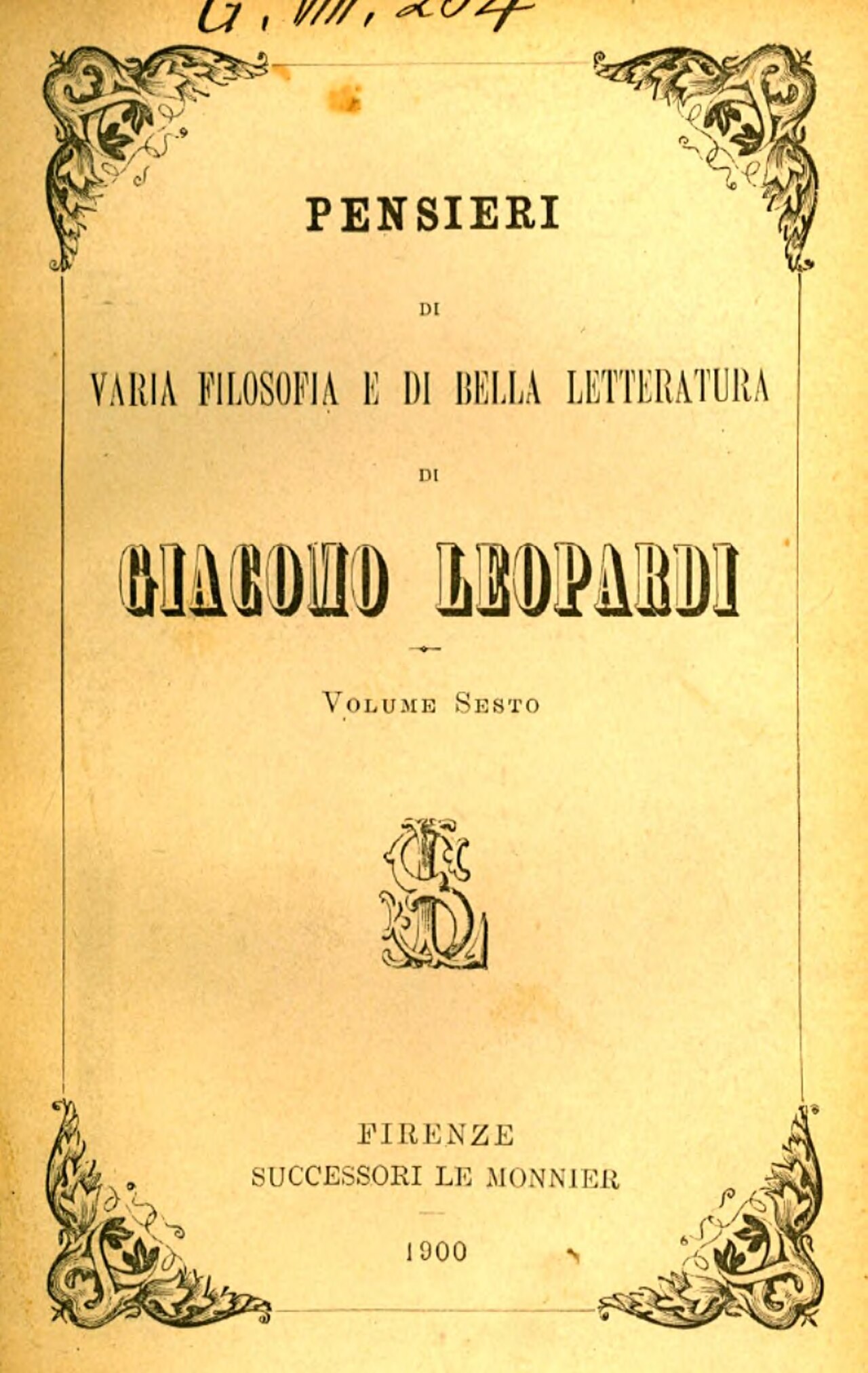
Zibaldone
Giacomo Leopardi · 1817–1832 (printed edition 1898-1900)
 Book
Primary source
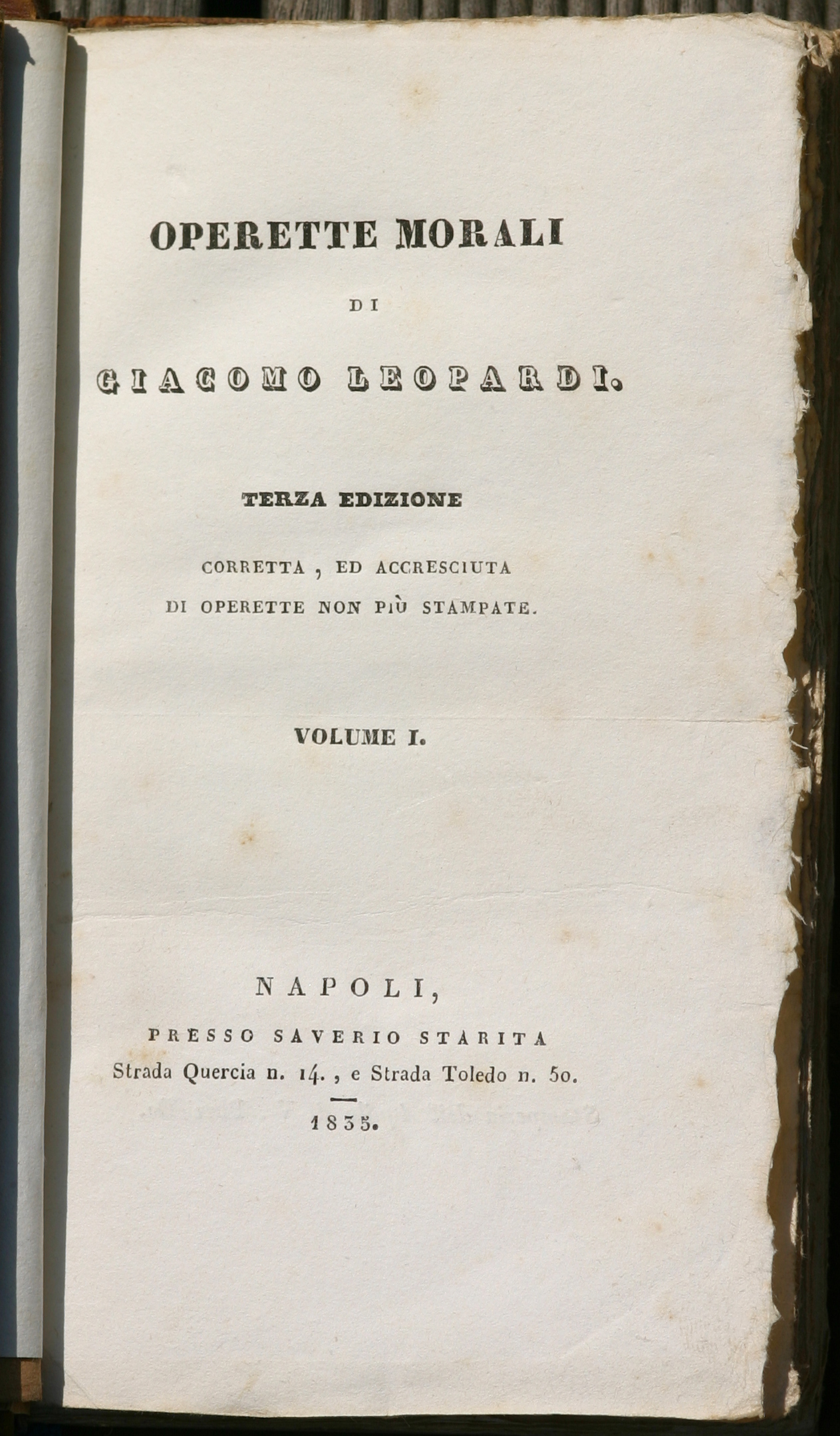
Operette morali
Giacomo Leopardi · 1824–1827 (this edition 1835)
 Book
Primary source
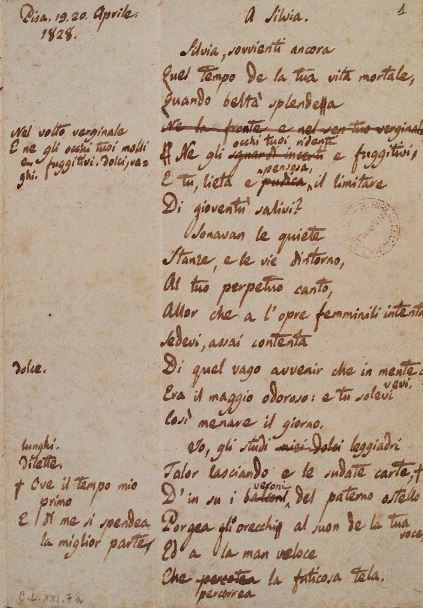
A Silvia
Giacomo Leopardi · 19-20 April 1828
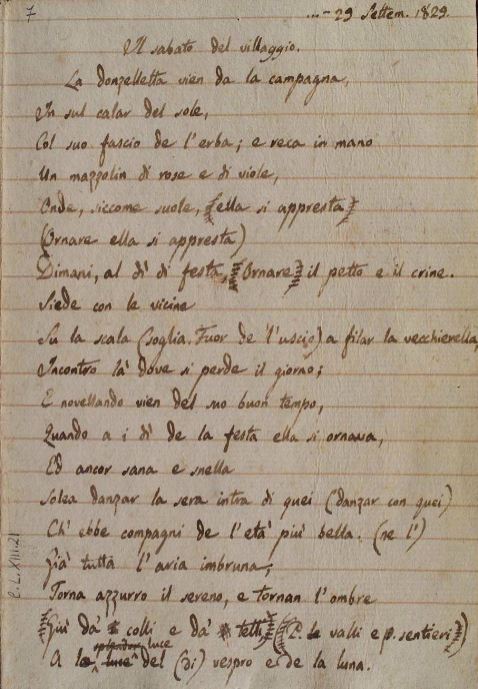
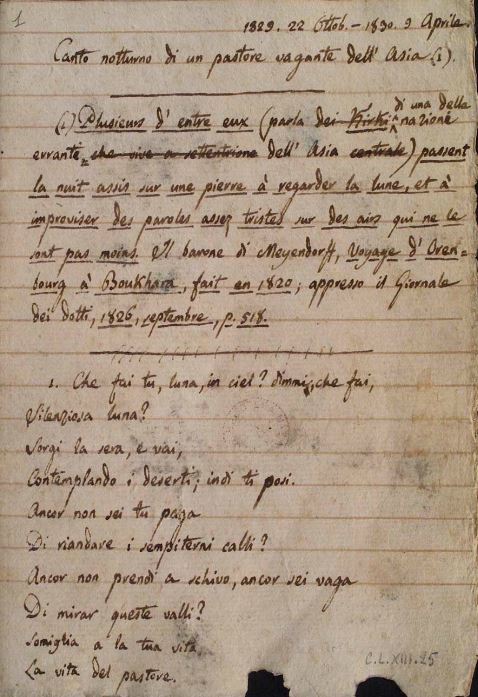
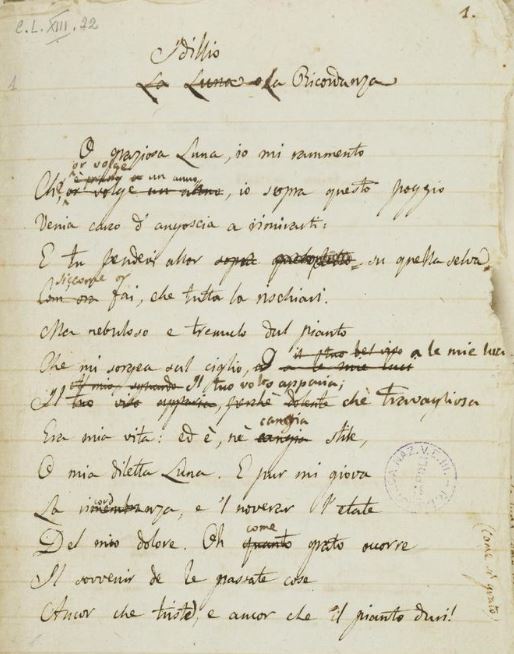
Free account
Read every Giacomo Leopardi source
Sign up free →
Ready when you are
Start chatting with Giacomo Leopardi now.
20 messages free · No credit card · Available in 50+ languages.