


Primary sourceBook1824–1827 (this edition 1835)
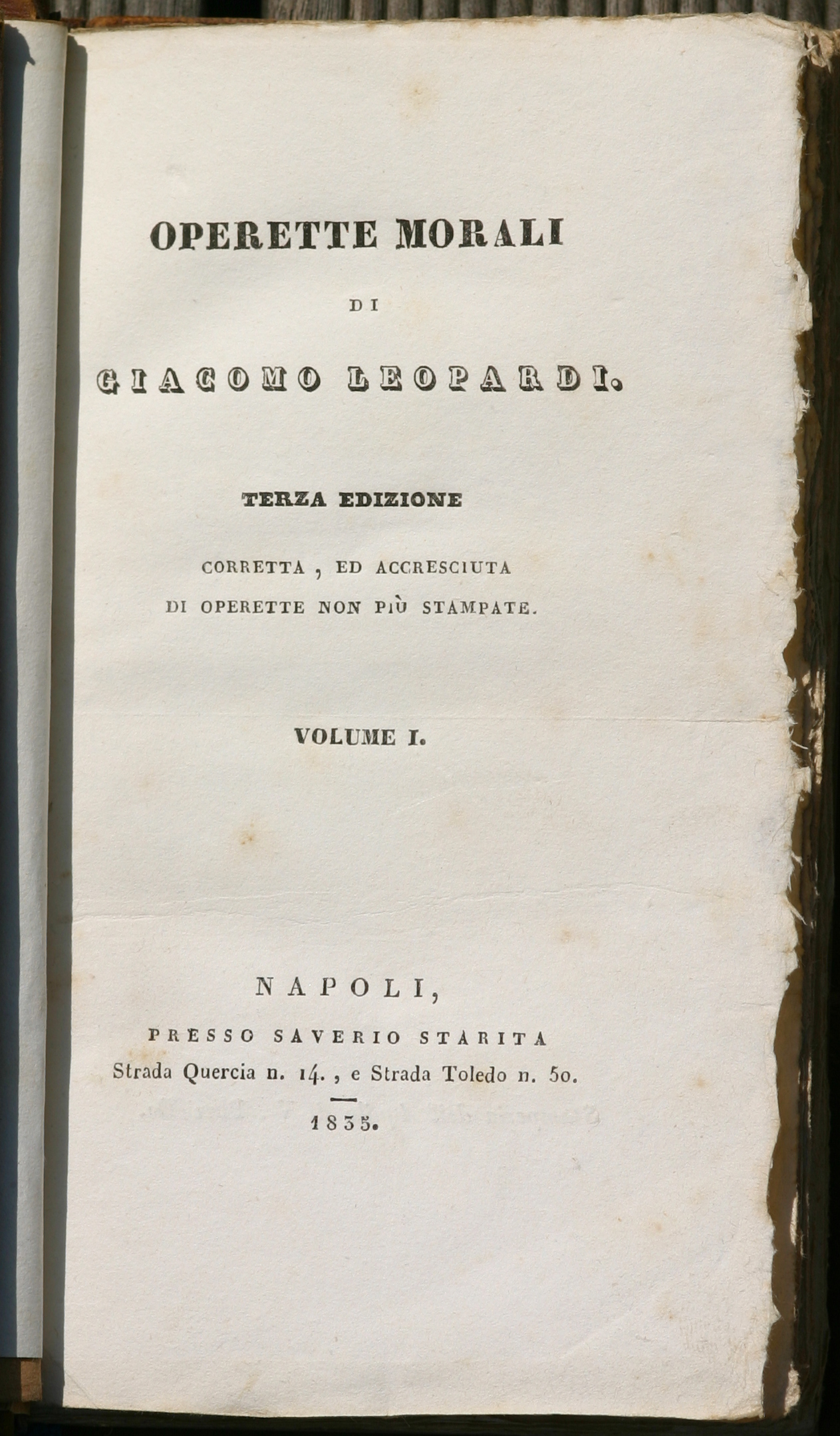
Operette morali
Giacomo Leopardi · 1824–1827 (this edition 1835)
A collection of satirical philosophical dialogues and fables written by Leopardi between 1824 and 1832, expressing his critical view of human illusions.
These are Leopardi's own prose dialogues, the main statement of his philosophical outlook in a public literary form.
Free Humy account · No credit card · 120,288 sources to read
About this source
What it is
The Operette morali ('Small Moral Works') is a set of twenty-four prose dialogues and short tales written by Giacomo Leopardi mainly in 1824, with later additions, and published in editions up to 1835. The image shows the title page of the 1835 Naples edition, printed by Saverio Starita, part of what became the last edition of Leopardi's works published during his lifetime.
Why it matters
Written in an ironic, witty style inspired by the ancient satirist Lucian, these dialogues carry much of the philosophy Leopardi had developed privately in his Zibaldone notebook into a public, literary form. They argue that reason, rather than being the enemy of happiness, is the only tool humans have to face a harsh and indifferent nature. The work was controversial enough that censors in Naples confiscated parts of this edition.
Look closer
- Why might a writer choose dialogue and fable, rather than direct argument, to express difficult philosophical ideas?
- What does the censorship of this edition suggest about how Leopardi's ideas were received at the time?
- How does satire change the way readers absorb serious or uncomfortable ideas?
This book is part of the curated material that grounds the AI version of Giacomo Leopardi on Humy.ai — when students ask about related events, the AI can quote it and cite it.
More Giacomo Leopardi sources
Browse all 92 →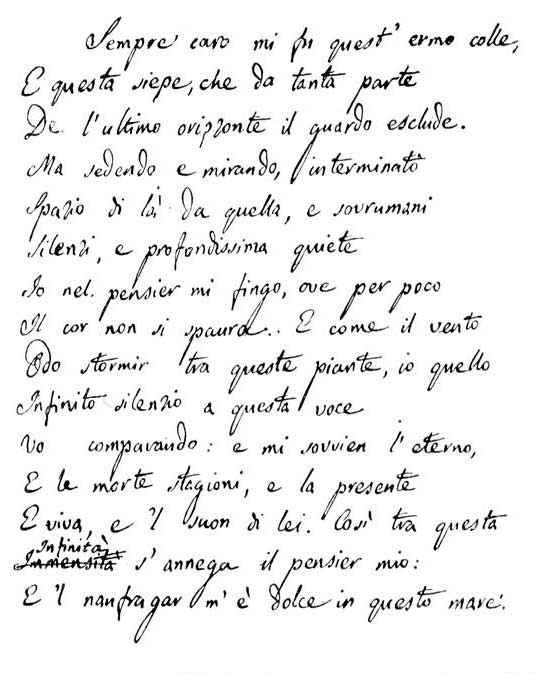 Book
Primary source
L'Infinito
Giacomo Leopardi · 1819
 Book
Primary source
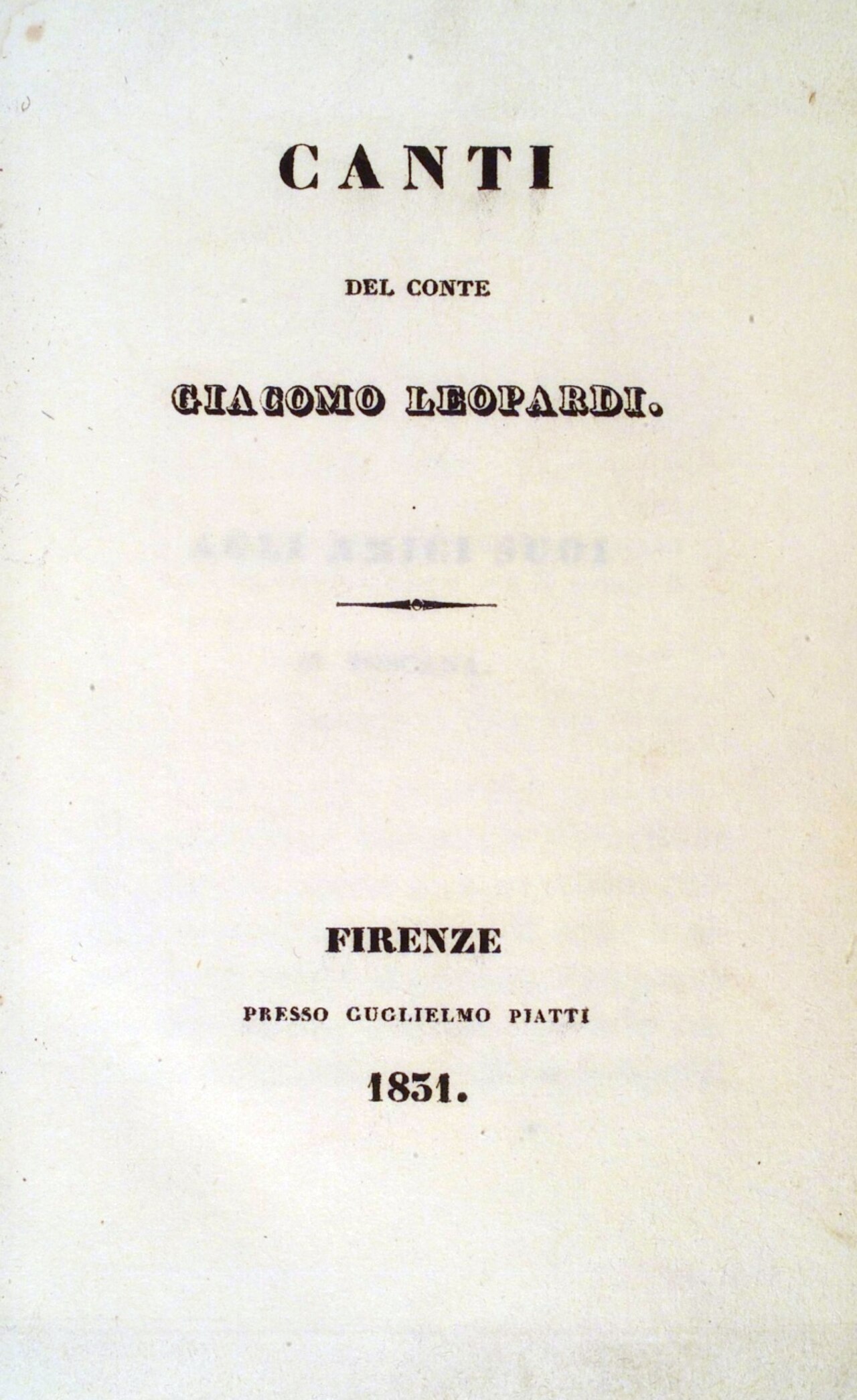
Canti
Giacomo Leopardi · 1831
 Diary entry
Primary source
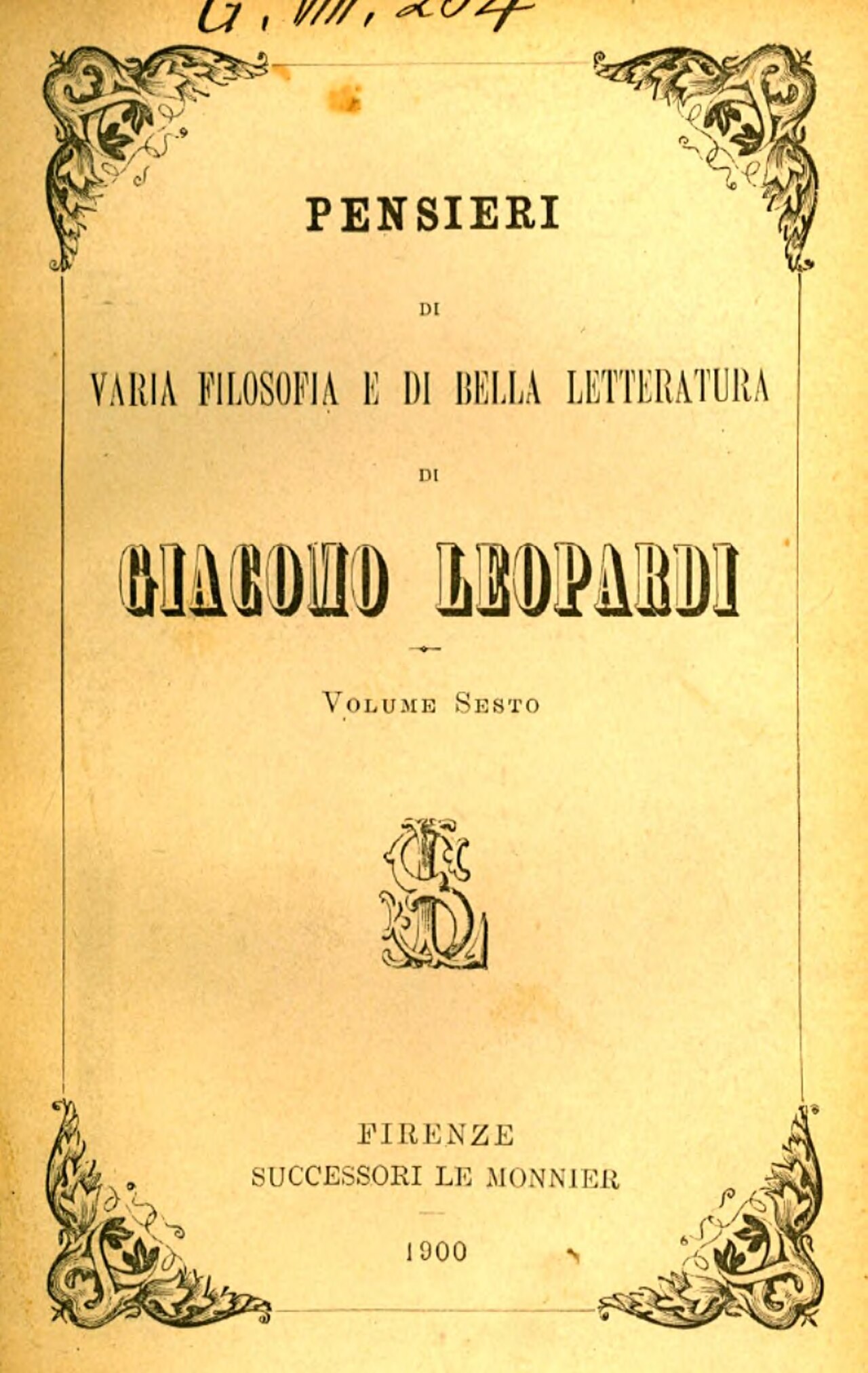
Zibaldone
Giacomo Leopardi · 1817–1832 (printed edition 1898-1900)
 Book
Primary source
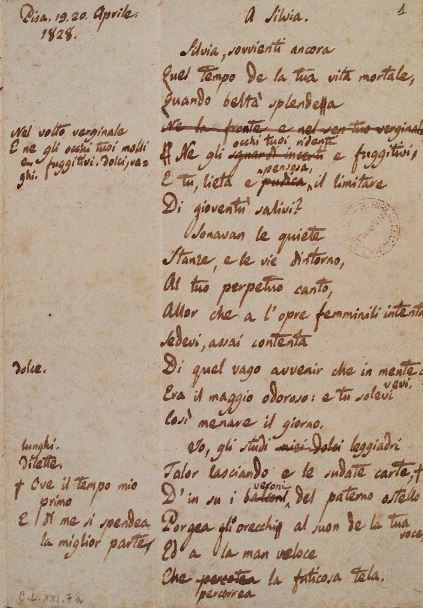
A Silvia
Giacomo Leopardi · 19-20 April 1828
Free account
Read every Giacomo Leopardi source
Sign up free →
Ready when you are
Start chatting with Giacomo Leopardi now.
20 messages free · No credit card · Available in 50+ languages.