


Secondary sourcePainting1832
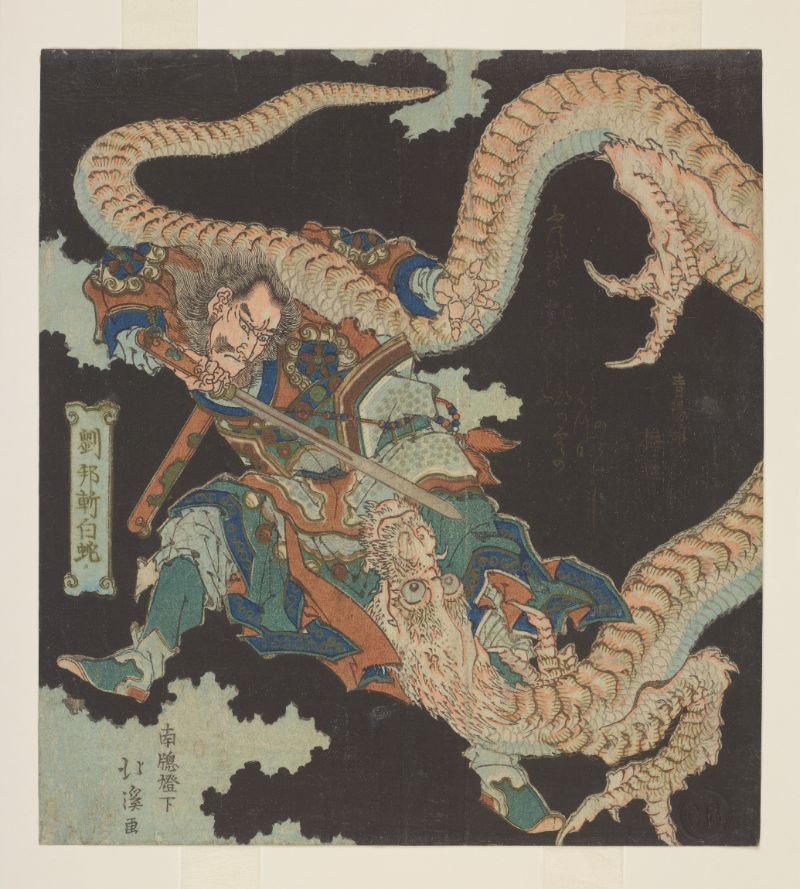
Liu Bang Kills a White Serpent
Totoya Hokkei · 1832
A Japanese woodblock print from 1832 depicting the legend of Liu Bang slaying a white serpent, a tale told about the Han founder long after his death.
Depicts a legend told about Liu Bang (Emperor Gaozu) centuries after his death, showing how his story was later mythologized.
About this source
What it is
This is a colour woodblock print made in Japan in 1832 by the artist Totoya Hokkei. It is a surimono print, a type of privately commissioned Japanese print often paired with poetry, and it carries a poem signed by Seirōkan Umeyo. It is held today by the Chester Beatty library in Ireland.
Why it matters
The print illustrates a famous legend about Liu Bang, who became Emperor Gaozu of Han: that he killed a giant white serpent, a story used to show he was destined for greatness. This image was made in Japan nearly two thousand years after Liu Bang lived, showing how his legend travelled across Asia and was reimagined by artists in other cultures and centuries.
Look closer
- What does the choice to show a dragon-like serpent rather than a real snake tell you about how legends change over time?
- Why might a Japanese artist in the 1800s be interested in an old Chinese legend?
- What does this print leave out about the real historical Liu Bang?
This painting is part of the curated material that grounds the AI version of Liu Bang (Gaozu of Han) on Humy.ai — when students ask about related events, the AI can quote it and cite it.
More Liu Bang (Gaozu of Han) sources
Meet the AI Liu Bang (Gaozu of Han) →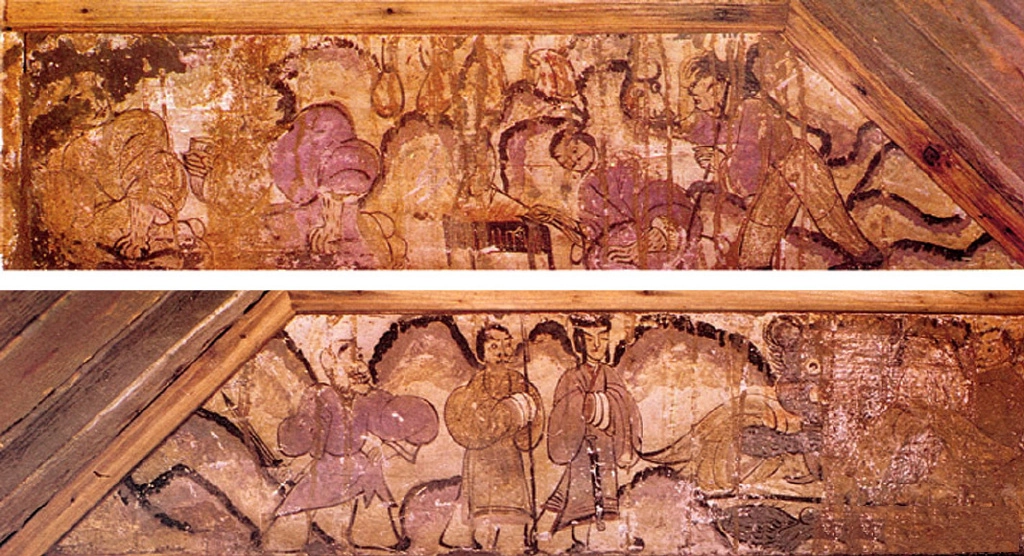 Painting
Secondary source
Feast at Hong Gate
Sima Qian (text); unknown painter (mural) · 206 BCE (event); mural Western Han period
 Book
Secondary source
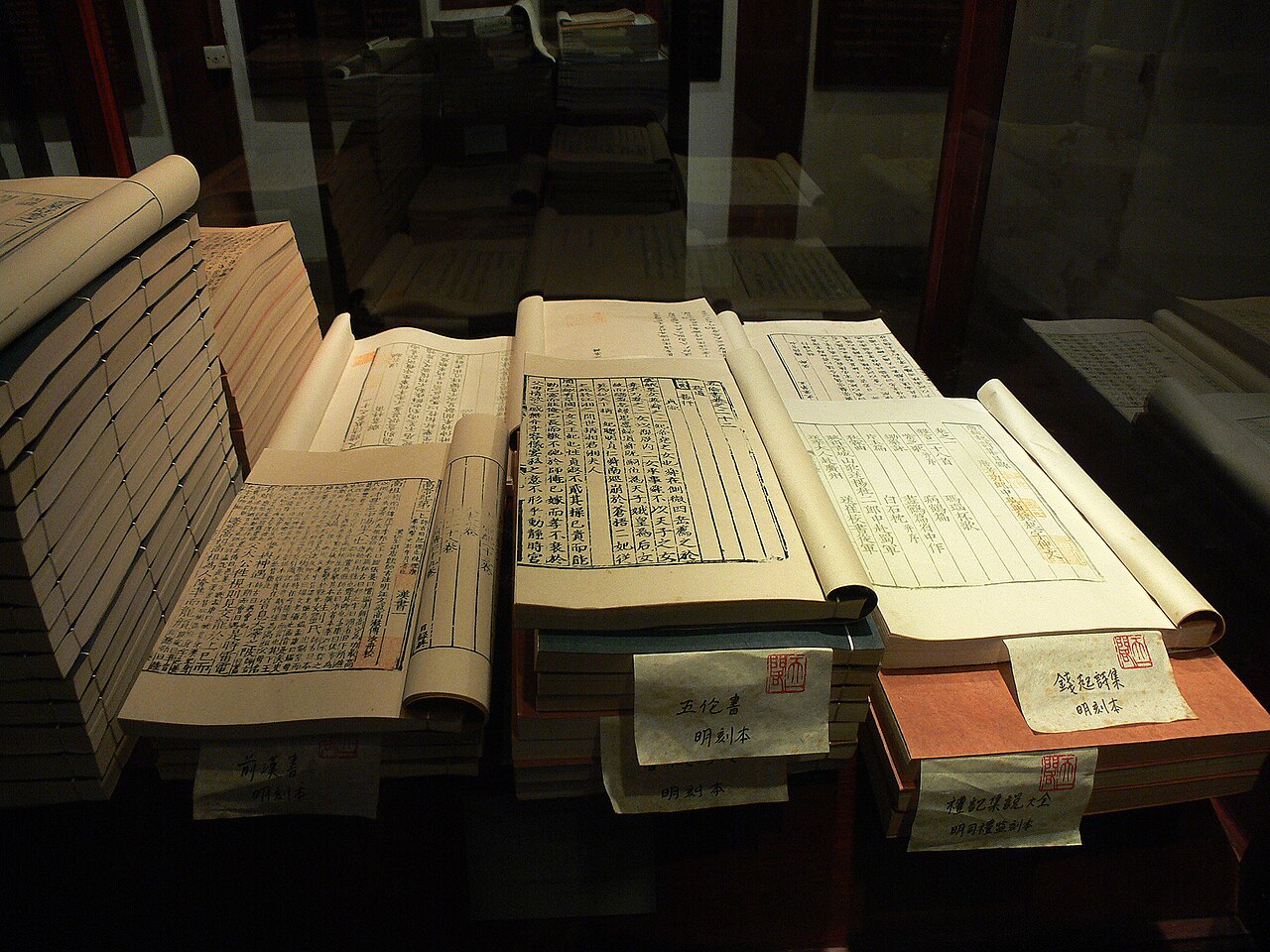
Book of Han
Ban Gu (with Ban Zhao and Ban Biao) · finished 111 CE
 Artifact
Primary source
Changling Mausoleum of Emperor Gaozu
Han imperial court · c. 202–195 BC
 Document
Primary source
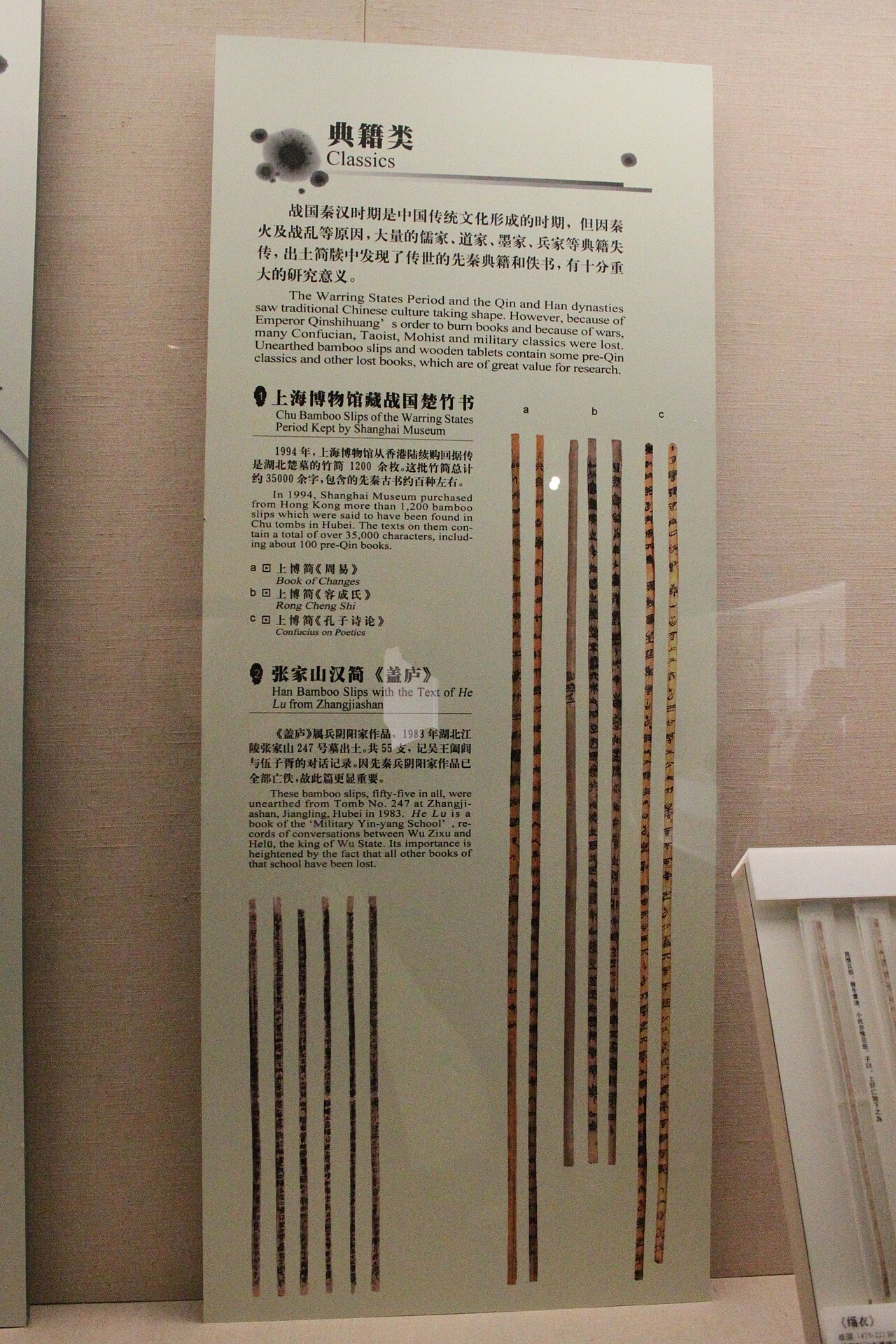
Zhangjiashan Han bamboo texts
Western Han officials · c. 202–186 BCE
 Artifact
Primary source
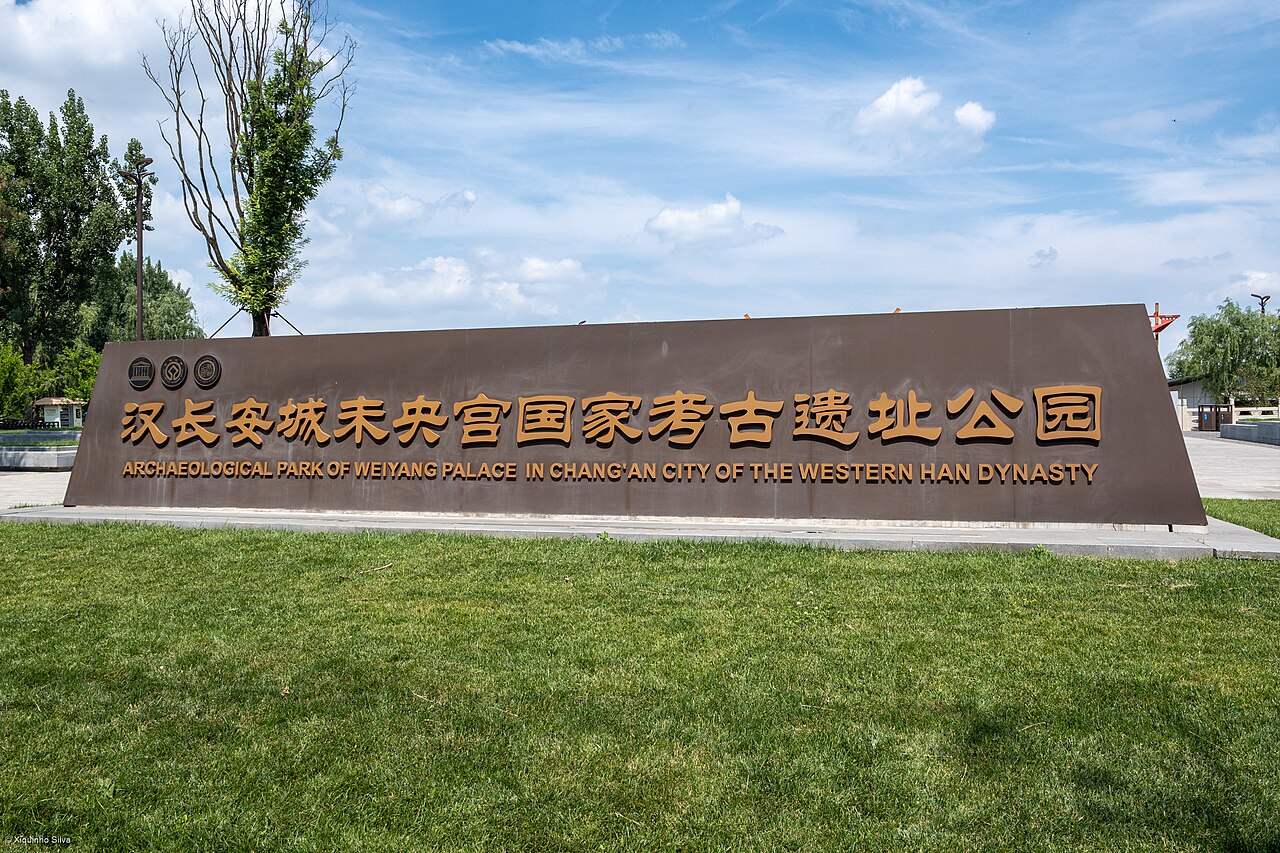
Weiyang Palace
Xiao He for Emperor Gaozu · 200 BC
Ready when you are
Start chatting with Liu Bang (Gaozu of Han) now.
20 messages free · No credit card · Available in 50+ languages.