


Secondary sourceArtifactc. 1880
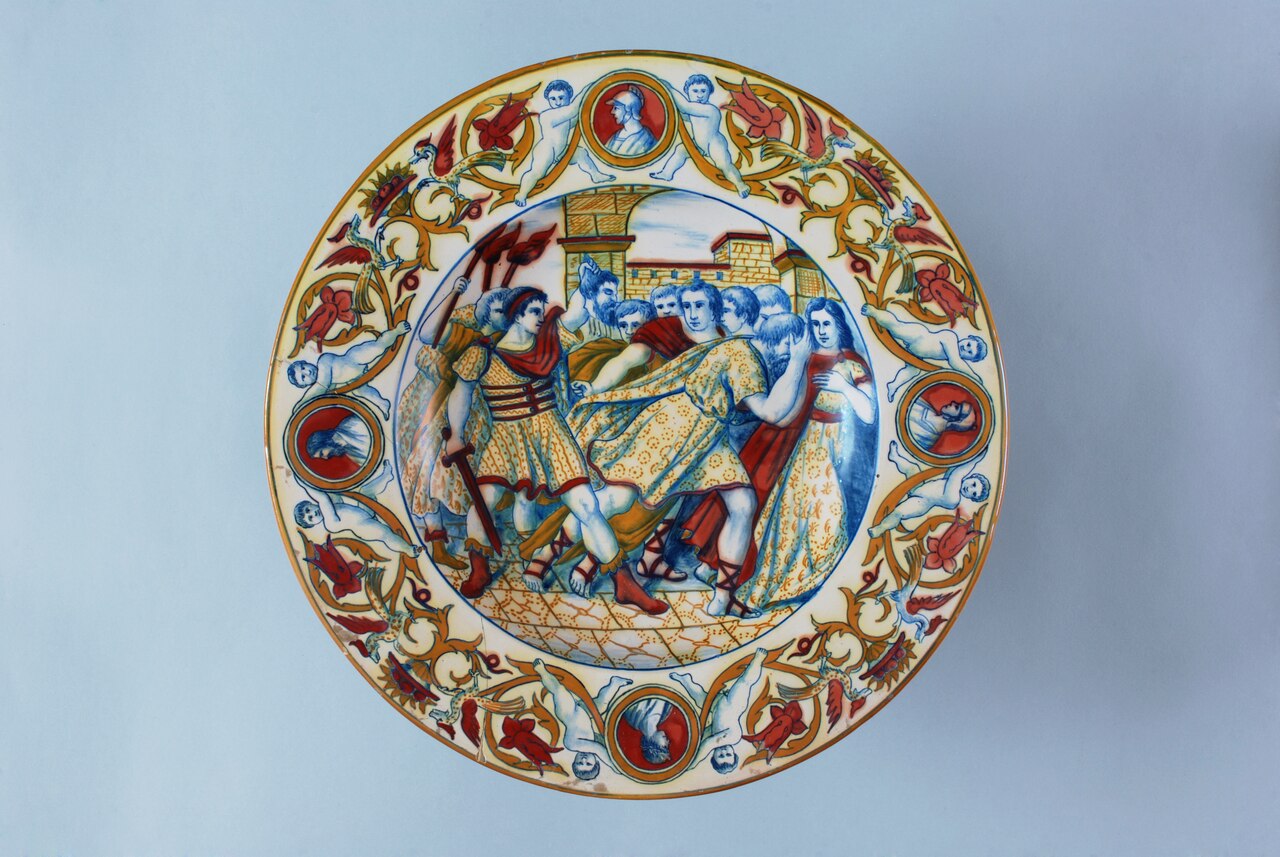
Lustreware Dish Showing Hannibal and Hasdrubal's Head
c. 1880
A 19th-century decorative ceramic dish depicting Hannibal's grief on being shown his brother Hasdrubal's severed head.
Depicts the legendary moment Hannibal was shown his brother Hasdrubal's severed head, reflecting the losses of his long war with Rome.
About this source
What it is
This round ceramic show dish, made by the Rubboli workshop around 1880, is decorated with a scene showing a man in armor recoiling as another figure presents a severed head, with onlookers and a city wall in the background. It is held at the Museo Opificio Rubboli in Gualdo Tadino, Italy.
Why it matters
The scene refers to a dramatic ancient story about Hannibal's reaction to seeing the severed head of his brother Hasdrubal, sent by the Romans. Decorative lustreware pieces like this show how ancient stories of war and family loss were turned into artistic and craft subjects for later audiences, far removed from the battlefield itself.
Look closer
- Why might a workshop choose such a violent scene for a decorative dish?
- What does the artist's choice of colors and framing emphasize?
- What does this craft object tell us about how later generations remembered ancient wars?
This artifact is part of the curated material that grounds the AI version of Hannibal Barca on Humy.ai — when students ask about related events, the AI can quote it and cite it.
More Hannibal Barca sources
Meet the AI Hannibal Barca →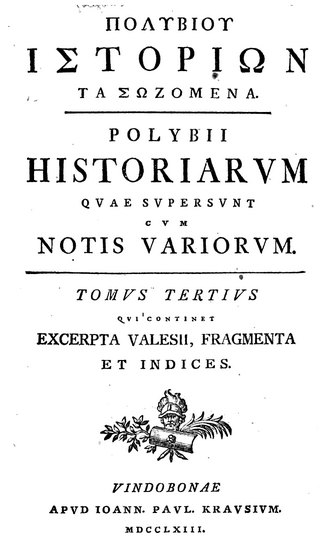 Book
Secondary source
The Histories
Polybius · c. 150 BCE
 Book
Primary source
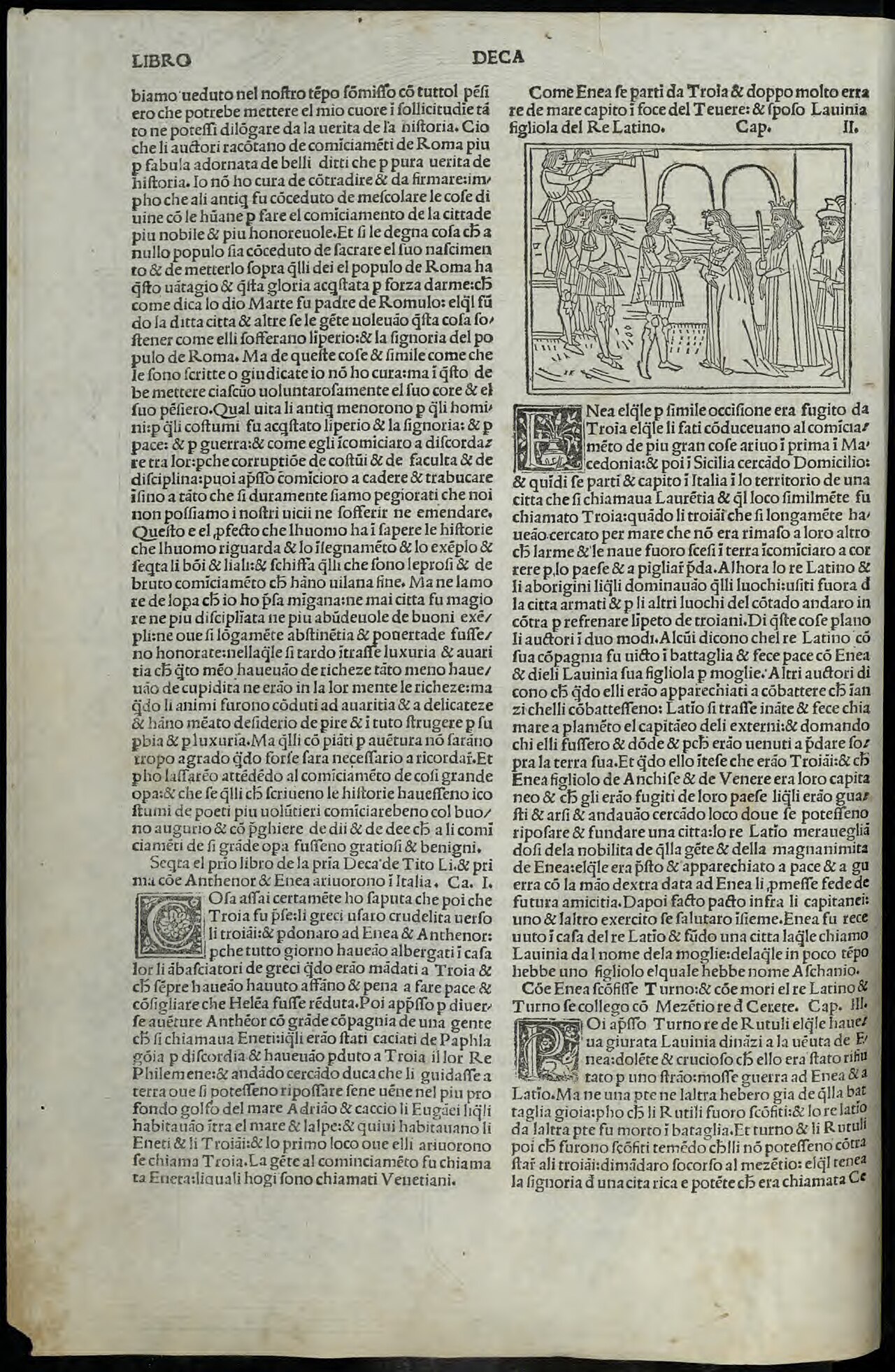
History of Rome
Titus Livius · 27-9 BC
Secondary source
Life of Hannibal
Cornelius Nepos
 Book
Secondary source
The Hannibalic War and The Punic Wars (Libyca)
Appian of Alexandria · c. AD 150
 Sculpture
Secondary source
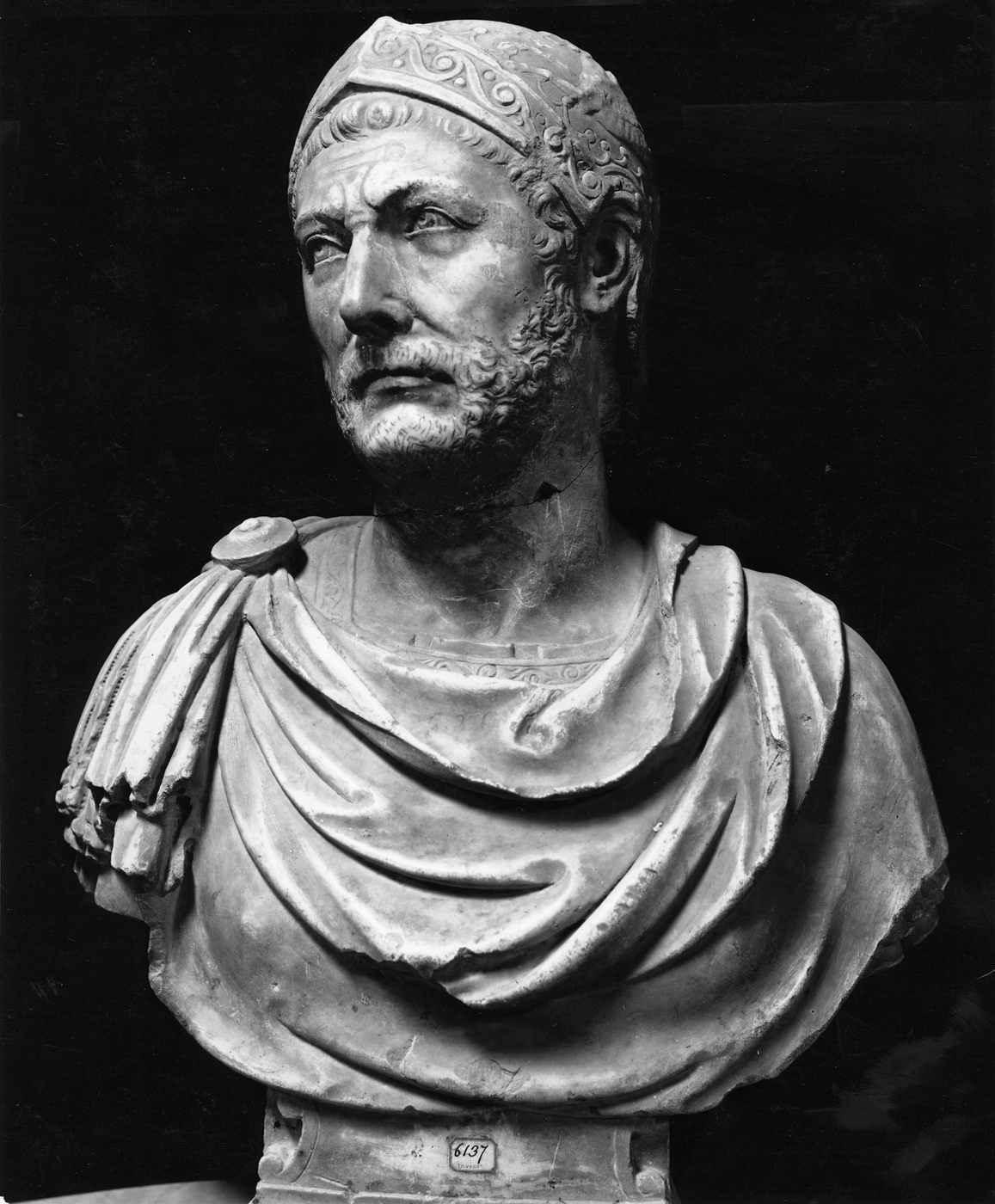
Capuan bust of Hannibal
1st century BC - 4th century AD
Ready when you are
Start chatting with Hannibal Barca now.
20 messages free · No credit card · Available in 50+ languages.