


Primary sourcePaintingca. 1874–81
Maffet Ledger Drawing
ca. 1874–81
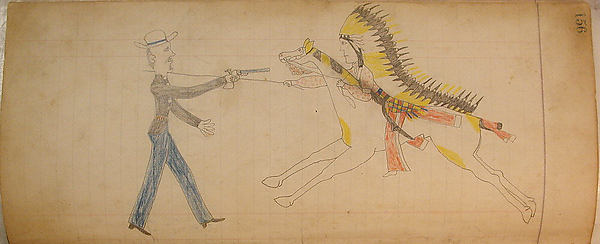
A Cheyenne ledger drawing from the 1870s-80s showing a violent confrontation, representing Plains Native art from Sitting Bull's era.
A Cheyenne artwork from the era of conflict that Dee Brown documented in his histories.
About this source
What it is
This drawing was made by a Southern or Northern Cheyenne artist between about 1874 and 1881, using graphite, watercolor and crayon on paper. It is part of what is known as the Maffet Ledger, held today by the Metropolitan Museum of Art. It shows a man aiming a long-barreled gun at a rider on a galloping horse, who wears a large feathered headdress.
Why it matters
Ledger drawings like this one were made by Plains Native artists on paper obtained from settlers and traders, often to record battles and events. This drawing comes from the same decade as major conflicts involving Sitting Bull and other Lakota and Cheyenne leaders, showing how Native artists documented their own history.
Look closer
- What is happening in this drawing, and how can you tell?
- Why did Native artists use ledger paper, rather than traditional materials, for drawings like this?
- What might this kind of drawing tell historians that a written US military report would not?
This painting is part of the curated material that grounds the AI version of Dee Brown, Sitting Bull (Tȟatȟáŋka Íyotake) and Black Elk on Humy.ai — when students ask about related events, the AI can quote it and cite it.
More Dee Brown sources
Meet the AI Dee Brown →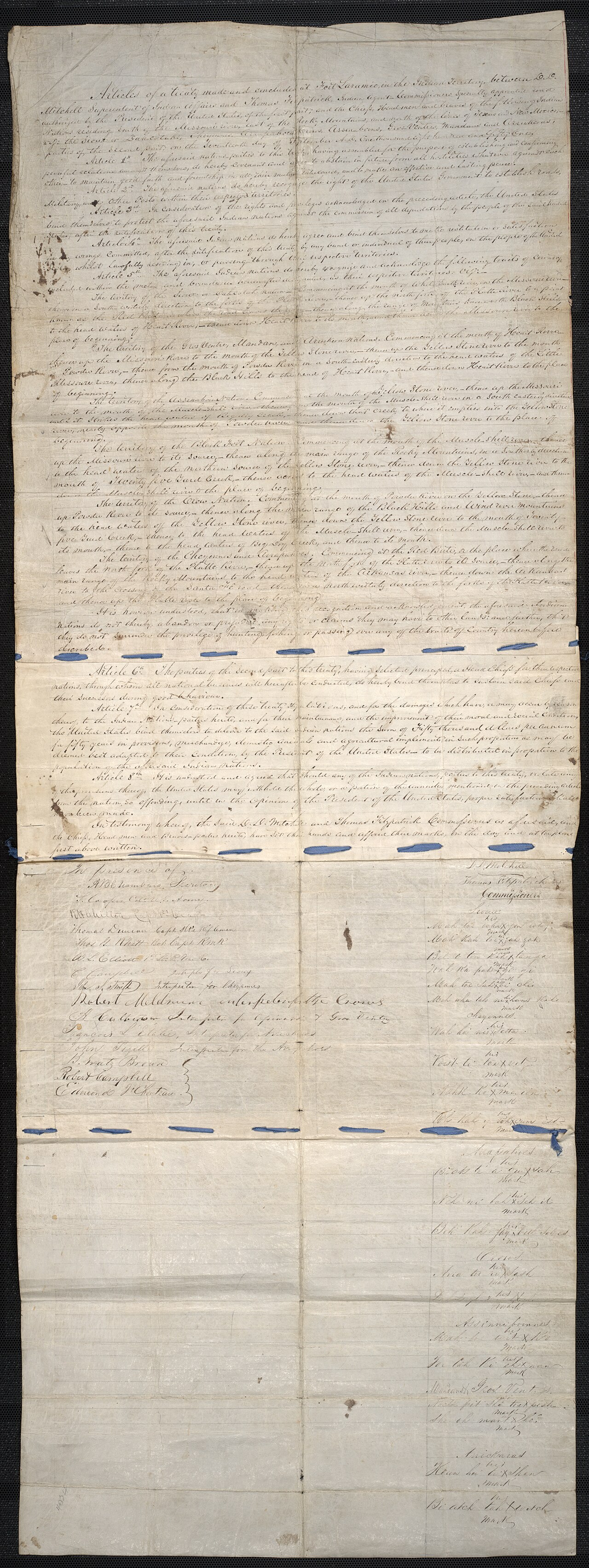 Document
Primary source
Fort Laramie Treaty of 1851
Office of Indian Affairs · 17 September 1851
 Document
Primary source
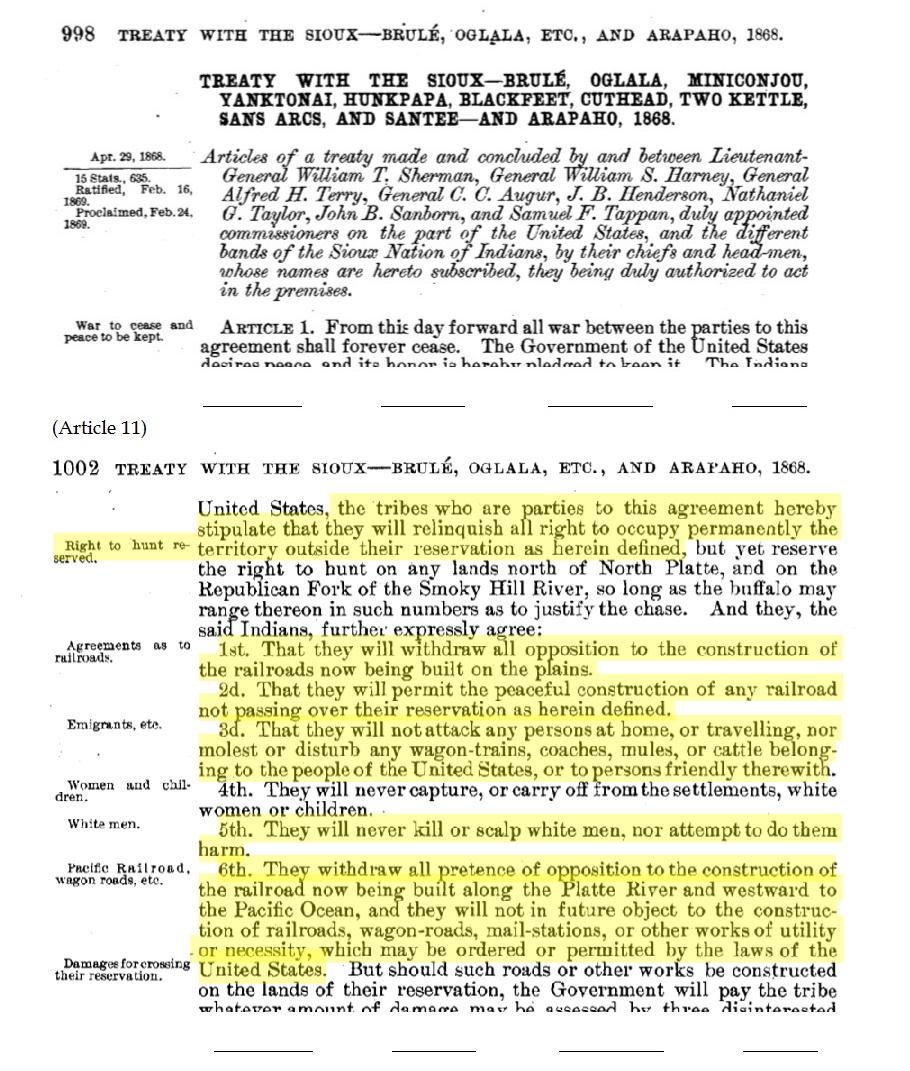
Treaty of Fort Laramie
1868
 Photograph
Primary source
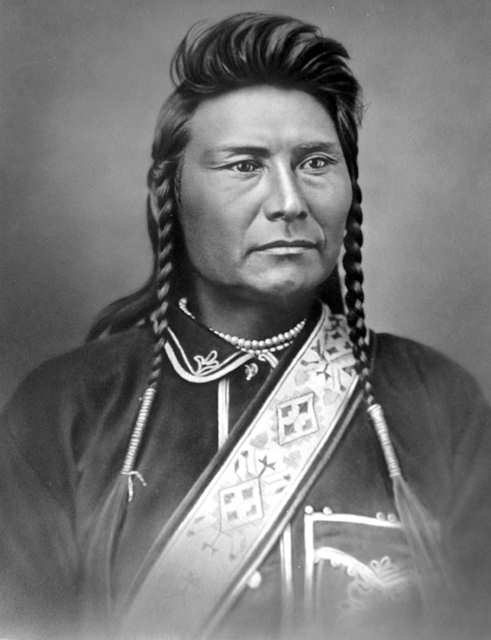
Chief Joseph, Bismarck Portrait
O. S. Goff (attributed) · November 1877
Primary source
The Ghost-Dance Religion and the Sioux Outbreak of 1890
James Mooney · 1896
 Document
Primary source
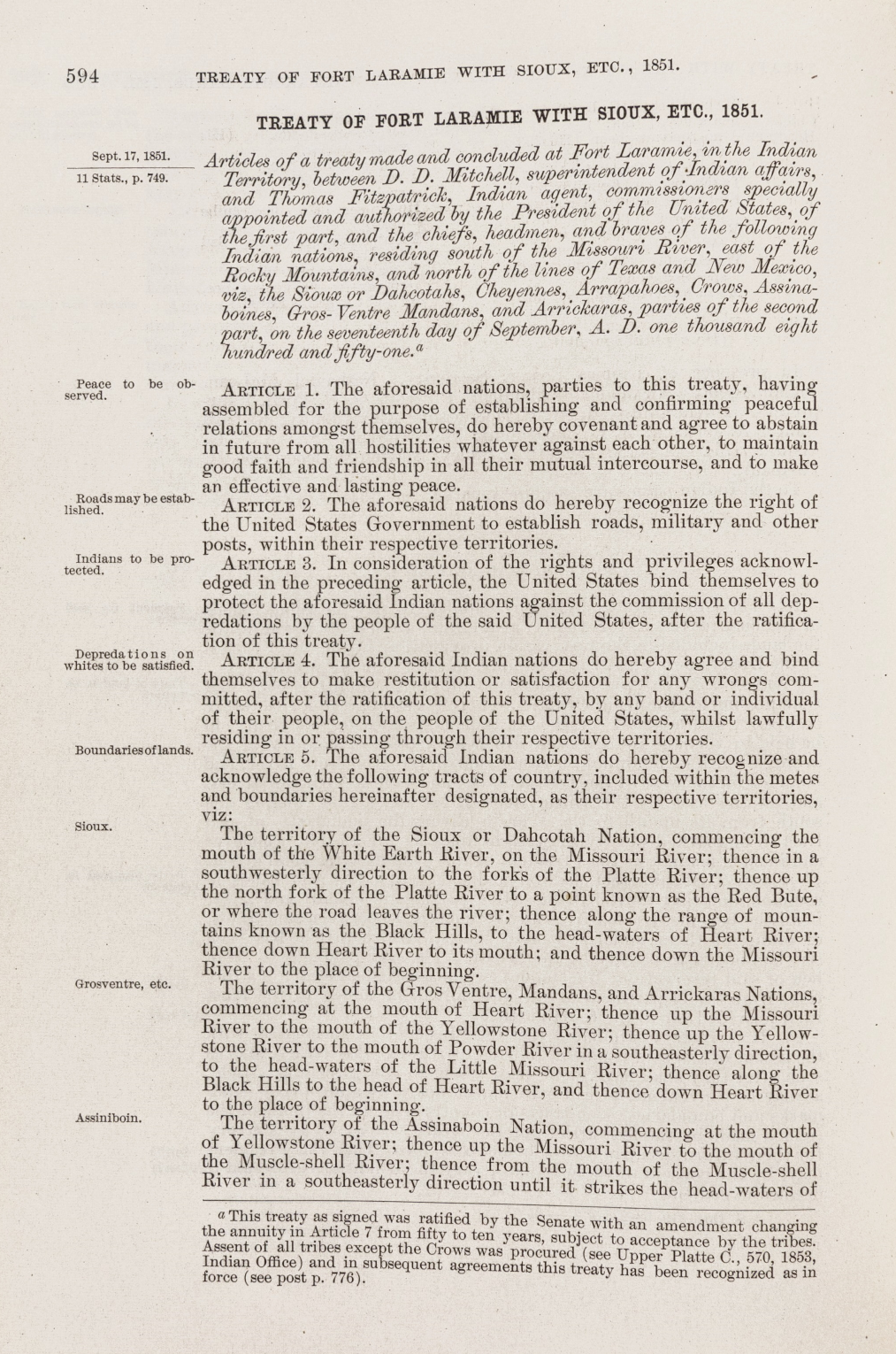
Fort Laramie Treaty, 1851, printed in Kappler volume 2
Government Printing Office · 17 September 1851 (printed 1904)
Ready when you are
Start chatting with Dee Brown now.
20 messages free · No credit card · Available in 50+ languages.