


Secondary sourcePaintingc. 1828-1833
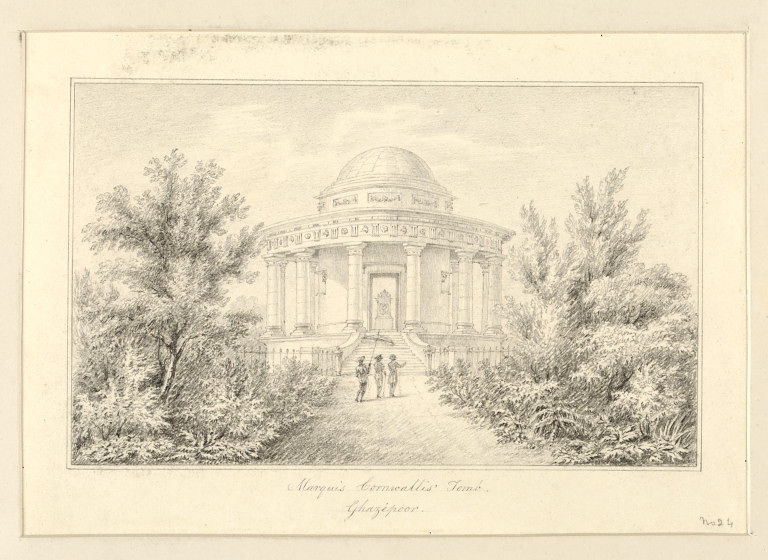
Marquess Cornwallis's Tomb, Ghazipur
Captain Robert Smith · c. 1828-1833
A pencil drawing of Cornwallis's tomb at Ghazipur, made by a British army officer travelling through India decades after his death.
Depicts the tomb built to mark Cornwallis's death and burial at Ghazipur, India.
About this source
What it is
This is a pencil drawing of the domed, circular stone tomb built for Lord Cornwallis at Ghazipur in India. It was drawn by Captain Robert Smith, a British officer, sometime between about 1828 and 1833, as part of an illustrated travel journal of his journeys through India. It is one of many sketches from that unpublished journal.
Why it matters
The drawing shows how Cornwallis was remembered in British India decades after his death: with a grand monument marking where he died. It reflects the perspective of a British traveller recording sights connected to empire, and reveals how colonial figures were memorialised rather than how ordinary Indians at the time might have viewed him.
Look closer
- Why might a British officer want to sketch and record this particular tomb?
- What does the choice of a domed, column-ringed monument suggest about how Cornwallis was honoured?
- What is missing from this image — whose voices or views about Cornwallis are not shown here?
This painting is part of the curated material that grounds the AI version of Charles Cornwallis on Humy.ai — when students ask about related events, the AI can quote it and cite it.
More Charles Cornwallis sources
Meet the AI Charles Cornwallis →Primary source
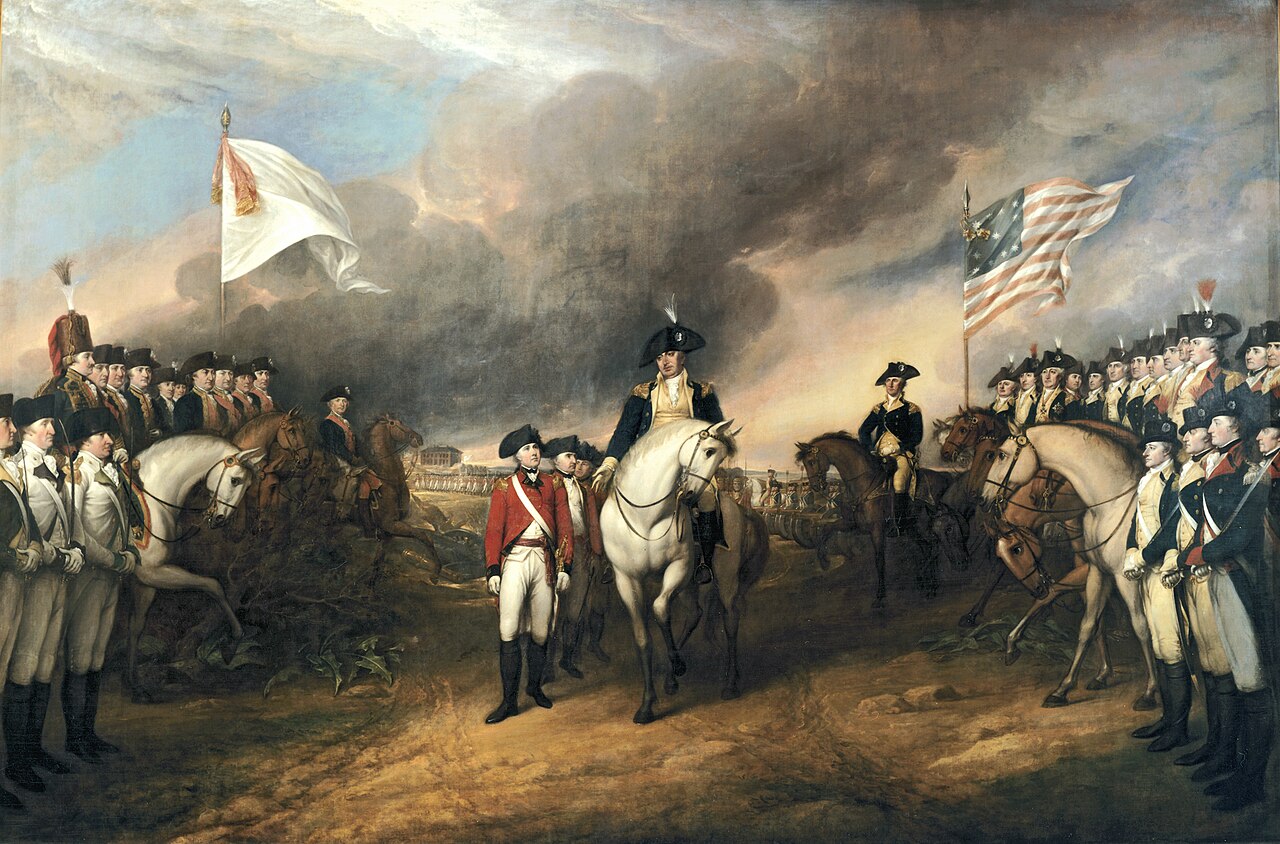
Articles of Capitulation, Yorktown
Charles Cornwallis; George Washington; Comte de Rochambeau; Comte de Barras · 19 October 1781
 Painting
Secondary source
Surrender of Lord Cornwallis
John Trumbull · 1819
 Painting
Primary source
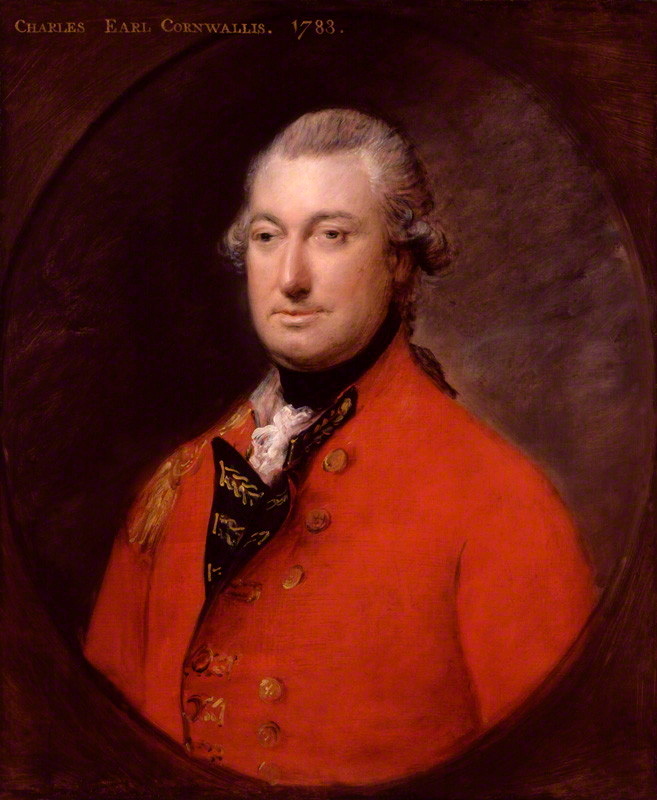
Charles Cornwallis, 1st Marquess Cornwallis
Thomas Gainsborough · 1783
 Painting
Secondary source
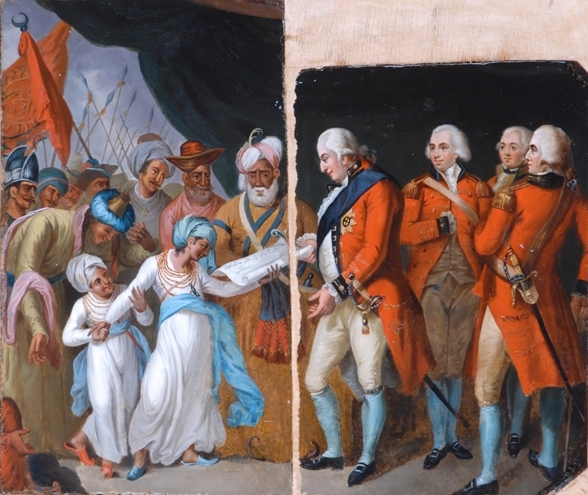
Lord Cornwallis receiving the Hostage Princes
Mather Brown · 1793
 Document
Primary source
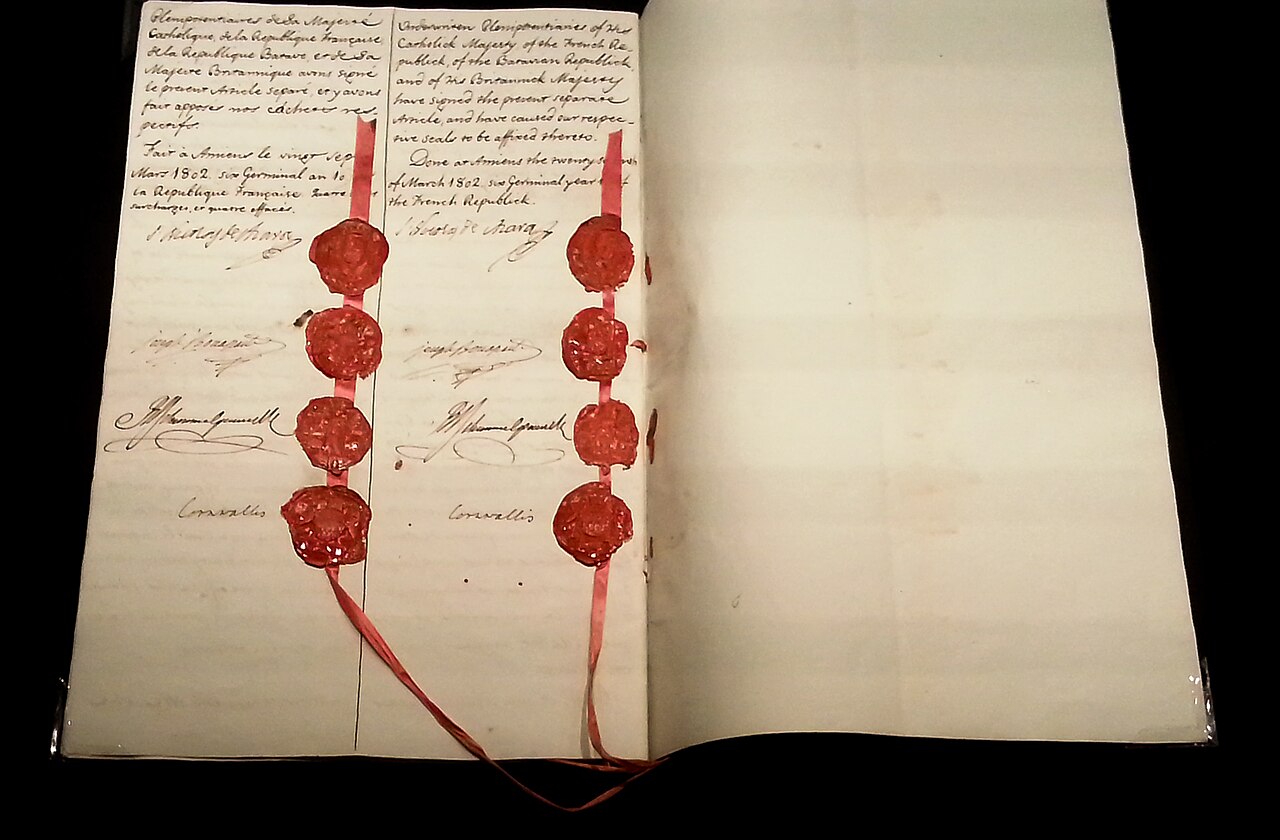
Treaty of Amiens
25 March 1802
Ready when you are
Start chatting with Charles Cornwallis now.
20 messages free · No credit card · Available in 50+ languages.