


Secondary sourceArtifact1916-1917
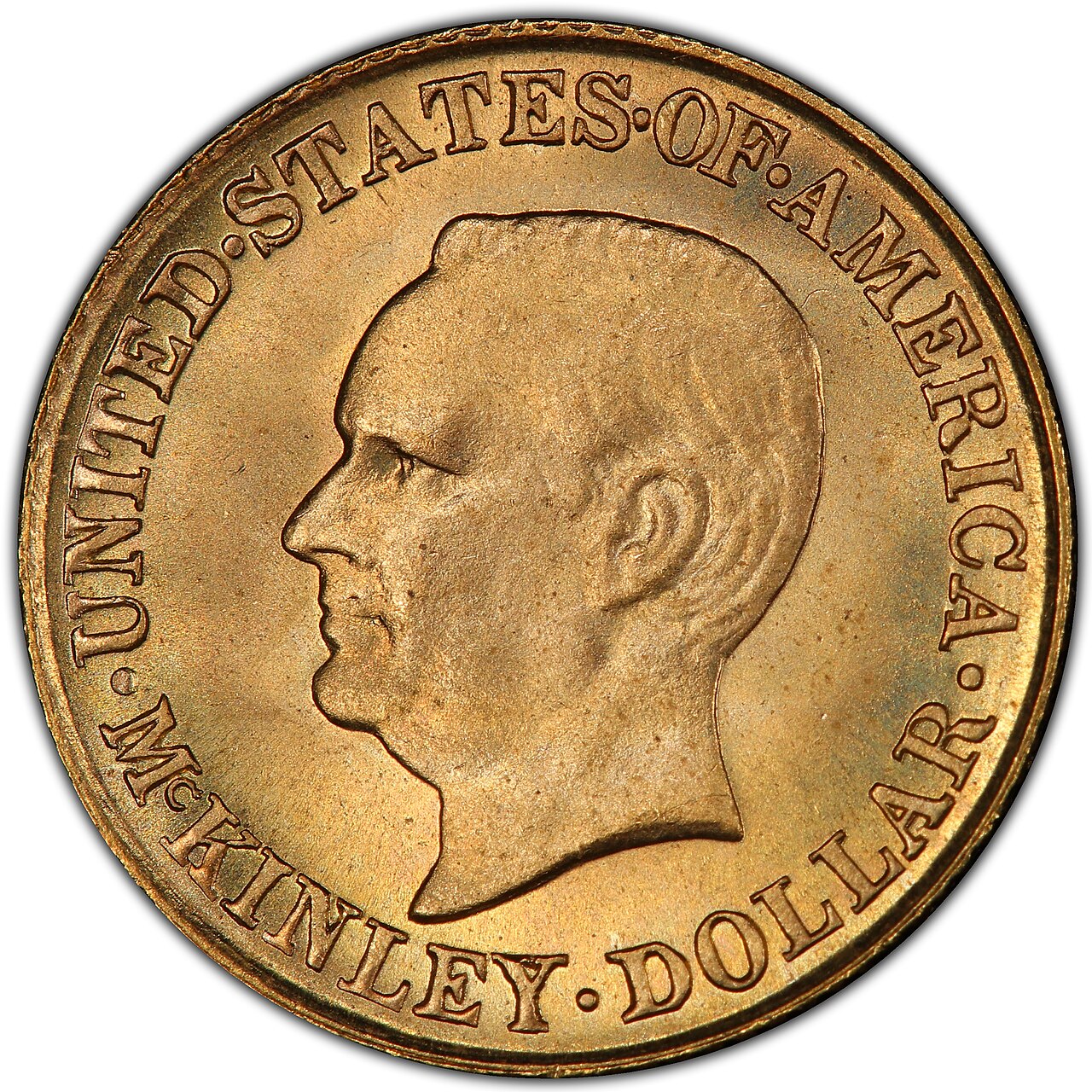
McKinley Birthplace Memorial dollar
Charles E. Barber · 1916-1917
A gold commemorative dollar struck by the U.S. Mint in 1916 and 1917 to raise money for the McKinley Birthplace Memorial in Niles, Ohio.
A coin made after McKinley's death to fund a memorial at his birthplace, showing the effort to keep his memory alive.
About this source
What it is
This is a gold commemorative dollar struck by the United States Bureau of the Mint in 1916 and 1917. It shows a right-facing profile portrait of McKinley, with the words UNITED STATES OF AMERICA and McKINLEY DOLLAR around the rim. The obverse was designed by Charles E. Barber, Chief Engraver of the Mint, and the reverse by his assistant, George T. Morgan. The coins were sold at a premium to finance the National McKinley Birthplace Memorial at Niles, Ohio.
The issue was first proposed as a silver dollar. It was changed to gold because a silver piece would not be appropriate for a president who had supported the gold standard. The authorized mintage was 100,000, but only about 30,000 were minted. About 20,000 were sold, many at a reduced price to a Texas coin dealer, and the remaining 10,000 were returned to the Mint for melting.
Why it matters
McKinley was the first person to appear on two issues of U.S. coins, since he had also appeared on a version of the 1903-dated Louisiana Purchase Exposition dollar. The coin shows how supporters worked to keep his memory alive after his death. The memorial itself was designed by the firm of McKim, Mead, and White and dedicated in 1917. The coin was poorly promoted and did not sell well.
Look closer
- Why was a gold coin chosen over a silver one, and what does that choice say about McKinley's political record?
- Who do you think the coin was meant to appeal to, and how was it sold?
- What does the small number of coins sold tell you about public interest in the memorial?
This artifact is part of the curated material that grounds the AI version of William McKinley on Humy.ai — when students ask about related events, the AI can quote it and cite it.
More William McKinley sources
Meet the AI William McKinley →Primary source
William McKinley's War Message to Congress
William McKinley · 11 April 1898
 Letter
Primary source
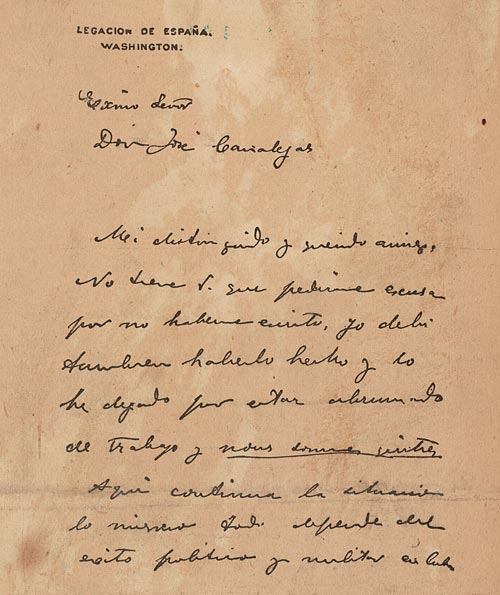
De Lôme Letter
Enrique Dupuy de Lôme · 9 February 1898
 Document
Primary source
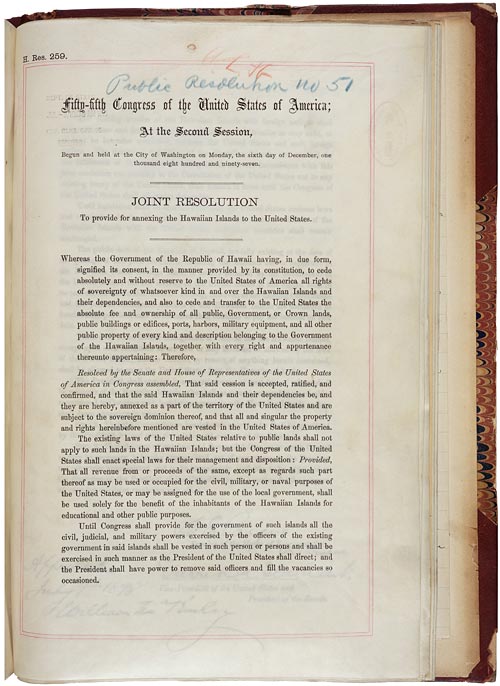
Joint Resolution to Provide for Annexing the Hawaiian Islands to the United States
United States Congress · 7 July 1898
 Document
Primary source
Treaty of Paris (1898)
10 December 1898
 Speech
Primary source
McKinley's Last Speech at the Pan-American Exposition
William McKinley · 5 September 1901
Ready when you are
Start chatting with William McKinley now.
20 messages free · No credit card · Available in 50+ languages.