


Primary sourceLetter1915-1916
McMahon–Hussein Correspondence
Henry McMahon · 1915-1916
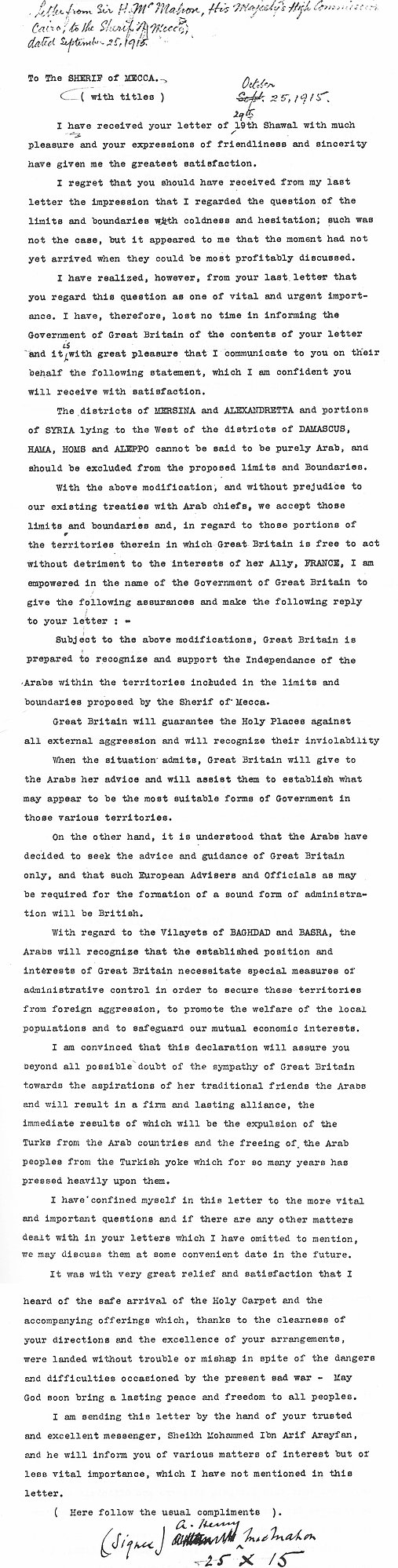
The 1915–16 letters promising Arab independence that formed the diplomatic backdrop to Lawrence's work in the Arab Revolt.
These letters form the diplomatic background and broken promises that shaped Lawrence's role in the Arab Revolt.
Free Humy account · No credit card · 120,912 sources to read
About this source
What it is
This is a series of ten letters exchanged from 1915 to 1916 between Henry McMahon, British High Commissioner to Egypt, and Hussein bin Ali, Sharif of Mecca, discussing British recognition of Arab independence in exchange for an Arab revolt against the Ottomans.
Why it matters
The correspondence promised the Arabs independence after the war, a promise that the secret Sykes–Picot Agreement later contradicted. This contradiction shaped the political world Lawrence operated in and fed the sense of betrayal he expressed in his own writing about the Revolt.
Look closer
- Why do the letters contain vague or disputed boundary descriptions?
- What does the later controversy over these letters tell us about the dangers of unclear diplomatic language?
- Whose interests were being served by each side of this correspondence?
This letter is part of the curated material that grounds the AI version of T. E. Lawrence on Humy.ai — when students ask about related events, the AI can quote it and cite it.
More T. E. Lawrence sources
Browse all 99 → Book
Primary source
Seven Pillars of Wisdom
T. E. Lawrence · 1922 (completed); published 1926
 Document
Primary source
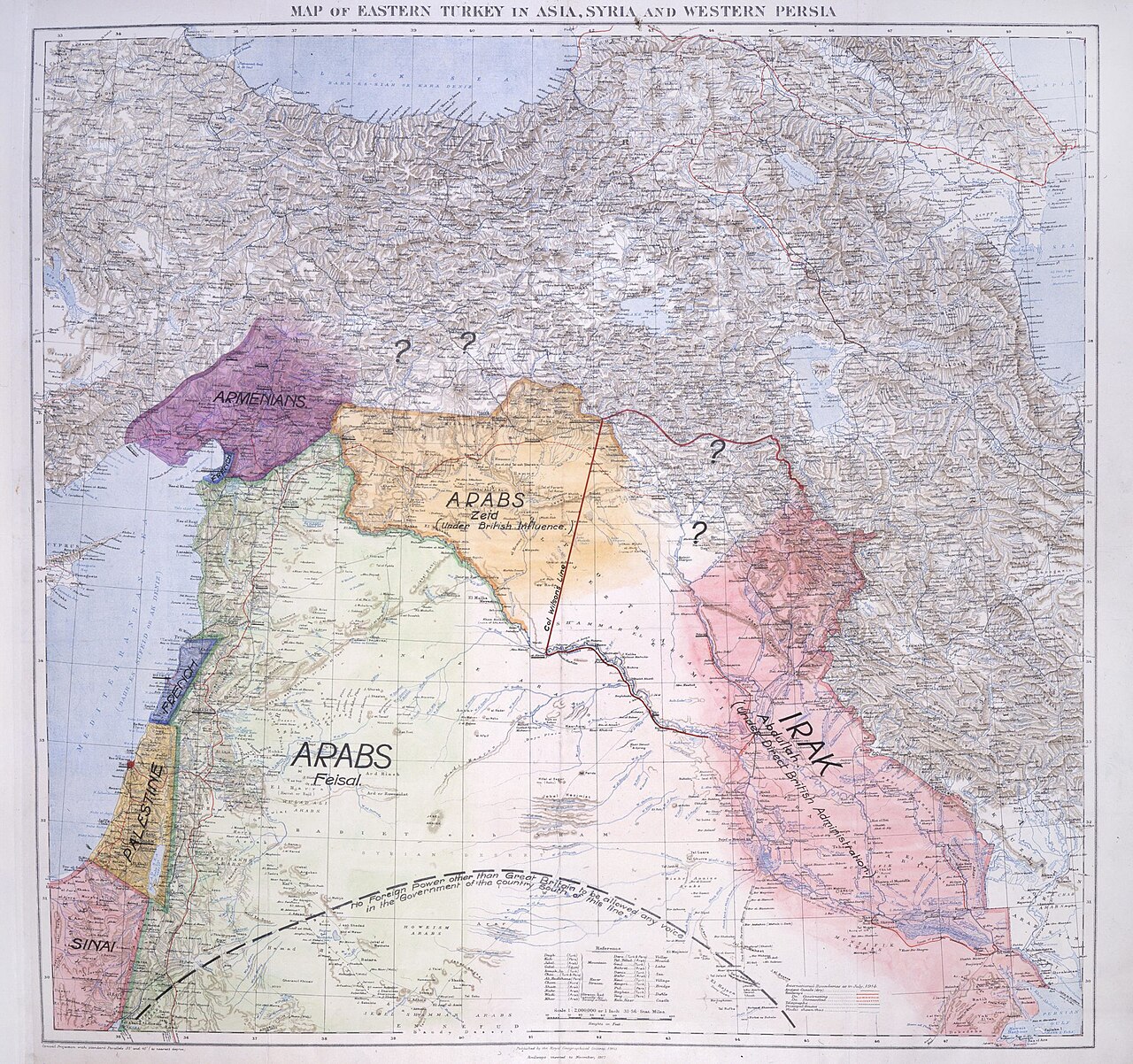
Map of the Middle East presented to the Eastern Committee
T. E. Lawrence · November 1918
 Document
Primary source
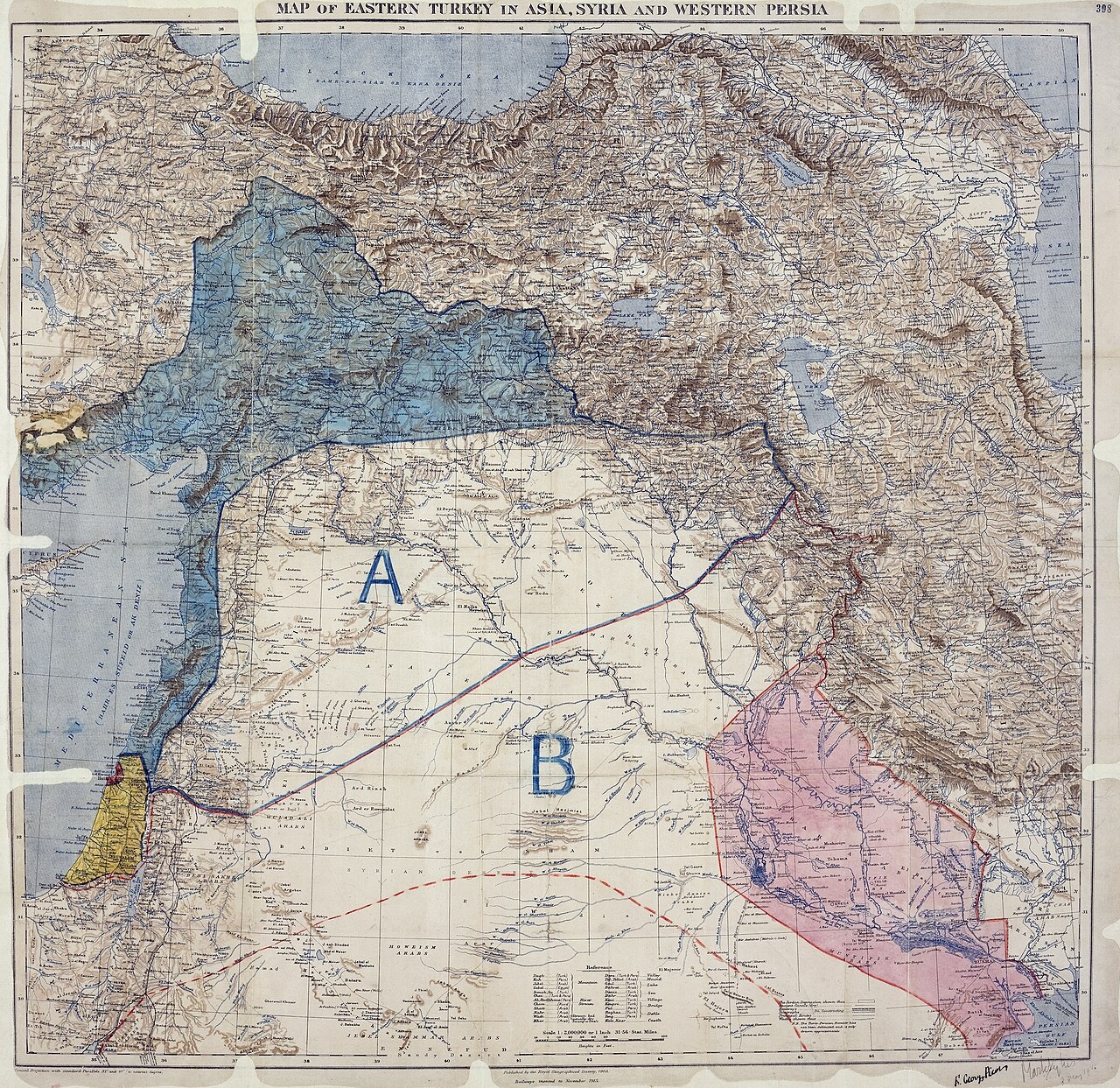
Sykes–Picot Agreement
Mark Sykes and François Georges-Picot · 1916
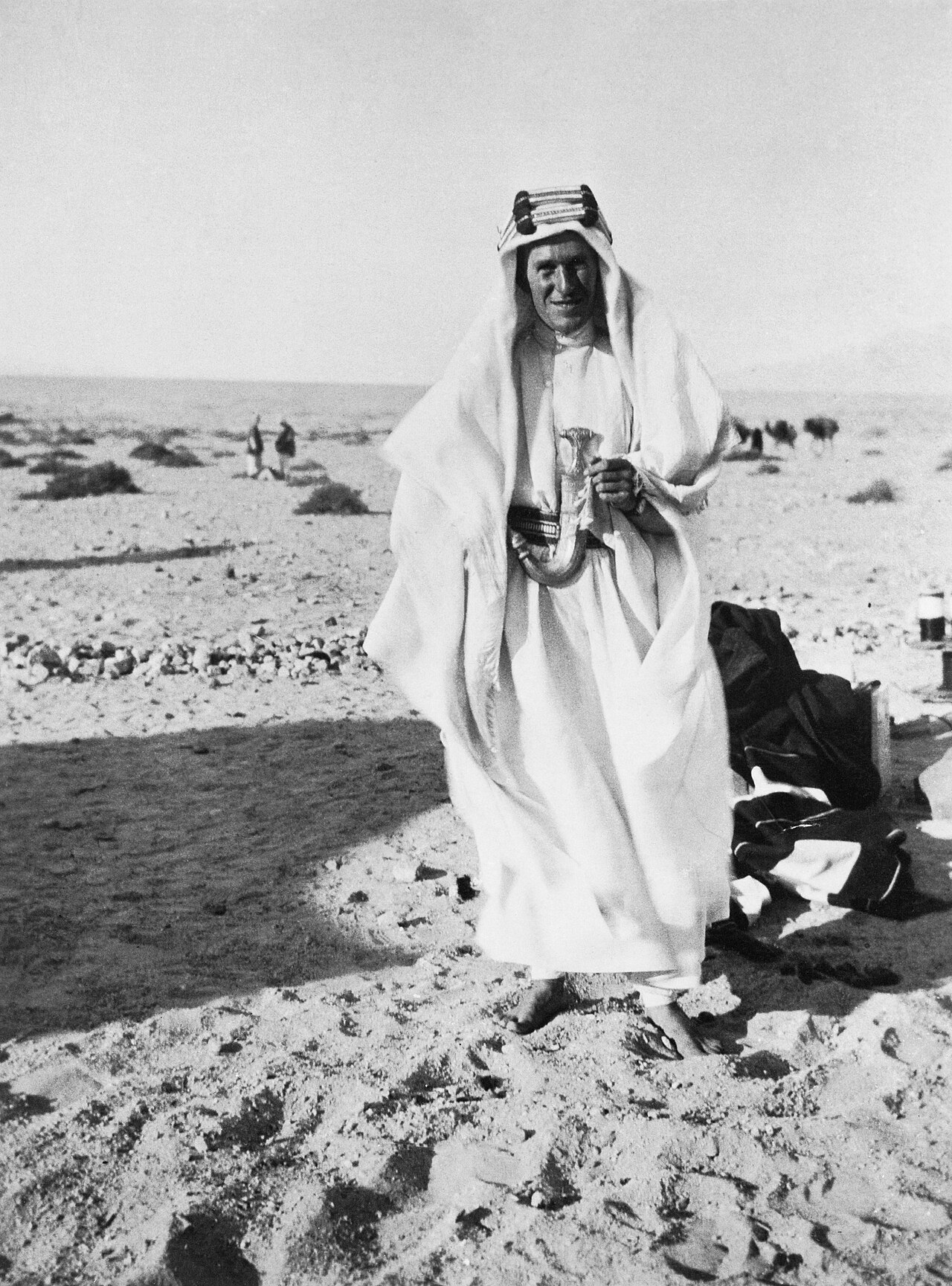 Photograph
Primary source
T E Lawrence 1888-1935
Goslett Raymond (Capt) · 1888-1935 (Lawrence's lifespan; photograph undated within)
Free account
Read every T. E. Lawrence source
Sign up free →
Ready when you are
Start chatting with T. E. Lawrence now.
20 messages free · No credit card · Available in 50+ languages.