


Secondary sourceArtifact1779
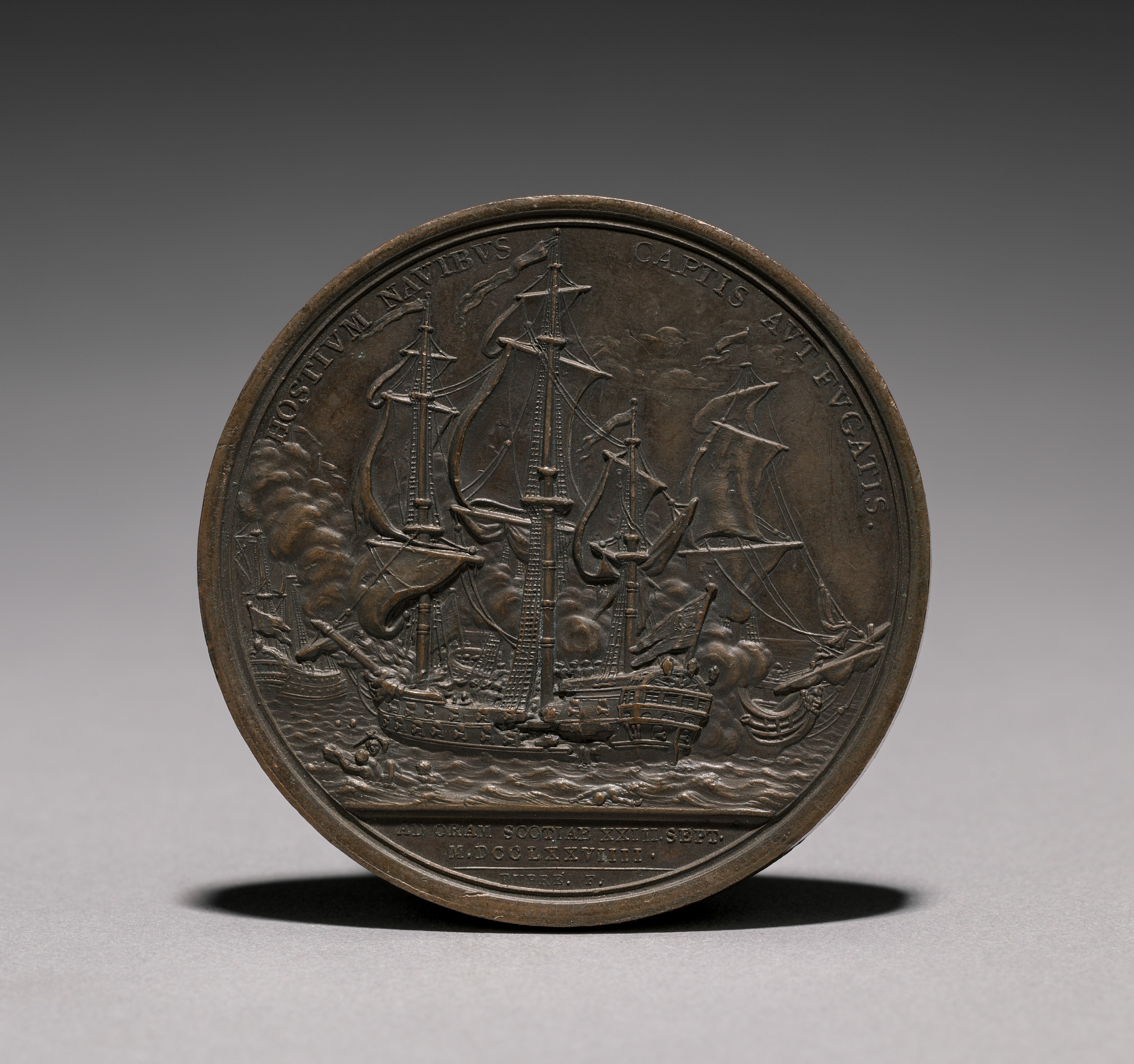
Medal of John Paul Jones, reverse
Jules Dupré · 1779
A bronze medal from 1779, reverse side, showing a sea battle and Latin inscriptions that commemorate Jones's victory.
Shows a commemorative object honoring Jones's 1779 victory, made to celebrate his fame.
About this source
What it is
This is a bronze medal held by The Cleveland Museum of Art, with a diameter of 5.8 cm. The reverse side shows several sailing warships in a sea battle, with smoke and waves. Latin inscriptions run around the rim, and the lower edge reads AD ORAM SCOTIAE XXIII SEPT and MDCCLXXVIIII, which is the date 1779. The museum lists Jules Dupré (French, 1811–1889) as the maker. The curator notes that this is a later 19th-century maker, so the medal is a secondary source about Jones.
Why it matters
The medal commemorates Jones's naval victory of 1779. Medals like this were made to celebrate heroes and to spread their fame. It shows that Jones's exploits were honored in visual form well beyond the sea battle itself.
Look closer
- What details of the sea battle are shown, and how does the artist suggest movement and danger?
- Why would a medal use Latin inscriptions, and who might have been meant to read them?
- What does the medal leave out about the crews or the cost of the battle?
This artifact is part of the curated material that grounds the AI version of John Paul Jones on Humy.ai — when students ask about related events, the AI can quote it and cite it.
More John Paul Jones sources
Meet the AI John Paul Jones →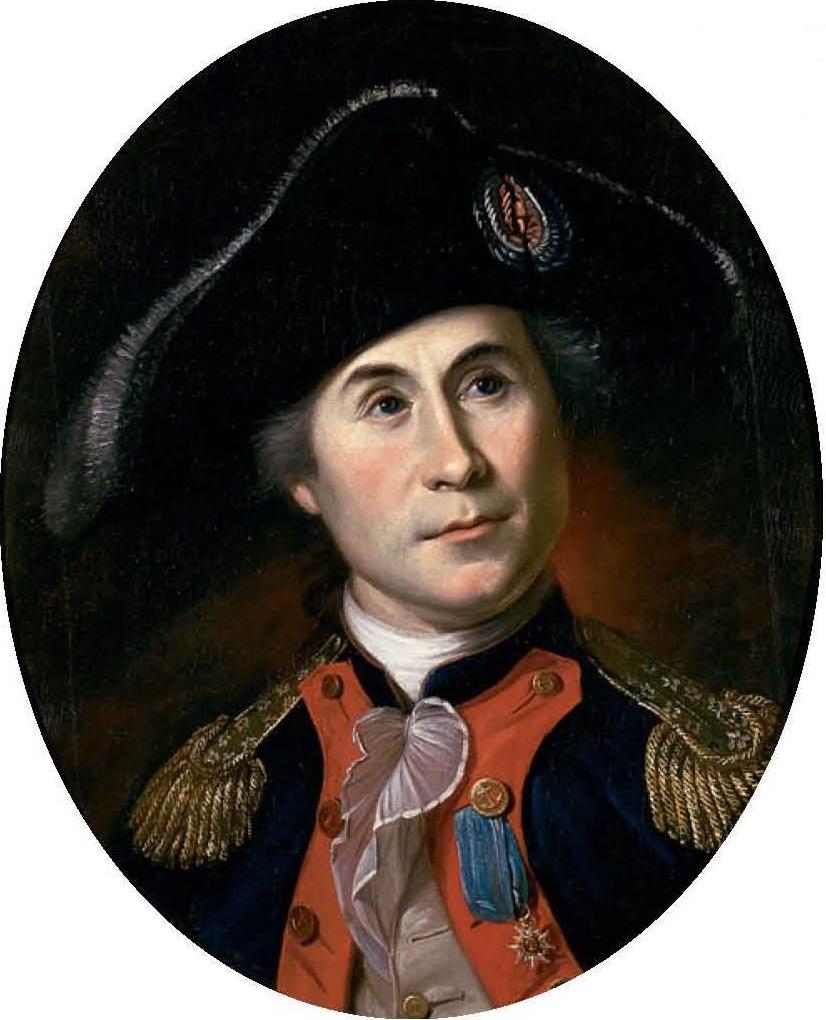 Painting
Primary source
Portrait of John Paul Jones
Charles Willson Peale · c. 1781
 Sculpture
Primary source
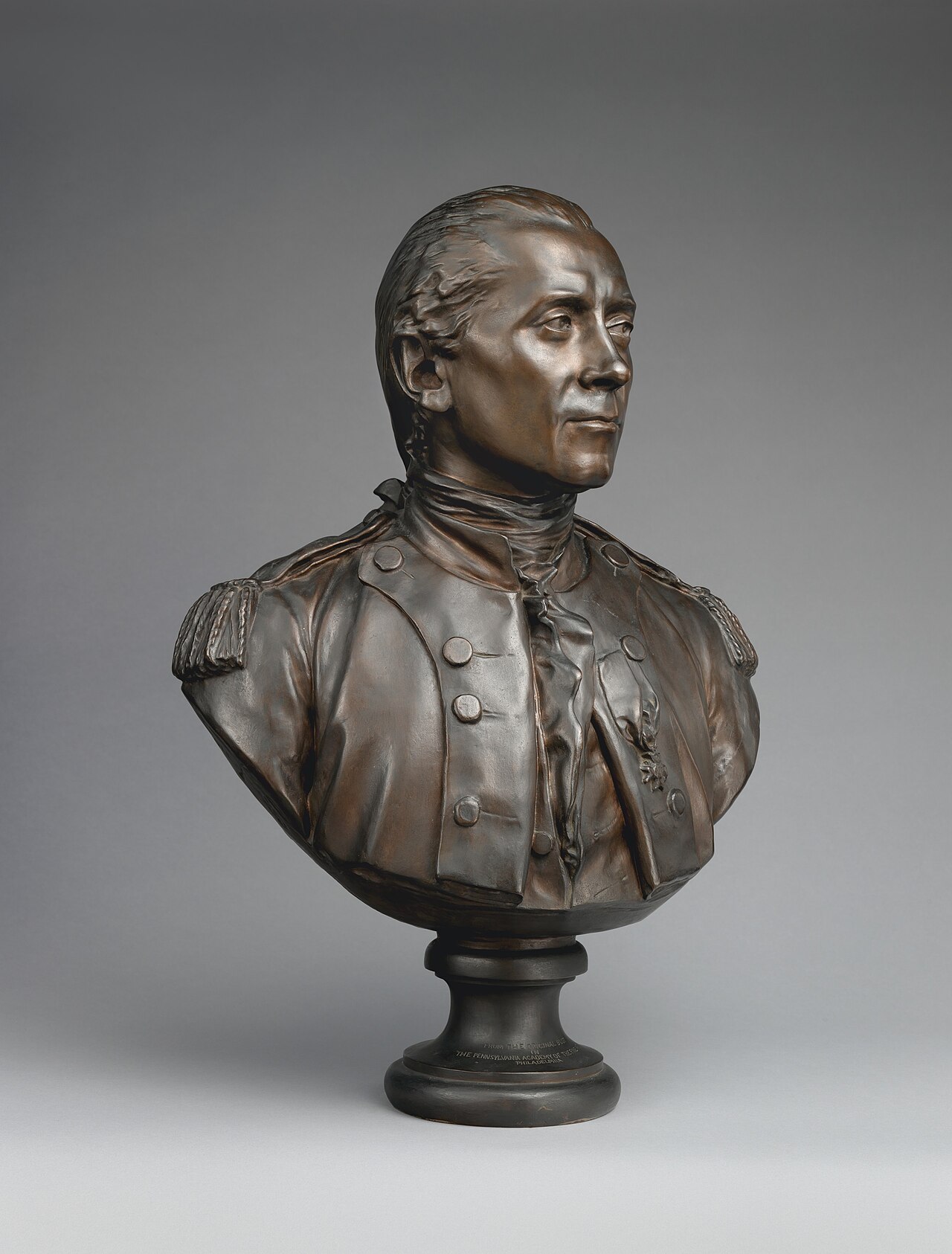
Bust of John Paul Jones
Jean-Antoine Houdon · 1780
 Painting
Primary source
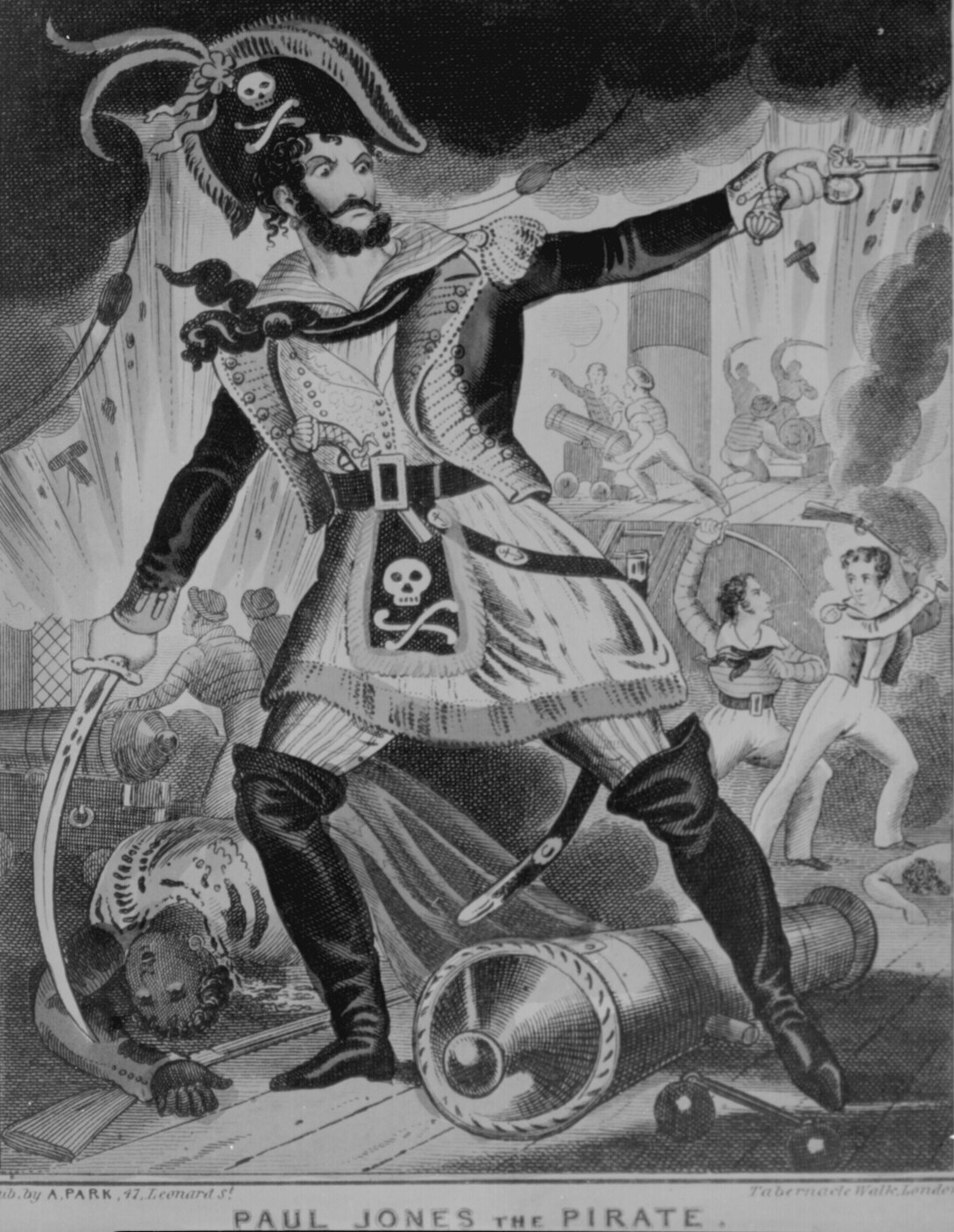
Paul Jones the Pirate
A. Park of London
 Document
Primary source
Treaty of Alliance with France
6 February 1778
 Artifact
Primary source
John Paul Jones Congressional Gold Medal
Augustin Dupré · 1787
Ready when you are
Start chatting with John Paul Jones now.
20 messages free · No credit card · Available in 50+ languages.