


Secondary sourcePainting1883
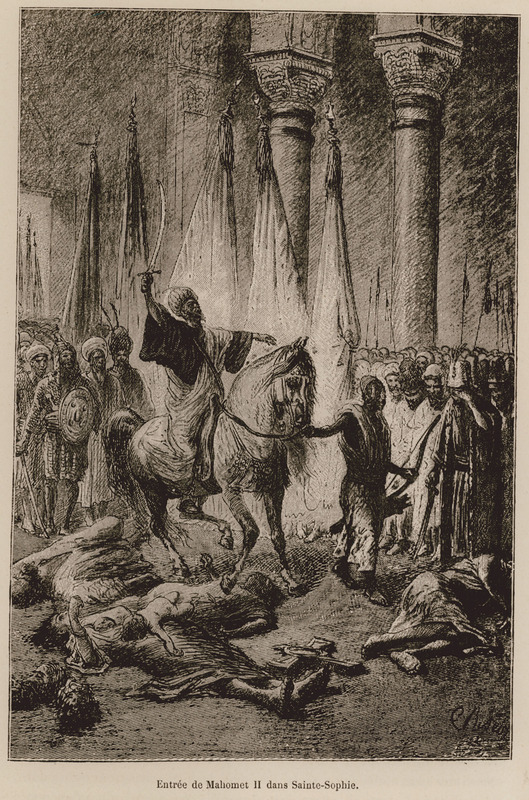
Mehmed II Entering Sainte-Sophie
C. Biseo · 1883
An 1883 illustration from Edmondo de Amicis's travel book Constantinople, showing Mehmed II riding into Hagia Sophia after the conquest.
A later illustrated scene imagining Mehmed II's entry into Hagia Sophia after his conquest of Constantinople.
About this source
What it is
This engraved illustration appeared in Edmondo de Amicis's 1883 book Constantinople, with drawings made from life by C. Biseo, translated and published in Paris. It depicts Mehmed II entering Hagia Sophia (Sainte-Sophie) on horseback after the conquest of Constantinople.
The image shows a mounted rider with a raised curved sword entering a grand columned interior, with bodies on the ground and a man holding the horse's bridle.
Why it matters
Though made centuries later, this illustration from a popular European travel book shows how the dramatic story of Mehmed II's conquest and his entry into the great church of Hagia Sophia continued to capture imaginations long afterward, shaping how the event was remembered.
Look closer
- Why would a 19th-century travel book about modern Istanbul include a historical scene like this?
- What feelings does the artist create by showing bodies on the floor as the sultan rides in triumphant?
- How might this scene differ from what might have actually happened, given it was drawn so long after the event?
This painting is part of the curated material that grounds the AI version of Mehmed II on Humy.ai — when students ask about related events, the AI can quote it and cite it.
More Mehmed II sources
Meet the AI Mehmed II →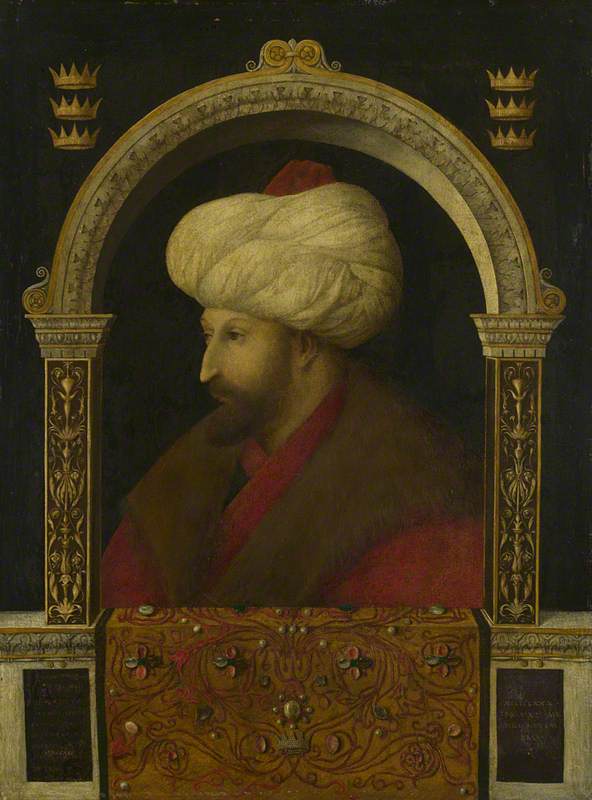 Painting
Primary source
The Sultan Mehmet II
Gentile Bellini · 1480
 Painting
Primary source
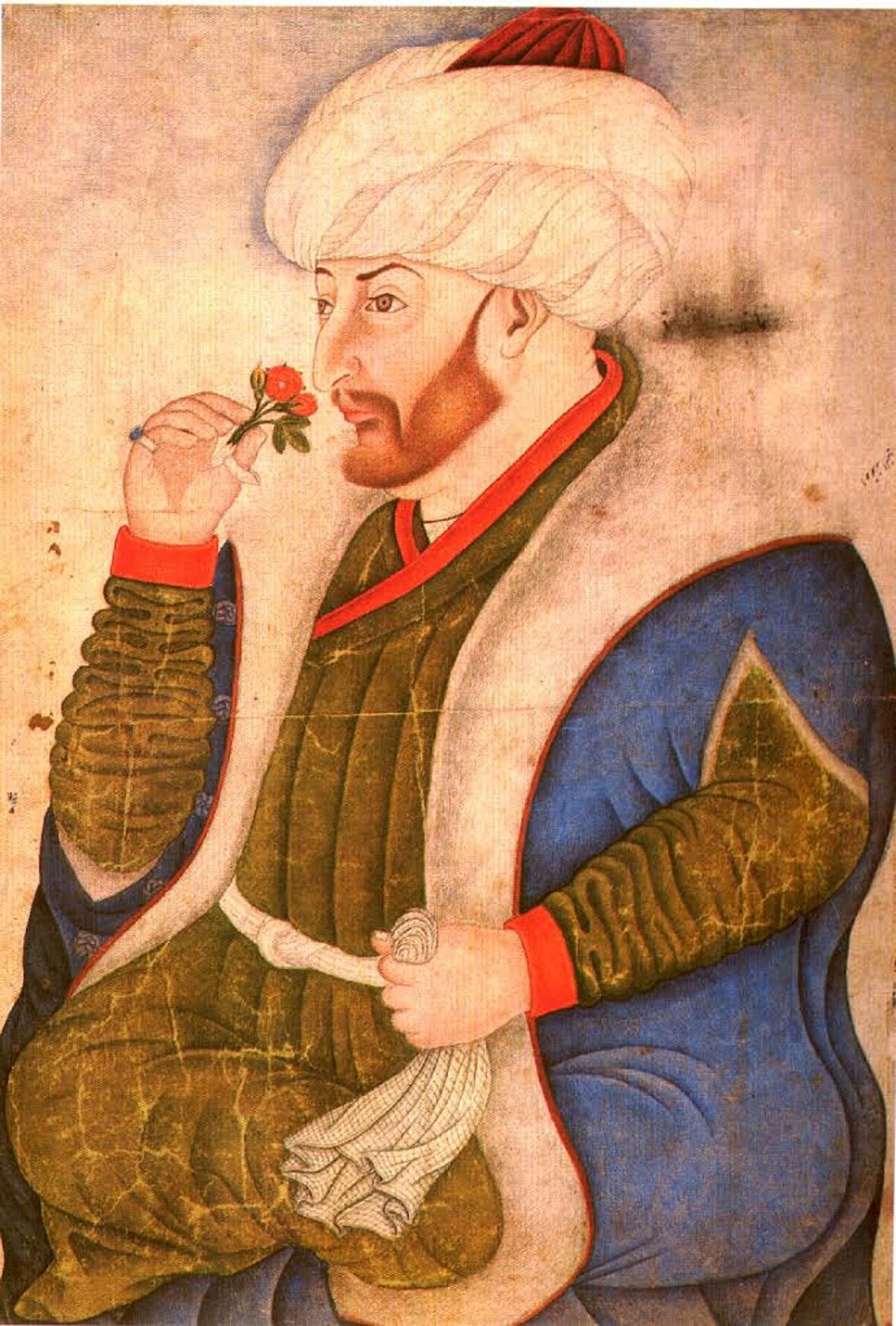
Portrait of Mehmed II Smelling a Rose
Attributed to Nakkaş Sinan Beg · c. 1480-81
 Artifact
Primary source
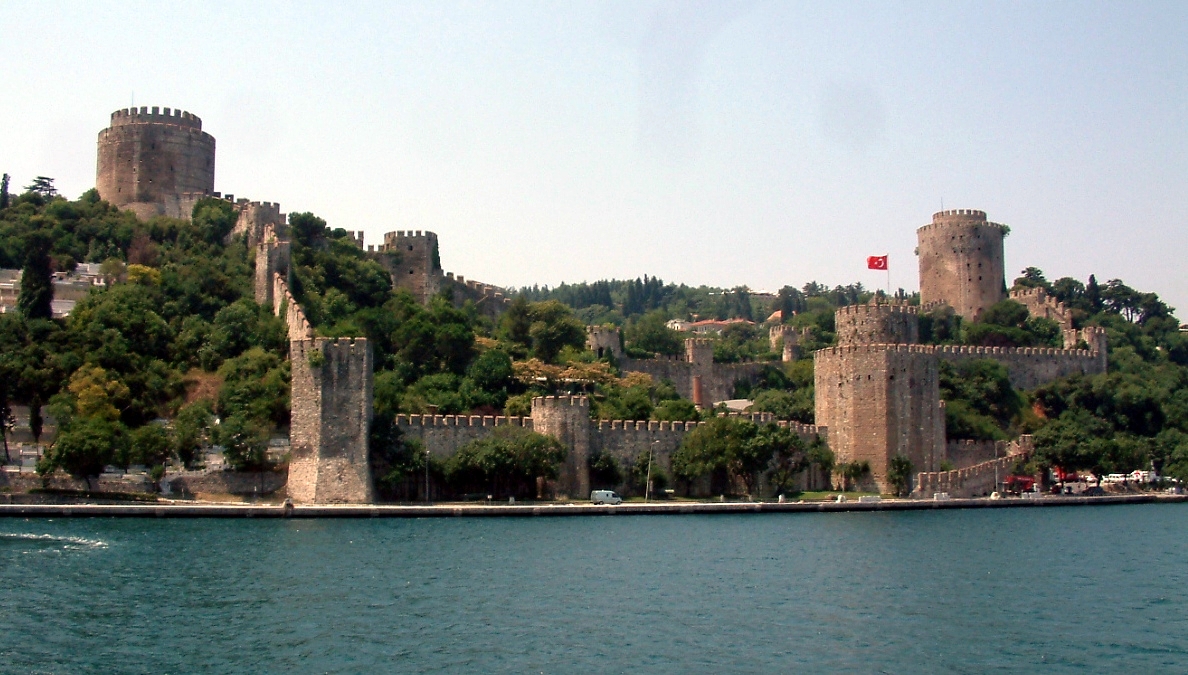
Rumeli Hisarı
1451-1452
 Artifact
Primary source
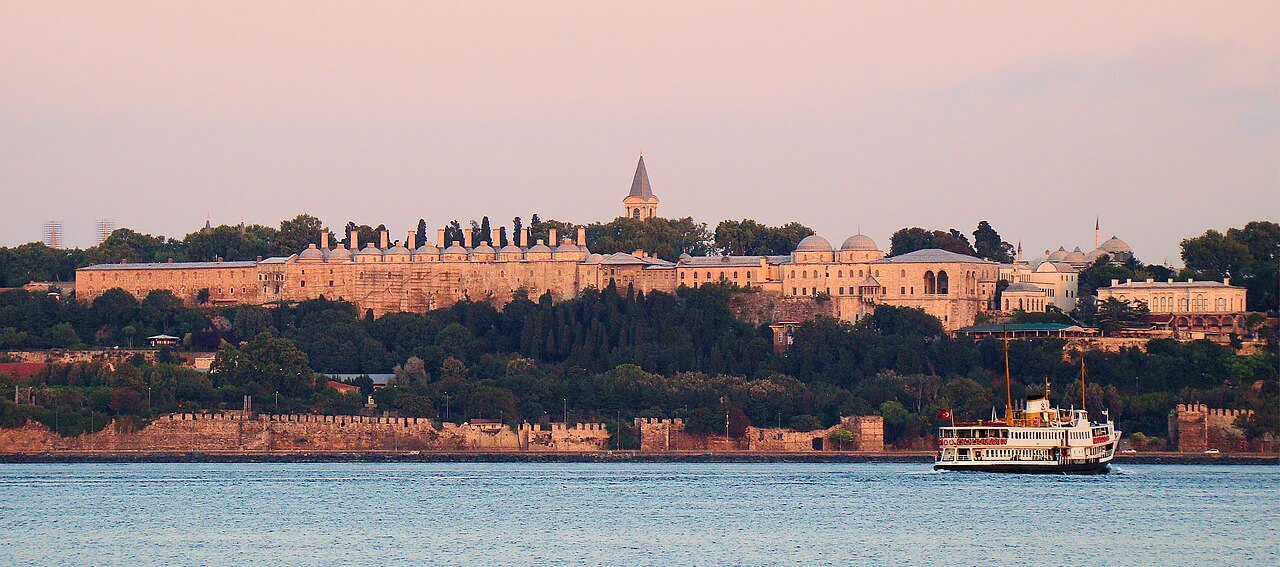
Topkapı Palace
from 1459
 Document
Primary source
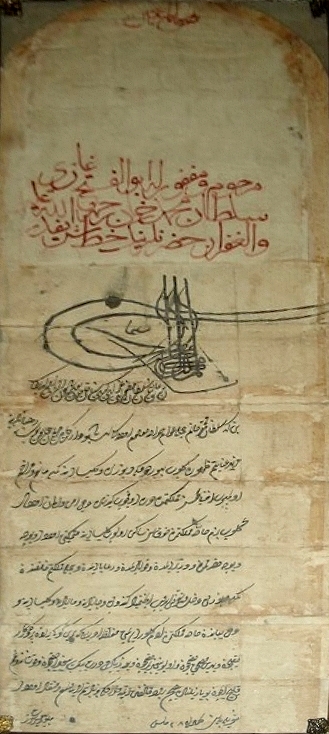
Ahdname of Fojnica
Mehmed II · 1463
Ready when you are
Start chatting with Mehmed II now.
20 messages free · No credit card · Available in 50+ languages.