


Secondary sourceSculpturephotographed 17 July 2013
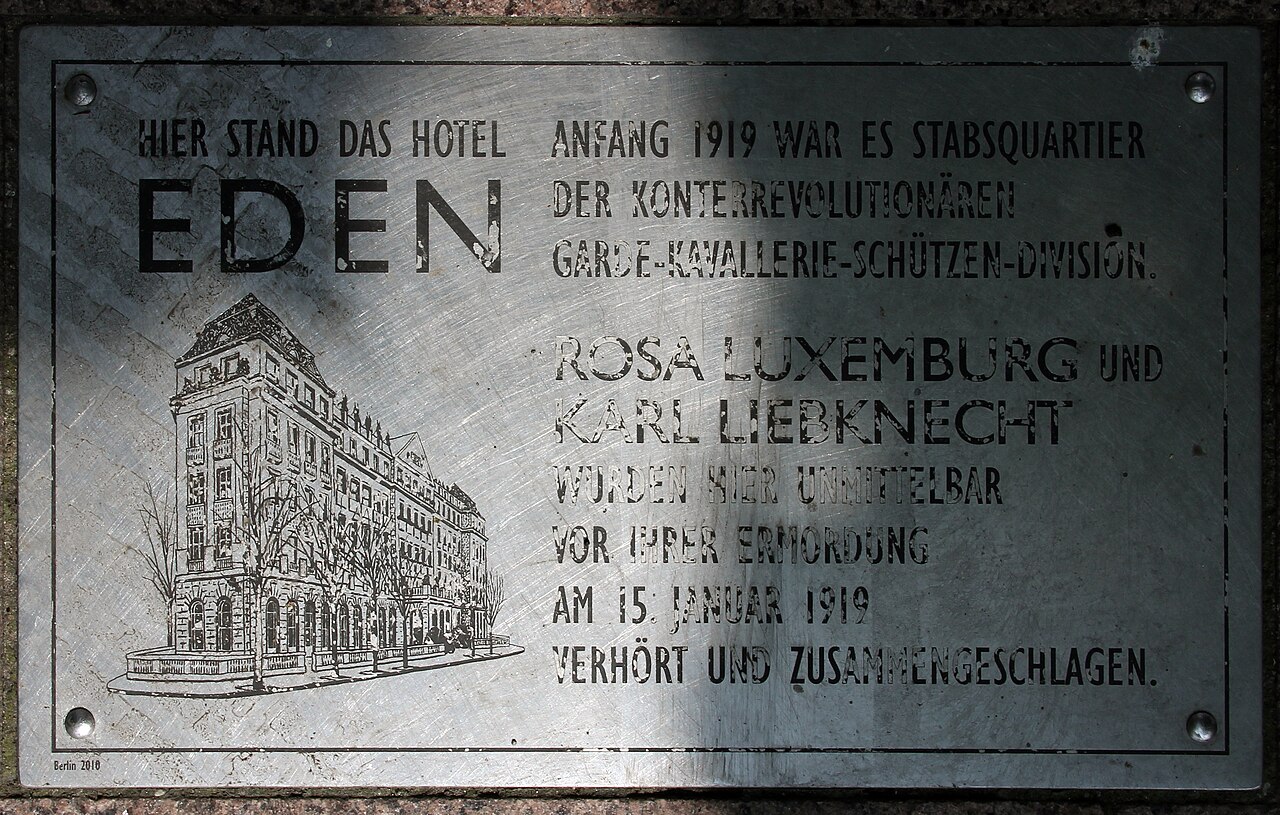
Memorial plaque at the Eden Hotel, Berlin
photographed 17 July 2013
A brushed metal plaque on stone at the Eden Hotel site in Berlin. It describes how Rosa Luxemburg and Karl Liebknecht were interrogated and beaten there shortly before their murder in January 1919.
A later plaque placed at the site where Rosa Luxemburg was interrogated and beaten shortly before her murder in January 1919.
About this source
What it is
This is a brushed metal memorial plaque mounted on stone at Olof-Palme-Platz in Berlin-Tiergarten. The left side reads 'Hier stand das Hotel Eden' above a line drawing of a multi-story hotel. The right side states that at the start of 1919 the building was headquarters of the counterrevolutionary Garde-Kavallerie-Schützen-Division, and that Rosa Luxemburg and Karl Liebknecht were interrogated and beaten here shortly before their murder on 15 January 1919. The photograph was taken on 17 July 2013.
Why it matters
The plaque is a later marker, not a document from 1919. Its text places the final days of Luxemburg and Karl Liebknecht in a specific building in Berlin. It names the military unit that occupied the hotel, which connects her death to the wider conflict of the revolutionary period in Germany.
Look closer
- Which people and groups does the text name, and which does it leave out?
- Why might a memorial describe a place where violence happened, rather than only the person?
- Who wrote this text, and how does its date affect how you read it?
This sculpture is part of the curated material that grounds the AI version of Rosa Luxemburg on Humy.ai — when students ask about related events, the AI can quote it and cite it.
More Rosa Luxemburg sources
Meet the AI Rosa Luxemburg →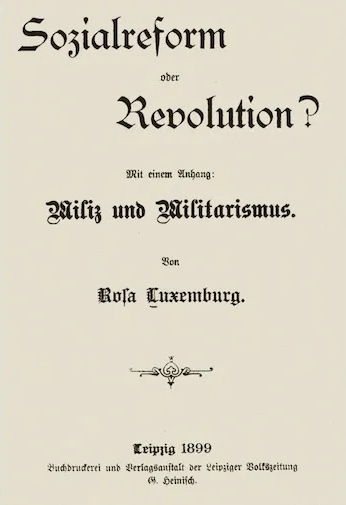 Book
Primary source
Social Reform or Revolution
Rosa Luxemburg · 1898-1899 (published 1899)
 Book
Primary source
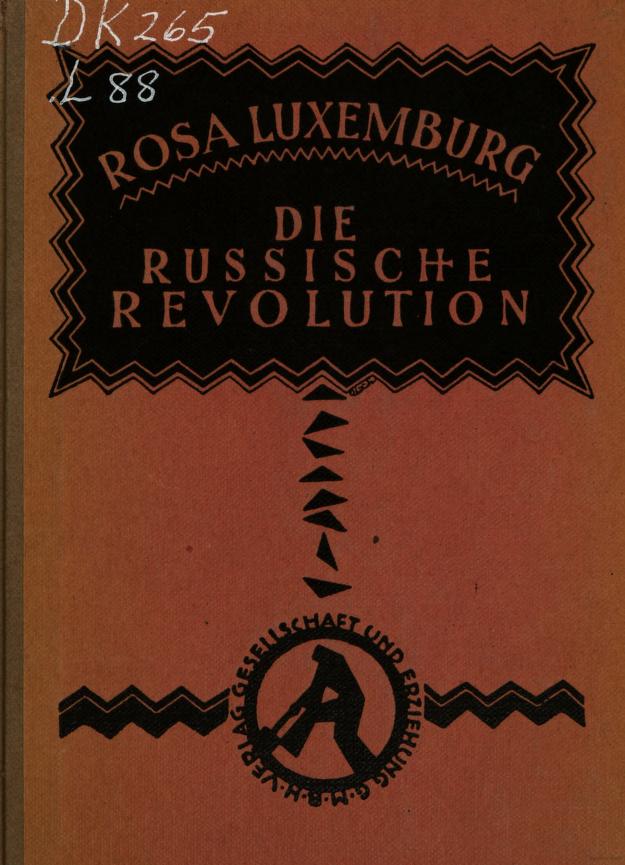
The Russian Revolution: A Critical Appreciation
Rosa Luxemburg · 1918 (published 1922)
 Book
Primary source
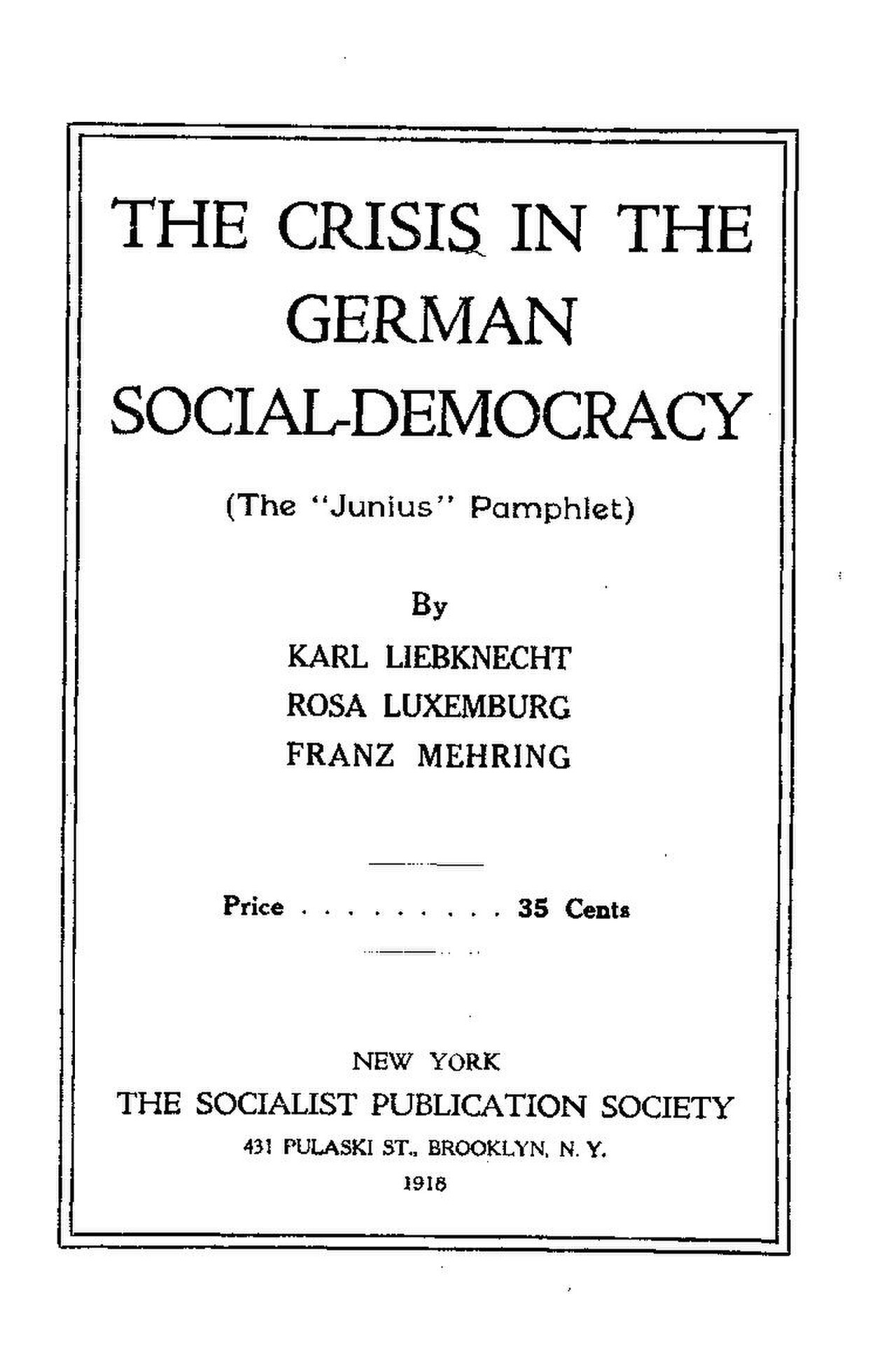
The Junius Pamphlet
Rosa Luxemburg · 1915 (published 1916)
Primary source
Was will der Spartakusbund?
Rosa Luxemburg · December 1918
 Book
Primary source
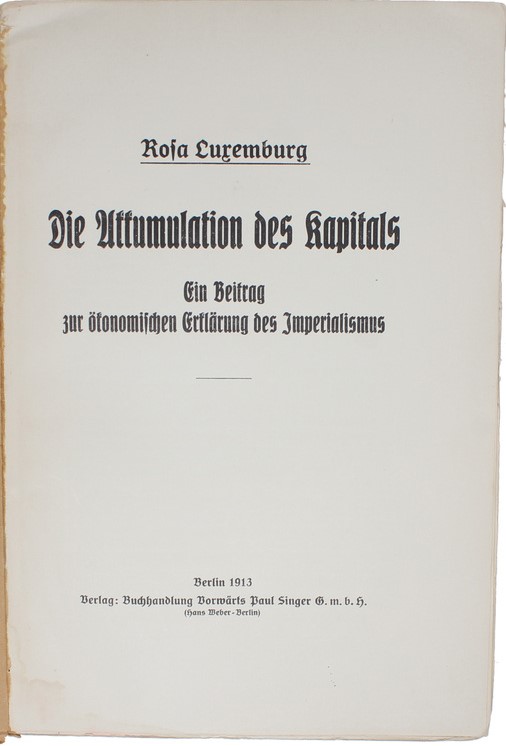
The Accumulation of Capital
Rosa Luxemburg · 1913
Ready when you are
Start chatting with Rosa Luxemburg now.
20 messages free · No credit card · Available in 50+ languages.