


Secondary sourcePainting
Memoriale medicorum
Petrus Rusticus
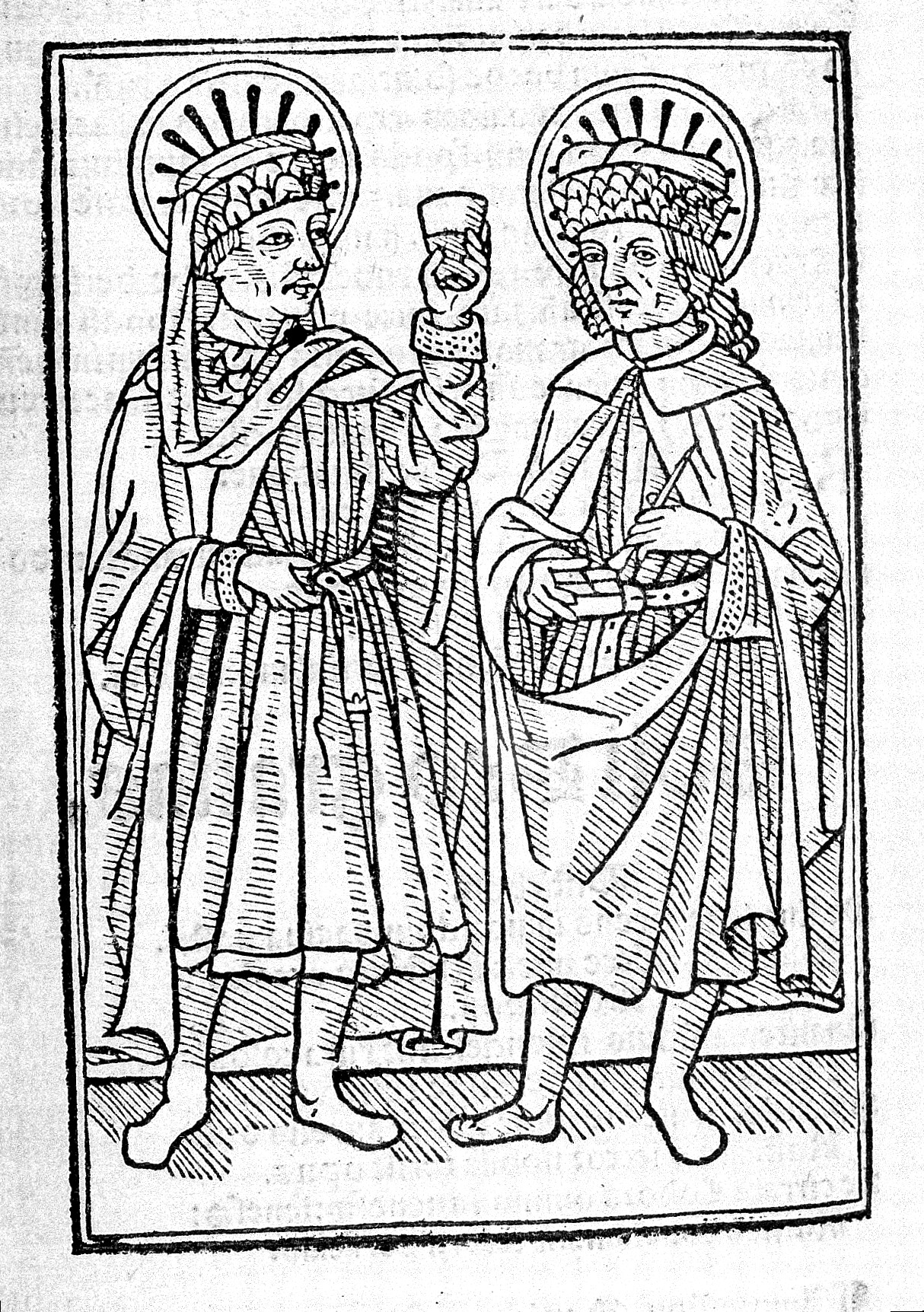
A Renaissance printed medical book showing Rhazes alongside Avicenna as two of the great canonical physicians.
Rhazes is depicted here as one of the two canonical medical authorities still honored in Renaissance medical printing.
About this source
What it is
This is a woodcut print from a Renaissance printed medical book called the Memoriale medicorum, made by Petrus Rusticus. It shows two bearded, haloed men in robes and hats, identified by keywords as Avicenna and Rhazes.
Why it matters
By the time of the Renaissance, European medicine still relied heavily on the works of Persian and Arab physicians like Rhazes and Avicenna, whose books had been translated into Latin centuries earlier. Printing them together like this, with haloes usually reserved for saints, shows how much authority these two scholars still held among European doctors long after their deaths.
Look closer
- Why might the printmaker have given these men haloes, a symbol usually used for religious figures?
- What do the objects they hold (a goblet, a book) suggest about their work?
- What does it tell us that European books still used Rhazes as a figure of authority so long after he lived?
This painting is part of the curated material that grounds the AI version of Al-Razi on Humy.ai — when students ask about related events, the AI can quote it and cite it.
More Al-Razi sources
Meet the AI Al-Razi →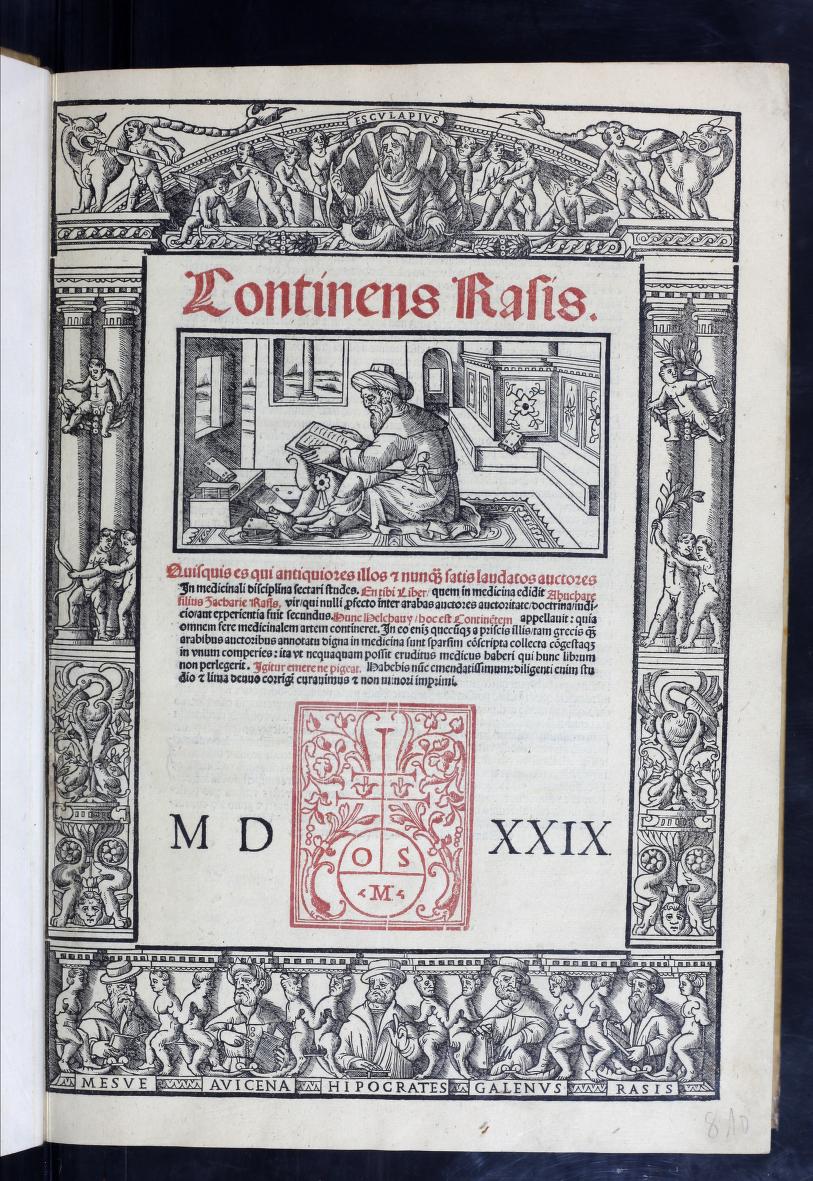 Book
Primary source
The Comprehensive Book on Medicine
Abu Bakr al-Razi · c. 900 (this edition: 1529)
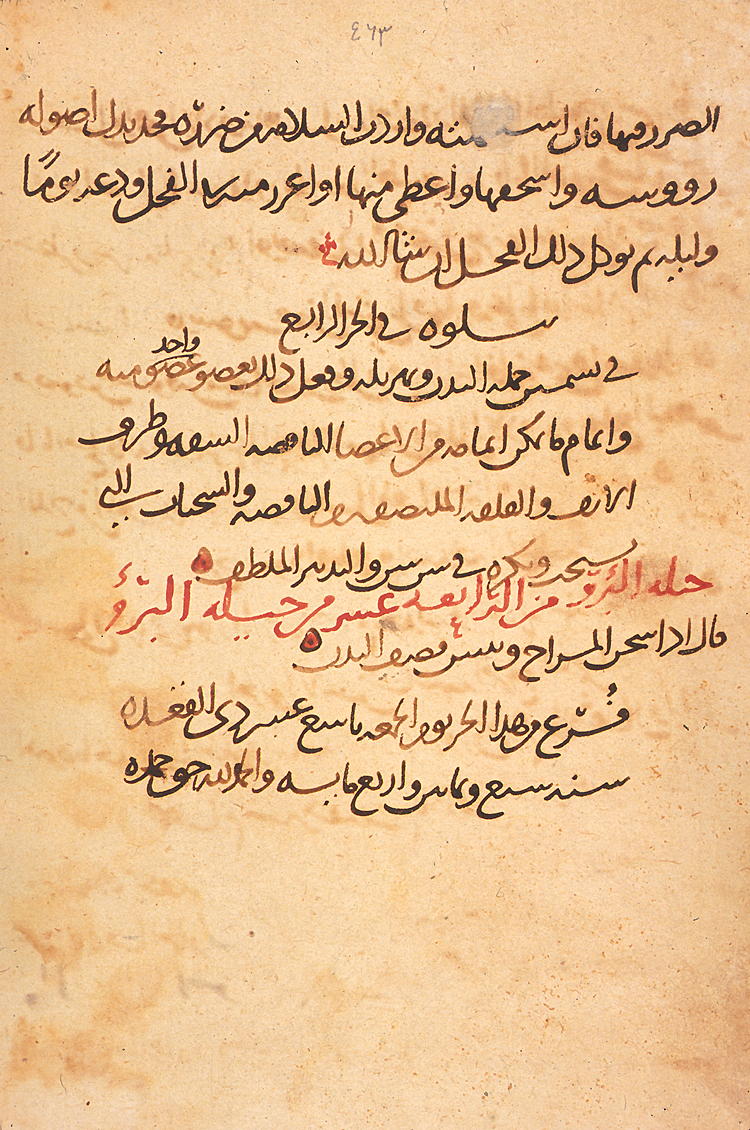 Document
Primary source
Rhazes NLM Manuscript Colophon
Unknown 10th century scribe · 30 November 1094
Primary source
The Spiritual Physick
Abu Bakr al-Razi · c. 900s
Primary source
The Philosophical Life
Abu Bakr al-Razi · c. 900s
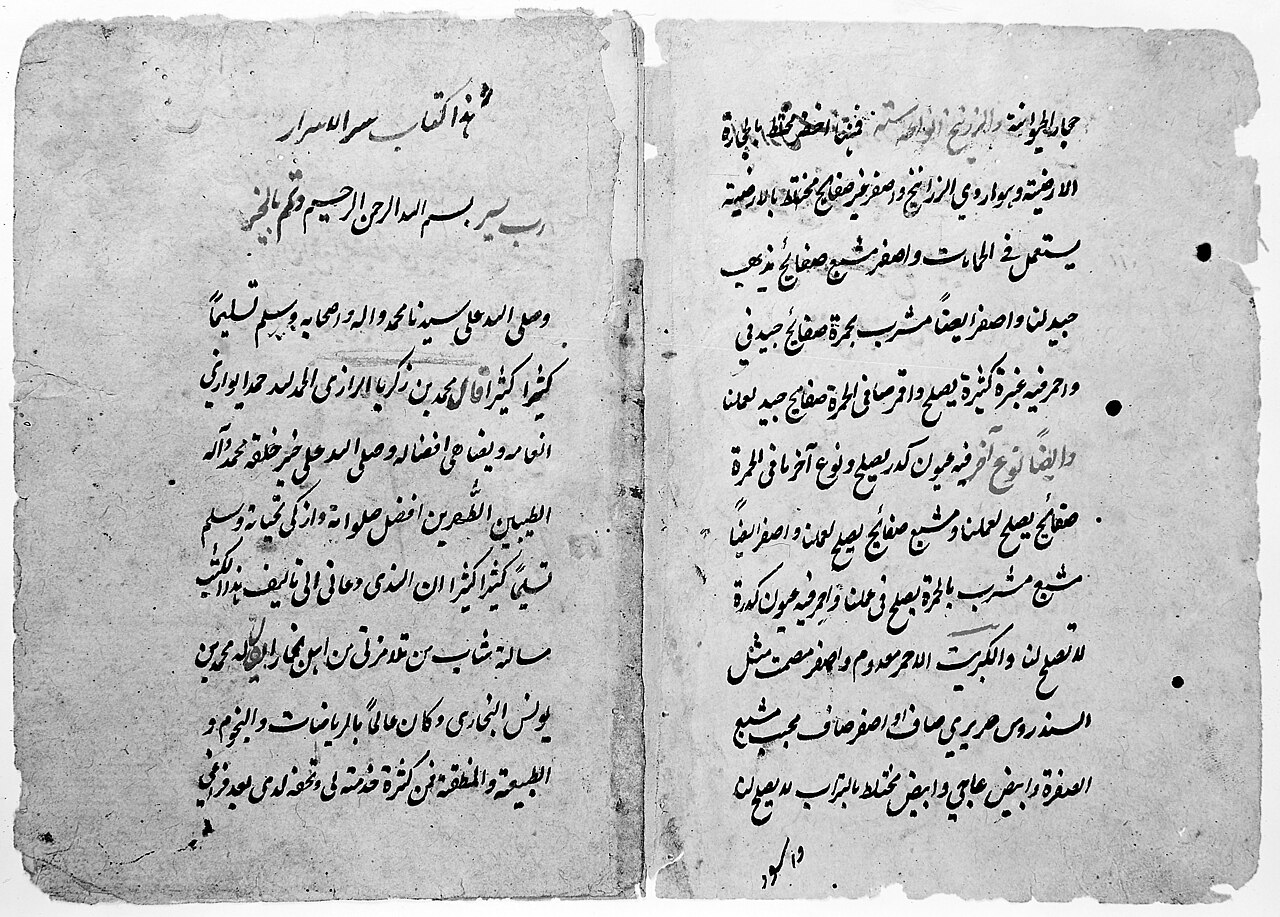 Book
Primary source
Arabic Manuscript on Alchemy by Razes
Abu Bakr al-Razi
Ready when you are
Start chatting with Al-Razi now.
20 messages free · No credit card · Available in 50+ languages.