


Primary sourceBookwritten 1671, published 1736
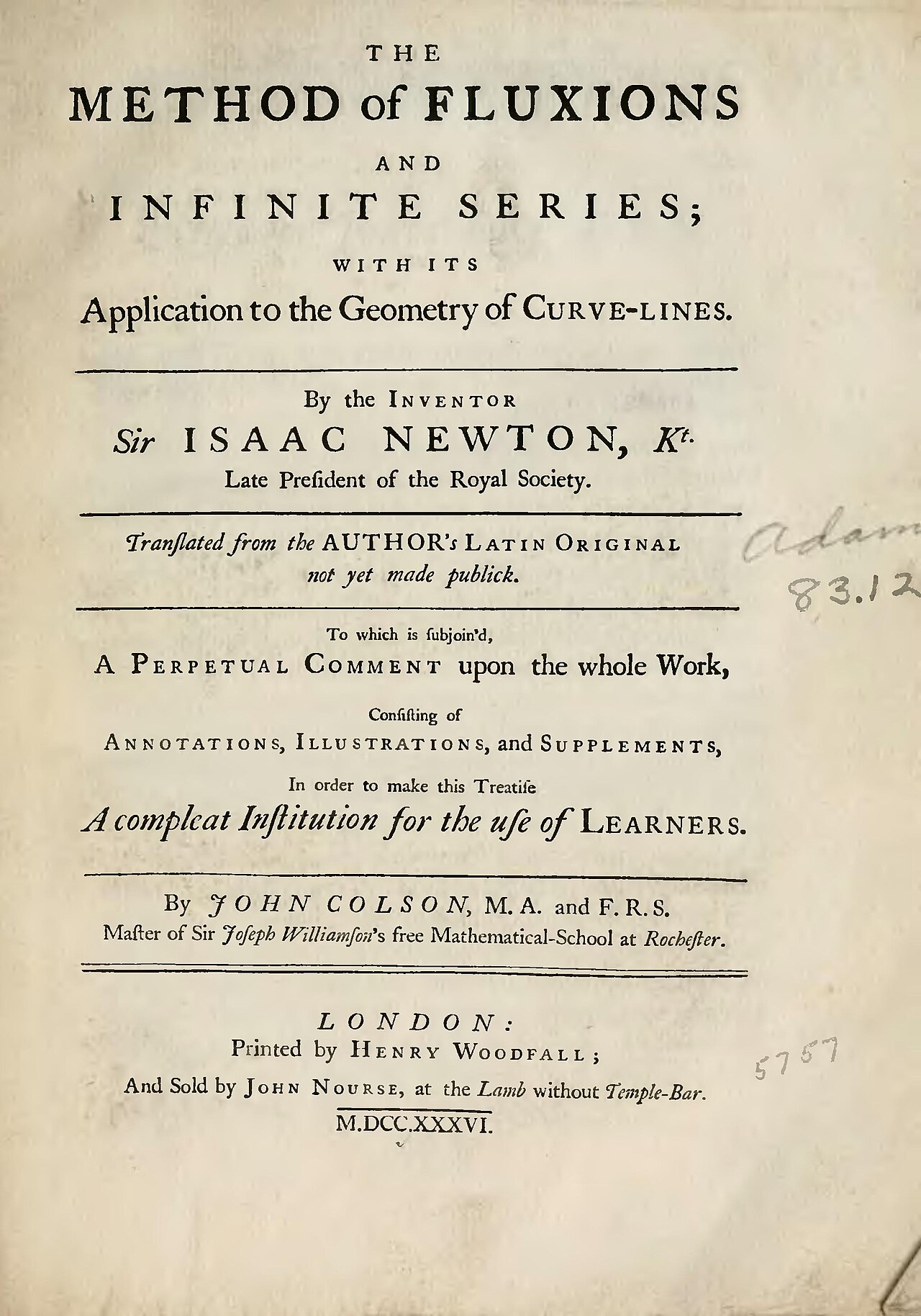
Method of Fluxions
Isaac Newton · written 1671, published 1736
Newton's treatise on his method of calculus, written in 1671 but not published until 1736, nine years after his death.
Newton's own early work on calculus, whose delayed publication fed his priority dispute with Leibniz.
About this source
What it is
This is Newton's Method of Fluxions (Latin: De Methodis Serierum et Fluxionum), completed in 1671 but only published posthumously in 1736. 'Fluxion' was Newton's term for what we now call a derivative. The edition shown here is an English translation with commentary by John Colson.
Why it matters
Newton developed this method of calculus at Woolsthorpe Manor during a period when Cambridge was closed because of plague, but he kept it hidden for years rather than publishing it. Meanwhile, Gottfried Leibniz developed his own version of calculus independently and published it first, in 1684. The long delay in Newton's publication helped fuel a bitter and lasting dispute between Newton and Leibniz over who truly deserved credit for inventing calculus.
Look closer
- Why might Newton have chosen to keep this work unpublished for so long?
- What problems can arise when two people discover something important at around the same time?
- How does the delay in publishing this book help explain the rivalry between Newton and Leibniz?
This book is part of the curated material that grounds the AI version of Isaac Newton on Humy.ai — when students ask about related events, the AI can quote it and cite it.
More Isaac Newton sources
Meet the AI Isaac Newton →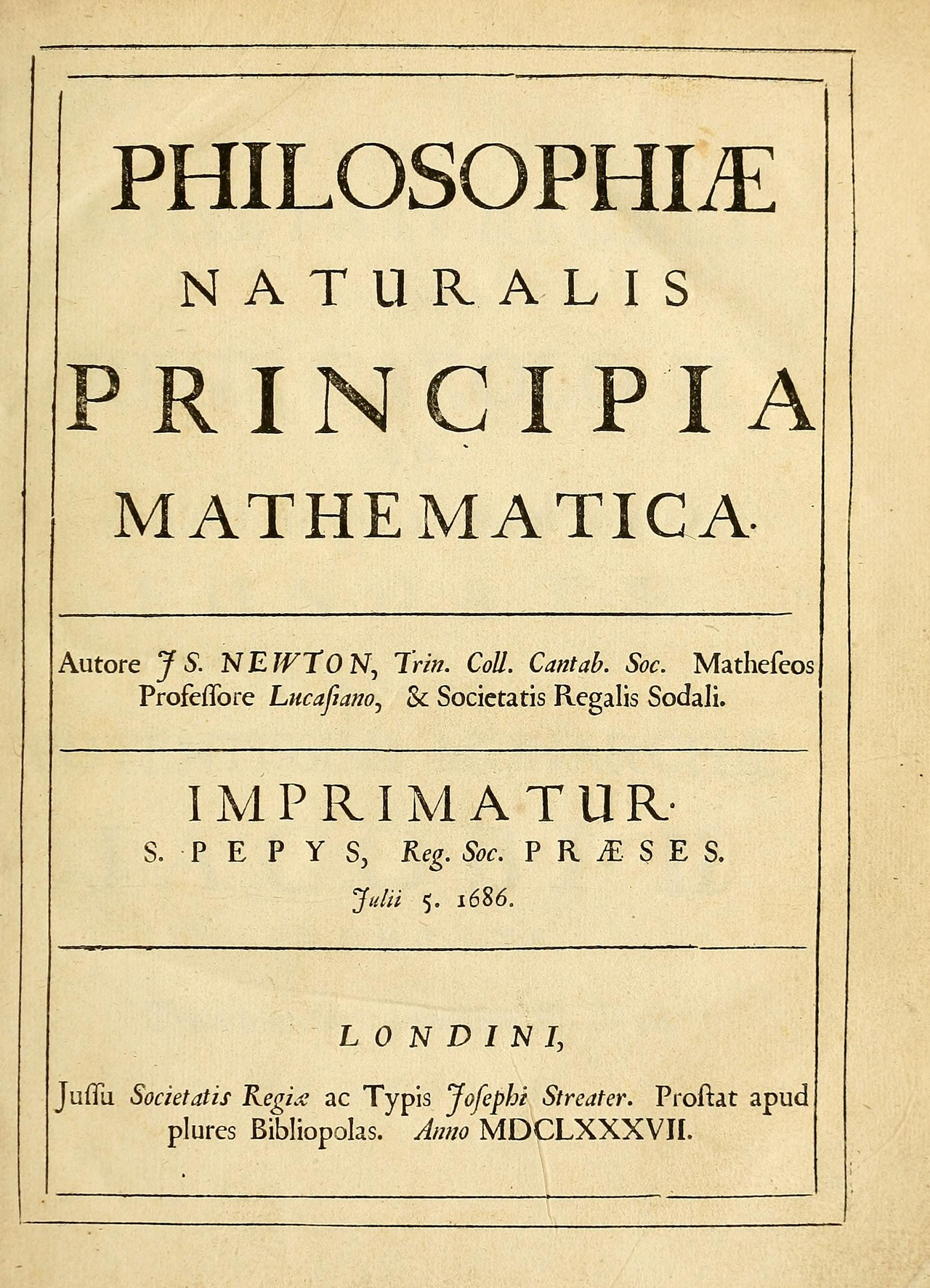 Book
Primary source
Philosophiæ Naturalis Principia Mathematica
Isaac Newton · 1687
 Book
Primary source
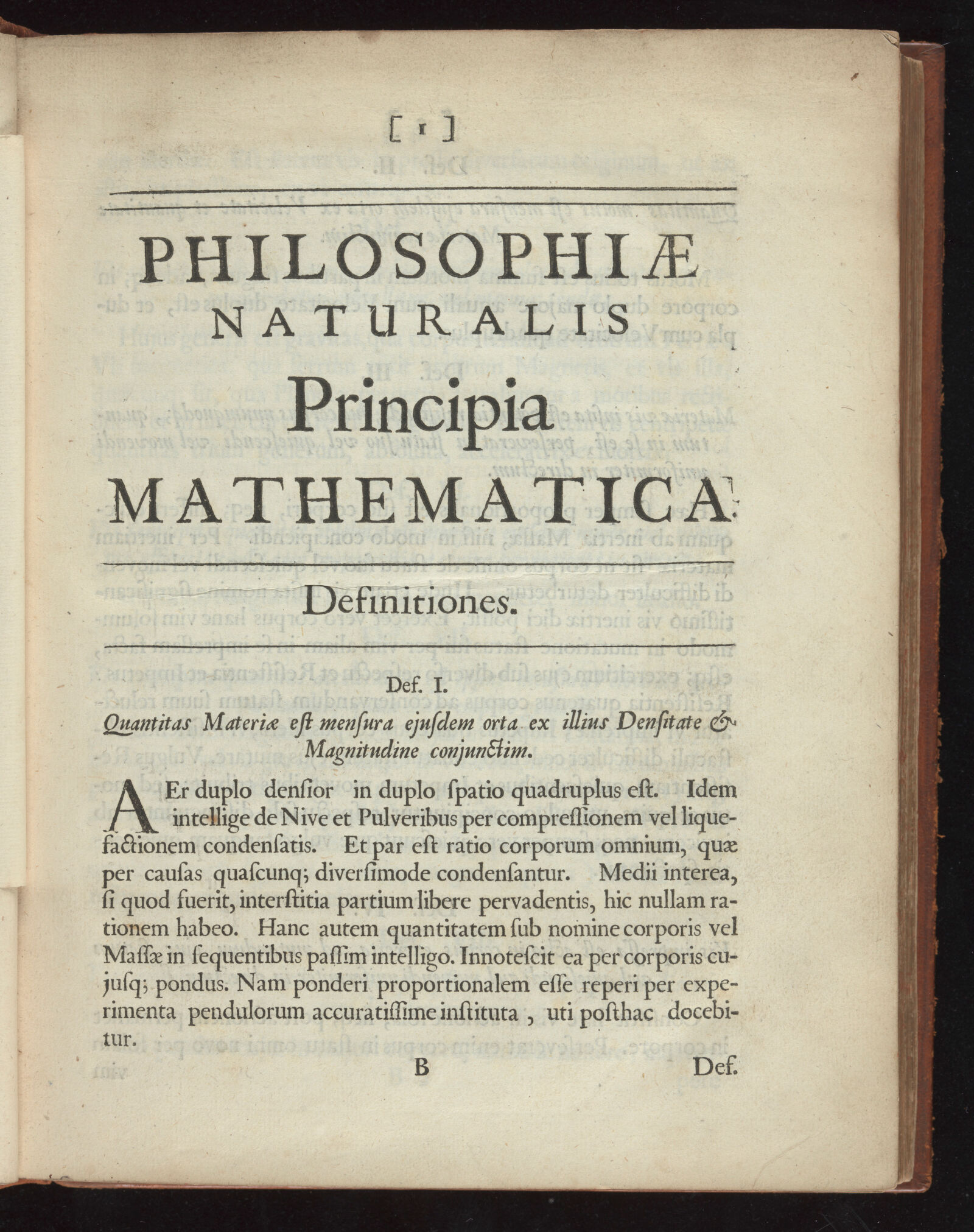
Principia Mathematica, Page 1: Definitions
Isaac Newton · 1687
 Painting
Primary source
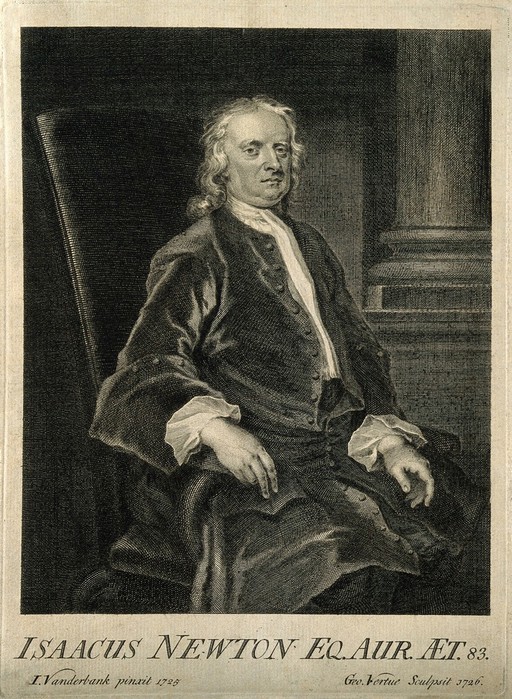
Sir Isaac Newton, line engraving by Vertue, 1726
George Vertue · 1726
 Document
Primary source
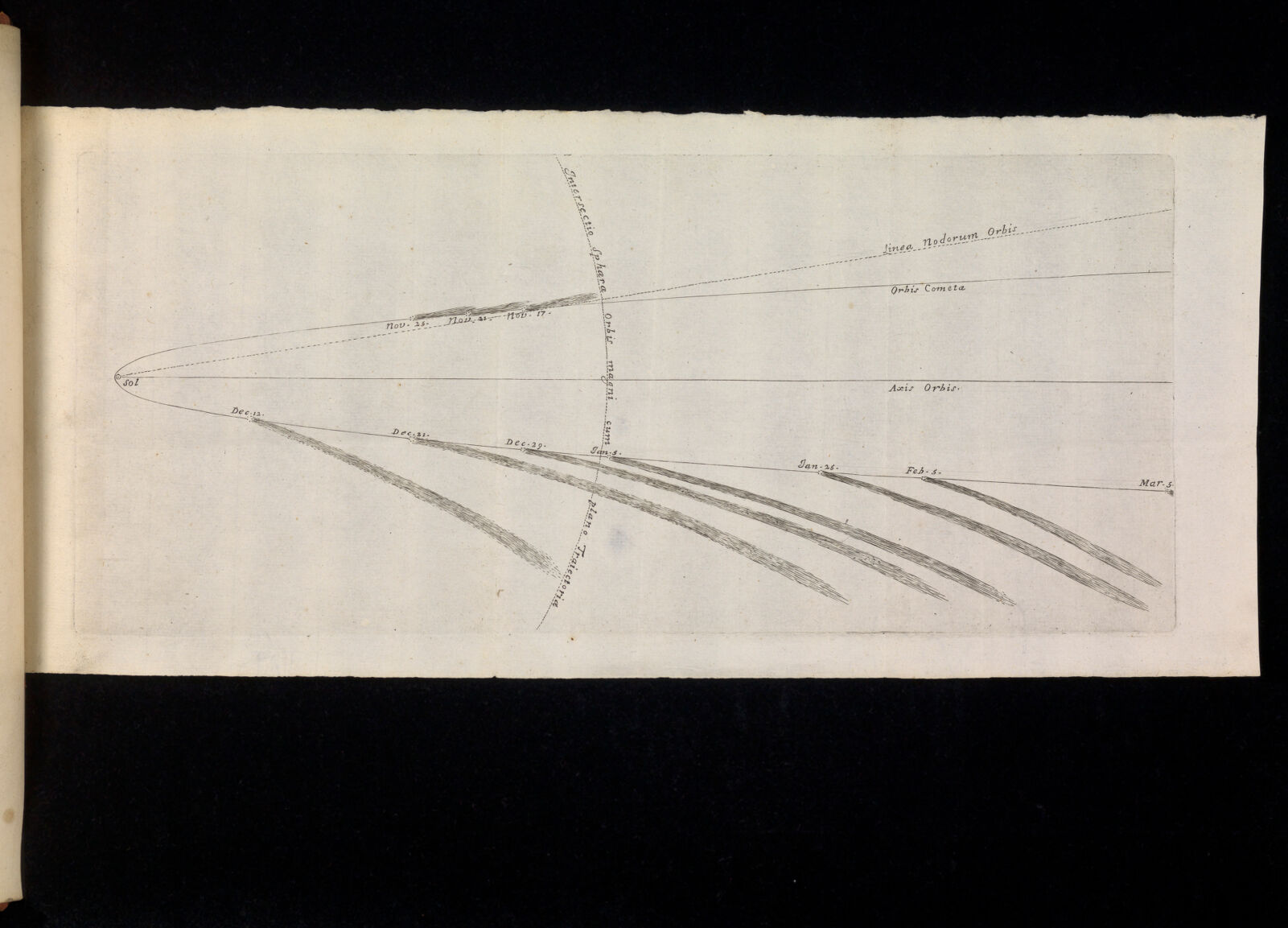
Principia Mathematica, Fold-out Diagram
Isaac Newton · 1687
 Painting
Primary source
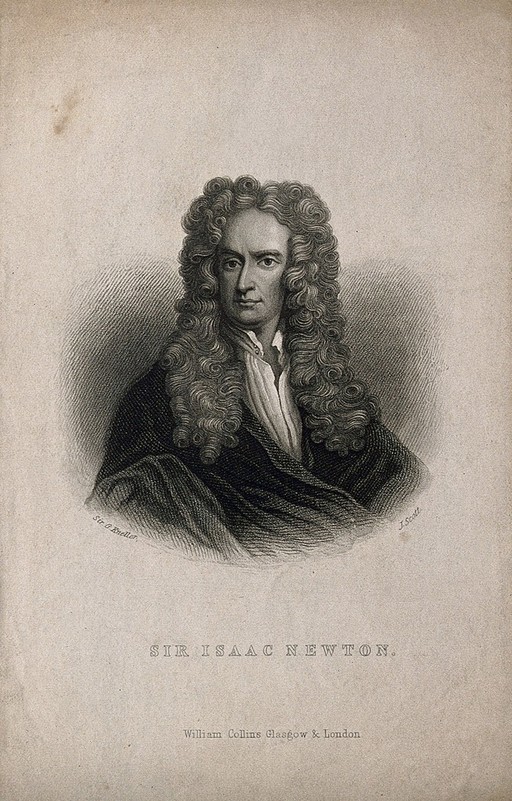
Sir Isaac Newton, stipple engraving by J. Scott after Kneller, 1702
J. Scott, after Sir Godfrey Kneller · 1702 (print made later)
Ready when you are
Start chatting with Isaac Newton now.
20 messages free · No credit card · Available in 50+ languages.