


Secondary sourcePainting1701 (catalogue date; the caption refers to 1792 and 1794, so this may be an error)
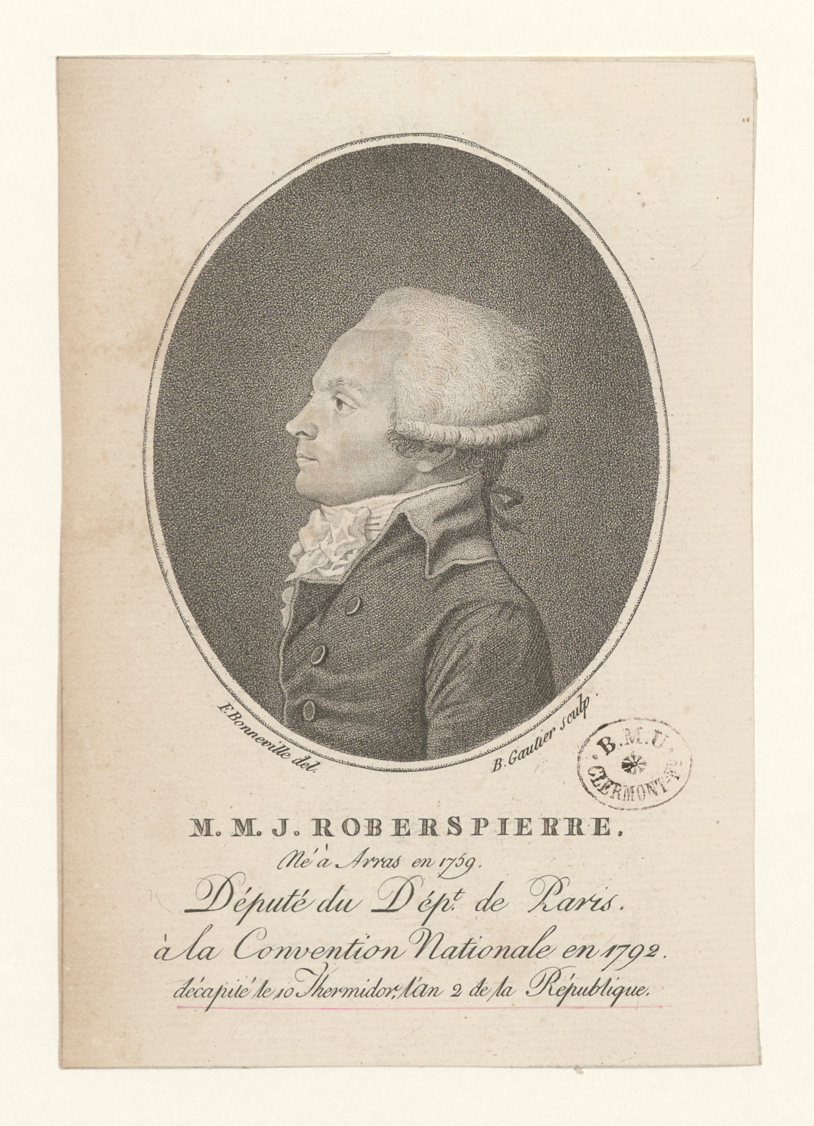
M.M.J. Robespierre engraved portrait
François Bonneville · 1701 (catalogue date; the caption refers to 1792 and 1794, so this may be an error)
An engraved oval portrait of Robespierre in profile, with a French caption giving his birth, his 1792 election to the Convention and his execution. It shows how his image was circulated after his death.
Shows how Robespierre was publicly remembered, with a caption summarising his career and execution.
About this source
What it is
This is an engraved portrait of Maximilien Robespierre in profile, facing left, inside an oval frame. The printed French caption says he was born at Arras in 1759, was a deputy to the National Convention in 1792, and was beheaded on 10 Thermidor, year 2 of the Republic. The artist credits are Bonneville (designer) and Gaultier (engraver). The catalogue names François Bonneville as the creator. The copy is held in the Boyer collection and carries a library stamp reading B.M.U. Clermont. The catalogue date of 1701 does not fit the caption, which describes events of 1792 and 1794, so the date should be checked.
Why it matters
Prints like this spread the faces of revolutionary leaders across France. The caption turns a career into a short summary and ends with his execution. Readers of the time could buy or display such portraits, so the image helped shape how the public remembered him.
Look closer
- What does the caption choose to tell viewers about Robespierre, and what does it leave out?
- Why might an engraver show a man in profile inside an oval frame?
- Who would have bought or displayed a print like this, and why?
This painting is part of the curated material that grounds the AI version of Maximilien Robespierre on Humy.ai — when students ask about related events, the AI can quote it and cite it.
More Maximilien Robespierre sources
Meet the AI Maximilien Robespierre →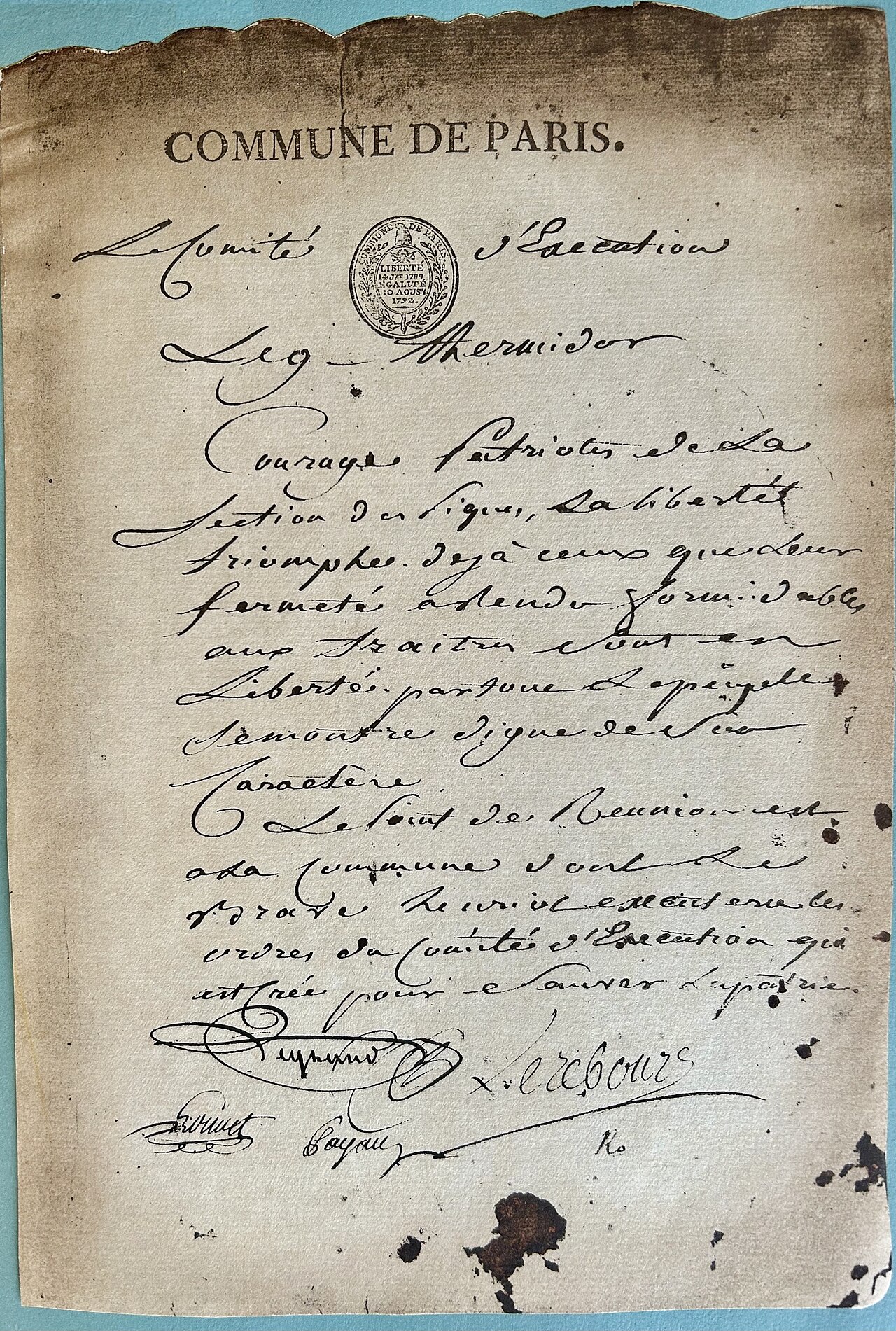 Document
Primary source
Appeal of the Commune to the Section des Piques, 9 Thermidor
Louvet, Payan, Lerebourgs, Legrand, Robespierre · 27 July 1794 (9 Thermidor Year II)
Primary source
Speech on the Trial of the King
Maximilien Robespierre · 3 December 1792
 Painting
Primary source
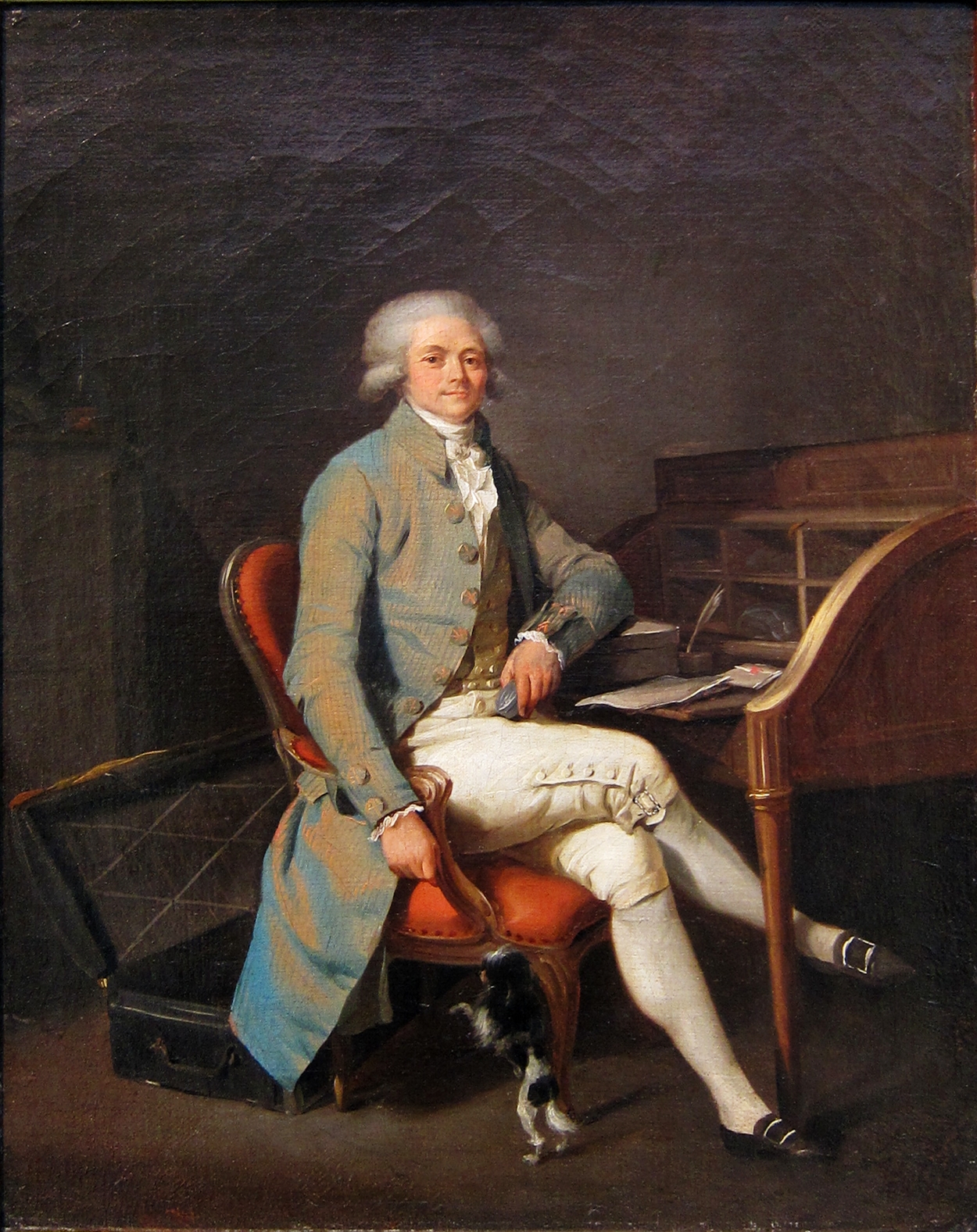
Portrait of Maximilien de Robespierre
Louis-Léopold Boilly · 1791
 Sculpture
Primary source
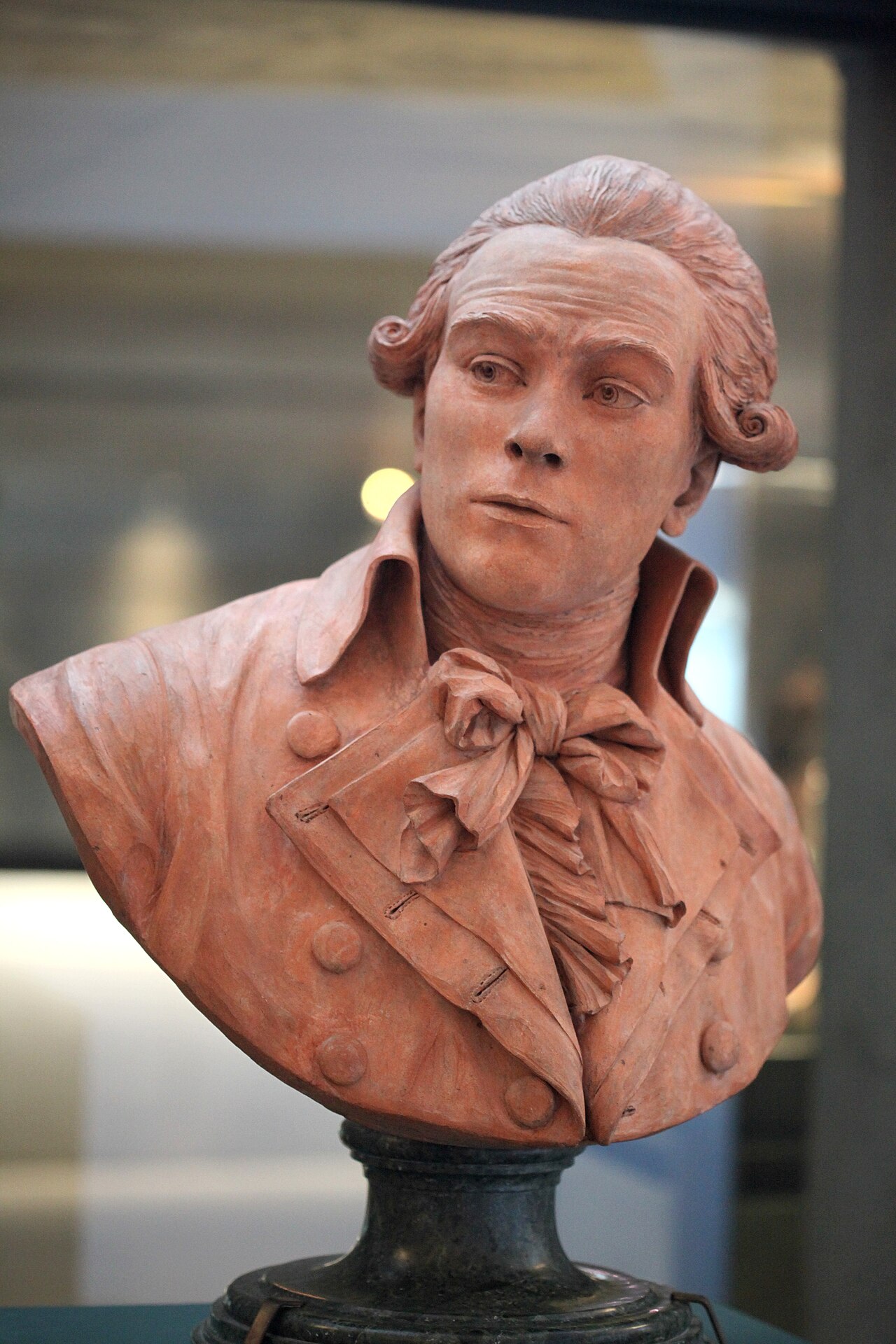
Bust of Robespierre
Claude-André Deseine · 1791
Primary source
Report on Religious and Moral Ideas and National Festivals (18 Floréal)
Maximilien Robespierre · 7 May 1794 (18 Floréal Year II)
Ready when you are
Start chatting with Maximilien Robespierre now.
20 messages free · No credit card · Available in 50+ languages.