


Primary sourcePaintingc. 1630
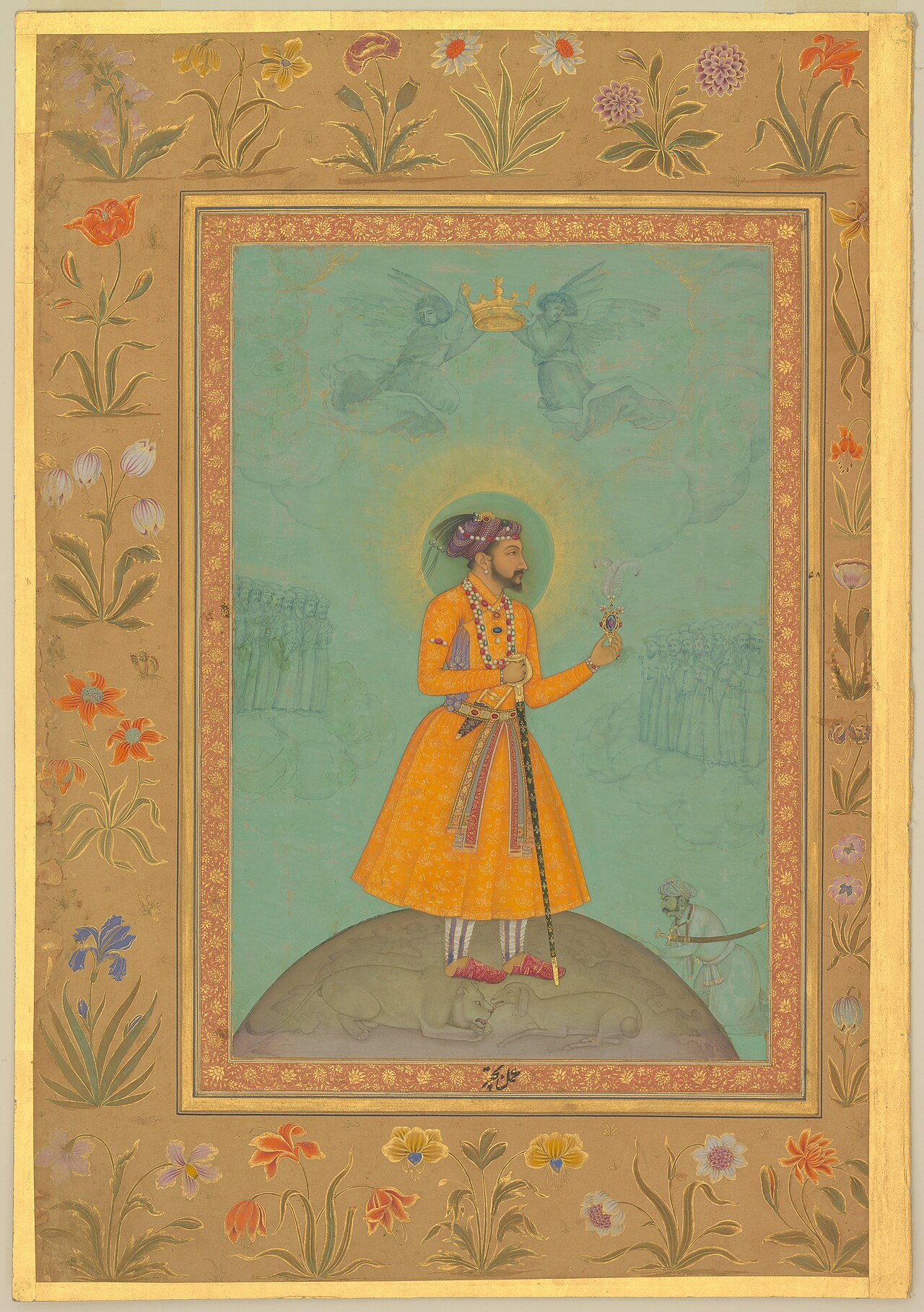
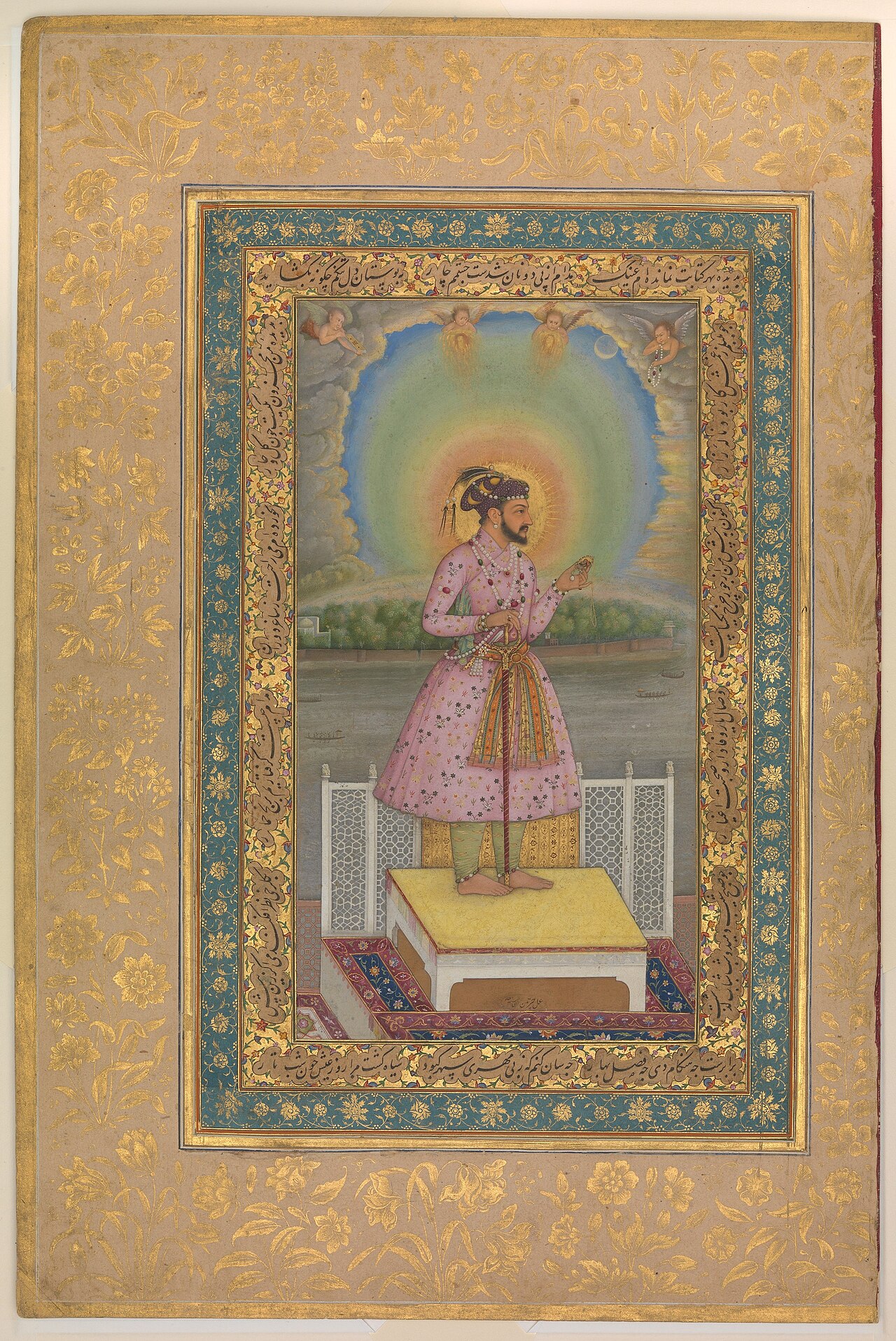
Mughal Emperor Shah Jahan standing on a globe
Bichitr · c. 1630
An allegorical miniature painting by Bichitr showing Shah Jahan standing atop the world, a claim to universal kingship.
This allegorical portrait depicts Shah Jahan himself, presenting him as a ruler of universal, almost divine authority.
About this source
What it is
This miniature painting from around 1630 was made by the court artist Bichitr. It shows Shah Jahan standing on a globe, holding a jeweled object and a sword, with a halo behind him and two angels holding a crown above his head. It is now held in the Chester Beatty Library, part of the Minto Album.
Why it matters
Court painters produced images like this to present the emperor's authority in symbolic terms rather than as a simple likeness. Standing on the globe and wearing a halo, Shah Jahan is shown as a ruler whose power extends over the whole world, a common theme in Mughal imperial art meant to project majesty and divine favor.
Look closer
- What symbols in the painting (the halo, the globe, the crown, the lion and lamb) suggest ideas about the emperor's power?
- Why would a ruler want to be shown this way rather than in an ordinary scene?
- What does this painting tell us about the artist's skill versus the emperor's actual power at the time?
This painting is part of the curated material that grounds the AI version of Shah Jahan on Humy.ai — when students ask about related events, the AI can quote it and cite it.
More Shah Jahan sources
Browse all 99 →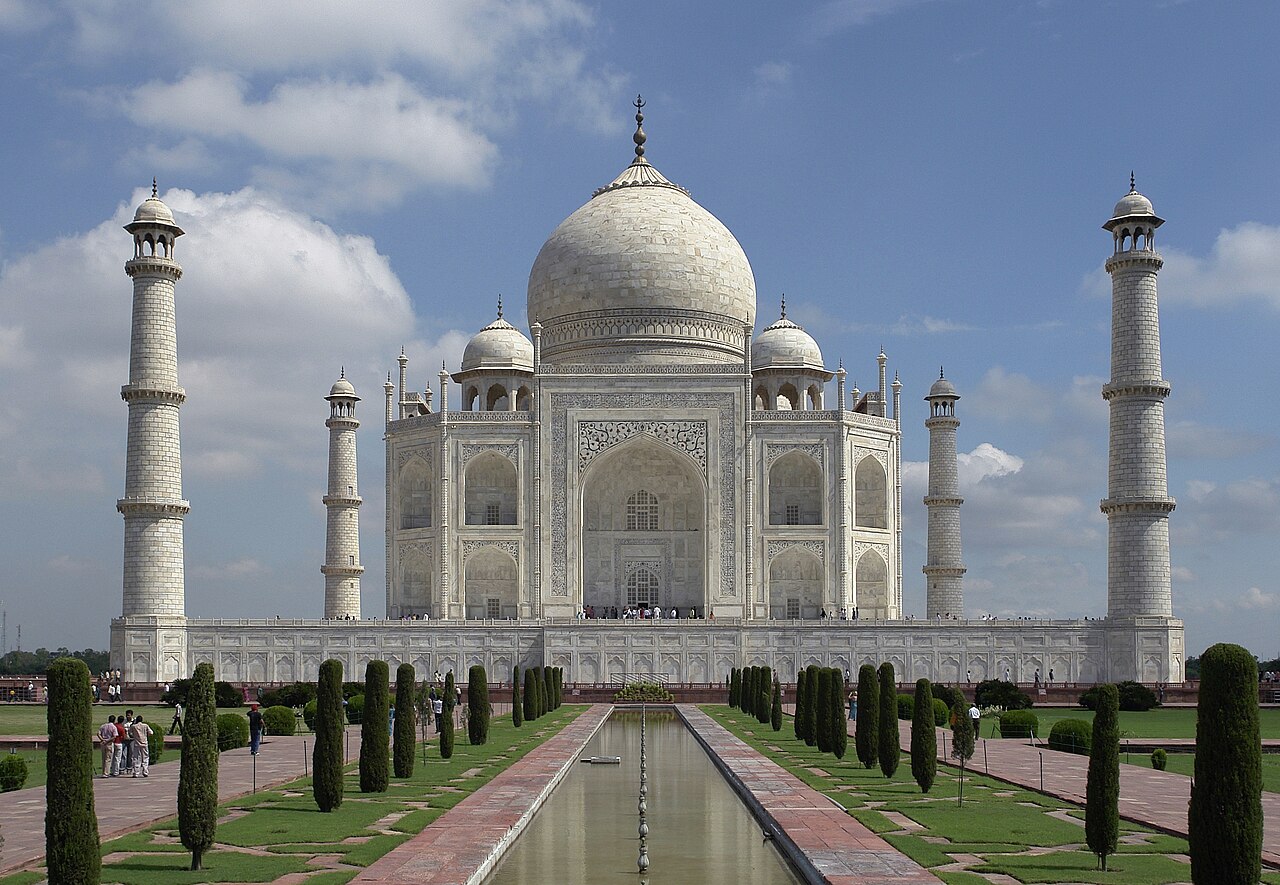 Artifact
Primary source
Taj Mahal
Ustad Ahmad Lahori · 1631-1653
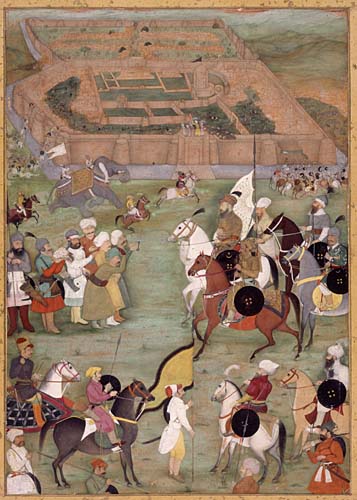 Book
Primary source
Padshahnama
Abdul Hamid Lahori · 1630-1657
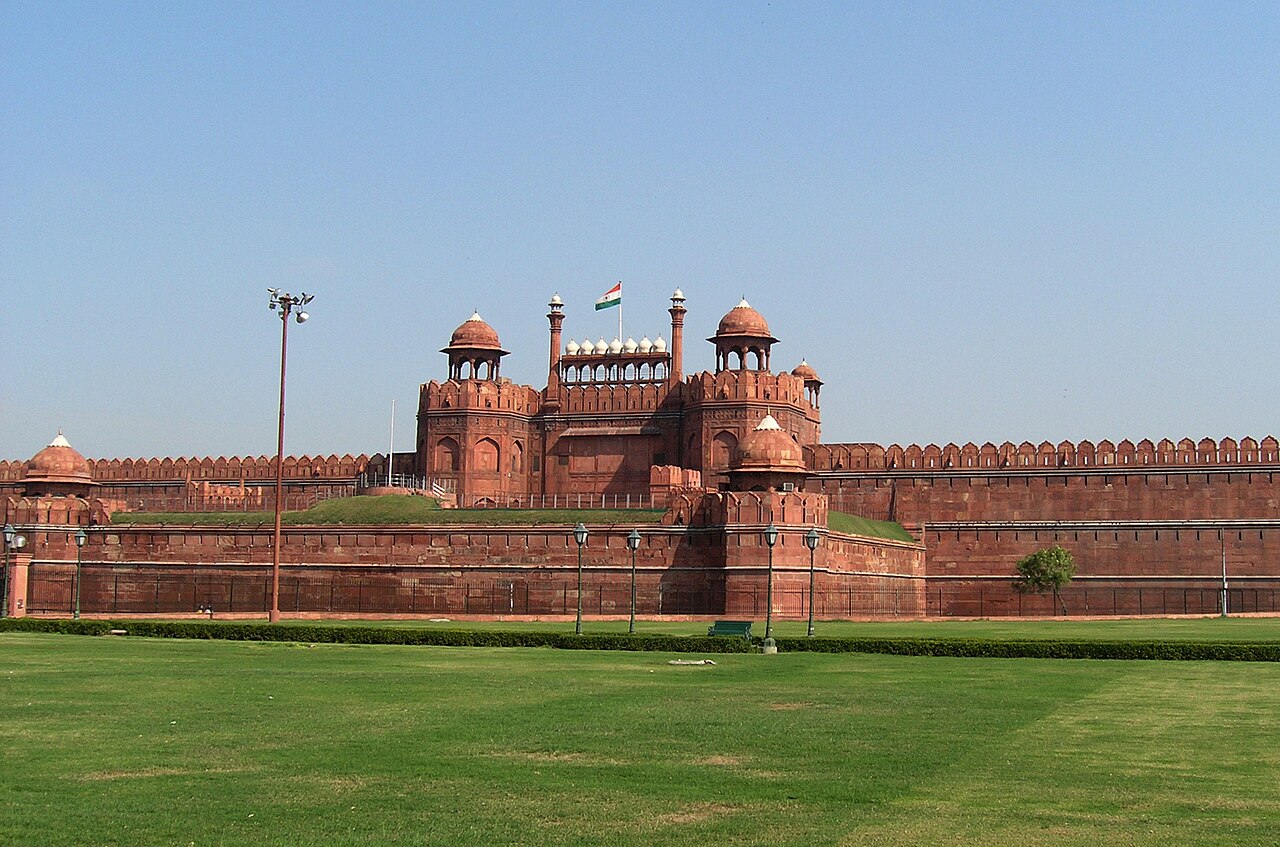 Artifact
Primary source
Red Fort
Ustad Ahmad Lahori · 1638-1648
 Painting
Primary source
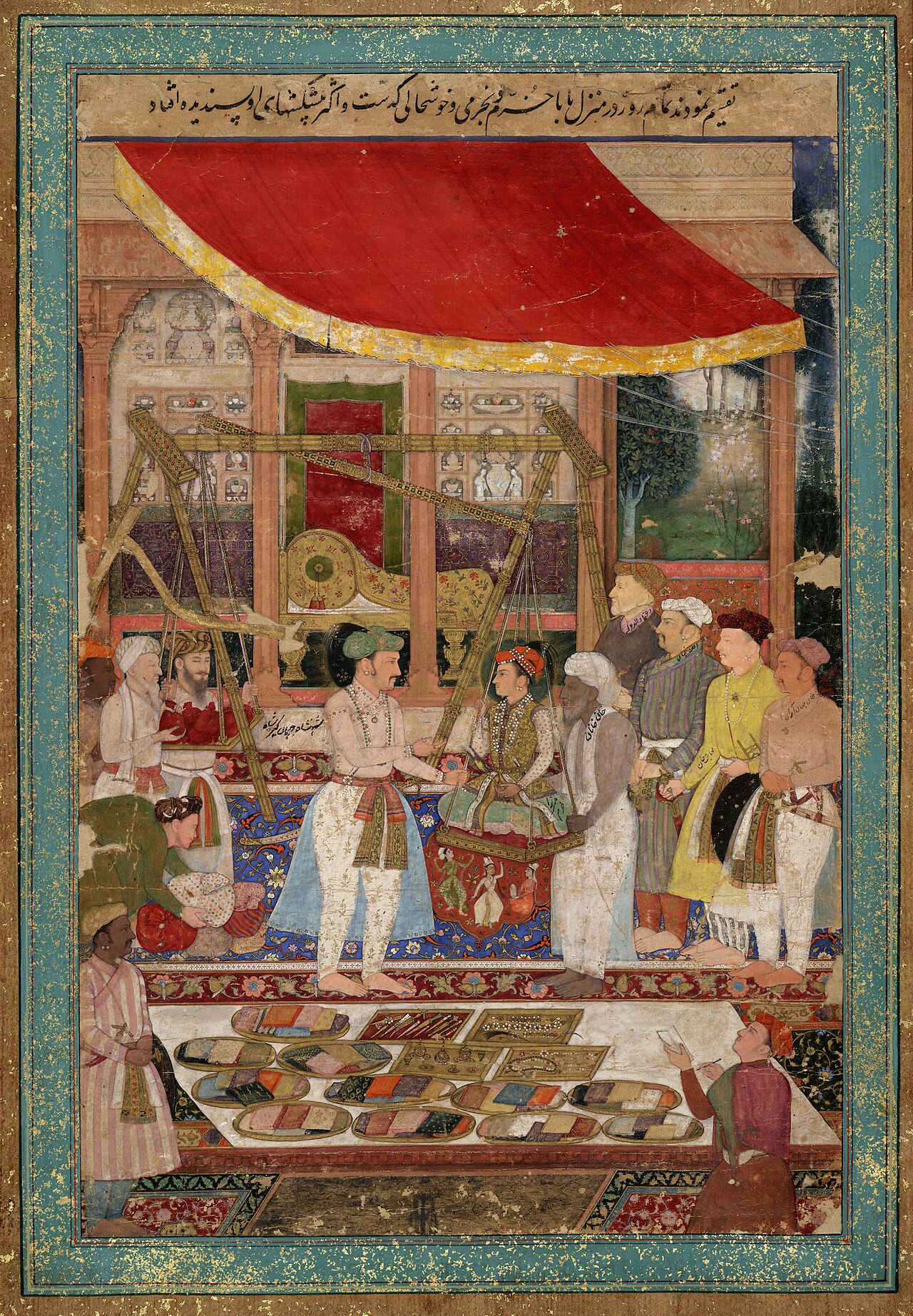
Jahangir Weighing Prince Khurram Against Gold and Silver
Manohar Das · c. 1610-1615
Free account
Read every Shah Jahan source
Sign up free →
Ready when you are
Start chatting with Shah Jahan now.
20 messages free · No credit card · Available in 50+ languages.