


Primary sourceDocument12 April 1814
Napoleon's Abdication at Fontainebleau
Napoleon Bonaparte · 12 April 1814
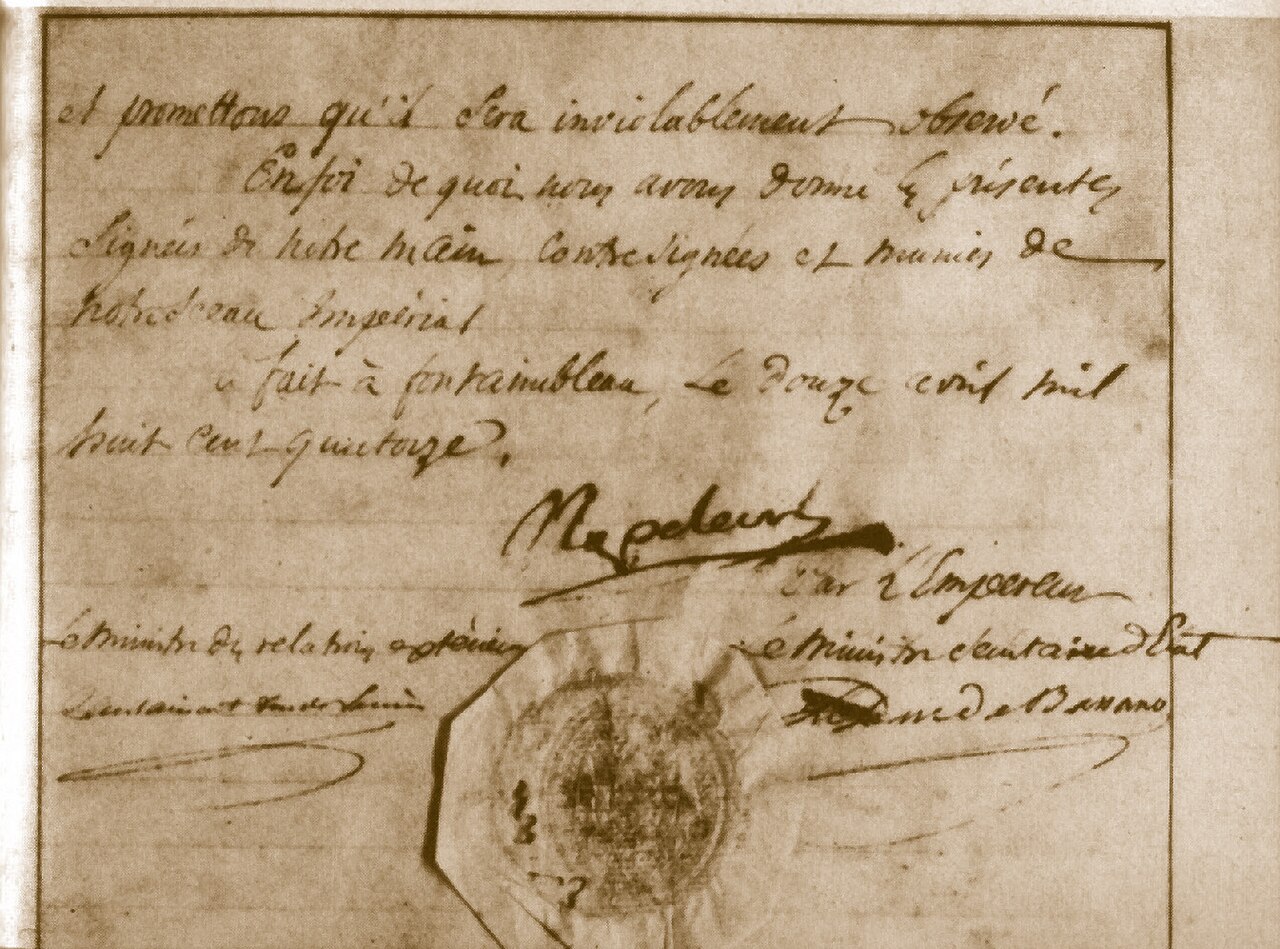
The signed document in which Napoleon abdicated his throne at Fontainebleau in April 1814, marking the fall of his empire.
Napoleon personally signed this document, formally abdicating his throne and ending his first reign.
About this source
What it is
This is a handwritten French document signed by Napoleon, with a red wax seal and the countersignature of the Duc de Bassano, dated 12 April 1814 at Fontainebleau. The image shown is a sepia-toned photograph of the original document, processed digitally to give it its colour.
Why it matters
This is the paper by which Napoleon gave up his throne after Allied armies captured Paris. It shows the end of his first reign and the collapse of the empire he had built, and reveals how even an emperor's power could be undone by military defeat.
Look closer
- What do the signature and seal tell you about how official documents were authenticated at the time?
- Why might Napoleon have needed to sign such a formal, solemn-looking document rather than simply stepping down quietly?
- What does this document NOT tell you about how Napoleon felt about losing his throne?
This document is part of the curated material that grounds the AI version of Napoleon Bonaparte on Humy.ai — when students ask about related events, the AI can quote it and cite it.
More Napoleon Bonaparte sources
Meet the AI Napoleon Bonaparte → Painting
Primary source
Bonaparte au Pont d'Arcole
Antoine-Jean Gros · 1796
 Painting
Primary source
Napoleon Bonaparte, Stipple Portrait after Bacler d'Albe
Louis Albert Guislain Bacler d'Albe · c. 1800
 Painting
Primary source
Napoleon Crossing the Alps (Bonaparte franchissant le Grand-Saint-Bernard)
Jacques-Louis David · 1801
 Painting
Primary source
Bonaparte Visiting the Plague-Stricken at Jaffa
Antoine-Jean Gros · 1804
 Document
Primary source
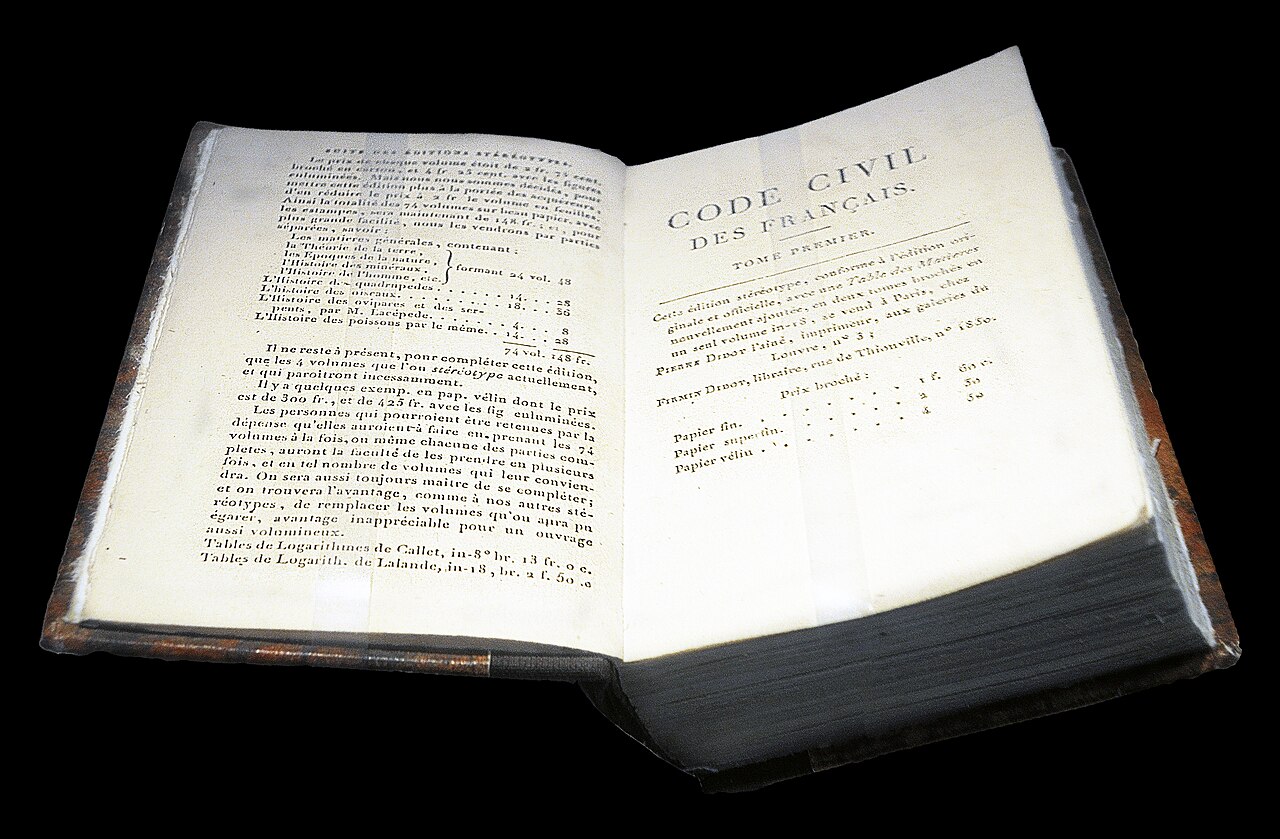
Civil Code of the French
1804
Ready when you are
Start chatting with Napoleon Bonaparte now.
20 messages free · No credit card · Available in 50+ languages.