


Primary sourceBook1620
Novum Organum
Francis Bacon · 1620
Bacon's major Latin treatise of 1620 setting out a new method of inductive reasoning to replace Aristotelian logic.
Bacon's own philosophical masterwork, the foundation of his reputation as father of empiricism.
About this source
What it is
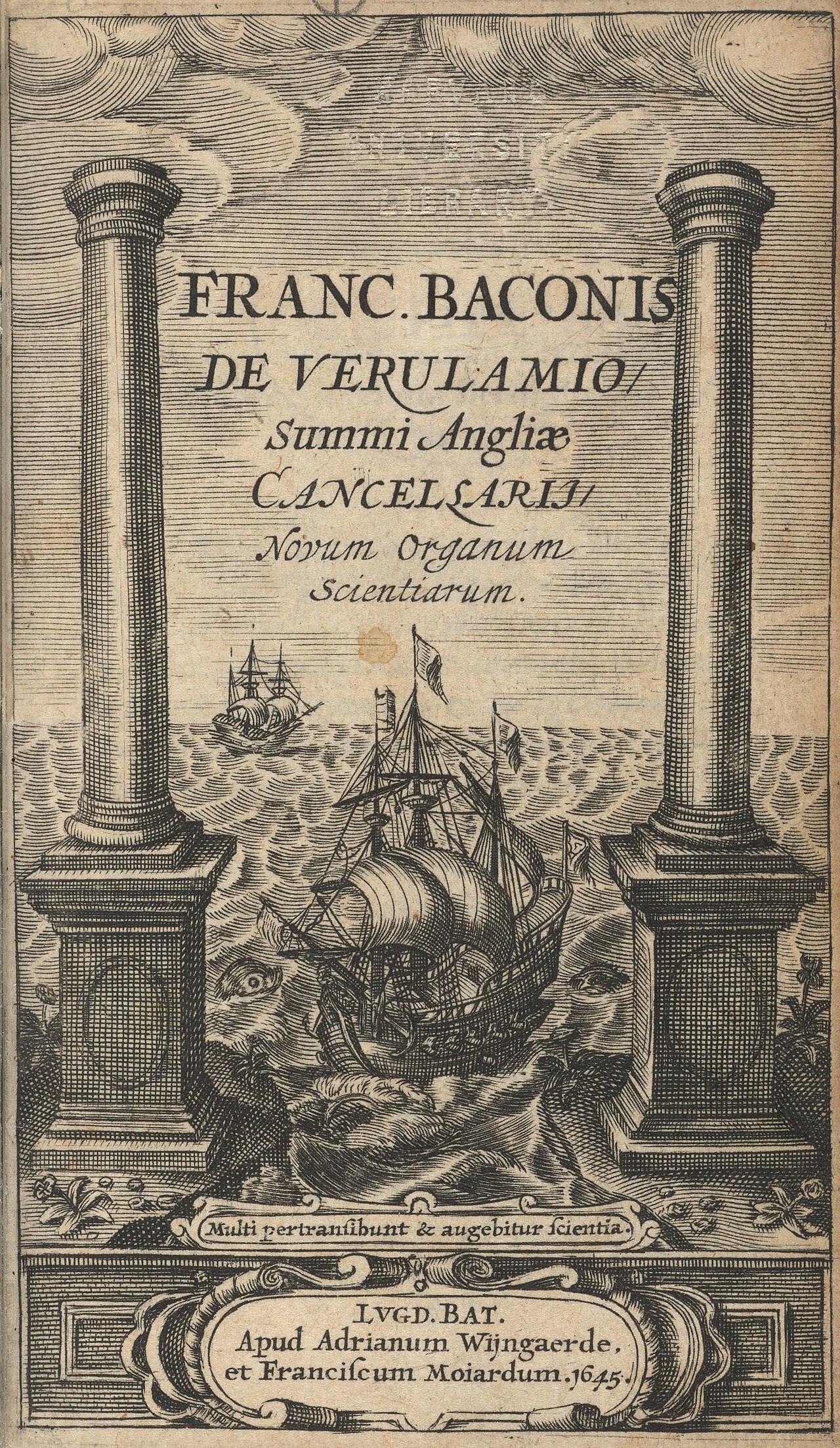
Novum Organum is a philosophical work written in Latin by Francis Bacon and published in 1620. It formed Part II of his larger plan, the Instauratio Magna. The title page shows a ship sailing between the mythical Pillars of Hercules, with a Latin motto meaning 'Many will travel and knowledge will be increased.'
Why it matters
In this book Bacon rejected old methods of reasoning by pure logic and argued that knowledge should be built up carefully from observation and experiment. This approach, later called the Baconian method, helped shape what became the modern scientific method, and it is why Bacon is often called a father of experimental philosophy.
Look closer
- What does the image on the title page suggest about Bacon's hopes for science?
- Why might writing in Latin rather than English have mattered in 1620?
- What does Bacon think is wrong with the old way of seeking knowledge?
This book is part of the curated material that grounds the AI version of Francis Bacon on Humy.ai — when students ask about related events, the AI can quote it and cite it.
More Francis Bacon sources
Meet the AI Francis Bacon →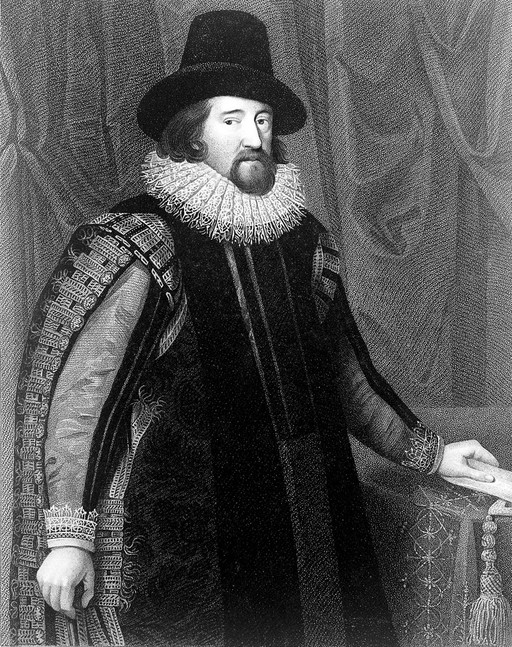 Painting
Secondary source
Portrait Engraving of Francis Bacon, Proof Impression
 Book
Primary source
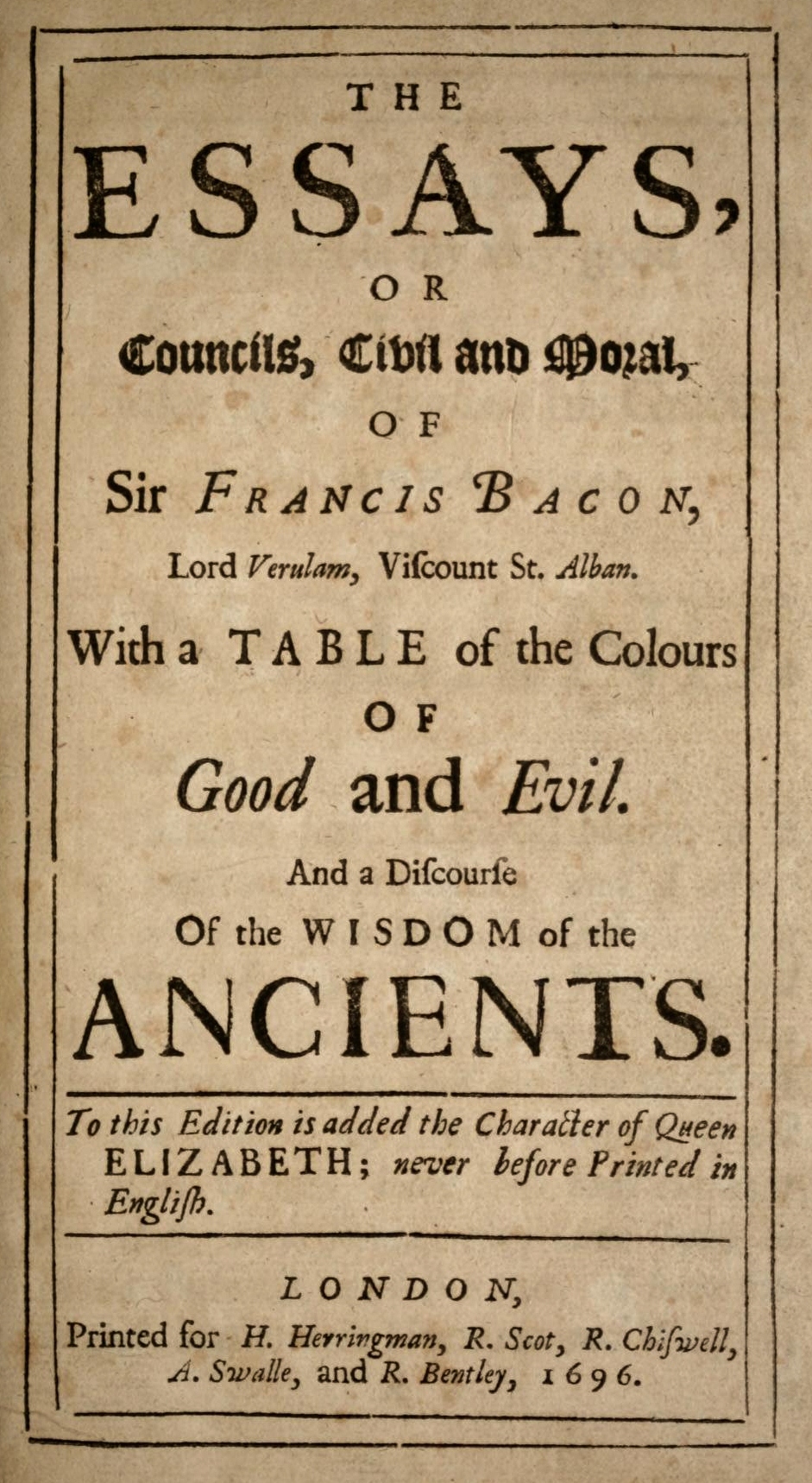
Essays
Francis Bacon · 1597
 Painting
Secondary source
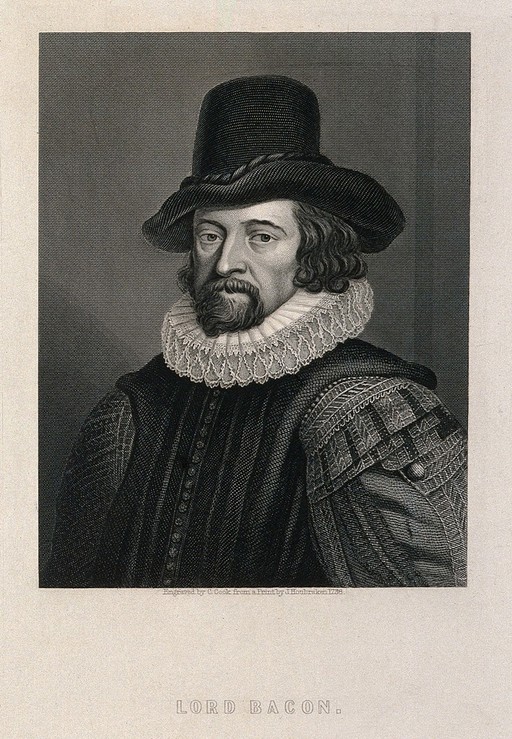
Francis Bacon, Engraving by C. Cook after Houbraken
C. Cook after Jacobus Houbraken · 1738
 Book
Primary source
New Atlantis
Francis Bacon · 1627
 Book
Primary source
The Advancement of Learning
Francis Bacon · 1605
Ready when you are
Start chatting with Francis Bacon now.
20 messages free · No credit card · Available in 50+ languages.