


Primary sourceBook1751 (published 1755)
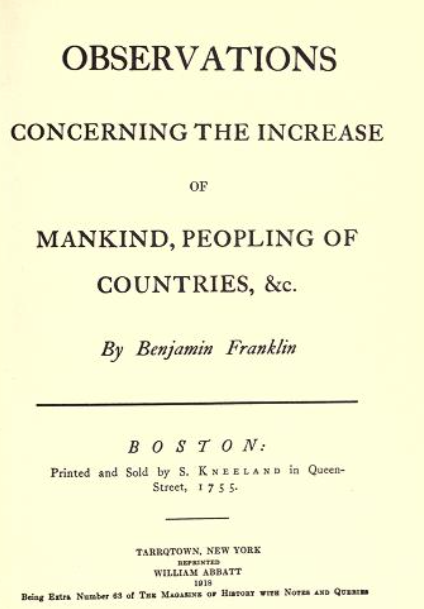
Observations Concerning the Increase of Mankind, Peopling of Countries, etc.
Benjamin Franklin · 1751 (published 1755)
Franklin's 1751 essay predicting rapid growth of the American colonial population, later published in 1755, including controversial remarks about German immigrants.
Franklin wrote this essay himself, revealing both his demographic insight and his era's prejudices.
About this source
What it is
Benjamin Franklin wrote this short essay in 1751 and circulated it among friends; it was published as an addendum to a Boston pamphlet in 1755 and reprinted many times afterward.
Why it matters
Franklin argued that the American colonies' population would double roughly every 25 years, far faster than in crowded Europe, because land and opportunity were more available. The essay influenced major thinkers including Adam Smith, Thomas Malthus, and later, through Malthus, Charles Darwin. It also argued that slavery was less productive than free labor. However, its final paragraphs express alarm at German immigration to Pennsylvania, worrying that German settlers would not adopt English language and customs — language later criticized as xenophobic. The essay shows both Franklin's skill as an early social scientist and the prejudices common in his time.
Look closer
- What evidence did Franklin use to make his population predictions, and how accurate were they later shown to be?
- Why might Franklin's economic arguments against slavery and his comments about German immigrants seem to pull in different directions?
- How should historians treat a source that mixes genuine insight with prejudiced views?
This book is part of the curated material that grounds the AI version of Benjamin Franklin on Humy.ai — when students ask about related events, the AI can quote it and cite it.
More Benjamin Franklin sources
Meet the AI Benjamin Franklin →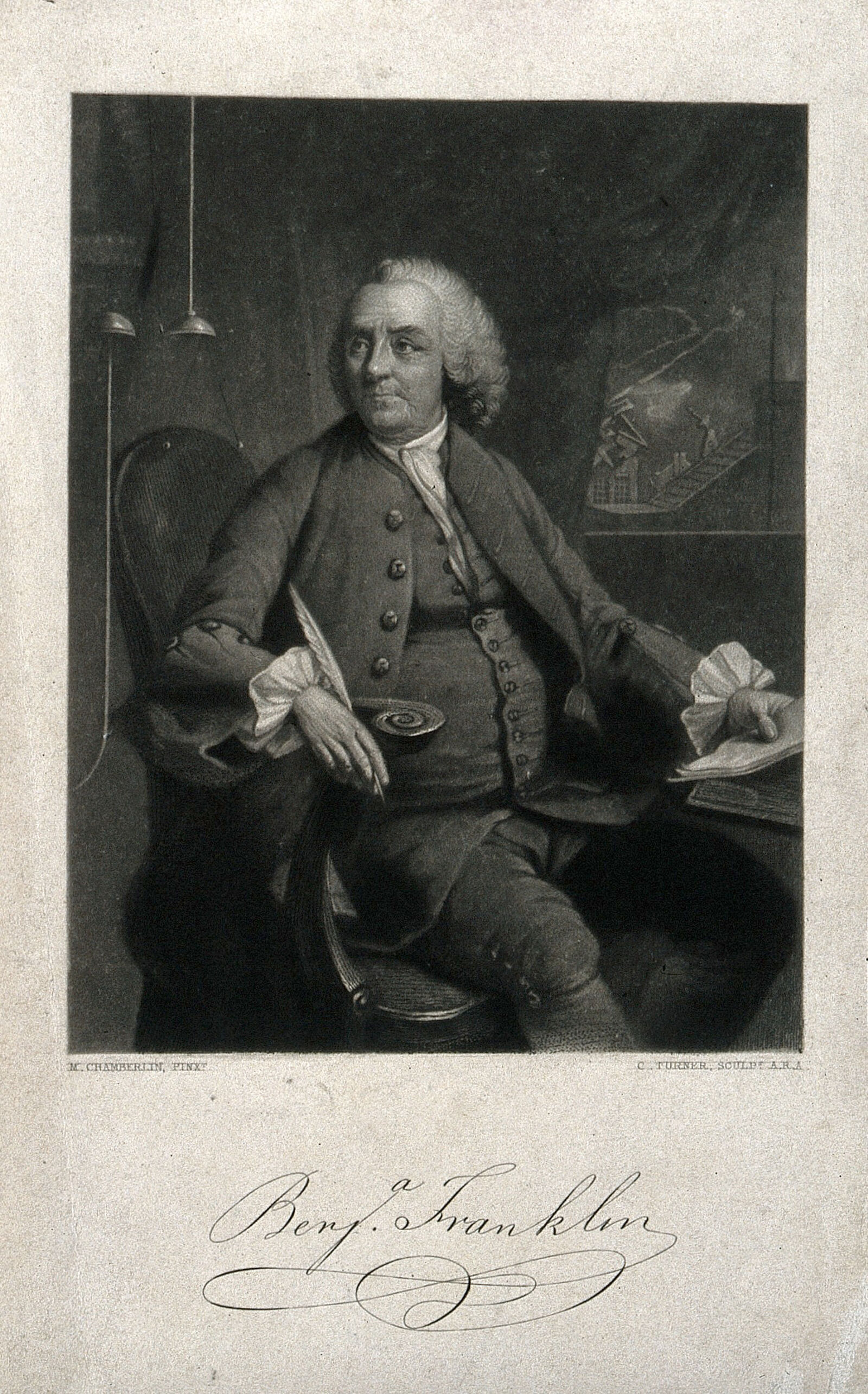 Painting
Primary source
Benjamin Franklin, mezzotint by C. Turner after M. Chamberlin
Mason Chamberlin · 1762
 Document
Primary source
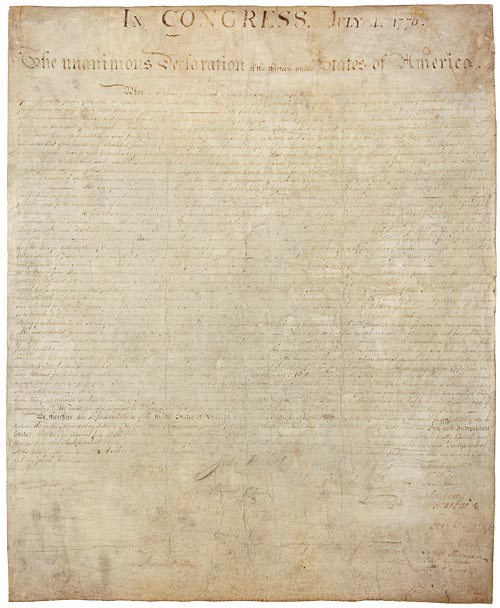
Declaration of Independence
Continental Congress (drafted by Thomas Jefferson) · 1776
 Artifact
Primary source
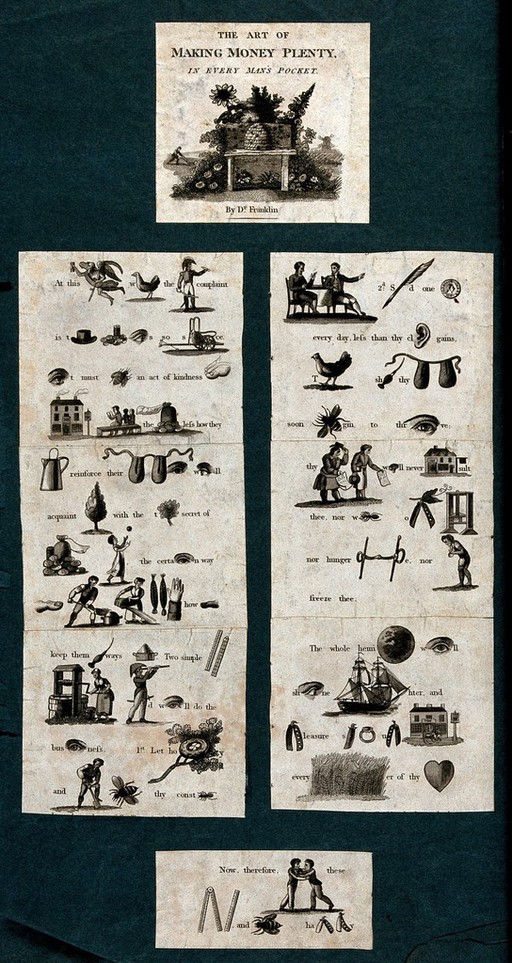
The Art of Making Money Plenty, In Every Man's Pocket
Benjamin Franklin
 Painting
Primary source
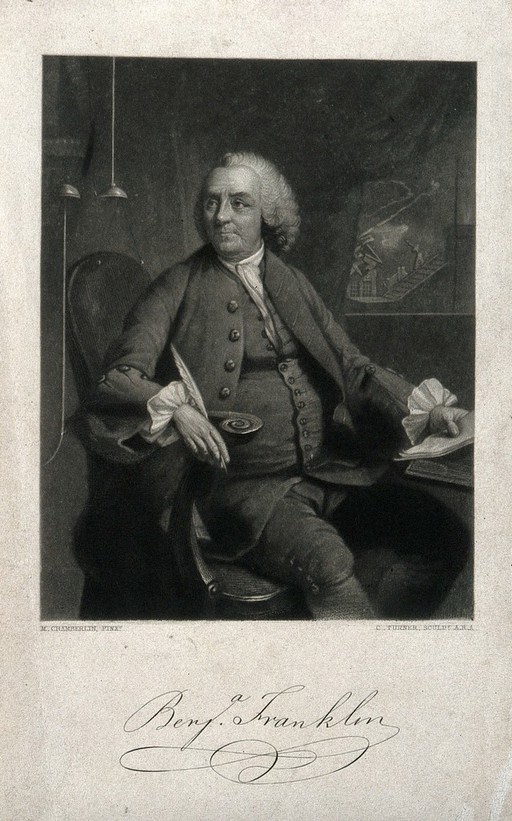
Benjamin Franklin, engraving after Mason Chamberlin
Mason Chamberlin · 1762
 Painting
Primary source
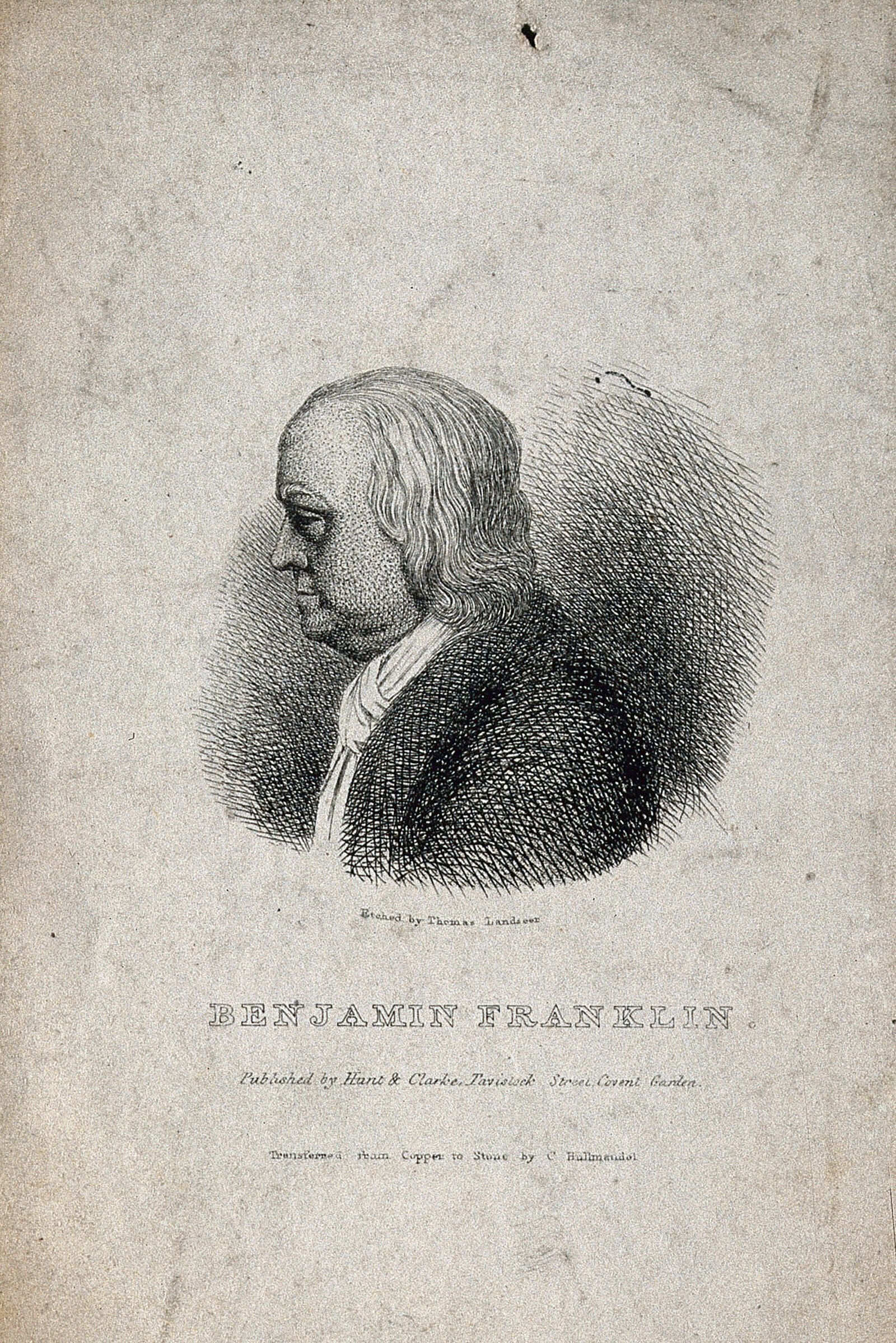
Benjamin Franklin, after J. J. Caffieri
Jean-Jacques Caffieri · 1777 (bust); print later
Ready when you are
Start chatting with Benjamin Franklin now.
20 messages free · No credit card · Available in 50+ languages.