


Secondary sourcePainting1850
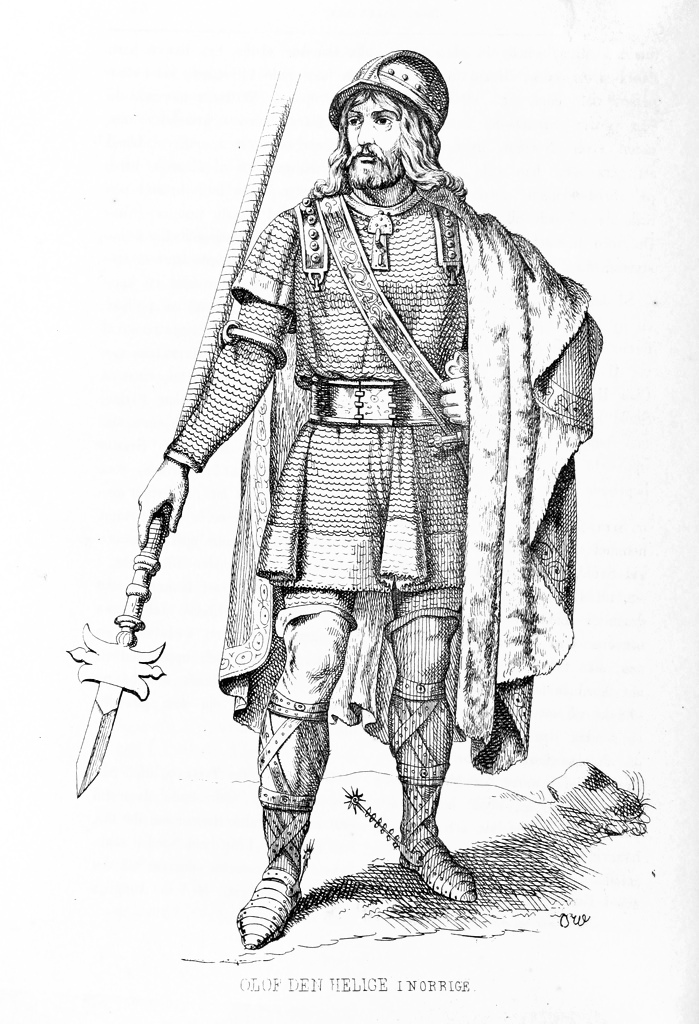
Olof den Helige
1850
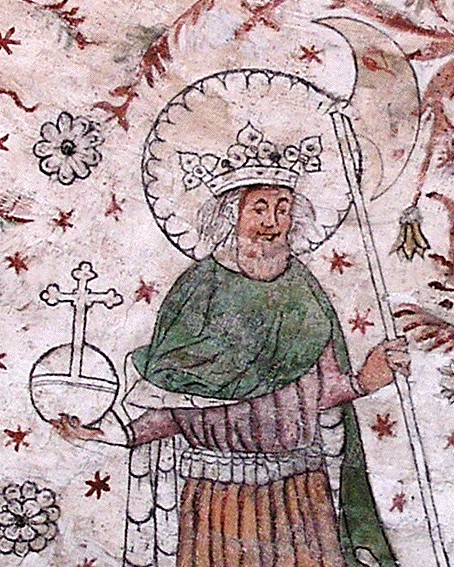
An 1850 Swedish engraving portraying St Olaf, King Olaf II of Norway, in armor with a sword and spear.
This 1850 engraving imagines King Olaf II (St Olaf) as an armored warrior-king, reflecting his later sainted reputation.
About this source
What it is
This is a black-and-white engraving from 1850, created for a Swedish-language reference work. It shows a bearded man in a helmet and chainmail, wearing a fur-lined cloak, holding a sword point-down and a spear or staff. The caption identifies him as Olof den Helige i Norrige (Olaf the Holy in Norway).
Why it matters
Made over 800 years after Olaf's death, this engraving reflects how he was remembered as a sainted king in 19th-century Scandinavian popular histories. His image as an armored warrior-king reflects both his royal and religious legacy.
Look closer
- What details in the armor and weapons suggest how the artist wanted viewers to see this king?
- Why might a 19th-century reference book include an imagined portrait of a medieval king?
- What might this image leave out about Olaf's actual appearance, since no contemporary portrait exists?
This painting is part of the curated material that grounds the AI version of Olaf II of Norway on Humy.ai — when students ask about related events, the AI can quote it and cite it.
More Olaf II of Norway sources
Browse all 87 →Secondary source
Óláfs saga helga in Heimskringla
Snorri Sturluson · c. 1230
 Book
Secondary source
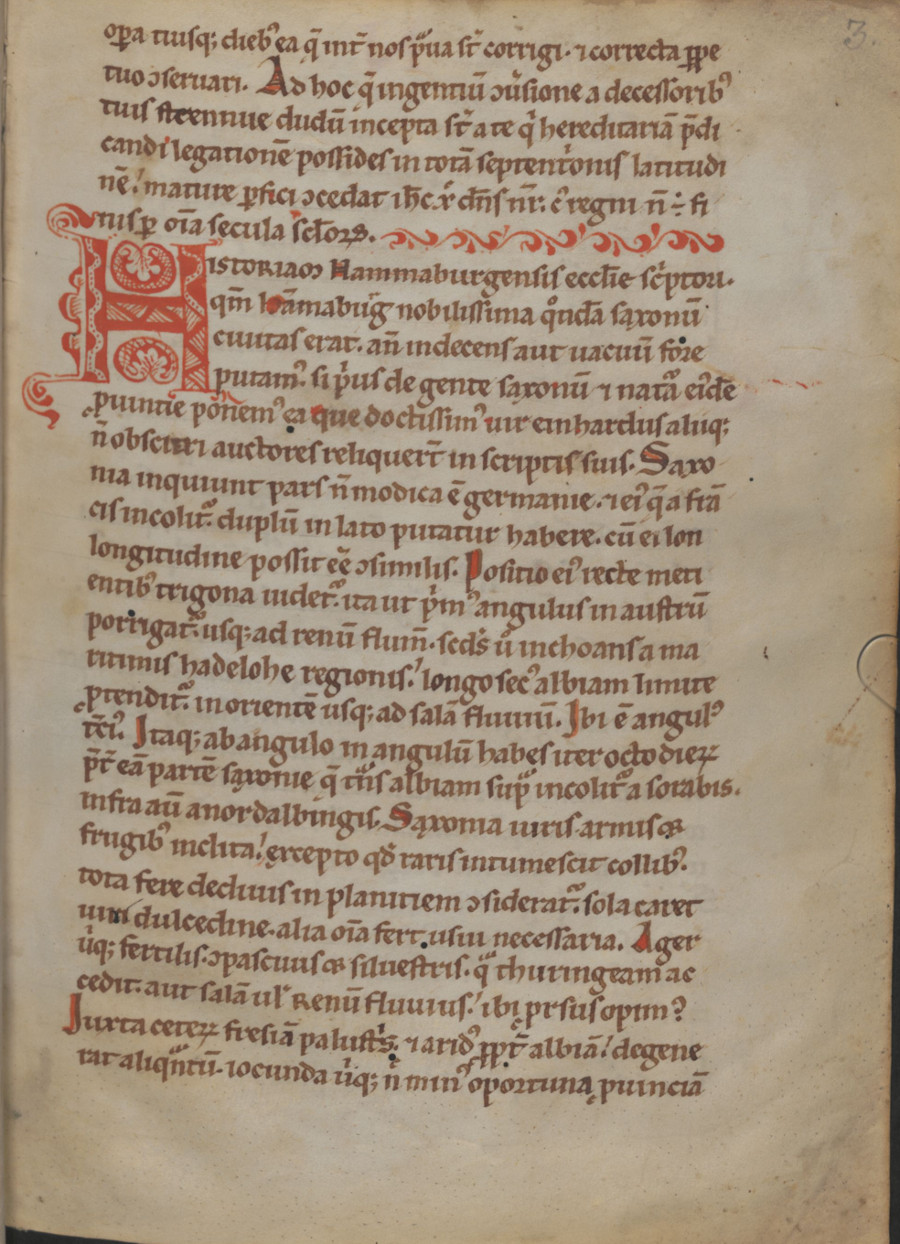
Gesta Hammaburgensis ecclesiae pontificum
Adam of Bremen · 1073-1076
 Artifact
Secondary source
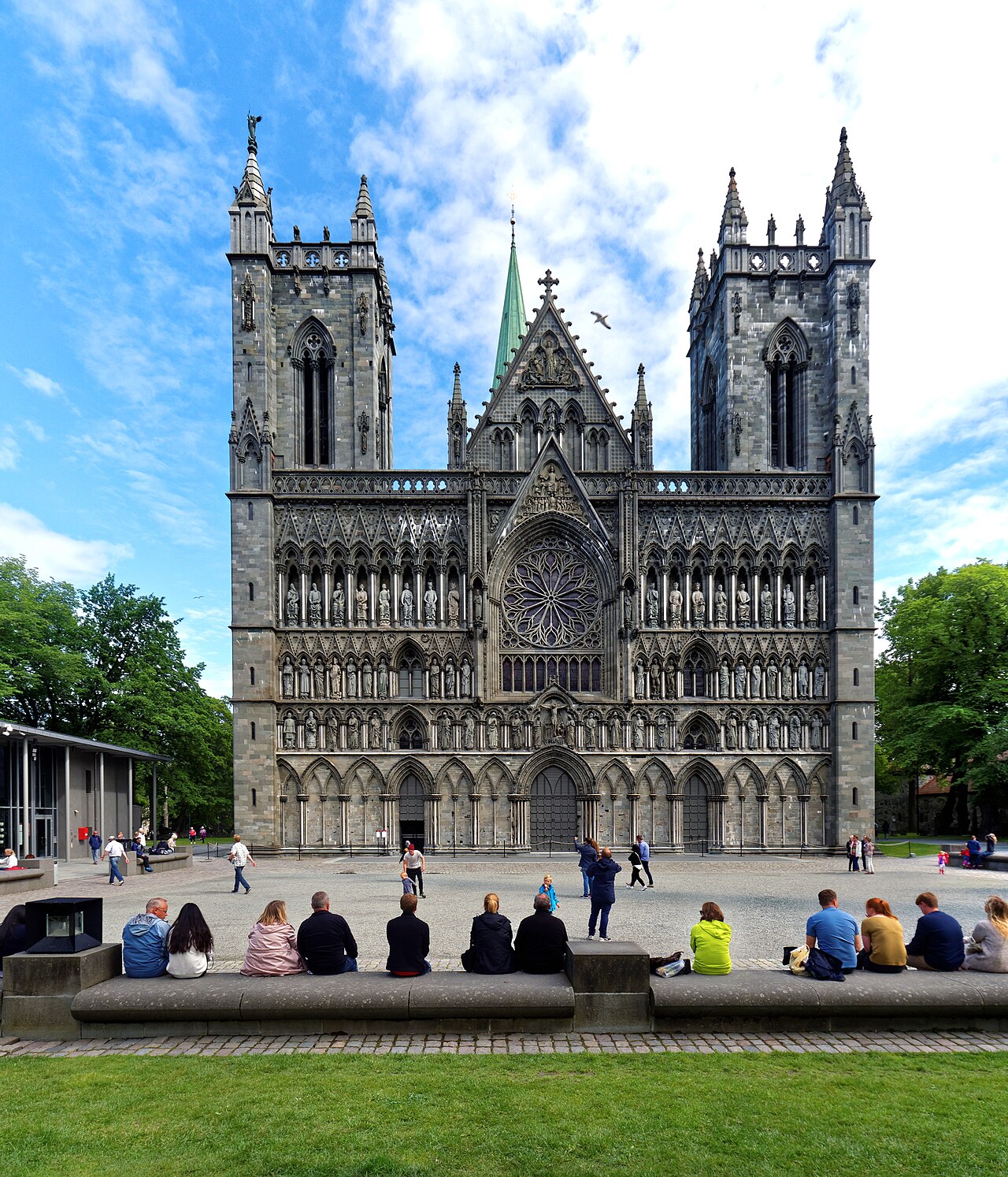
Nidaros Cathedral
1070-1300 (begun)
 Artifact
Primary source
Kuli Stone
c. 1034
Free account
Read every Olaf II of Norway source
Sign up free →
Ready when you are
Start chatting with Olaf II of Norway now.
20 messages free · No credit card · Available in 50+ languages.