


Secondary sourcePainting1865
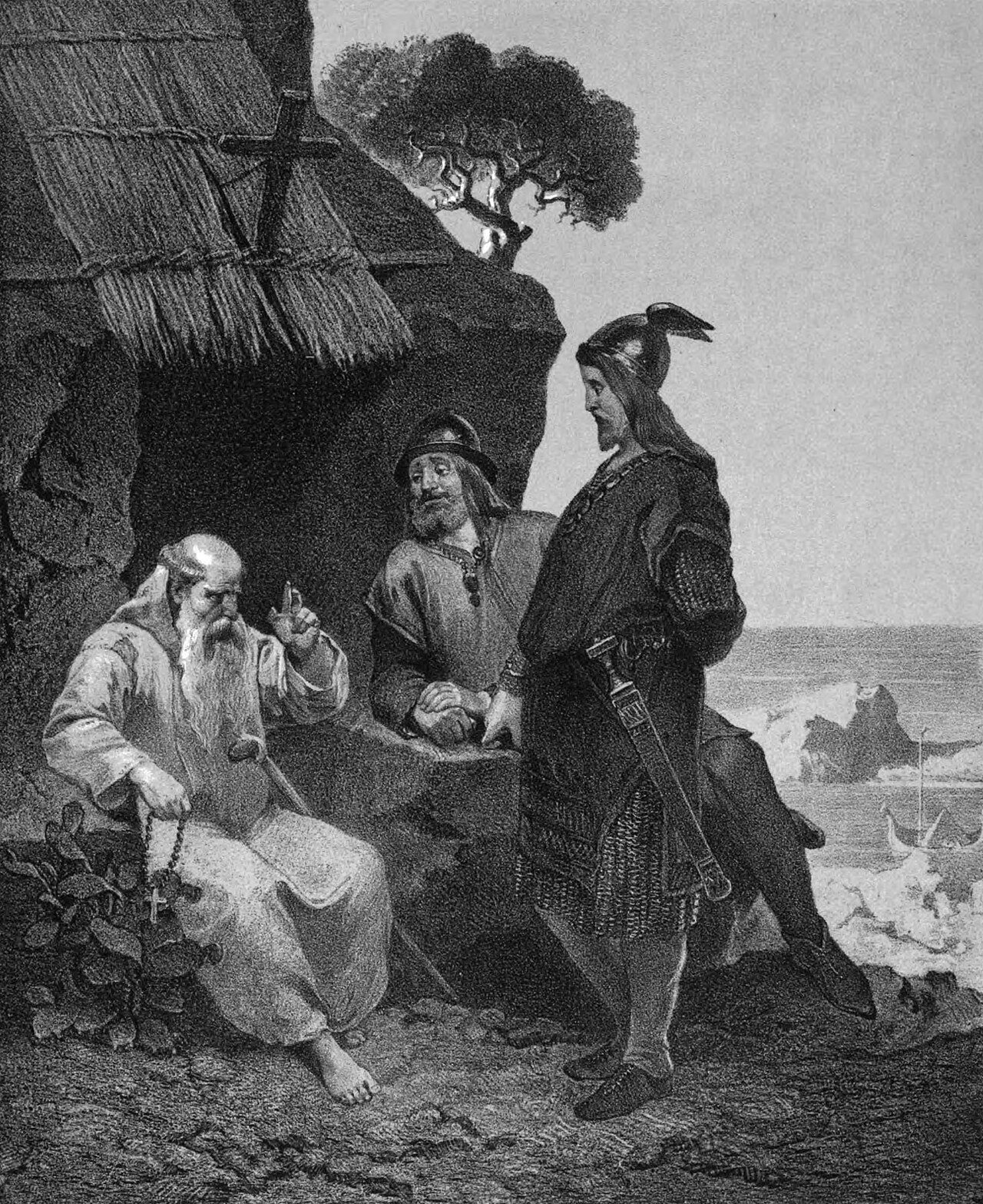
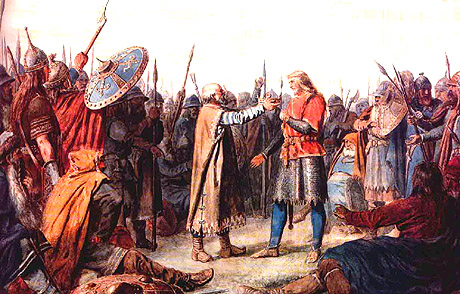
Olof Tryggvason's Conversion to Christianity
After August Malmström · 1865
A 19th-century print showing King Olaf Tryggvason's conversion to Christianity, a turning point of his reign.
Depicts Olaf's conversion to Christianity, a defining event of his reign as king.
About this source
What it is
This engraved print, made in 1865 after a painting by August Malmström, shows three men outdoors near a thatched hut: an old man holding a rosary, a seated man in a helmet, and a standing man in a winged helmet and mail shirt.
Why it matters
The scene depicts the conversion of Olaf Tryggvason to Christianity, one of the most important events tied to his rule, since he later worked to spread Christianity across Norway. As a 19th-century historical image, it shows how later generations imagined this moment rather than recording it firsthand.
Look closer
- What details in the clothing and poses of the three men suggest who holds power in this scene?
- Why might 19th-century artists have been drawn to depicting a king's religious conversion?
- What can't this image tell us about how or why the conversion actually happened?
This painting is part of the curated material that grounds the AI version of Olaf Tryggvason on Humy.ai — when students ask about related events, the AI can quote it and cite it.
More Olaf Tryggvason sources
Browse all 45 →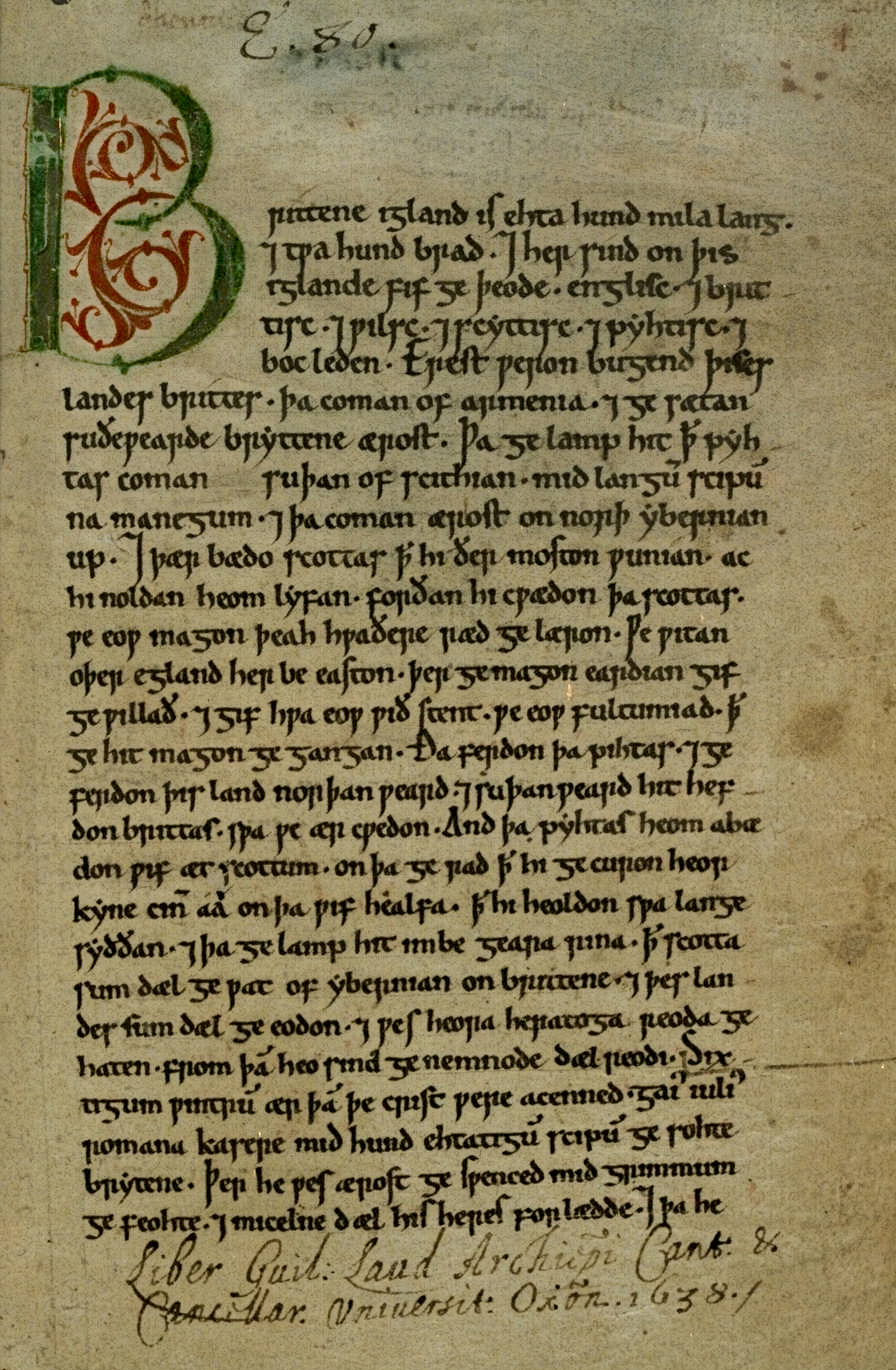 Document
Primary source
Anglo-Saxon Chronicle
c. 890 (Common Stock)
 Book
Secondary source
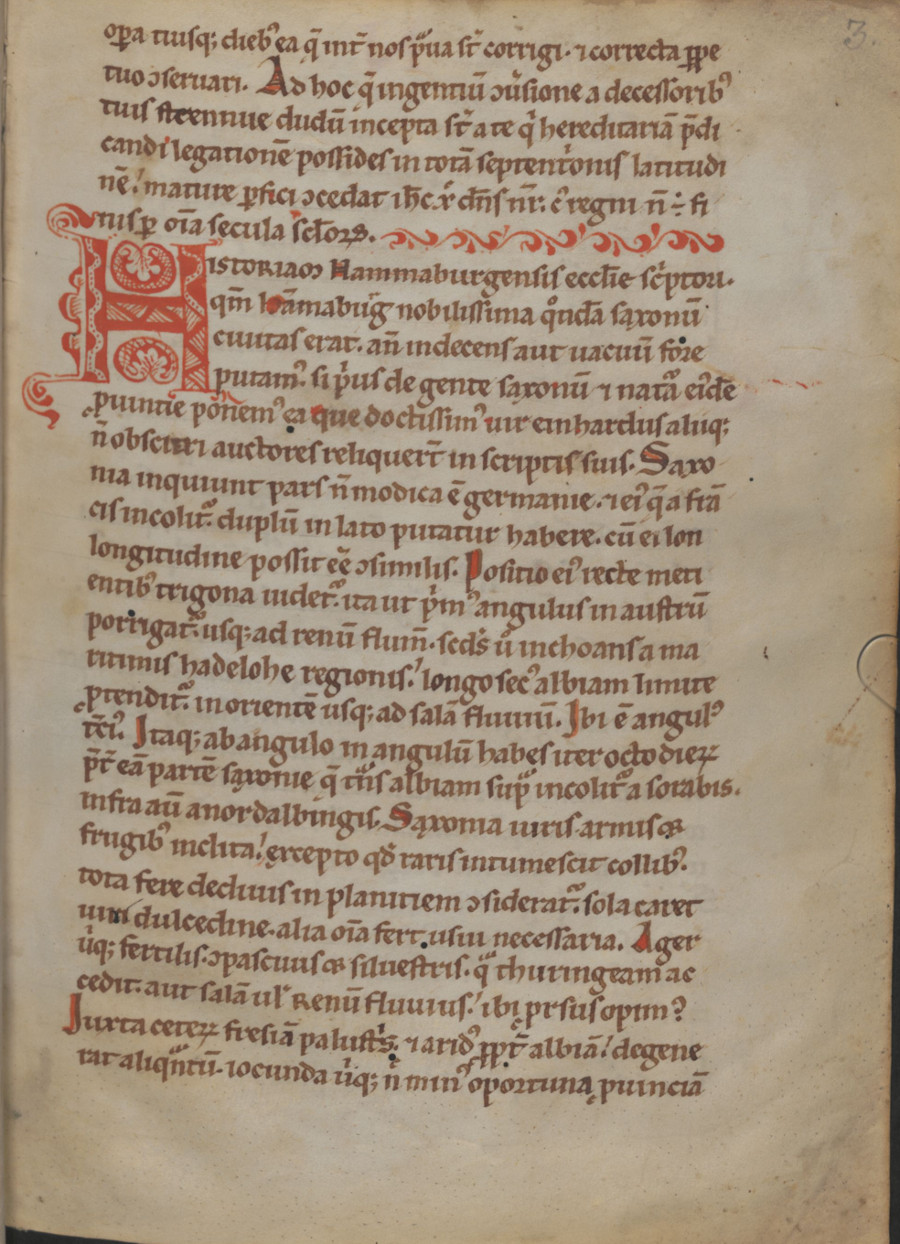
Gesta Hammaburgensis ecclesiae pontificum
Adam of Bremen · 1073-1076
 Book
Secondary source
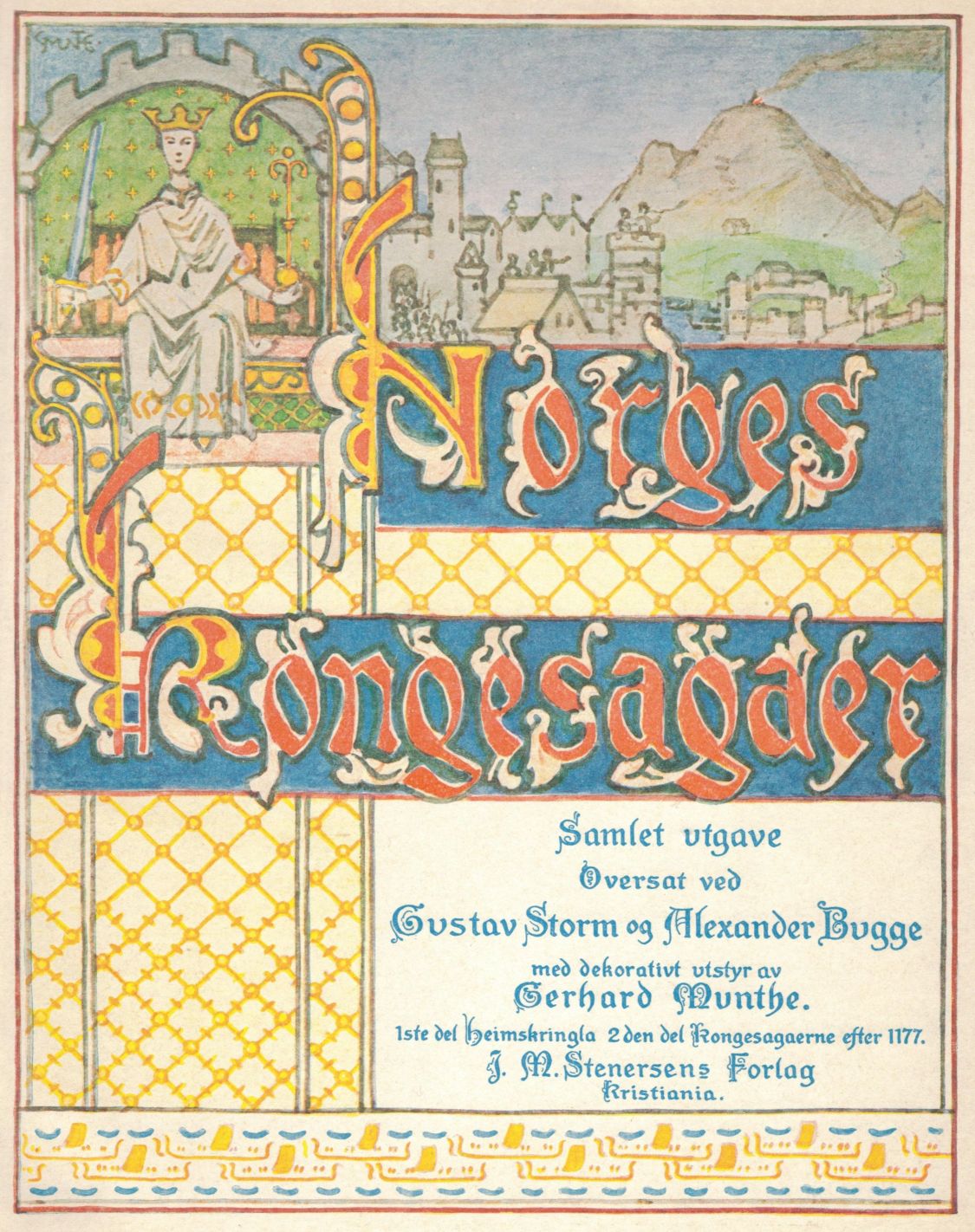
Heimskringla
Snorri Sturluson · c. 1230
 Artifact
Primary source
Kuli Stone
c. 1034
Free account
Read every Olaf Tryggvason source
Sign up free →
Ready when you are
Start chatting with Olaf Tryggvason now.
20 messages free · No credit card · Available in 50+ languages.