


Primary sourceDocument1788
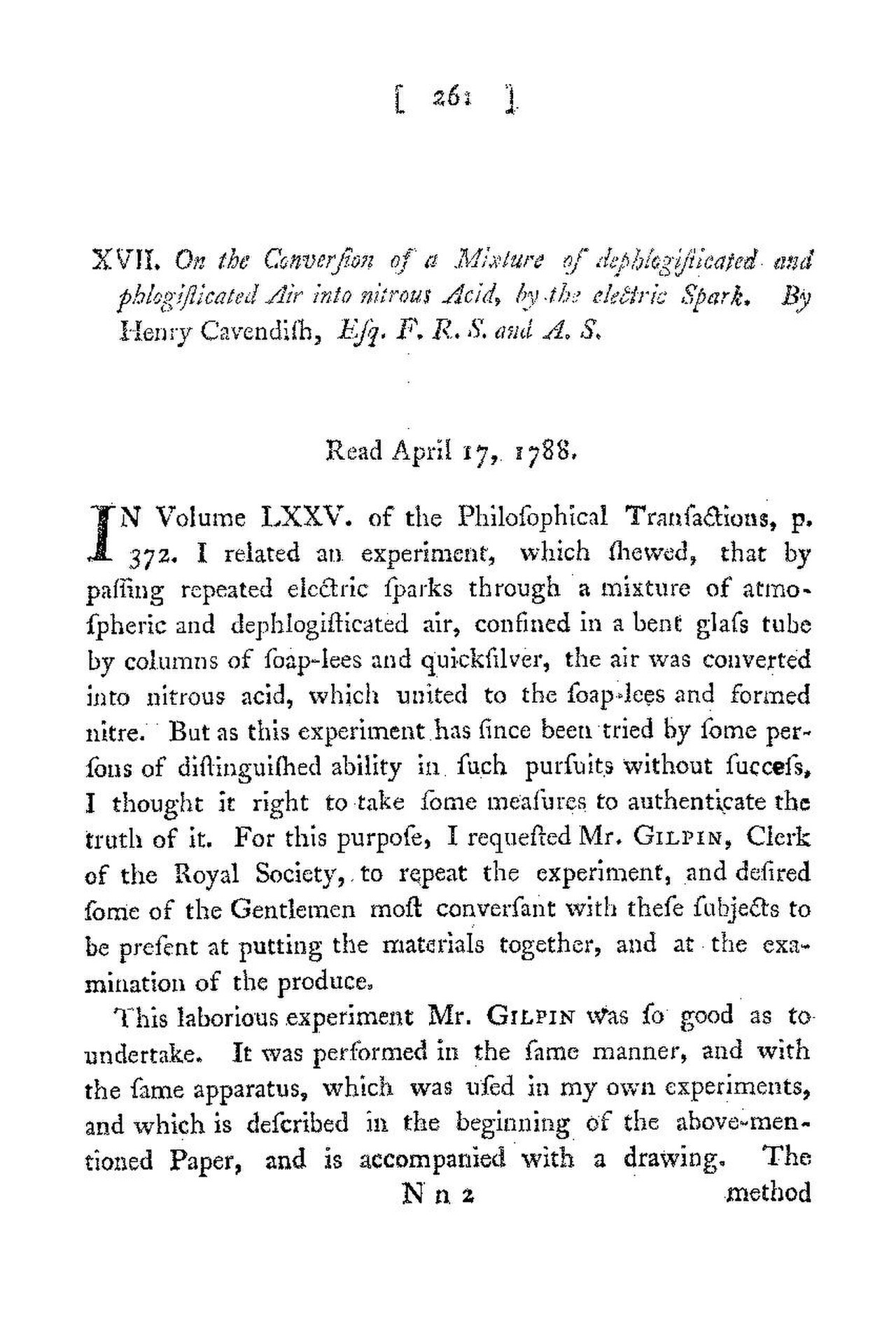
On the Conversion of a Mixture of Dephlogisticated and Phlogisticated Air into Nitrous Acid, by the Electric Spark
Henry Cavendish · 1788
Cavendish's 1788 paper reporting his spark experiments combining nitrogen and oxygen, confirming his earlier quantitative work on air.
Written and read by Cavendish himself, reporting his own spark experiments on the composition of air.
Free Humy account · No credit card · 120,912 sources to read
About this source
What it is
This is a scientific paper written by Henry Cavendish, read to the Royal Society in April 1788 and published in the Philosophical Transactions, where it is held.
It reports experiments passing electric sparks through a mixture of 'dephlogisticated' and 'phlogisticated' air (oxygen and nitrogen, in later terms) to produce nitrous acid, and describes how Mr Gilpin repeated the experiment to confirm the results.
Why it matters
The paper continues Cavendish's precise, quantitative approach to chemistry, carried out before the ideas of modern chemistry fully replaced the old 'phlogiston' theory. It shows how scientists of the time checked and re-checked each other's results to build trust in new findings.
Look closer
- Why did Cavendish ask someone else to repeat his experiment rather than relying only on his own results?
- What do the unfamiliar terms 'dephlogisticated' and 'phlogisticated' air tell you about how scientific language has changed?
- What does this paper leave out about how Cavendish actually interpreted his results?
This document is part of the curated material that grounds the AI version of Henry Cavendish on Humy.ai — when students ask about related events, the AI can quote it and cite it.
More Henry Cavendish sources
Browse all 53 →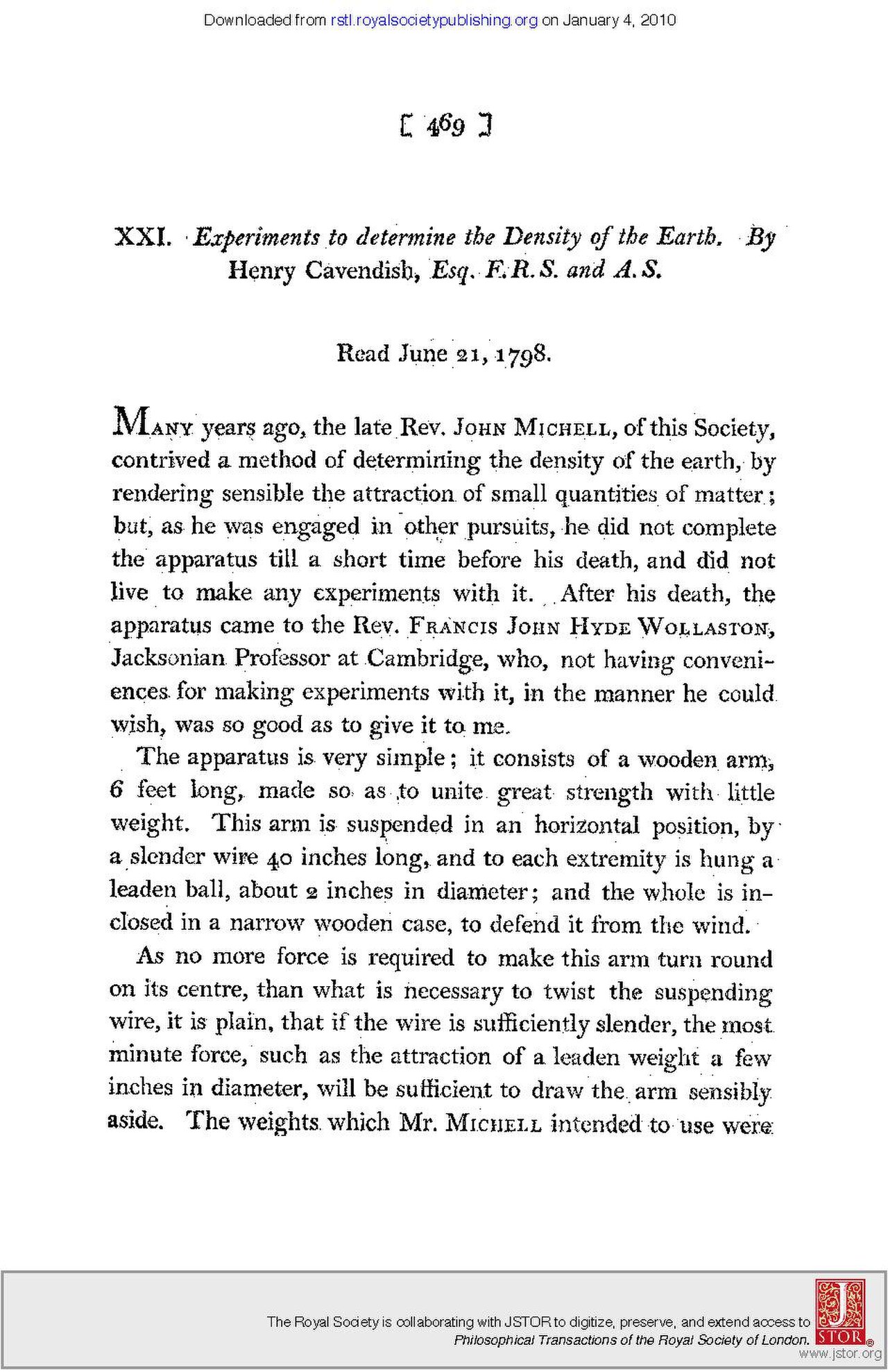 Document
Primary source
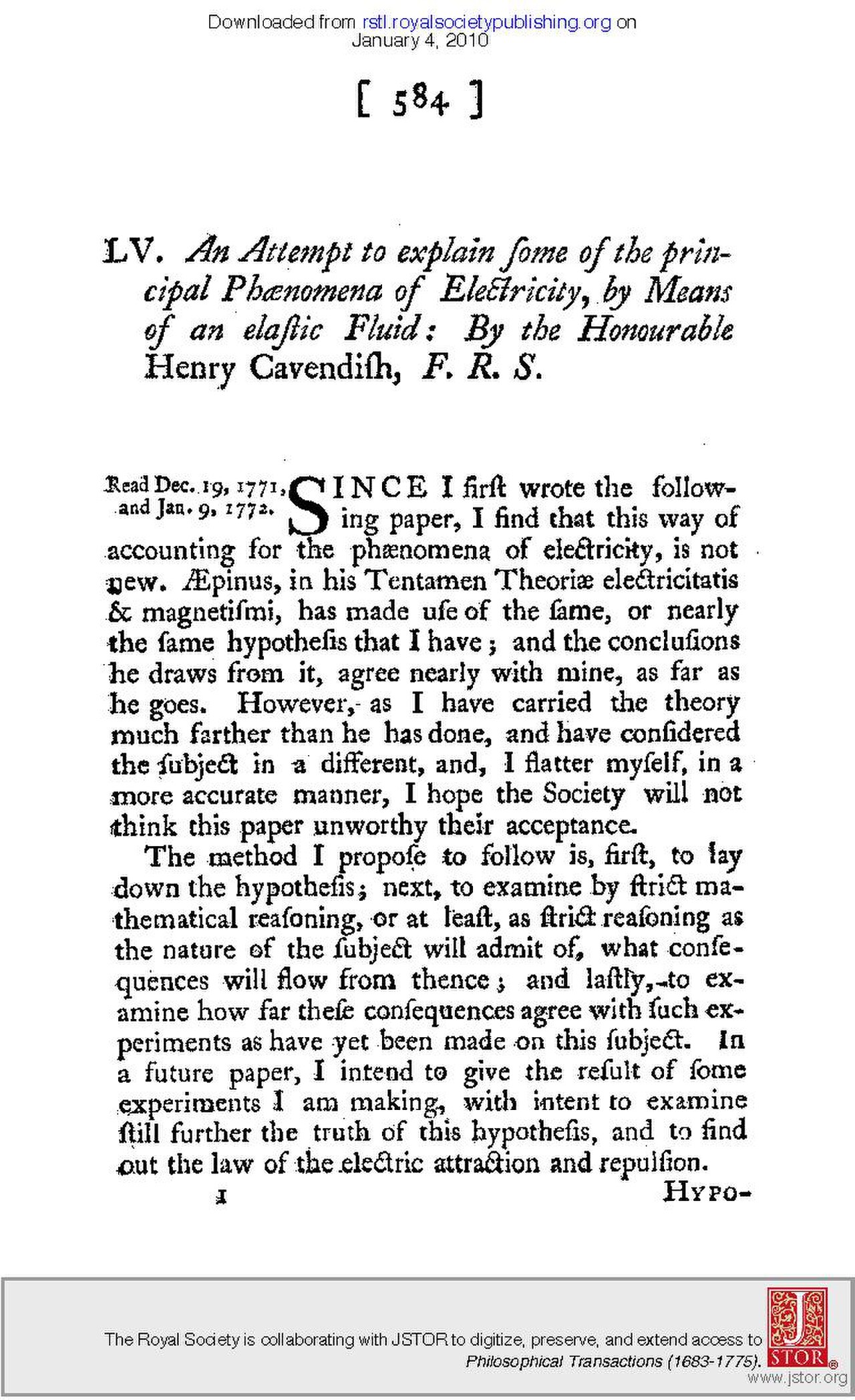
Experiments to Determine the Density of the Earth
Henry Cavendish · 1798
 Document
Primary source
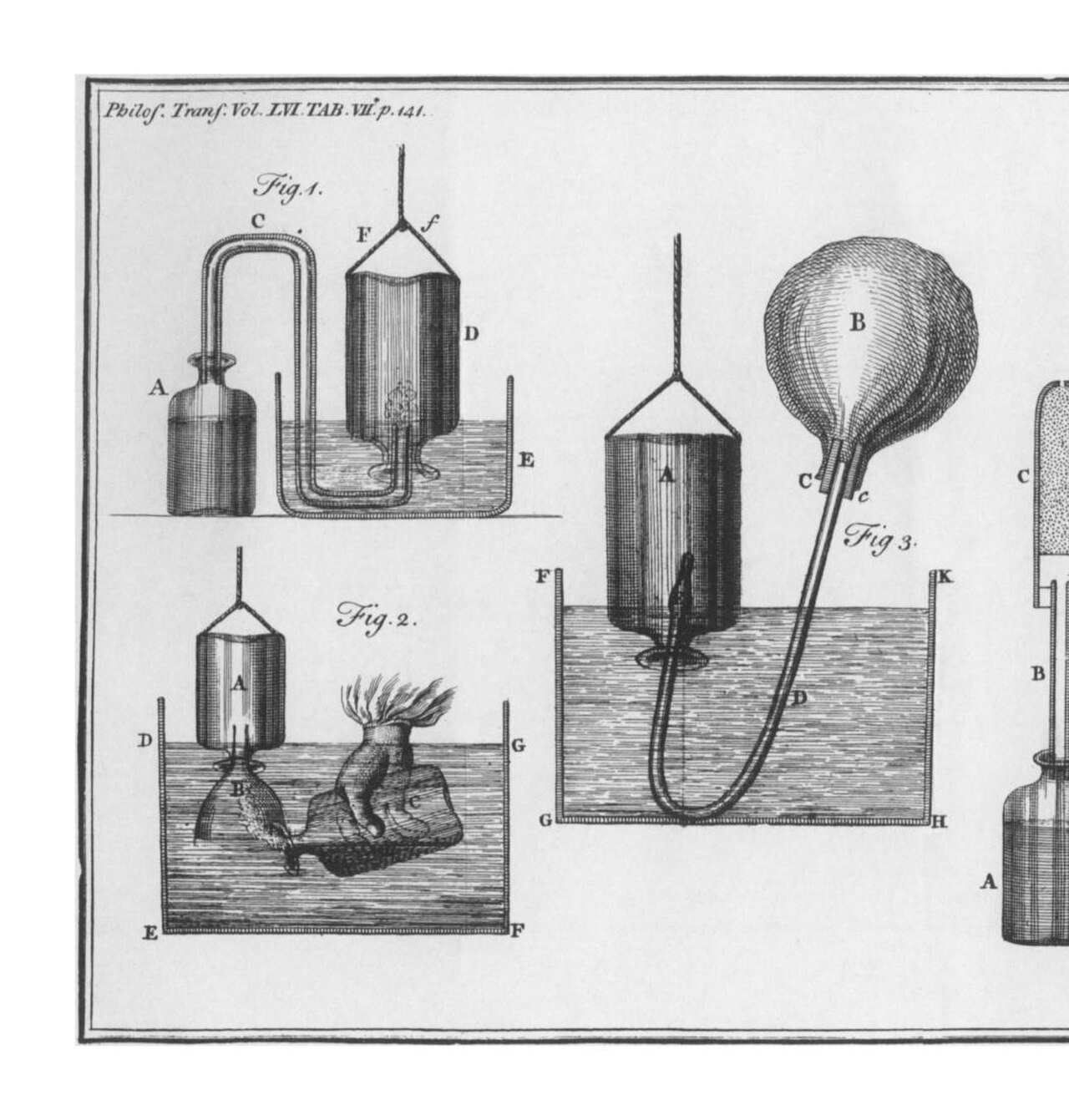
Three Papers, Containing Experiments on Factitious Air
Henry Cavendish · 1766
 Document
Primary source
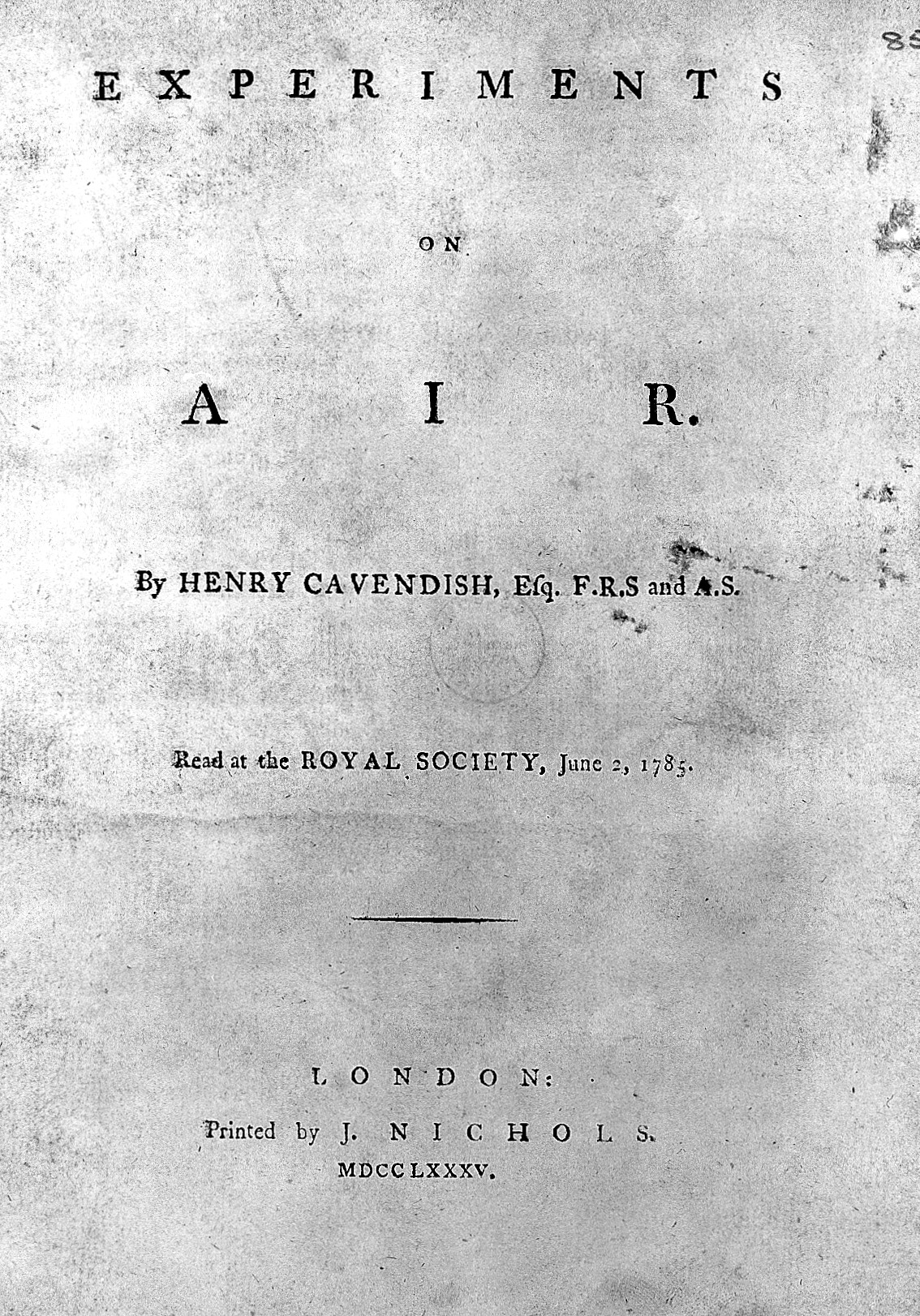
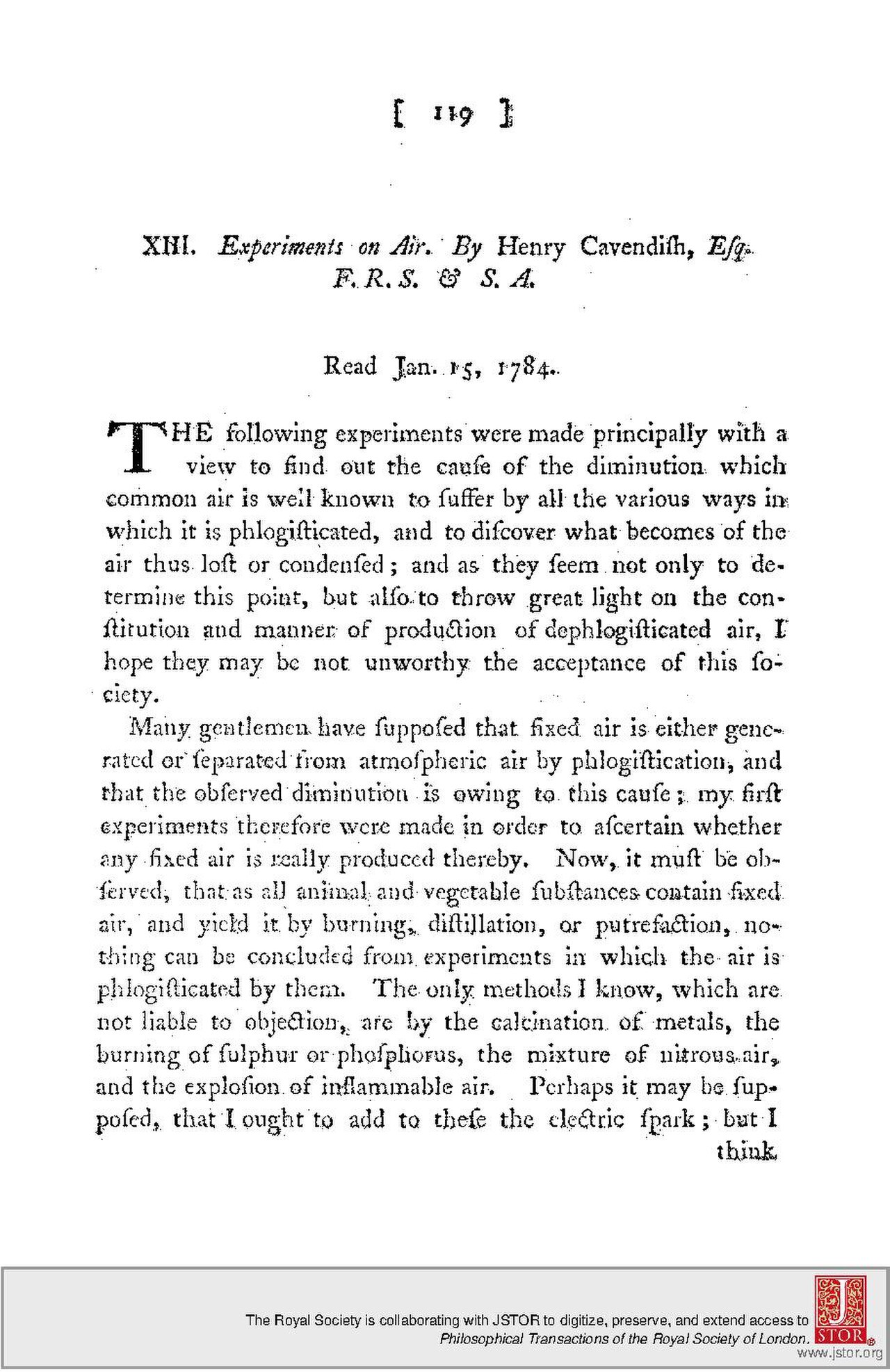
Experiments on Air, 1785 title page
Henry Cavendish · 1785
 Painting
Primary source
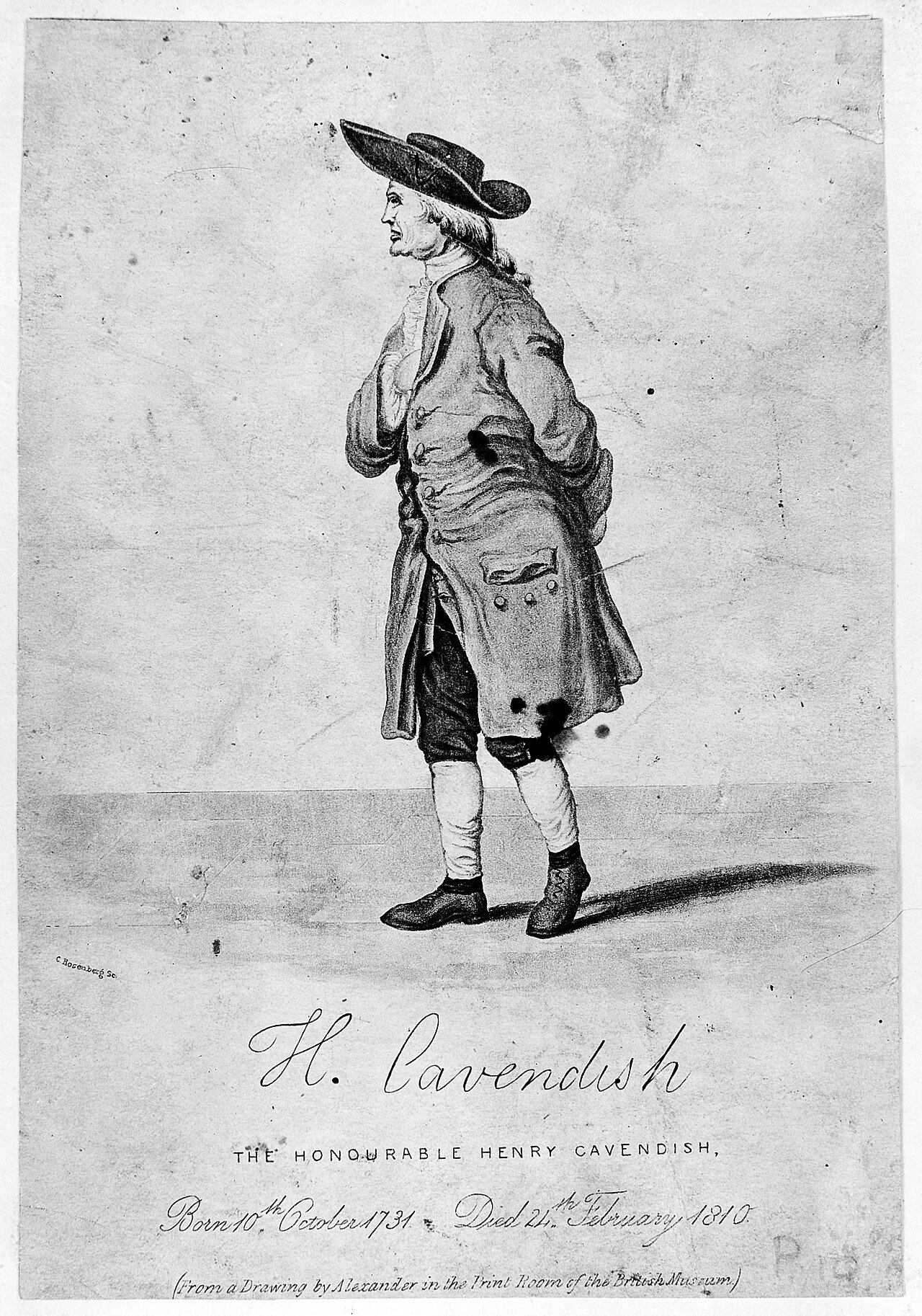
Henry Cavendish, Chemist (lithograph after Alexander)
William Alexander
Free account
Read every Henry Cavendish source
Sign up free →
Ready when you are
Start chatting with Henry Cavendish now.
20 messages free · No credit card · Available in 50+ languages.