


Primary sourceDocument1901
On the Law of Energy Distribution in the Normal Spectrum
Max Planck · 1901
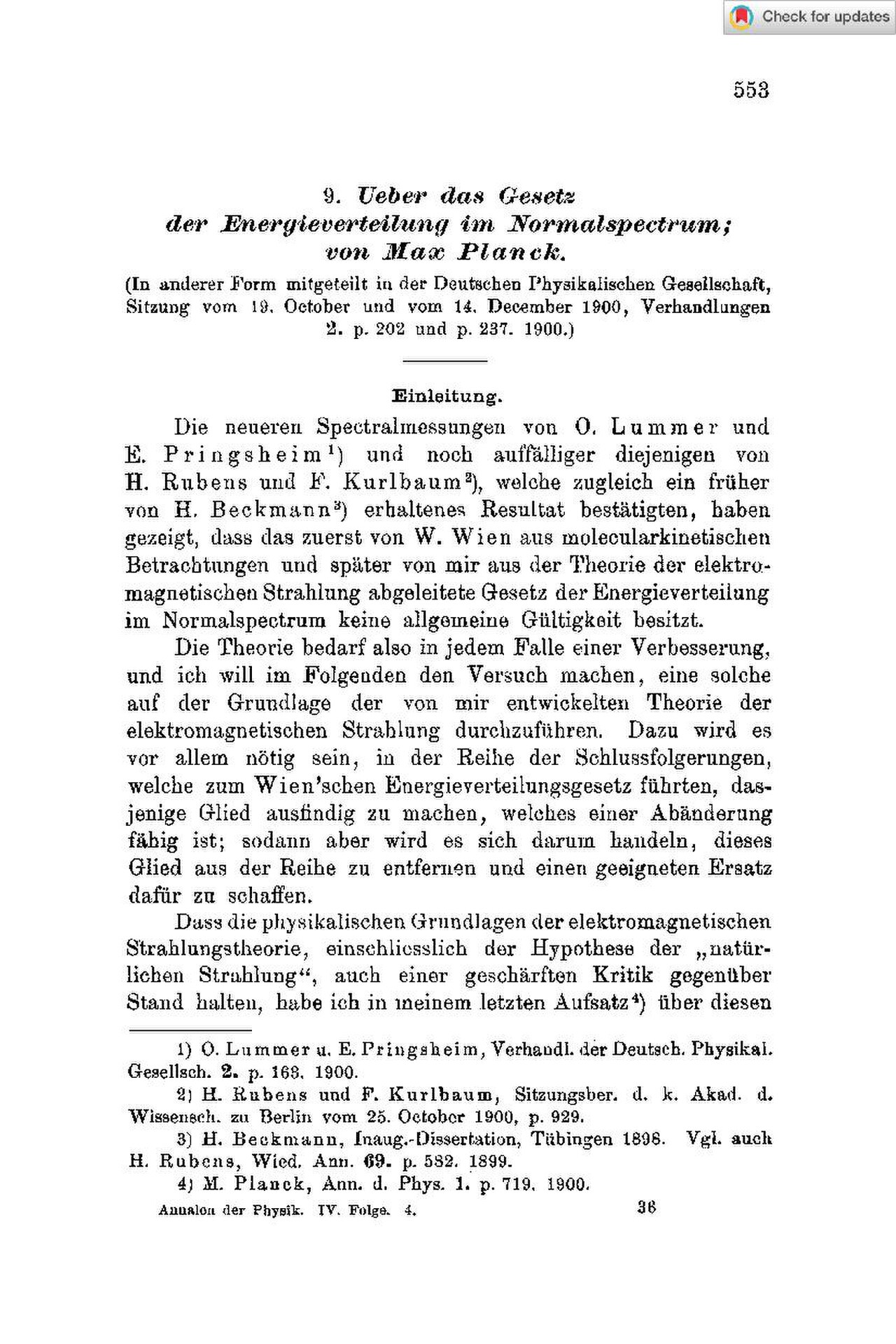
Max Planck's 1901 paper that used Boltzmann's statistical method of counting entropy and introduced the constant later named after him.
Planck's paper directly applied Boltzmann's statistical method of counting entropy, showing his lasting influence on physics.
Free Humy account · No credit card · 53,307 sources to read
About this source
What it is
This is the published text of Max Planck's 1901 paper, 'Über das Gesetz der Energieverteilung im Normalspectrum,' printed in the journal Annalen der Physik. In it, Planck adapted the statistical method for counting entropy that had been developed by Ludwig Boltzmann, and introduced what became known as Planck's constant.
Why it matters
This paper is a foundation of quantum physics, and it shows directly how Planck built on Boltzmann's earlier statistical approach to thermodynamics. It illustrates how scientific ideas pass between researchers and are transformed into new theories.
Look closer
- What does it mean that Planck built his new theory on tools Boltzmann had already created?
- Why might historians see this paper as a turning point, even though it uses older methods?
- What questions does reading only the opening of a technical paper leave unanswered?
This document is part of the curated material that grounds the AI version of Ludwig Boltzmann and Max Planck on Humy.ai — when students ask about related events, the AI can quote it and cite it.
More Ludwig Boltzmann sources
Browse all 44 →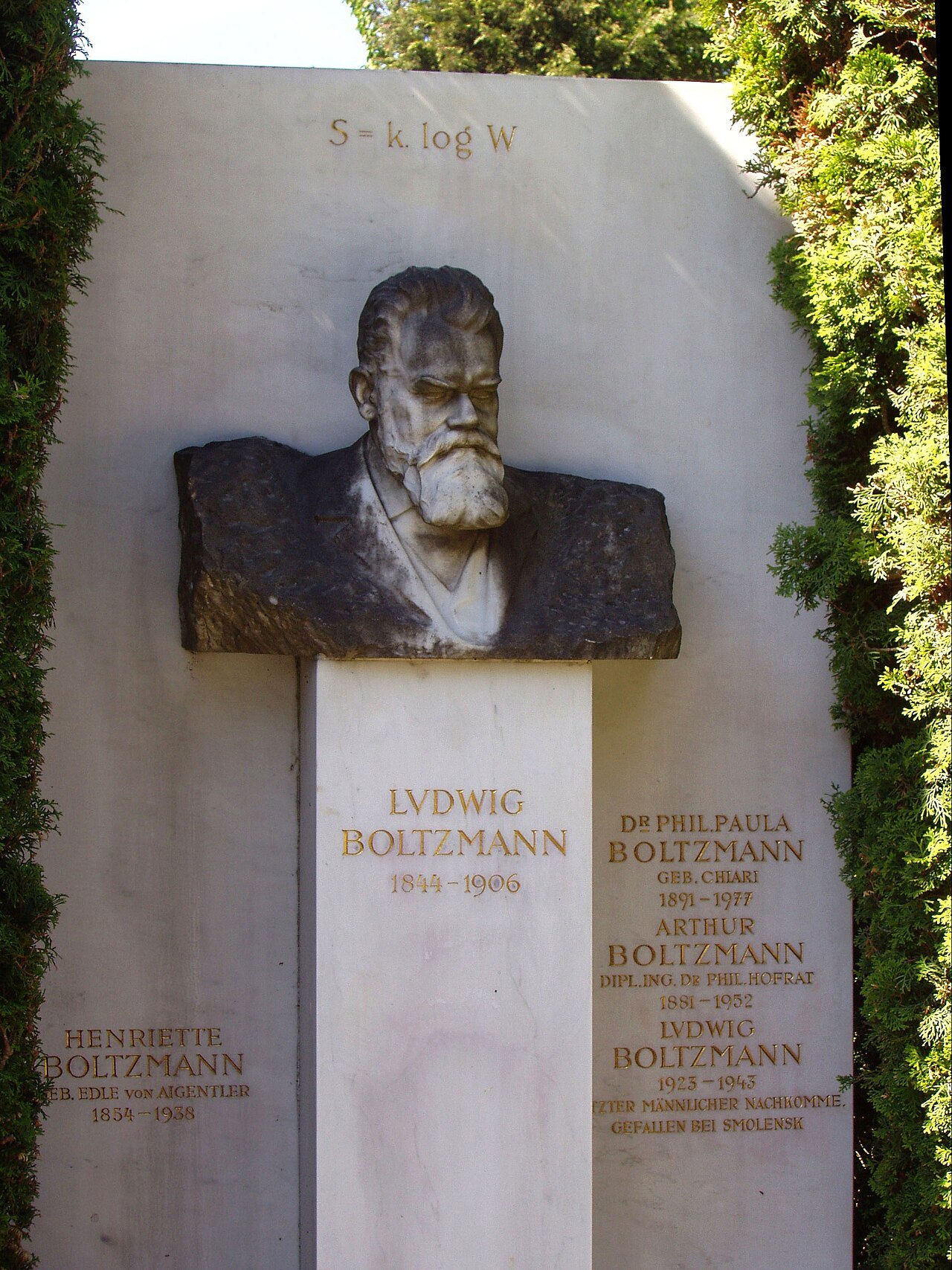 Artifact
Secondary source
Grave of Ludwig Boltzmann
 Photograph
Primary source
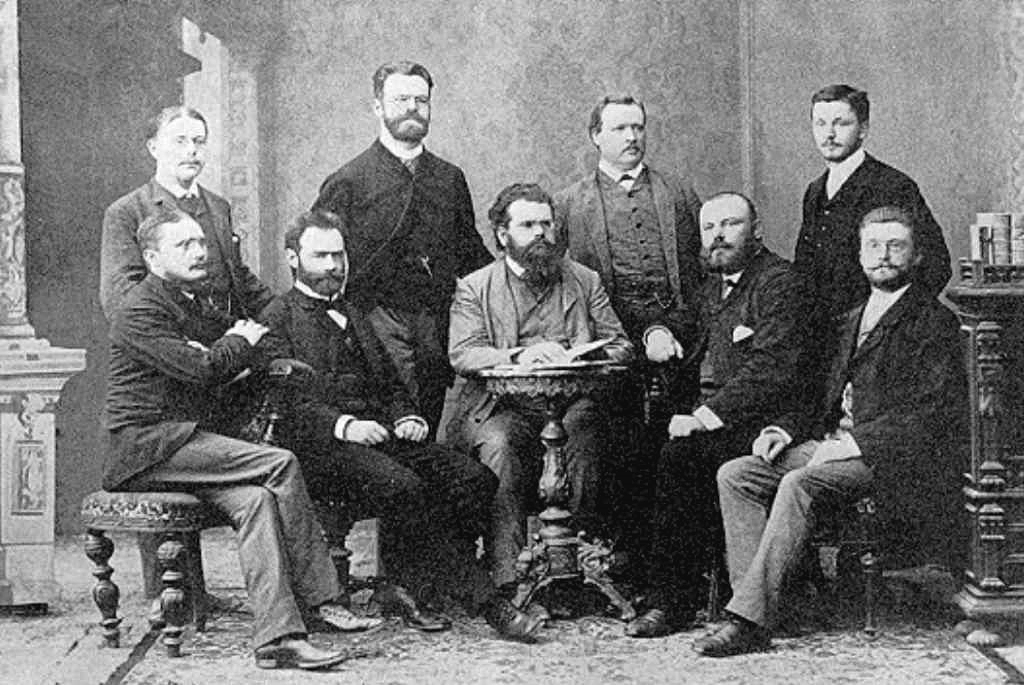
Boltzmann with Students and Colleagues, Graz
1887
 Photograph
Primary source
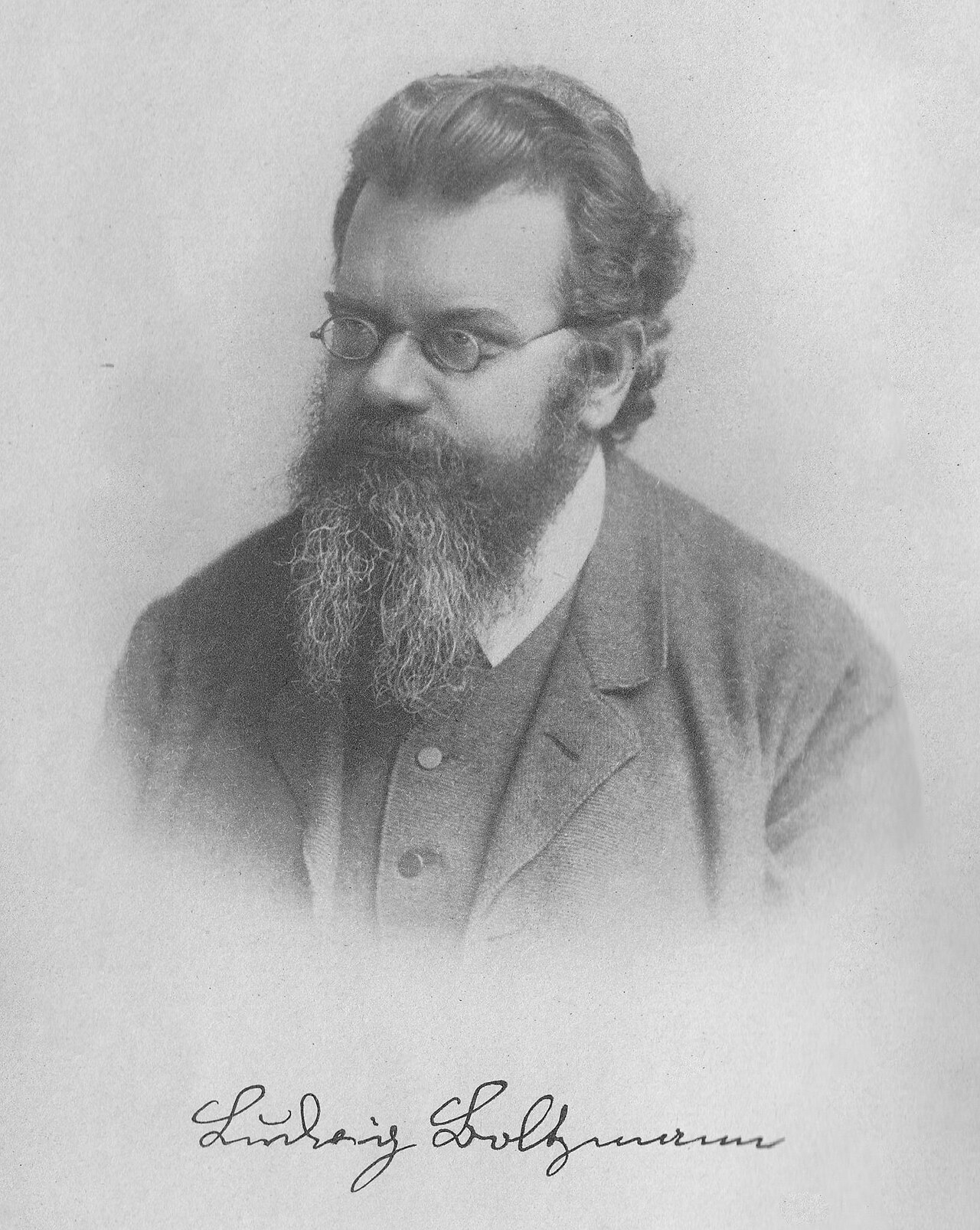
Portrait Photograph of Ludwig Boltzmann
 Document
Primary source
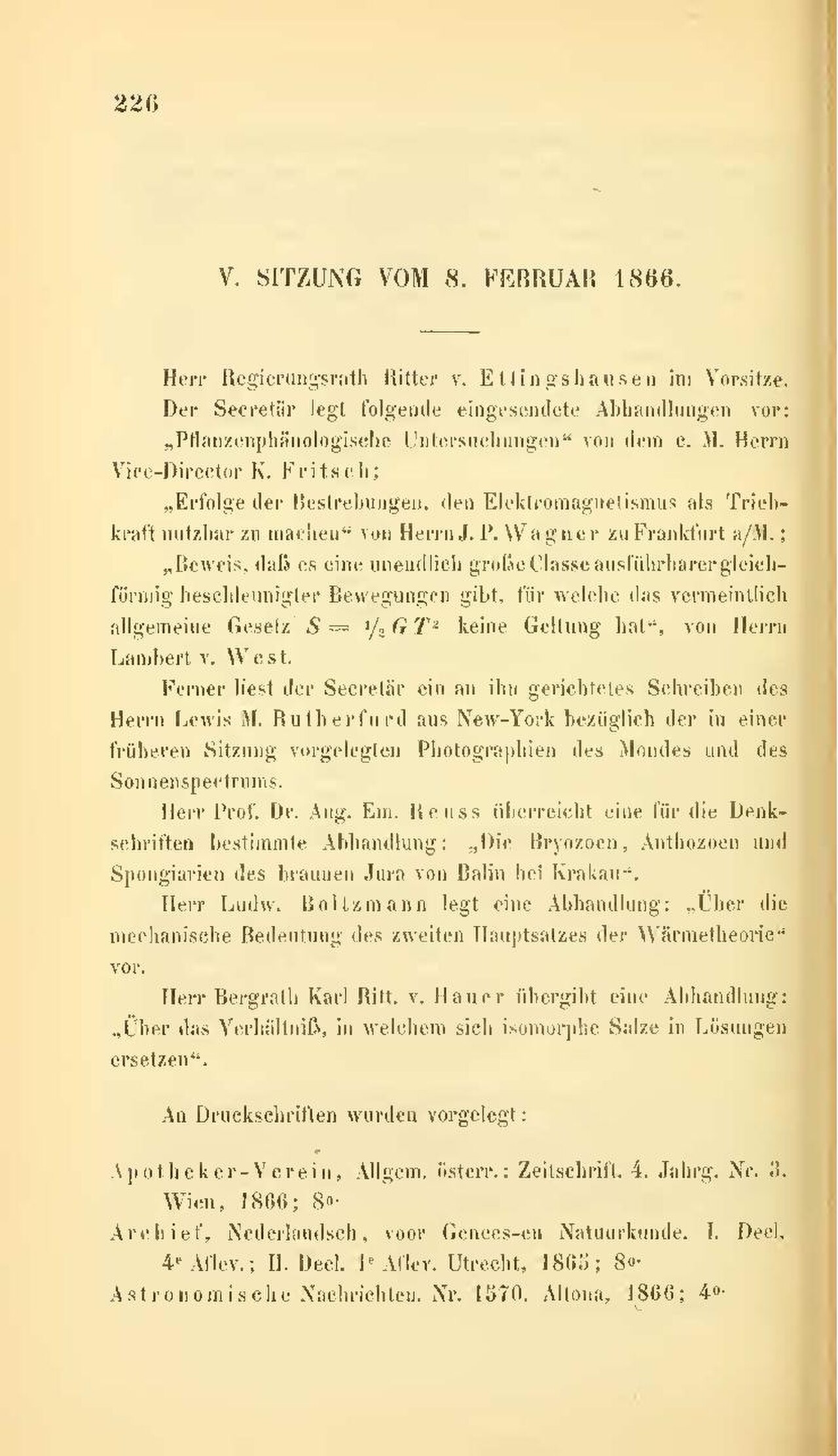
Über die mechanische Bedeutung des zweiten Hauptsatzes der Wärmetheorie
Ludwig Boltzmann · 1866

Free account
Browse every Ludwig Boltzmann source
Sign up free →
Ready when you are
Start chatting with Ludwig Boltzmann now.
20 messages free · No credit card · Available in 50+ languages.