


Primary sourceArtifact1934
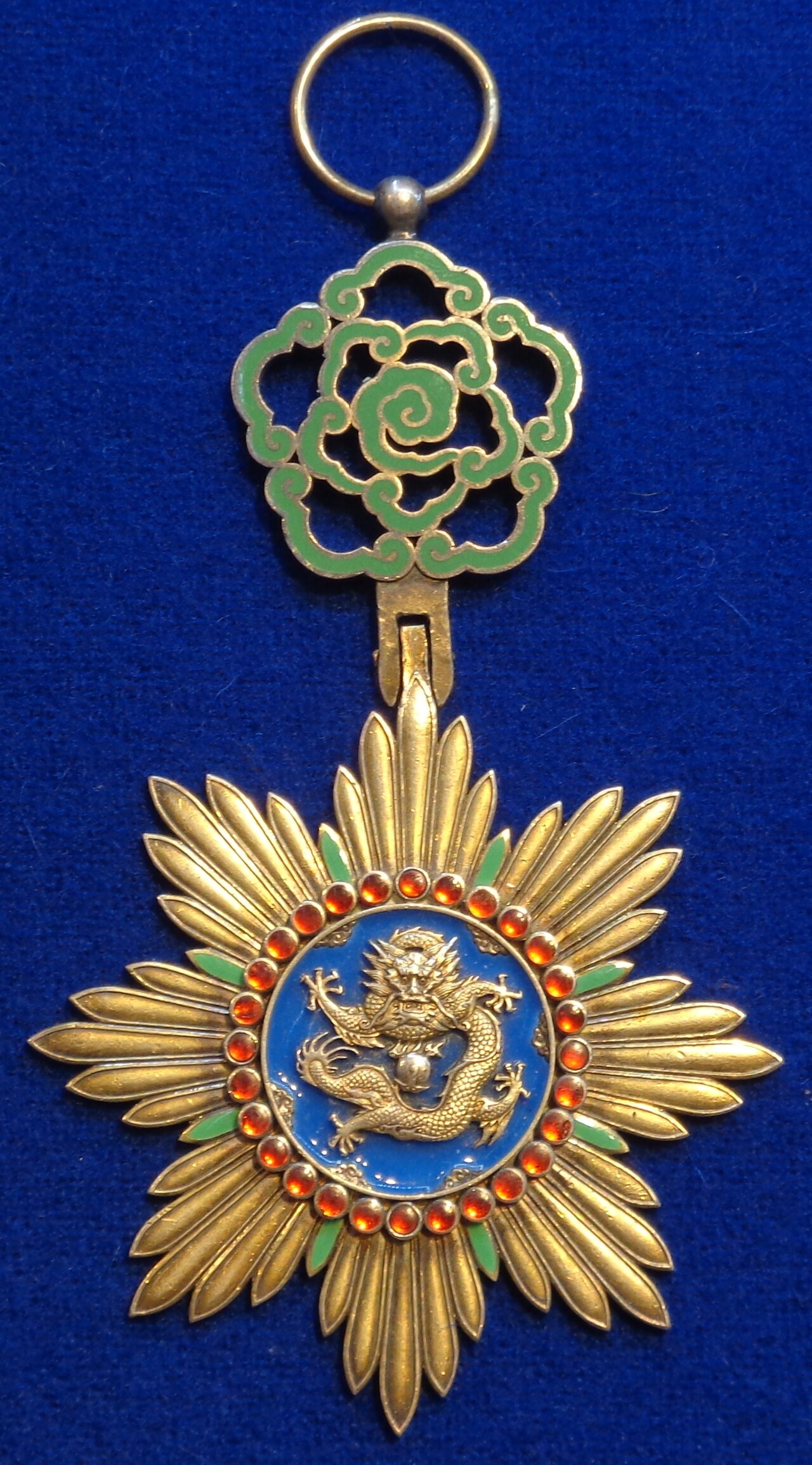
Order of the Illustrious Dragon
1934
The highest decoration of Manchukuo, established in 1934, bearing a dragon symbolizing Puyi as the puppet state's emperor.
This order was issued in Puyi's name as emperor of Manchukuo and symbolized him through its dragon design.
About this source
What it is
The Order of the Illustrious Dragon was the top award of Manchukuo, established in March 1934. It was a single-class order, a gold star-shaped badge with a central dragon design surrounded by red jewels, worn on a blue-and-white sash. Only 33 were ever awarded, including to Puyi himself, before the order ended in 1945 with the Soviet invasion of Manchuria.
Why it matters
The dragon at the center of the badge represented Puyi, who had been installed by Japan as Manchukuo's emperor. The order's design borrowed imperial dragon symbolism to give the Japanese-controlled state an appearance of legitimate, ancient Chinese authority. Its recipients, including Japanese military leader Hideki Tojo, show how the award was used to bind together the figures who ran and supported Manchukuo.
Look closer
- Why might the designers have chosen a dragon, a traditional symbol of Chinese emperors, for this award?
- What does the list of recipients tell you about who really held power in Manchukuo?
- How does an object like this help explain how puppet states try to look legitimate?
This artifact is part of the curated material that grounds the AI version of Puyi on Humy.ai — when students ask about related events, the AI can quote it and cite it.
More Puyi sources
Browse all 89 →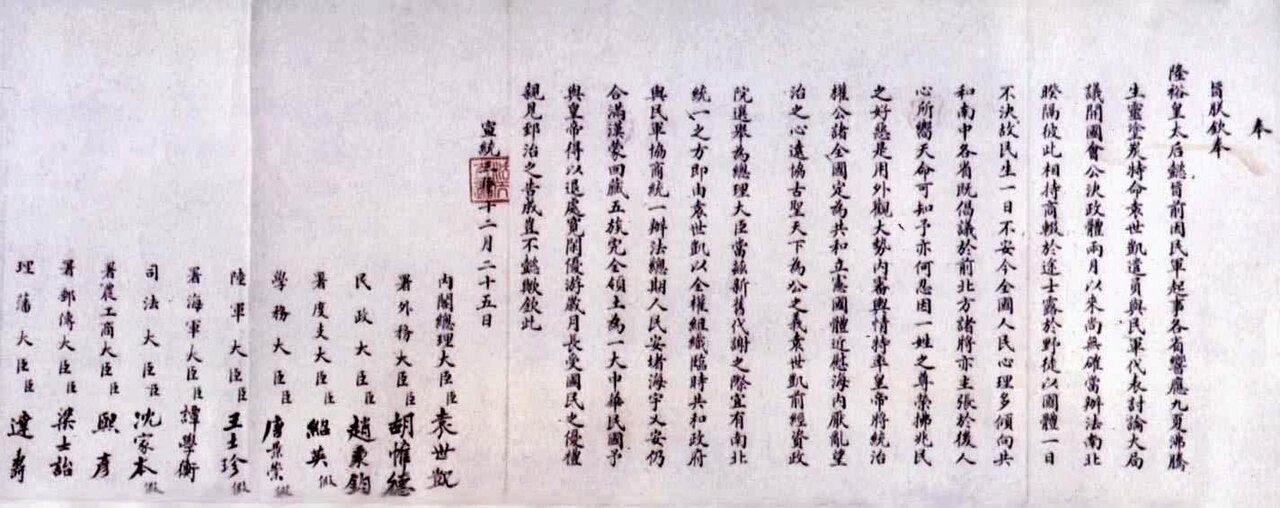 Document
Primary source
Imperial Edict of the Abdication of the Qing Emperor
Empress Dowager Longyu · 12 February 1912
Primary source
Articles of Favourable Treatment of the Great Qing Emperor after His Abdication
1912
 Photograph
Primary source
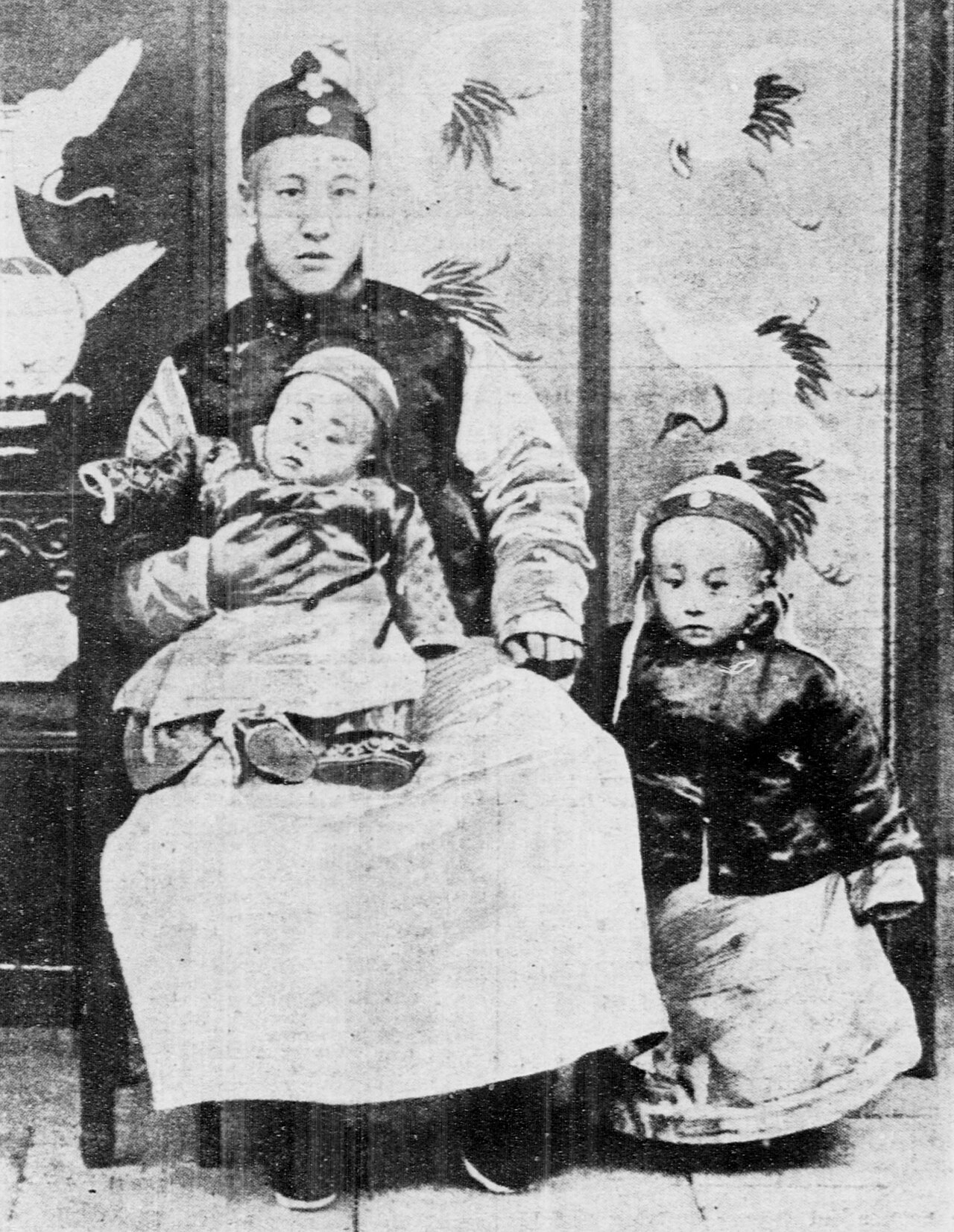
PuYi 1909
Unknown author · 1909
 Document
Secondary source
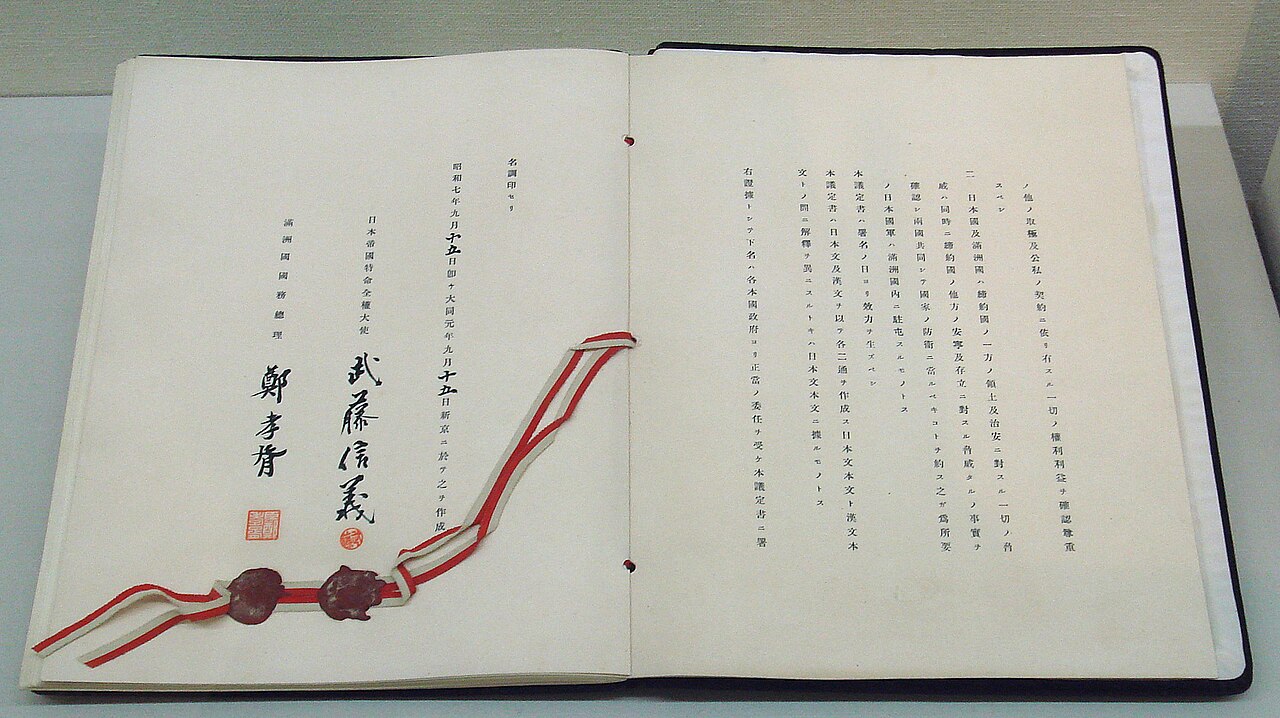
Lytton Report
Lytton Commission · 1932

Free account
Read every Puyi source
Sign up free →
Ready when you are
Start chatting with Puyi now.
20 messages free · No credit card · Available in 50+ languages.