


Secondary sourcePaintingc. 1674
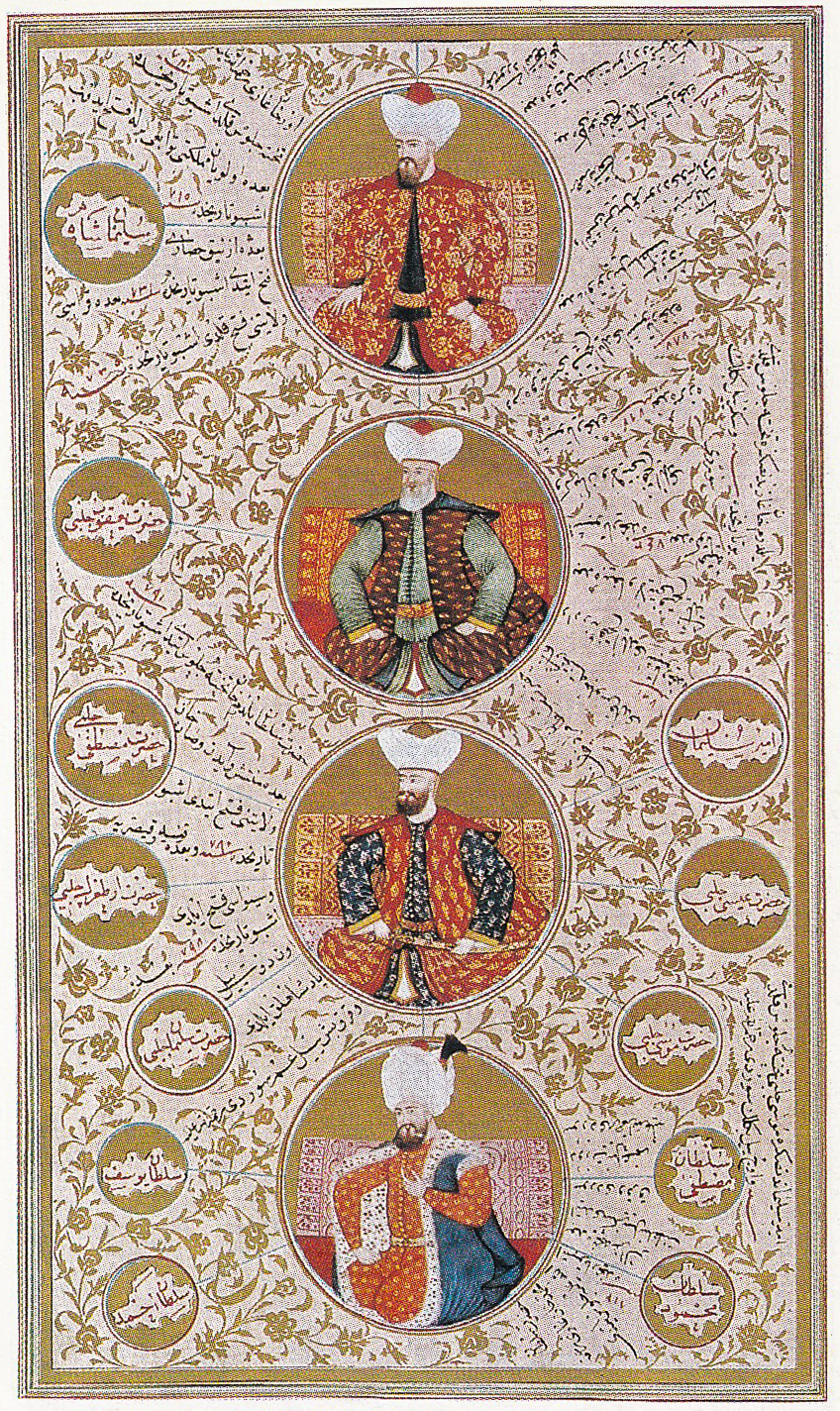
Orhan, Murad I, Bayezid I and Mehmed I
c. 1674
A painted Ottoman genealogy page from about 1674, showing four sultans in circular portraits, including Bayezid I. It was made long after his lifetime.
Places Bayezid I within a later Ottoman dynastic line, showing how his place in family history was remembered long after his lifetime.
About this source
What it is
This is a painting from about 1674 that shows an Ottoman dynastic genealogy page. Four circular portraits of sultans are stacked vertically on a gold floral background. The page is surrounded by Arabic-script text and labeled medallions. The figures wear turbans and rich robes. The artist is unknown. The four rulers are Orhan, Murad I, Bayezid I and Mehmed I.
Why it matters
The page presents Bayezid I as one link in a family line of rulers. Such genealogies were used to show that a dynasty had a long and orderly history. Because the painting was made around 1674, about 270 years after Bayezid's death, it reflects how later Ottoman readers and makers chose to remember their early sultans.
Look closer
- Why might the artist place these rulers one above another, and what does that arrangement suggest about succession?
- What do the gold background and the rich robes tell you about how the dynasty wanted to be seen?
- Which rulers or events are left out of a family line like this, and why might that be?
This painting is part of the curated material that grounds the AI version of Bayezid I, Mehmed I and Orhan on Humy.ai — when students ask about related events, the AI can quote it and cite it.
More Bayezid I sources
Browse all 91 →
Ready when you are
Start chatting with Bayezid I now.
20 messages free · No credit card · Available in 50+ languages.