


Secondary sourcePainting1859
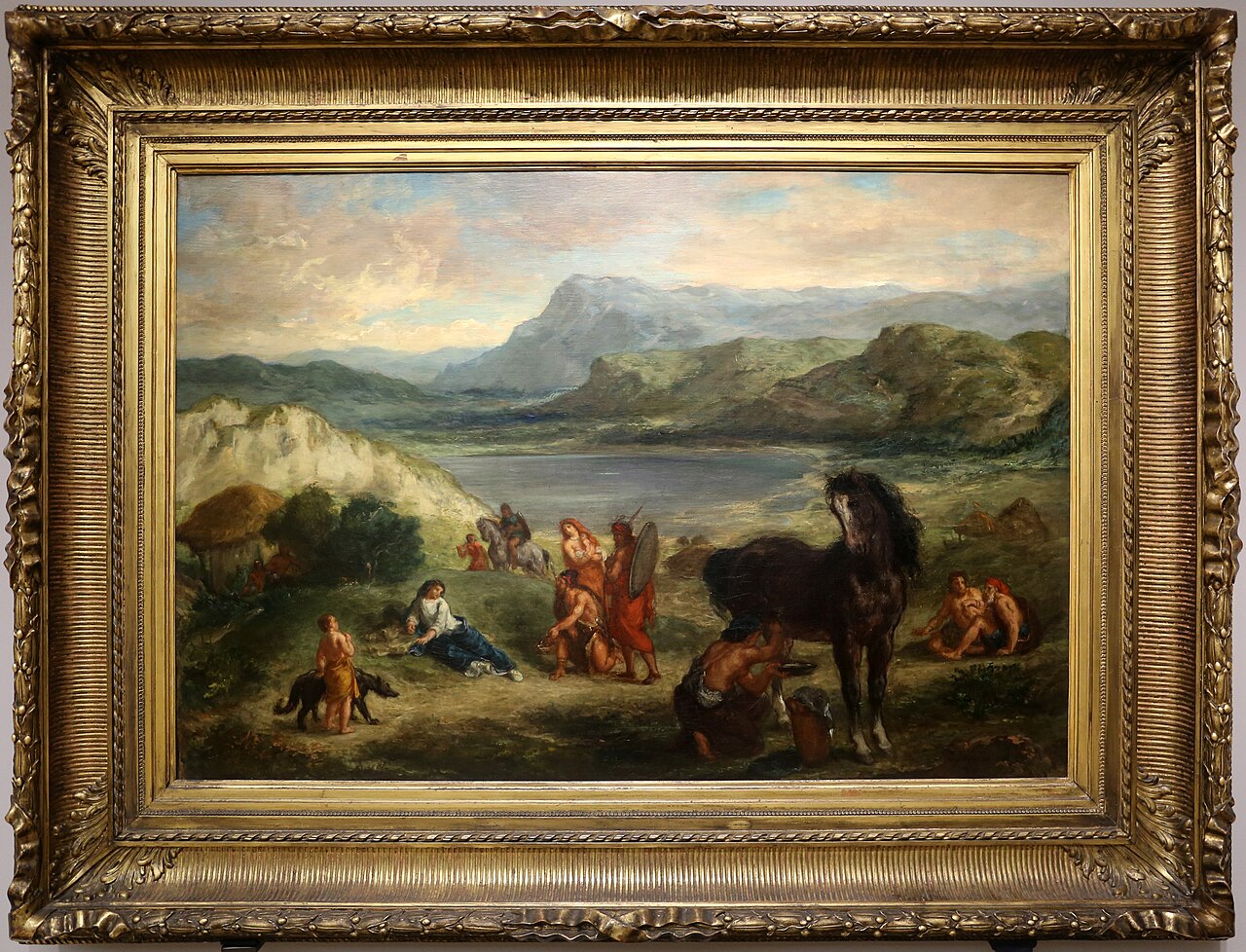
Ovid Among the Scythians
Eugène Delacroix · 1859
A painting by Eugène Delacroix imagining Ovid's life in exile among the Scythians near the Black Sea, where he was banished by Rome.
This painting imagines Ovid's years of exile among the Scythians after his banishment from Rome.
About this source
What it is
This is a painting by the French artist Eugène Delacroix, made in 1859, titled Ovid Among the Scythians. It shows a wide landscape with a lake and hills, and figures in the foreground including a seated woman, standing figures in red robes, a horse, a dog, and reclining men.
Why it matters
The painting imagines the Roman poet Ovid during his exile at Tomis, on the edge of the Roman world, after he was banished by the emperor Augustus. Delacroix, working centuries later, used the scene to show Ovid living among a foreign people, far from the comforts of Rome, reflecting on themes of displacement and survival in an unfamiliar land.
Look closer
- What details in the landscape and figures suggest this is a place far from Rome?
- Why might a 19th-century French painter be drawn to the story of a Roman poet's exile?
- What does the calm, peaceful mood of the painting suggest about how Delacroix imagined Ovid's exile, compared to how Ovid himself described it in his poetry?
This painting is part of the curated material that grounds the AI version of Ovid on Humy.ai — when students ask about related events, the AI can quote it and cite it.

Ready when you are
Start chatting with Ovid now.
20 messages free · No credit card · Available in 50+ languages.