


Secondary sourcePainting1859
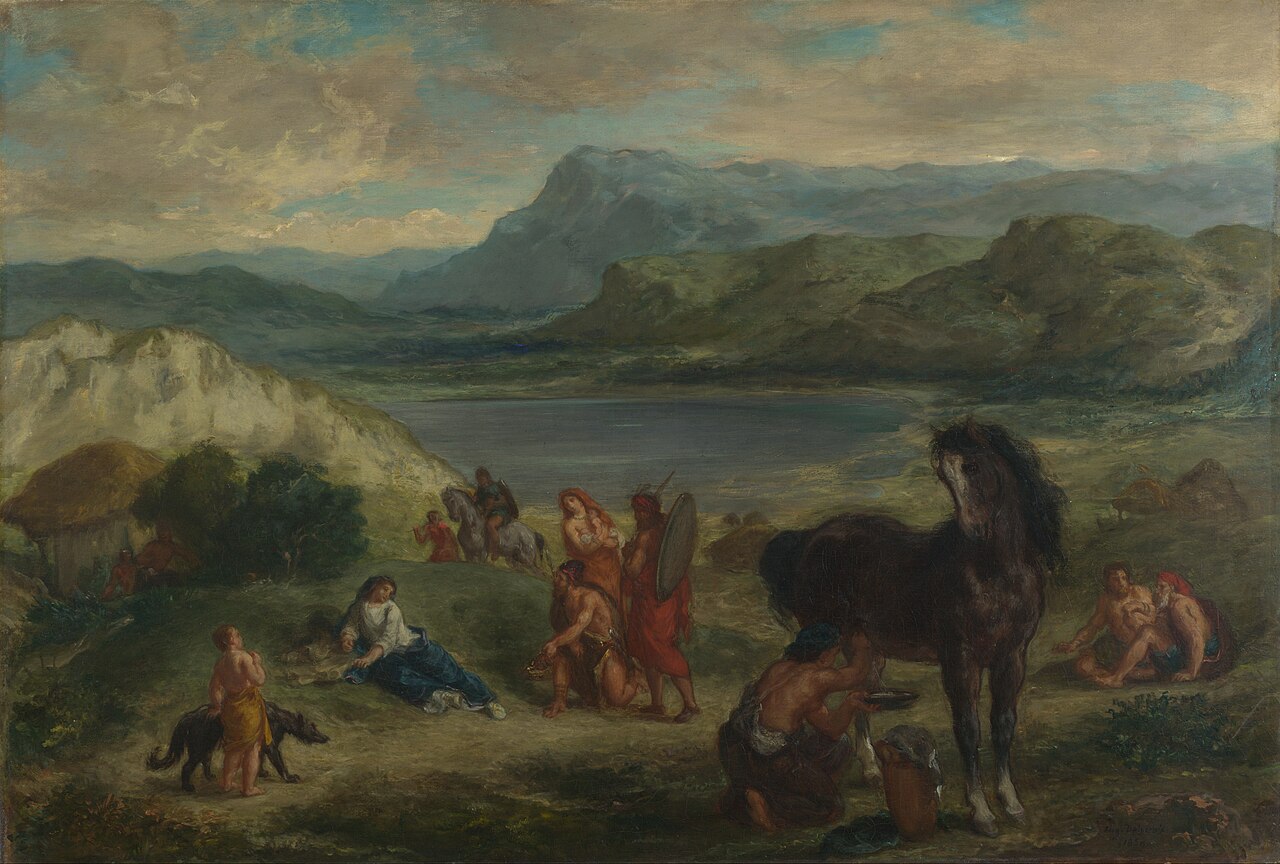
Ovid Among the Scythians
Eugène Delacroix · 1859
A Romantic oil painting by Eugène Delacroix imagining the exiled Ovid's arrival among the peoples of the Black Sea region.
A Romantic painting imagining Ovid's exile among the Scythians, shaping how later generations pictured the banished poet.
About this source
What it is
This oil painting was made by the French painter Eugène Delacroix in 1859 and is now in the National Gallery in London. It shows the Roman poet Ovid during his exile at the Black Sea port of Tomis, surrounded by local people, animals, and a wide hilly landscape.
Why it matters
Ovid was banished from Rome by the Emperor Augustus and spent his last years writing poems of exile such as the Tristia. Delacroix, working over 1800 years later, turned this episode into the defining Romantic image of the misunderstood artist cast out among "barbarians". The painting says as much about 19th-century ideas of civilisation and genius as it does about ancient Rome.
Look closer
- How does Delacroix pose Ovid's body, and what feeling does it create?
- What do the Scythian figures seem to be doing, and how are they shown reacting to him?
- Why might an artist centuries later be drawn to the story of an exiled poet?
This painting is part of the curated material that grounds the AI version of Ovid and Eugène Delacroix on Humy.ai — when students ask about related events, the AI can quote it and cite it.
Ready when you are
Start chatting with Ovid now.
20 messages free · No credit card · Available in 50+ languages.