


Secondary sourcePainting1862
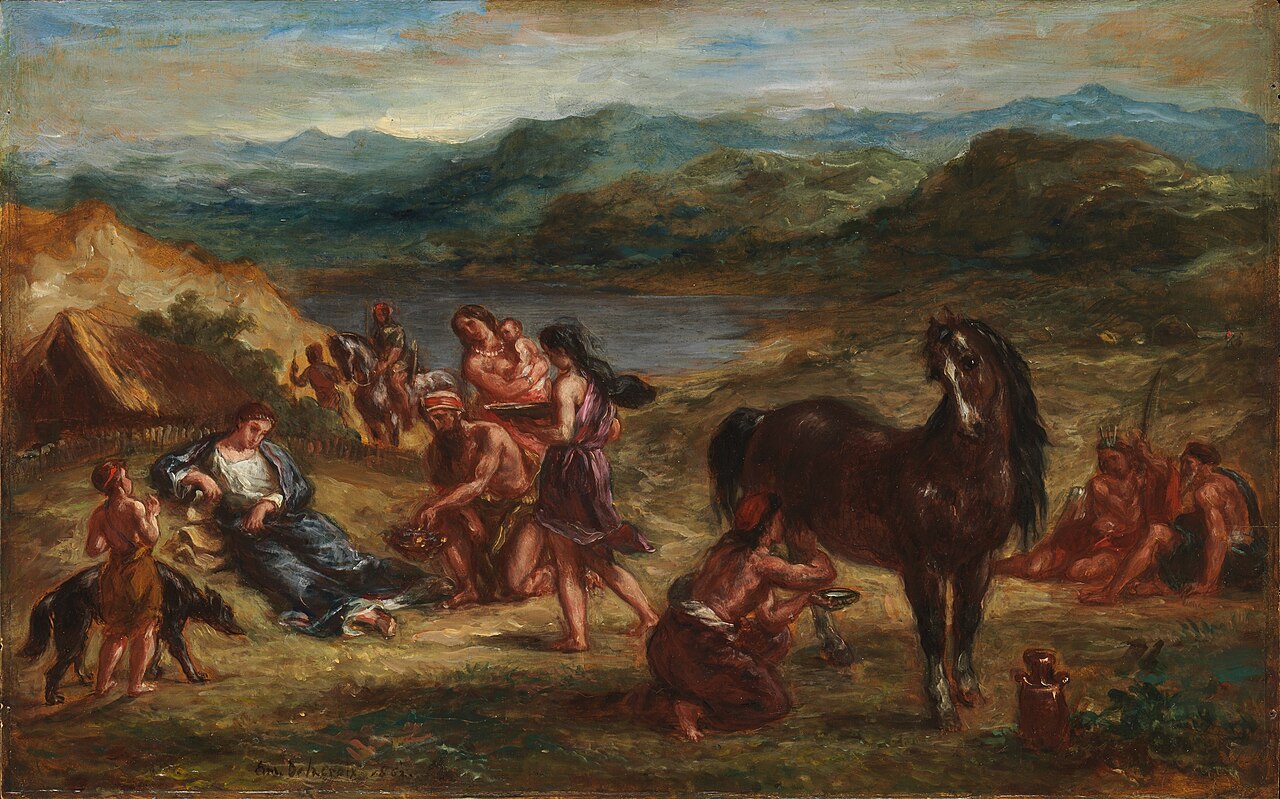
Ovid Among the Scythians
Eugène Delacroix · 1862
Delacroix's painting imagines Ovid living in exile among the Scythians, a later artistic retelling of the poet's banishment.
Depicts Ovid's imagined life in exile among the Scythians after his banishment from Rome.
About this source
What it is
This is a painting by Eugène Delacroix, dated 1862, held at the Metropolitan Museum of Art. It is a smaller, later version of a scene imagining Ovid's exile, showing a landscape with a hut, a reclining woman, a horse, figures tending a fire, and riders in the distance.
Why it matters
Delacroix painted this scene to imagine Ovid's life after he was exiled from Rome, living among a foreign people. The painting reflects how 19th-century artists like Delacroix returned to classical stories of exile and used them to explore ideas about distant cultures and displacement.
Look closer
- What in the scene suggests an unfamiliar or foreign land to a Roman exile?
- Why might Delacroix have chosen to paint this moment of Ovid's story rather than his life in Rome?
- What does the painting leave out about the real hardships of exile?
This painting is part of the curated material that grounds the AI version of Ovid and Eugène Delacroix on Humy.ai — when students ask about related events, the AI can quote it and cite it.


Ready when you are
Start chatting with Ovid now.
20 messages free · No credit card · Available in 50+ languages.