


Secondary sourcePainting15th century
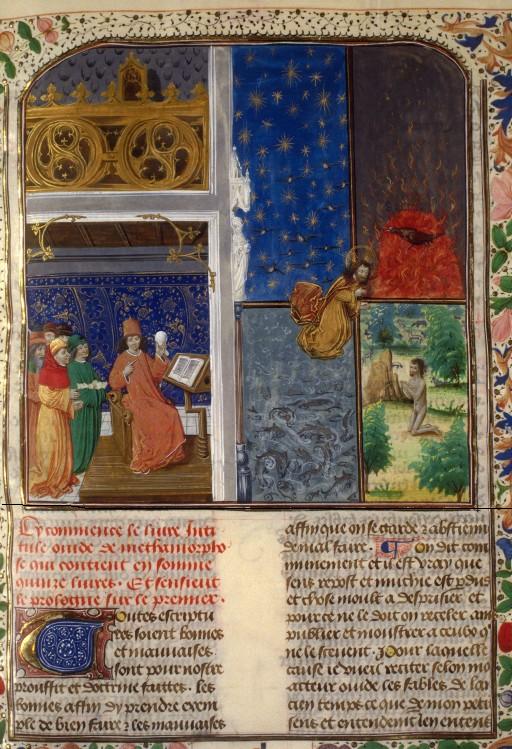
Ovid Comparing the Universe to an Egg
15th century
A 15th-century Flemish manuscript illumination showing Ovid as a learned philosopher explaining the structure of the cosmos.
This manuscript illumination depicts Ovid himself as a learned author explaining the cosmos, shaping his later image.
About this source
What it is
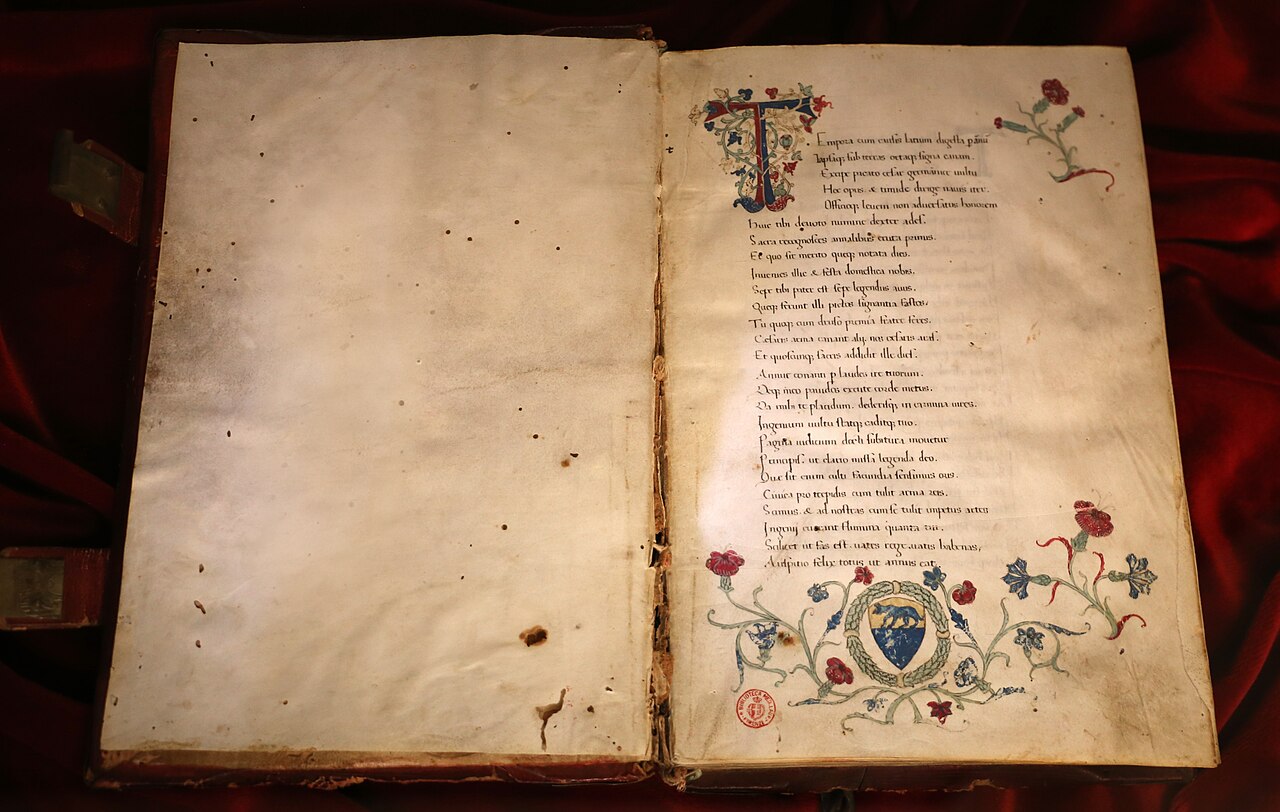
This illumination comes from a 15th-century Flemish manuscript of Ovid's Metamorphoses, created in what is now Belgium. It depicts Ovid comparing the universe to an egg.
Why it matters
The image reflects how medieval and early modern audiences viewed Ovid not just as a poet of myth but as a philosopher offering explanations of the natural world. It shows how his reputation and the meaning of his work changed over the centuries after his death.
Look closer
- Why might medieval illustrators have portrayed Ovid as a scholar or philosopher rather than simply a storyteller?
- What does the egg comparison suggest about how people understood the universe at this time?
- How might this image differ from how Ovid himself might have wanted to be portrayed?
This painting is part of the curated material that grounds the AI version of Ovid on Humy.ai — when students ask about related events, the AI can quote it and cite it.

Ready when you are
Start chatting with Ovid now.
20 messages free · No credit card · Available in 50+ languages.