


Secondary sourceArtifactphotograph dated 5 August 2011
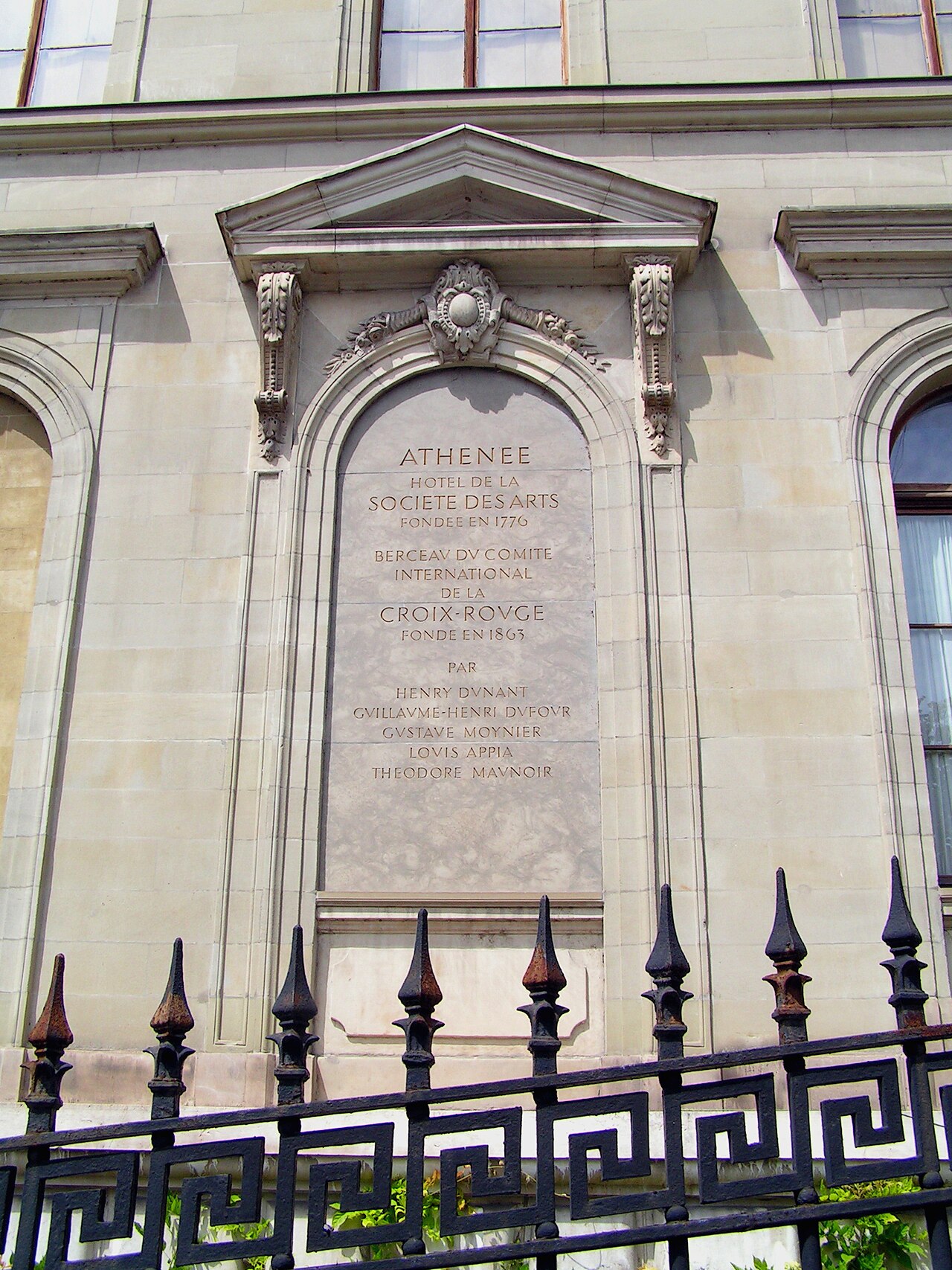
Palais de l'Athénée, Geneva
Romano1246 · photograph dated 5 August 2011
A 2011 photograph of the Geneva building where the committee that became the ICRC met in 1863, with a plaque naming its founders. The building is a place central to Dunant's founding work.
Shows the Geneva building where the founding committee met in 1863, connecting Dunant to the place of the Red Cross's beginnings.
About this source
What it is
This photograph, dated 5 August 2011, shows the stone facade of the Palais de l'Athénée at Rue de l'Athénée 2 in Geneva, Switzerland. A carved pediment and a central arched marble plaque are visible, and a black wrought-iron fence with spearhead finials runs across the foreground. The plaque names the Hotel de la Société des Arts, founded in 1776, and states that the International Committee of the Red Cross was founded in 1863 by Henry Dunant, Guillaume-Henri Dufour, Gustave Moynier, Louis Appia and Theodore Maunoir. The uploader is listed as Romano1246.
Why it matters
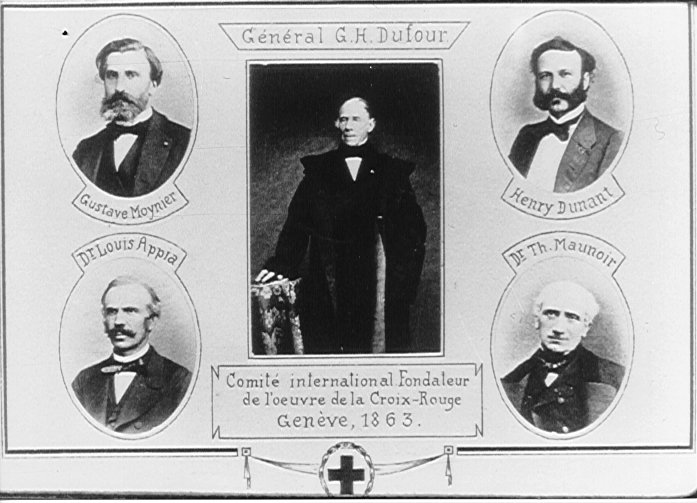
This building is where the committee that became the International Committee of the Red Cross met in 1863. Dunant worked with Dufour, Moynier, Appia and Maunoir on the founding, so the building connects all five men to the start of the Red Cross. The photograph is a modern snapshot, so it shows the place as it looks today rather than as it looked in 1863.
Look closer
- What does the plaque choose to emphasise about the building, and why might it name several founders rather than one?
- Why might a building from an earlier society be remembered for a meeting held there in 1863?
- What does a single modern photograph leave out about the building's history and the people who used it?
This artifact is part of the curated material that grounds the AI version of Henry Dunant on Humy.ai — when students ask about related events, the AI can quote it and cite it.
More Henry Dunant sources
Browse all 81 →
Ready when you are
Start chatting with Henry Dunant now.
20 messages free · No credit card · Available in 50+ languages.