


Secondary sourceBook9th century
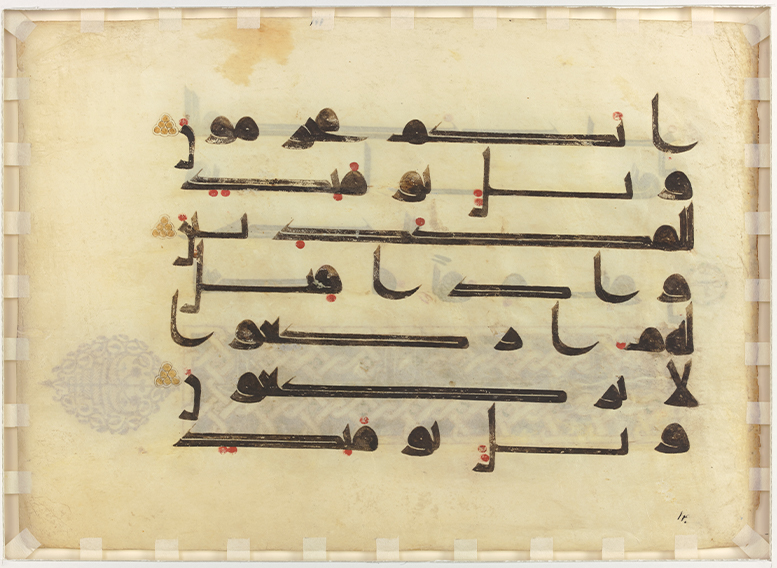
Pars Museum Kufic Qur'an, Folio 100a
9th century
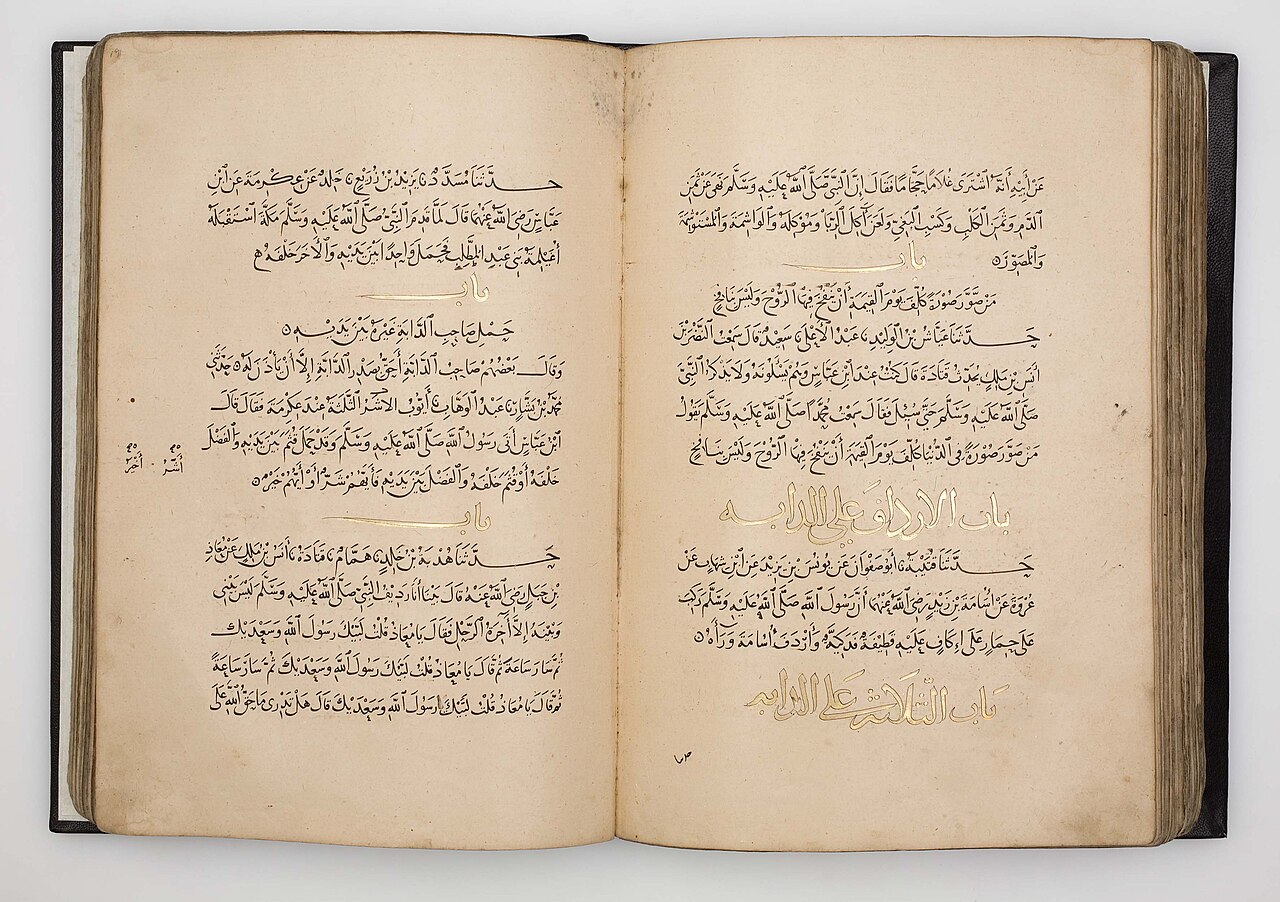
Another page from the same ninth-century Kufic Qur'an manuscript, showing the script style used to preserve the scripture across generations.
A companion folio to the same manuscript, part of the written tradition of the Qur'an linked to Uthman's standardization.
About this source
What it is
This is another folio from the same Kufic Qur'an manuscript, MS 548, made in the 9th century. It was once part of the Pars Museum's collection and is now held at the Louvre Abu Dhabi.
Why it matters
Uthman ibn Affan is credited in Islamic tradition with overseeing the compilation of an authoritative Qur'an text during his caliphate. This folio is part of a later manuscript that continued the written transmission of that text, decorated with gold dots and faint arabesque patterns.
Look closer
- What differences can you spot between this folio and its companion page, Folio 100b?
- Why might manuscripts like this one be considered valuable enough to be stolen?
- What do the faint background patterns add to the page beyond the text itself?
This book is part of the curated material that grounds the AI version of Uthman ibn Affan on Humy.ai — when students ask about related events, the AI can quote it and cite it.
More Uthman ibn Affan sources
Browse all 45 →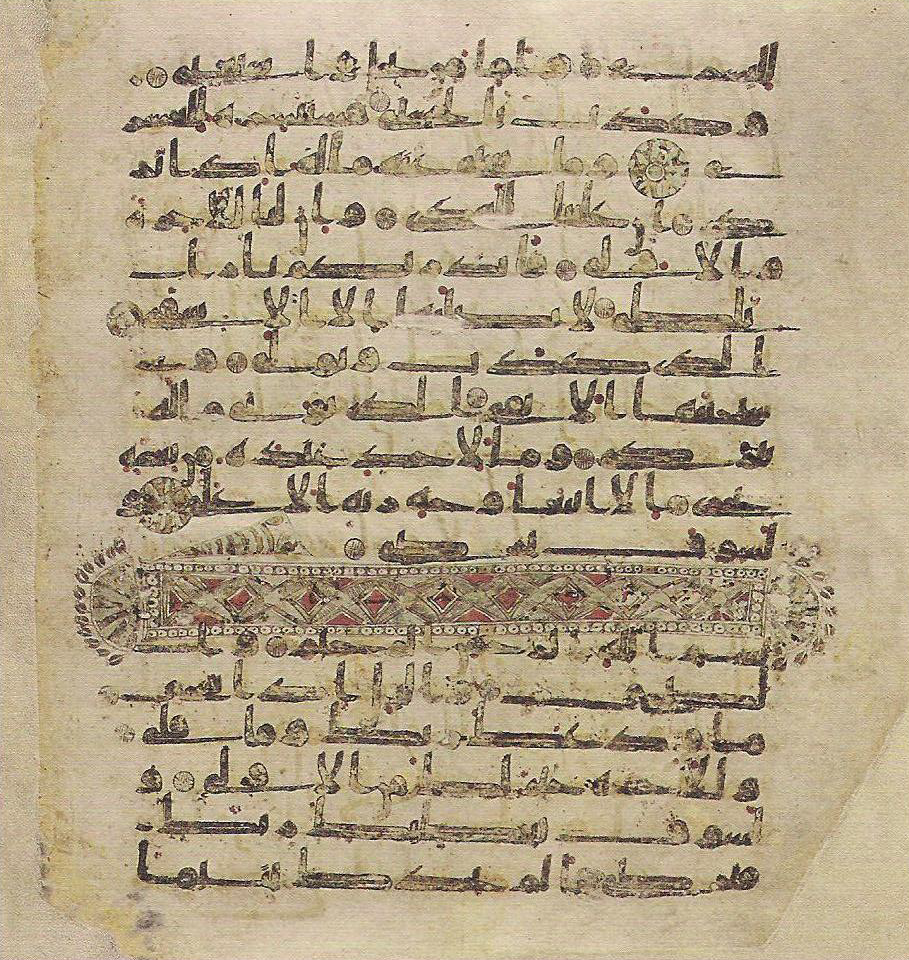 Book
Secondary source
Topkapi manuscript
c. 725-775 CE (traditionally linked to Uthman, d. 656)
 Document
Primary source
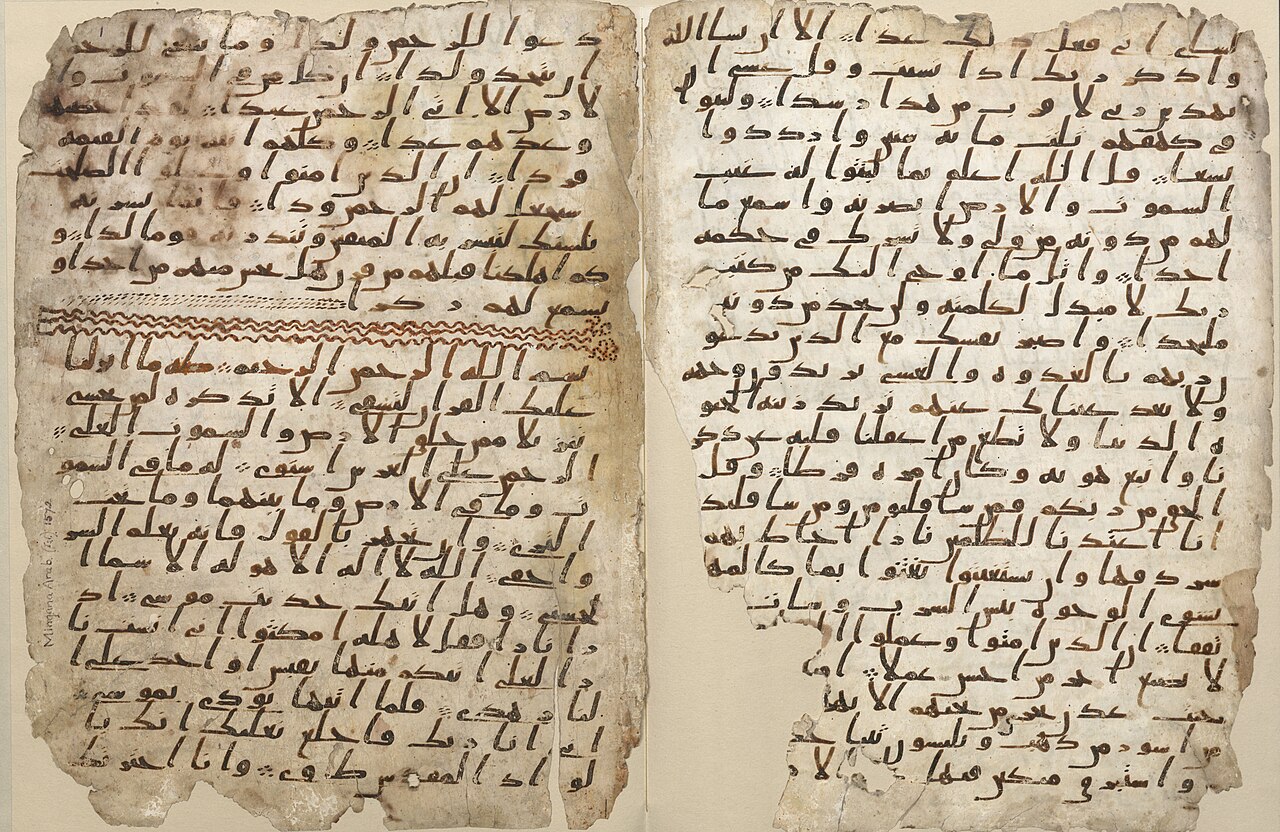
Birmingham Quran Manuscript
568–645 CE
 Book
Primary source
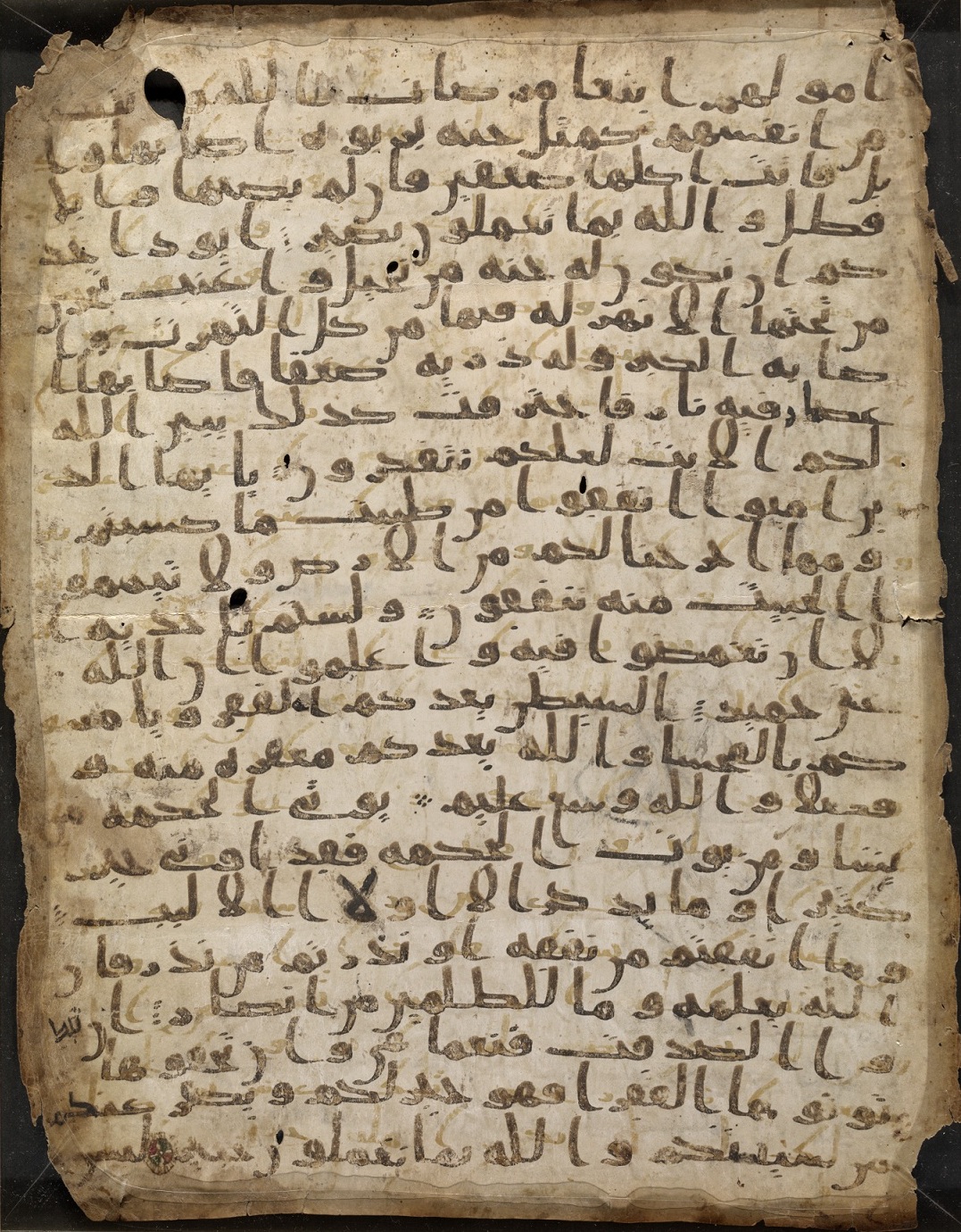
Sana'a Manuscript
c. 650 CE
 Book
Secondary source
Sahih al-Bukhari
Muhammad ibn Isma'il al-Bukhari · c. 846 CE
Free account
Read every Uthman ibn Affan source
Sign up free →
Ready when you are
Start chatting with Uthman ibn Affan now.
20 messages free · No credit card · Available in 50+ languages.