


Primary sourcePainting1810
Paso de quindiu
Christian Duttenhofer · 1810
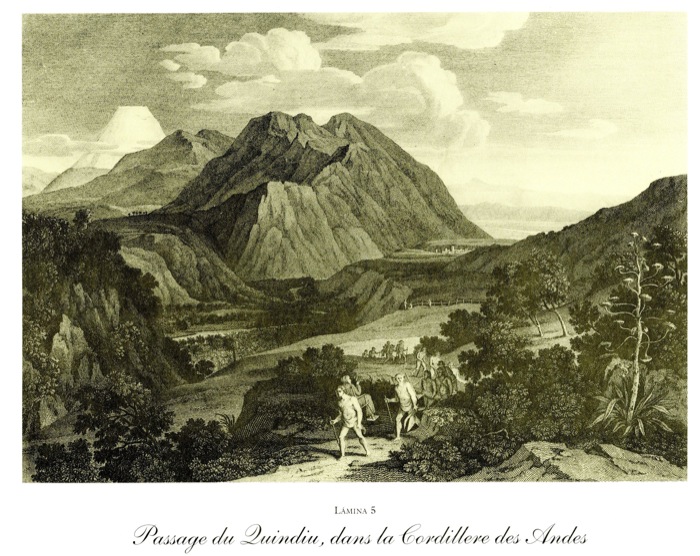
An engraved plate from Humboldt's Vues des cordillères showing travellers carried over the Quindío pass in the Andes. It was published in 1810 as part of his work on American landscapes and indigenous monuments.
Humboldt's own book plate shows his interest in Andean landscapes and the labour that made travel there possible.
About this source
What it is
This engraved plate comes from Humboldt's book Vues des cordillères, published in 1810. It shows a steep Andean peak on the right, a snow-capped volcano behind it, and a valley with fields and a small settlement below. In the foreground, small figures walk along a path among trees and shrubs. The catalogue lists the creators as Christian Duttenhofer and Humboldt. The caption on the image reads 'Passage du Quindiu, dans la Cordillère des Andes'.
Why it matters
Humboldt combined landscape views with scientific information about the peoples and monuments of America. The curator's note says this plate shows his attention to colonial labour: human carriers bear travellers over the pass. The plate is a useful source for how Humboldt presented the Andes to European readers, but it shows the carriers only as small figures and does not name them.
Look closer
- Who are the figures on the path, and what are they doing?
- Why might the artist make the steep peak the largest thing in the view?
- What does the picture leave out about the people who carried the travellers?
This painting is part of the curated material that grounds the AI version of Alexander von Humboldt on Humy.ai — when students ask about related events, the AI can quote it and cite it.
More Alexander von Humboldt sources
Browse all 93 →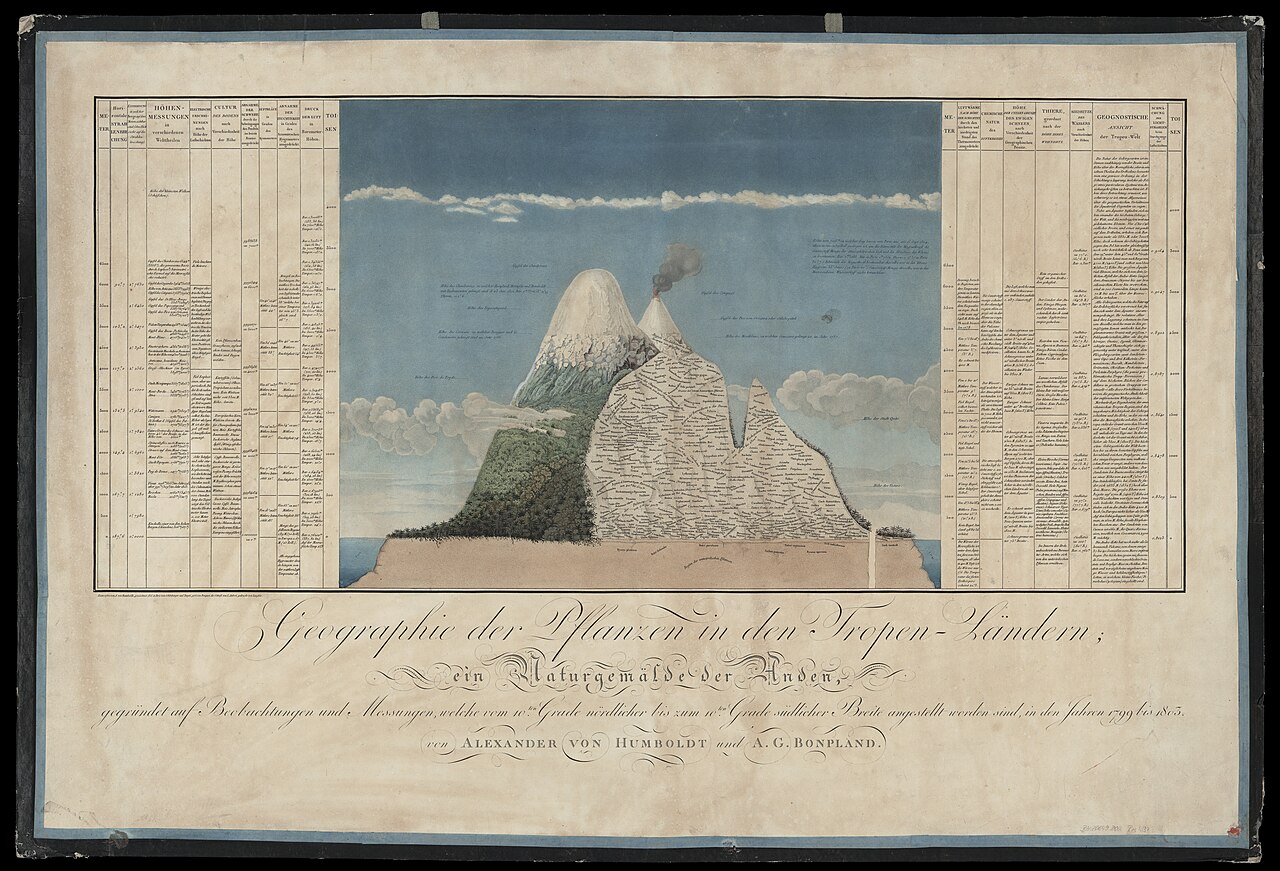 Artifact
Primary source
Naturgemälde der Anden
Alexander von Humboldt · 1805
 Book
Primary source
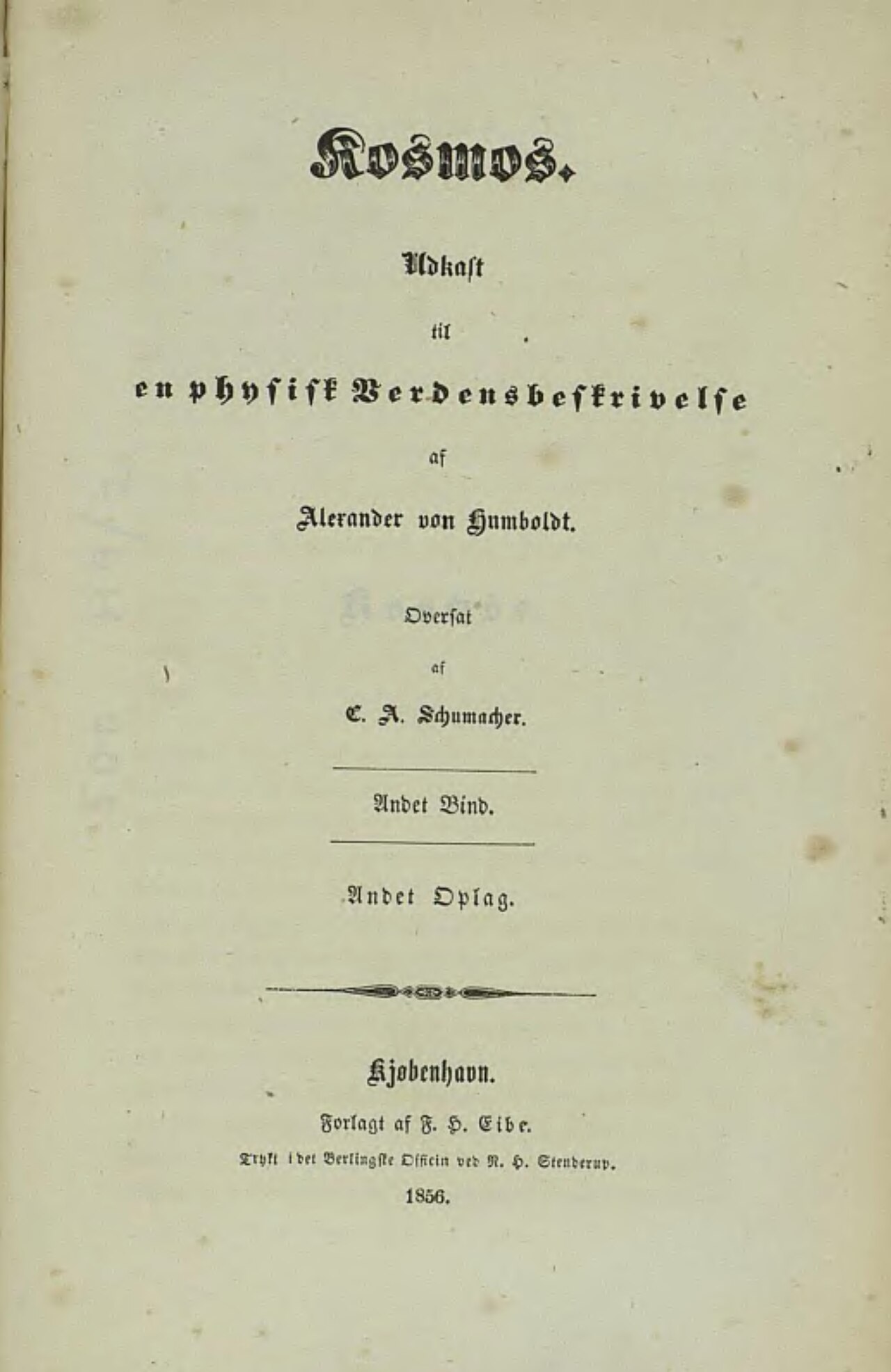
Cosmos
Alexander von Humboldt · 1845
 Painting
Primary source
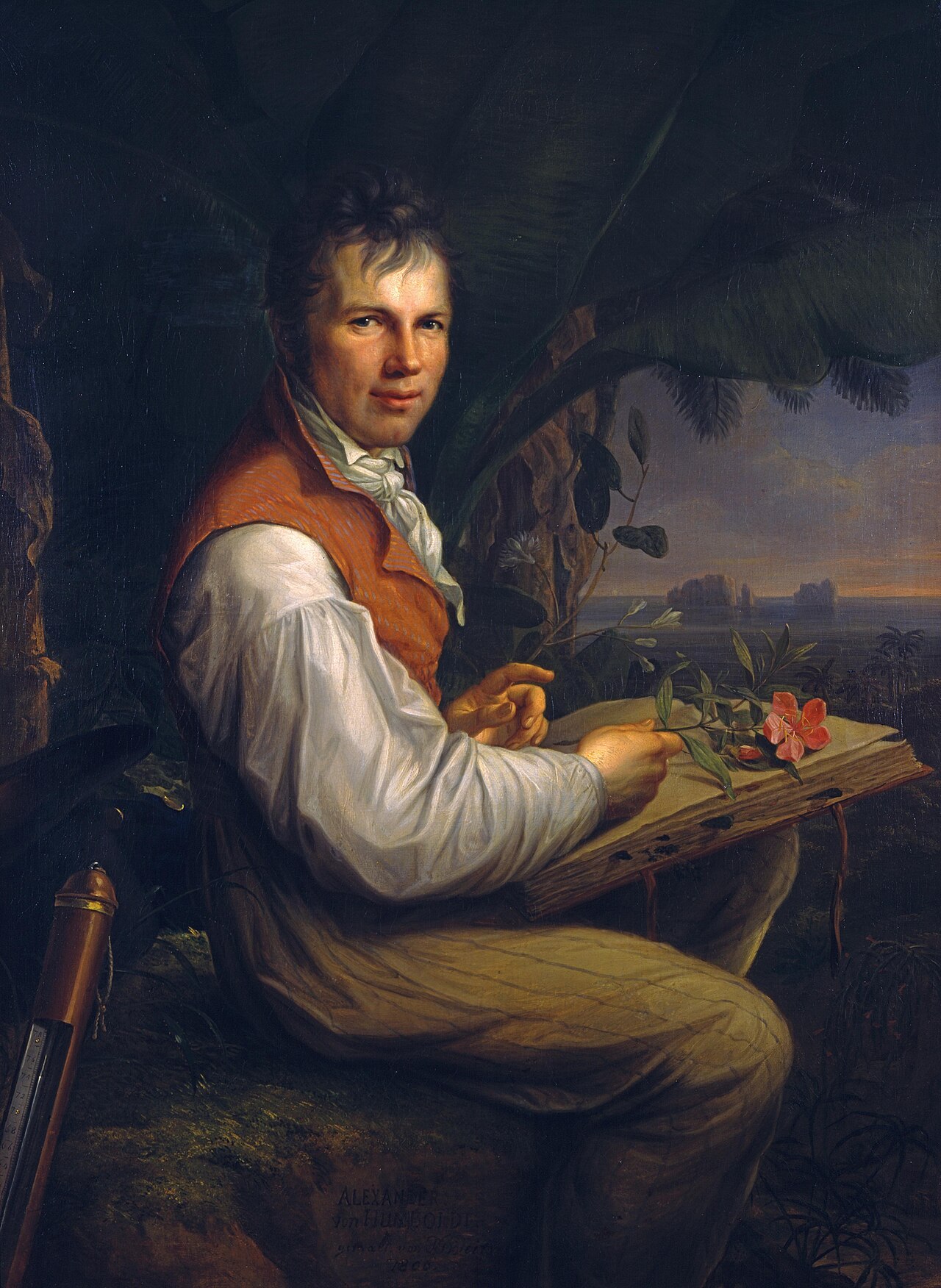
Portrait of Alexander von Humboldt
Friedrich Georg Weitsch · 1806
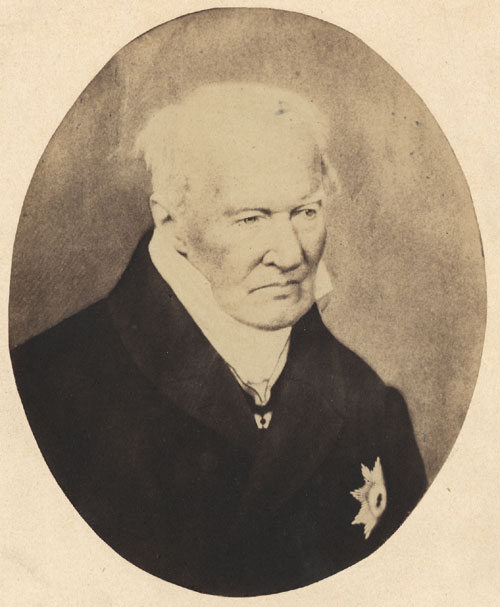 Photograph
Primary source
Alexander von Humboldt photo 1857
Verlag von L. Haase & Co. · 1857
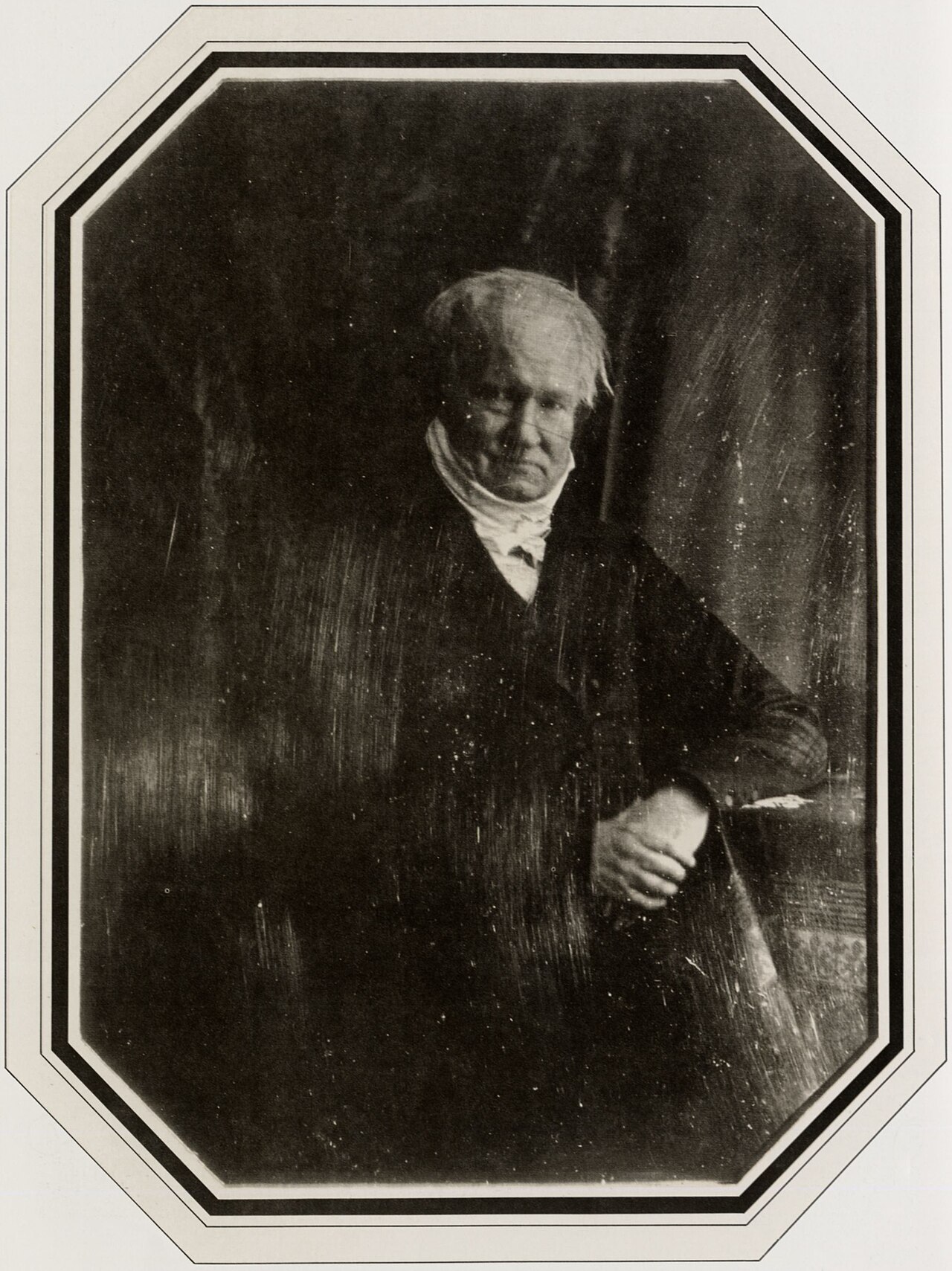
Free account
Read every Alexander von Humboldt source
Sign up free →
Ready when you are
Start chatting with Alexander von Humboldt now.
20 messages free · No credit card · Available in 50+ languages.