


Primary sourcePhotographc. 1970
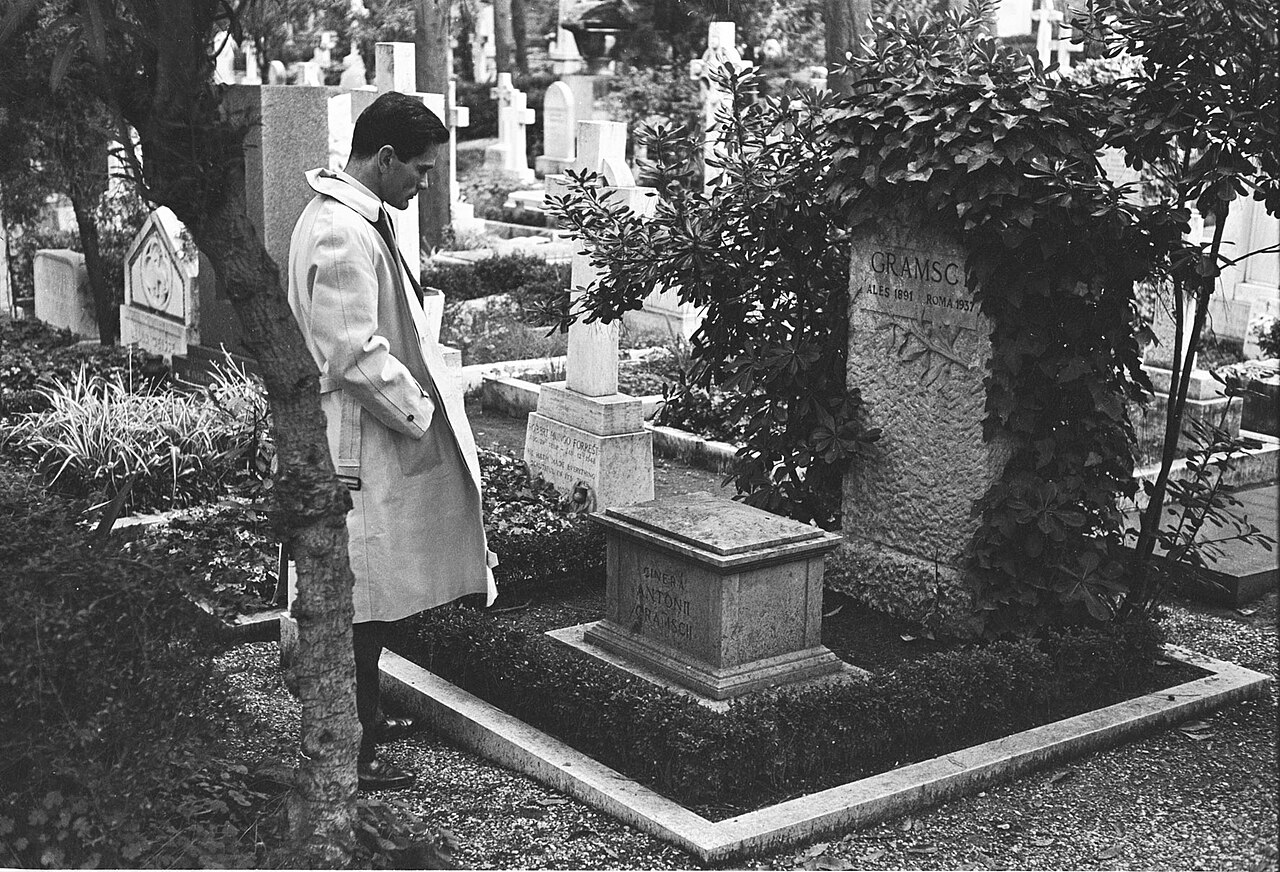
Pasolini at Gramsci's Tomb
Unknown (ANSA) · c. 1970
A photograph of Pasolini standing before the tomb of Antonio Gramsci, the setting of his best-known poem.
The photograph shows Pasolini at Gramsci's tomb, the setting of his famous poem reflecting on political and intellectual commitment.
About this source
What it is
This black-and-white photograph, taken around 1970, shows Pier Paolo Pasolini standing before the grave of Antonio Gramsci, the Italian Marxist thinker and politician, marked by a stone bearing his name and dates. Pasolini is shown in a light raincoat, looking down at the tomb.
Why it matters
Gramsci's tomb was the setting of one of Pasolini's most famous poems, which reflected on political commitment, intellectual life and his own conflicted relationship with Marxism and Italian society. The photograph connects Pasolini's physical presence to the place that inspired this important work, showing the real-world roots of his poetry.
Look closer
- What does Pasolini's posture and expression suggest about his feelings in this moment?
- Why might visiting a political thinker's grave be the starting point for a famous poem?
- What does this photograph add to your understanding of the poem that you couldn't get from the text alone?
This photograph is part of the curated material that grounds the AI version of Pier Paolo Pasolini and Antonio Gramsci on Humy.ai — when students ask about related events, the AI can quote it and cite it.
More Pier Paolo Pasolini sources
Browse all 92 →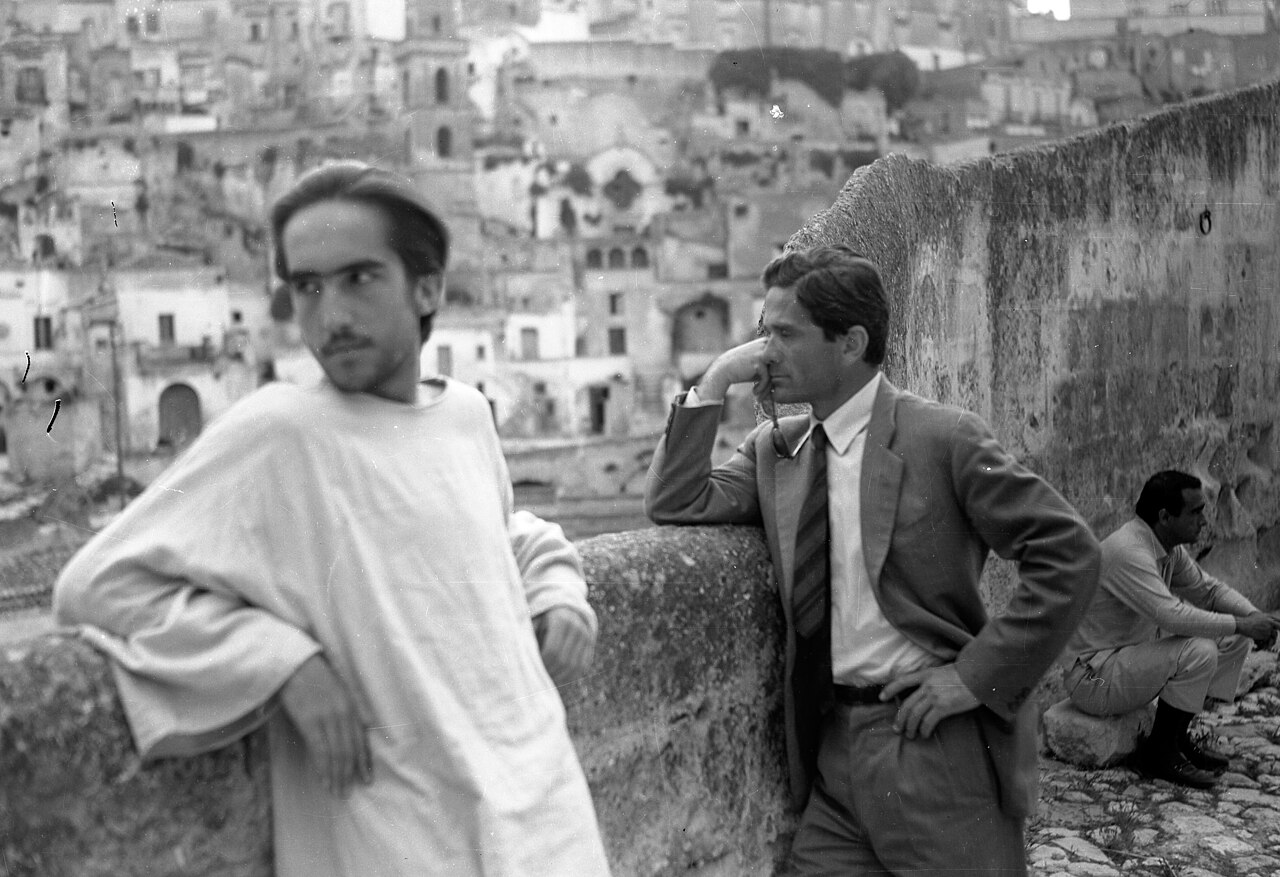 Documentary
Primary source
The Gospel According to St. Matthew
Pier Paolo Pasolini · 1964
 Documentary
Primary source
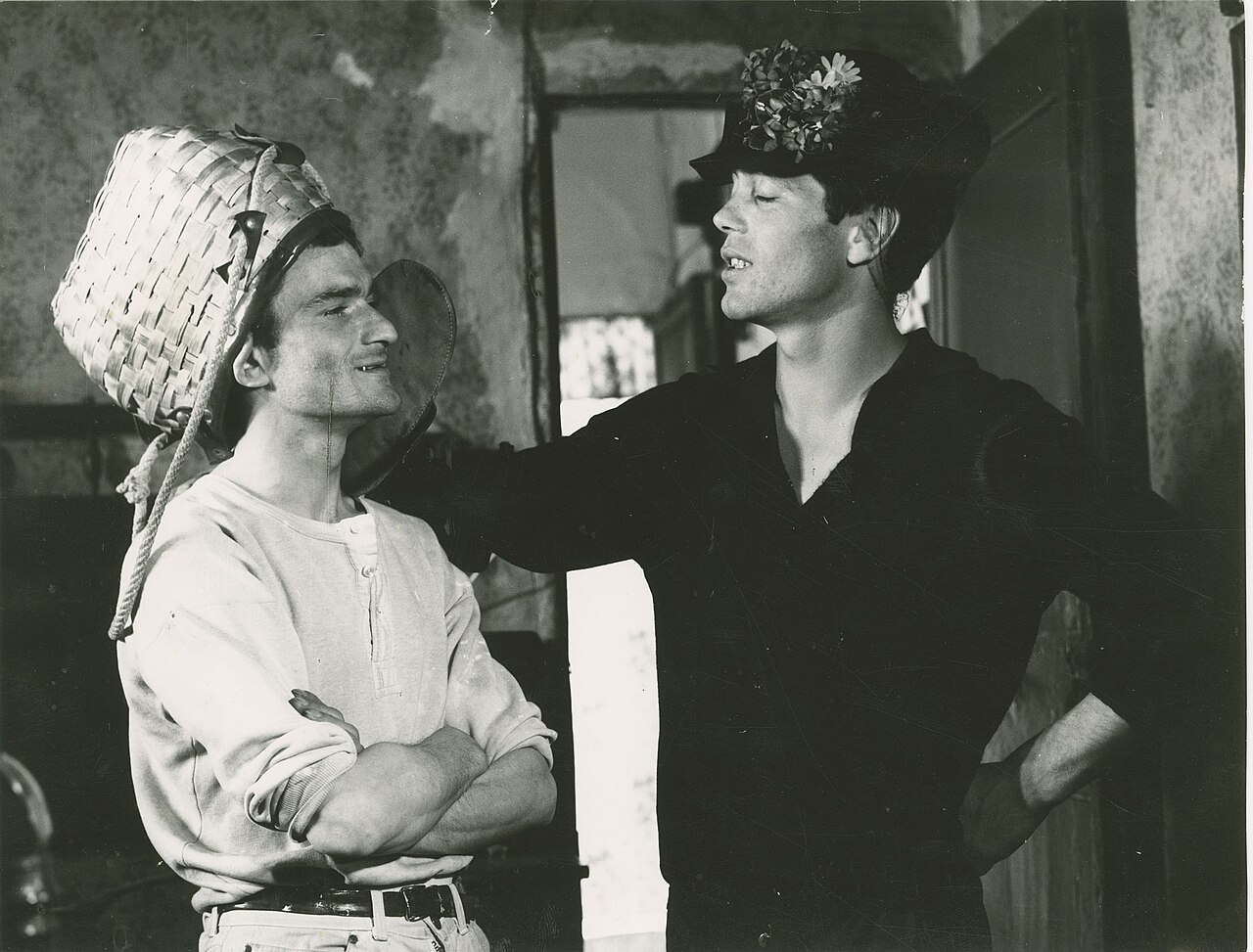
Accattone
Pier Paolo Pasolini · 1961
 Documentary
Primary source
Mamma Roma
Pier Paolo Pasolini · 1962
 Documentary
Primary source
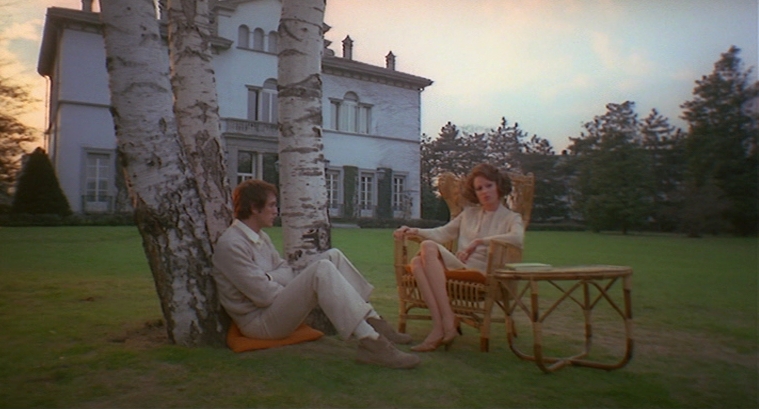
Teorema
Pier Paolo Pasolini · 1968

Free account
Read every Pier Paolo Pasolini source
Sign up free →
Ready when you are
Start chatting with Pier Paolo Pasolini now.
20 messages free · No credit card · Available in 50+ languages.