


Secondary sourcePhotograph7 September 2019
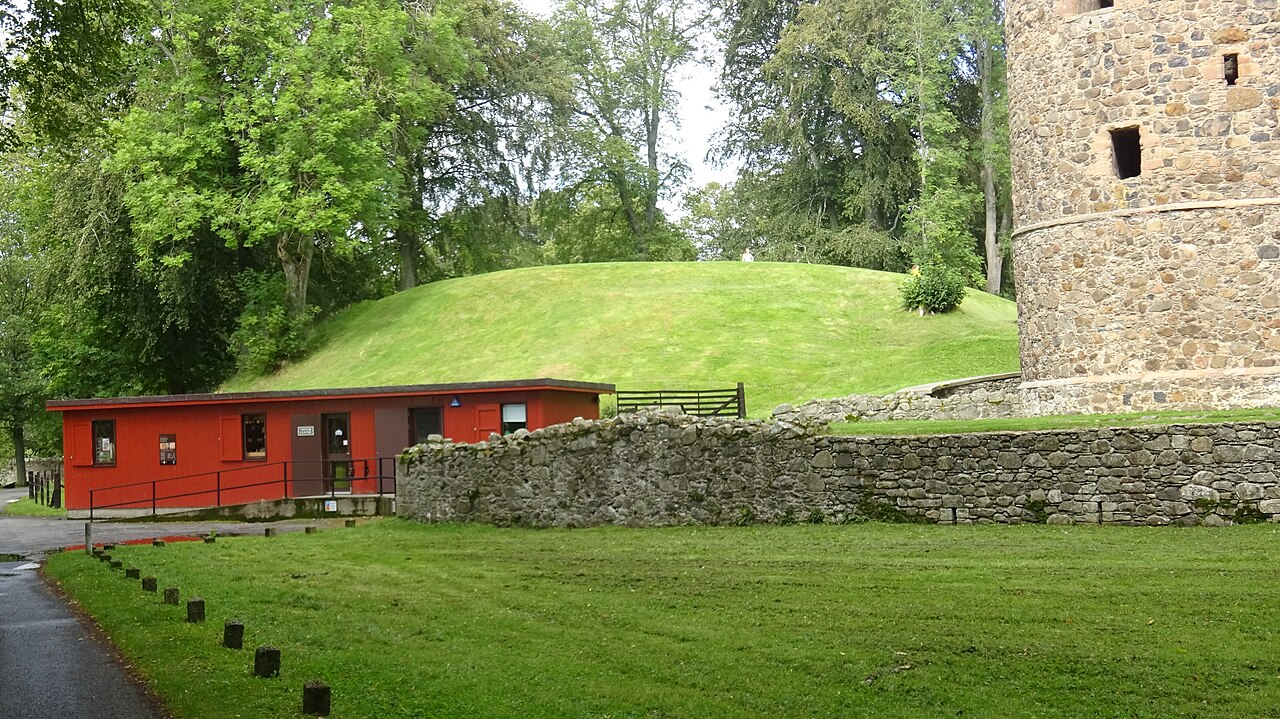
Peel of Strathbogie motte, Huntly Castle
Rosser1954 · 7 September 2019
A modern photograph of the site of a 12th-century motte at Huntly Castle in Aberdeenshire, where Robert the Bruce once took refuge.
It shows a 12th-century motte where Robert the Bruce once took refuge, a place central to his campaigns.
About this source
What it is
This is a modern photograph of the site of the 12th-century Peel of Strathbogie motte at Huntly Castle in Aberdeenshire, Scotland. A motte is a large earthen mound on which a wooden or stone tower was often built. The photograph was taken on 7 September 2019 by the Commons user Rosser1954. It shows a grassy mound rising behind a low red-painted hut and a stone wall, with a round stone tower at the right edge.
Why it matters
Robert the Bruce ruled Scotland from 1306 to 1329 and spent much of his career moving between fortified places during his campaigns. The Commons record says he once took refuge at this site. Such places show how the struggle for power depended on control of strongholds. The photograph shows the site as it looks today, so it cannot show what it was like when Bruce was there.
Look closer
- What does the grassy mound suggest about how this defence was built?
- Why might a modern visitor's photo include a hut and a path?
- What does this photograph leave out about the people who used the site in the 1300s?
This photograph is part of the curated material that grounds the AI version of Robert the Bruce on Humy.ai — when students ask about related events, the AI can quote it and cite it.
More Robert the Bruce sources
Browse all 83 →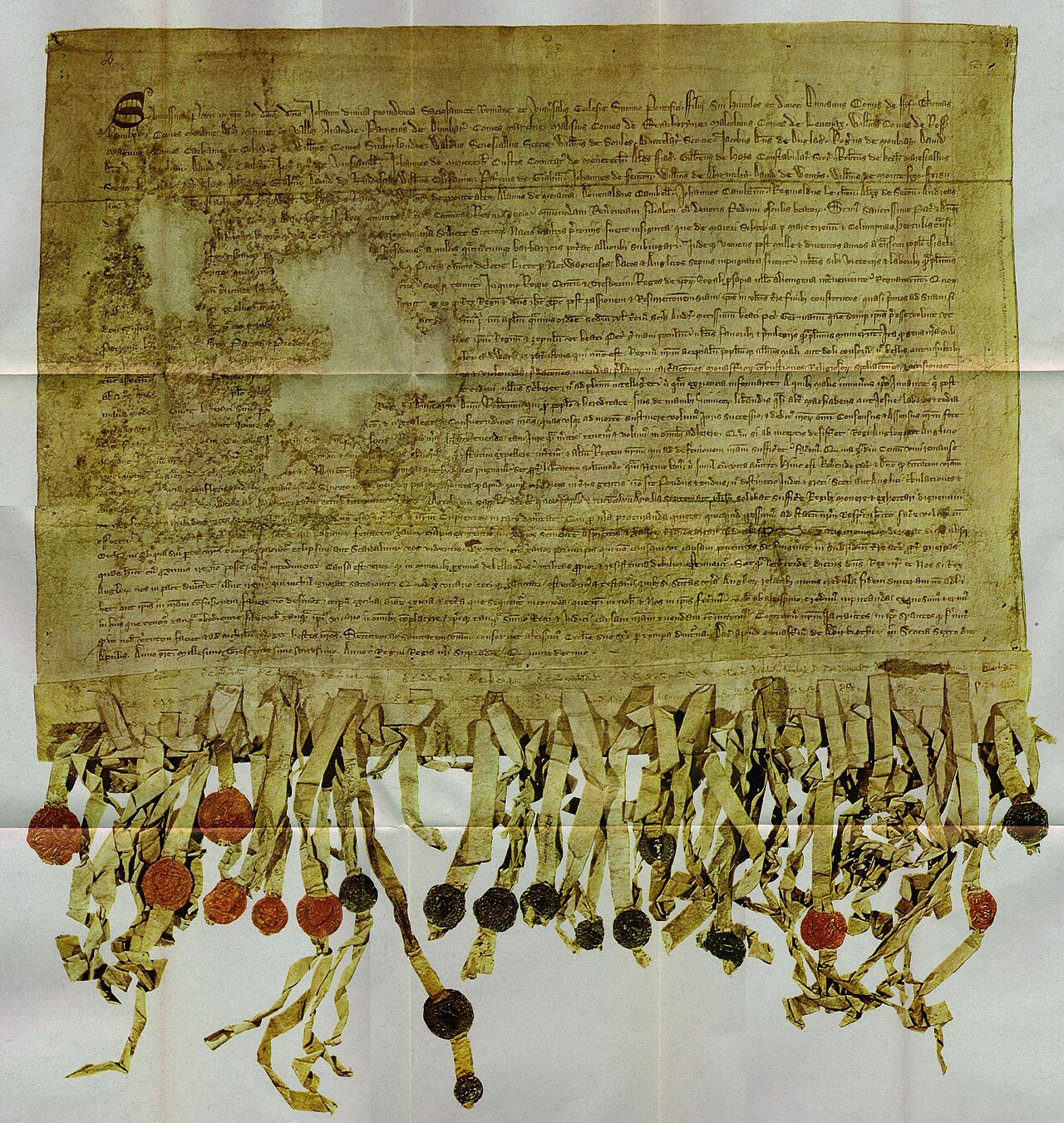 Document
Primary source
Declaration of Arbroath
Bernard of Kilwinning (attributed) · 6 April 1320
 Artifact
Primary source
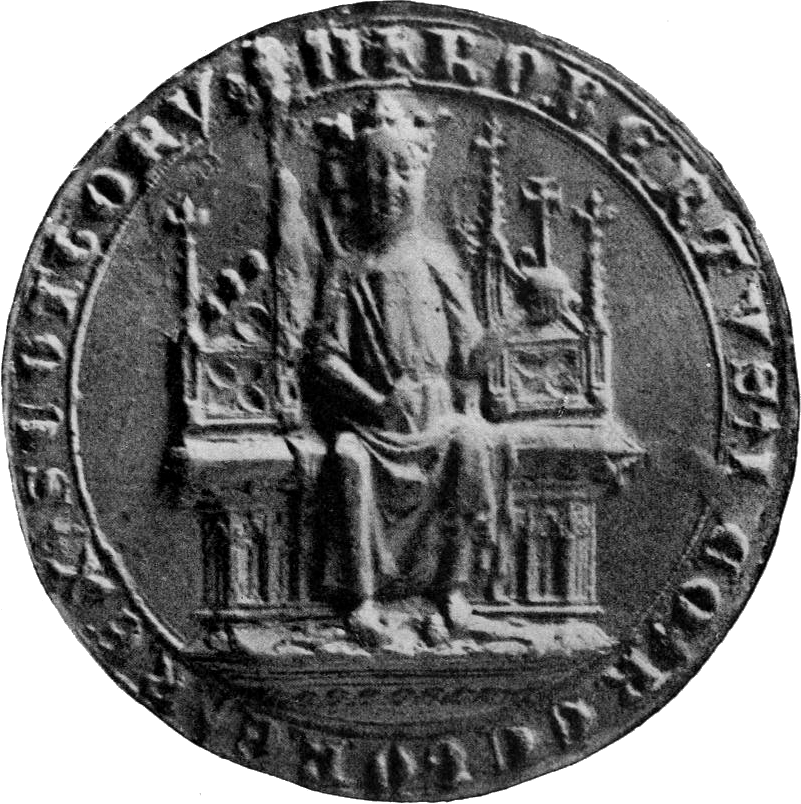
Great Seal of Robert I, King of Scotland
1306-1329
Primary source
Treaty of Edinburgh–Northampton
1328
 Document
Primary source
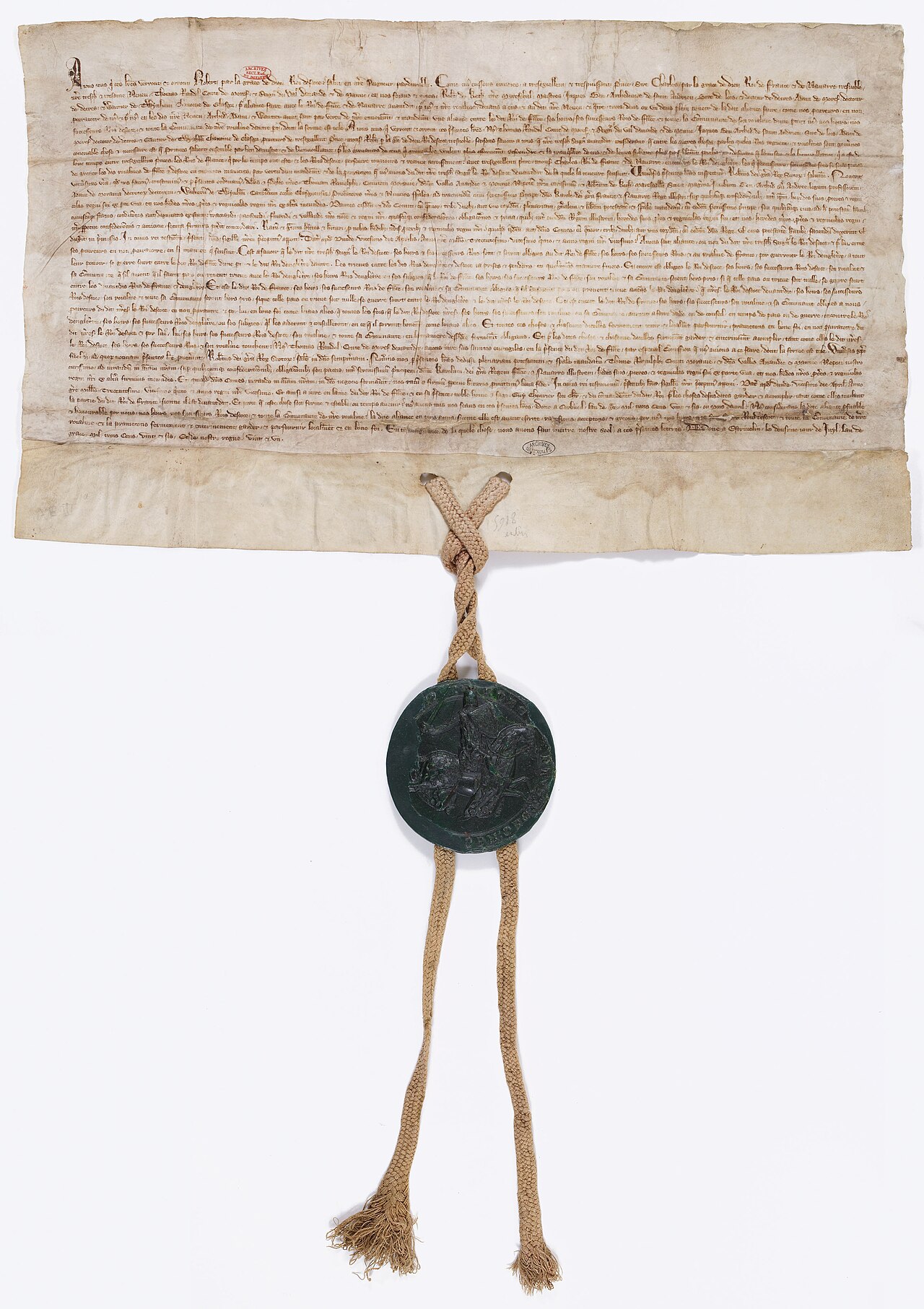
Ratification of the Treaty of Corbeil
12 July 1326
Free account
Read every Robert the Bruce source
Sign up free →
Ready when you are
Start chatting with Robert the Bruce now.
20 messages free · No credit card · Available in 50+ languages.