


Primary sourceDocument1328
Treaty of Edinburgh–Northampton
1328
The 1328 peace treaty issued in young Edward III's name, recognising Scottish independence under Robert the Bruce, which Edward later resented and overturned.
Issued in young Edward III's name by his regents, this treaty's later rejection shows his struggle to assert his own authority.
Free Humy account · No credit card · 120,912 sources to read
About this source
What it is
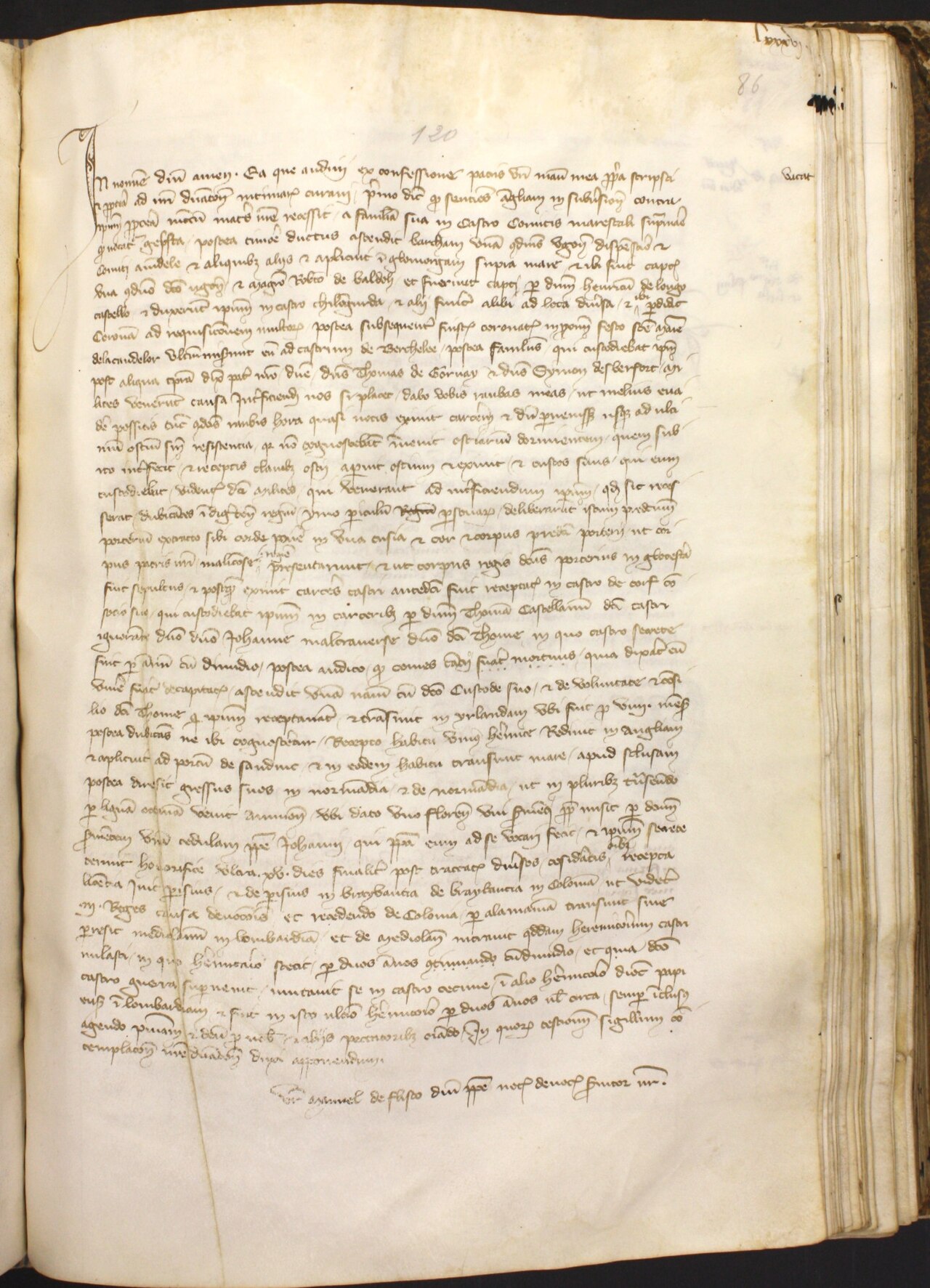
This document is the 1328 Treaty of Edinburgh-Northampton, a peace agreement between England and Scotland ending the First War of Scottish Independence. It was signed in Edinburgh by Robert the Bruce and ratified by the English Parliament at Northampton. Written in French, one surviving copy is held by the National Archives of Scotland.
Why it matters
The treaty was issued in the name of the underage Edward III but actually negotiated by his mother Isabella and Roger Mortimer, who governed in his place. It recognised Scotland's independence and Robert the Bruce as its rightful king, in exchange for a large payment, and arranged a marriage between Edward's sister Joanna and Bruce's son David.
Edward later resented this peace made without his real consent and worked to overturn it once he took power from Mortimer, revealing the conflict between the young king and his mother's regime.
Look closer
- Why might Edward III later reject a treaty that was issued in his own name?
- What does the treaty's language about ending war and suffering tell us about its purpose?
- Who really held power when this treaty was made, and how does that change how we read it?
This document is part of the curated material that grounds the AI version of Edward III and Robert the Bruce on Humy.ai — when students ask about related events, the AI can quote it and cite it.
More Edward III sources
Browse all 93 →
Ready when you are
Start chatting with Edward III now.
20 messages free · No credit card · Available in 50+ languages.