


Secondary sourcePainting1498
Penitent Magdalene
Filippino Lippi · 1498
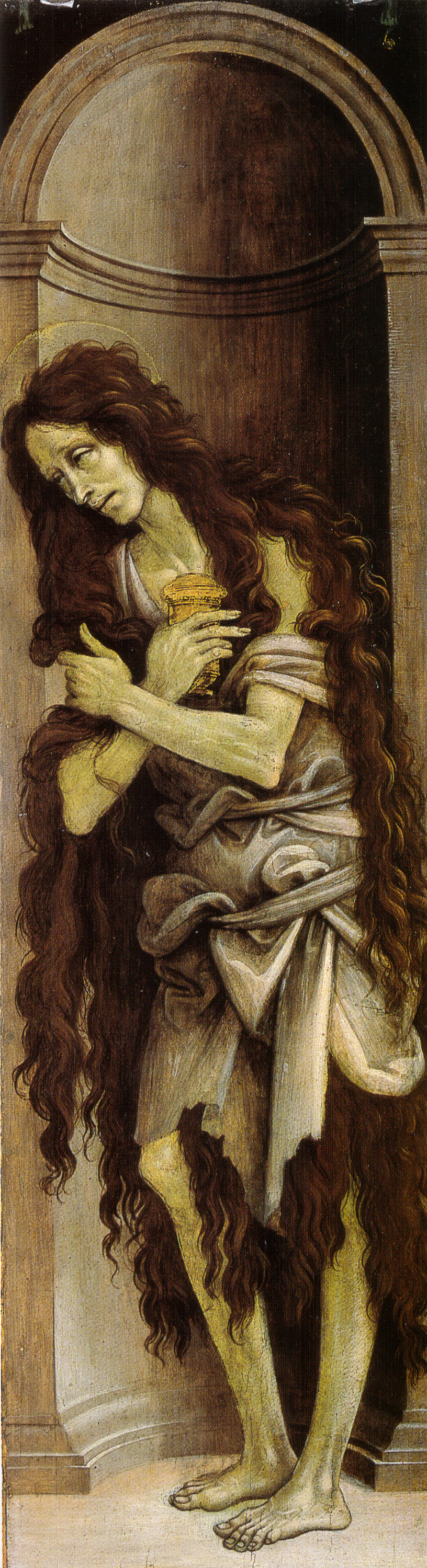
A 1498 painting by Filippino Lippi showing Mary Magdalene as a gaunt penitent figure, reflecting her later legend as a desert ascetic.
Depicts Mary Magdalene as a penitent ascetic according to her later medieval legend.
About this source
What it is
This painting was made by the Renaissance artist Filippino Lippi in 1498. It shows Mary Magdalene standing in a stone niche, thin and barefoot, her body largely covered by long hair, holding an ointment jar close to her chest.
Why it matters
The image reflects the medieval legend that Mary Magdalene spent her later life as a penitent hermit, living in extreme poverty and devotion. The ointment jar is a traditional symbol linking her to the biblical story of anointing, while her gaunt appearance shows how artists used her image to teach lessons about repentance and spiritual transformation.
Look closer
- What details in the painting suggest suffering, poverty, or penitence?
- Why might the artist show her holding the ointment jar even in this later scene?
- What is the difference between how Mary Magdalene appears here and in scenes showing her with Jesus?
This painting is part of the curated material that grounds the AI version of Mary Magdalene on Humy.ai — when students ask about related events, the AI can quote it and cite it.
More Mary Magdalene sources
Browse all 96 →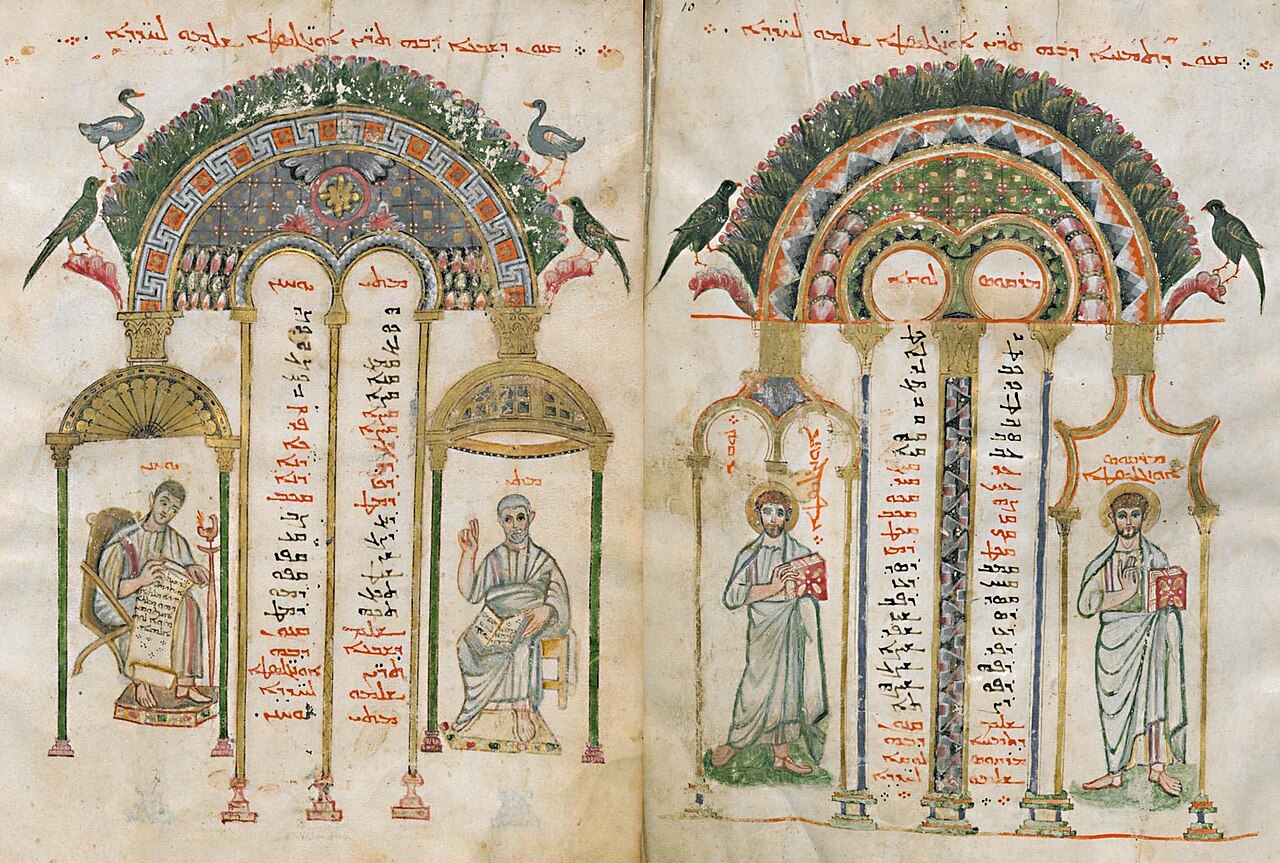 Painting
Secondary source
Rabbula Gospels
Rabbula (scribe) · 586
 Painting
Secondary source
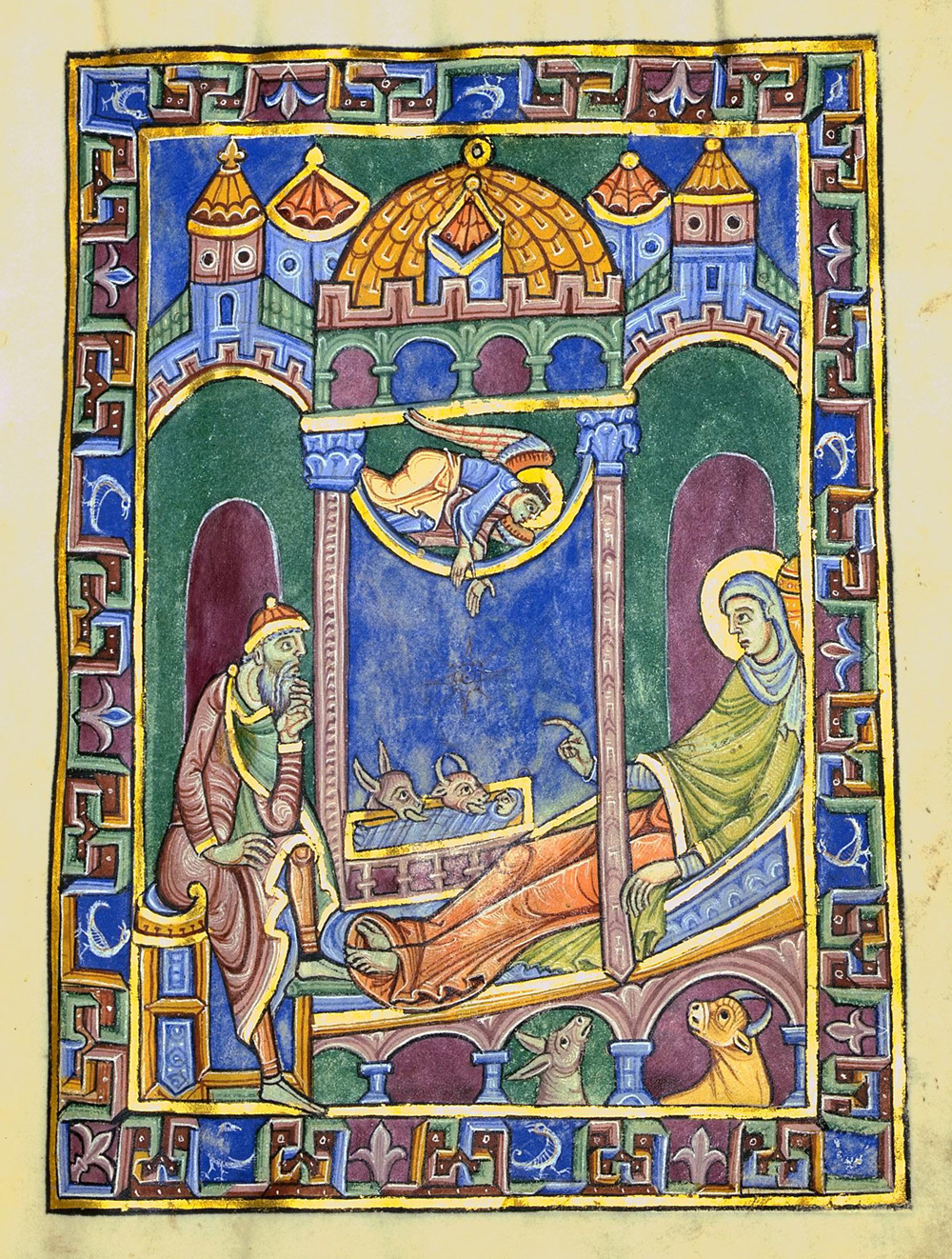
St Albans Psalter
12th century
 Book
Secondary source
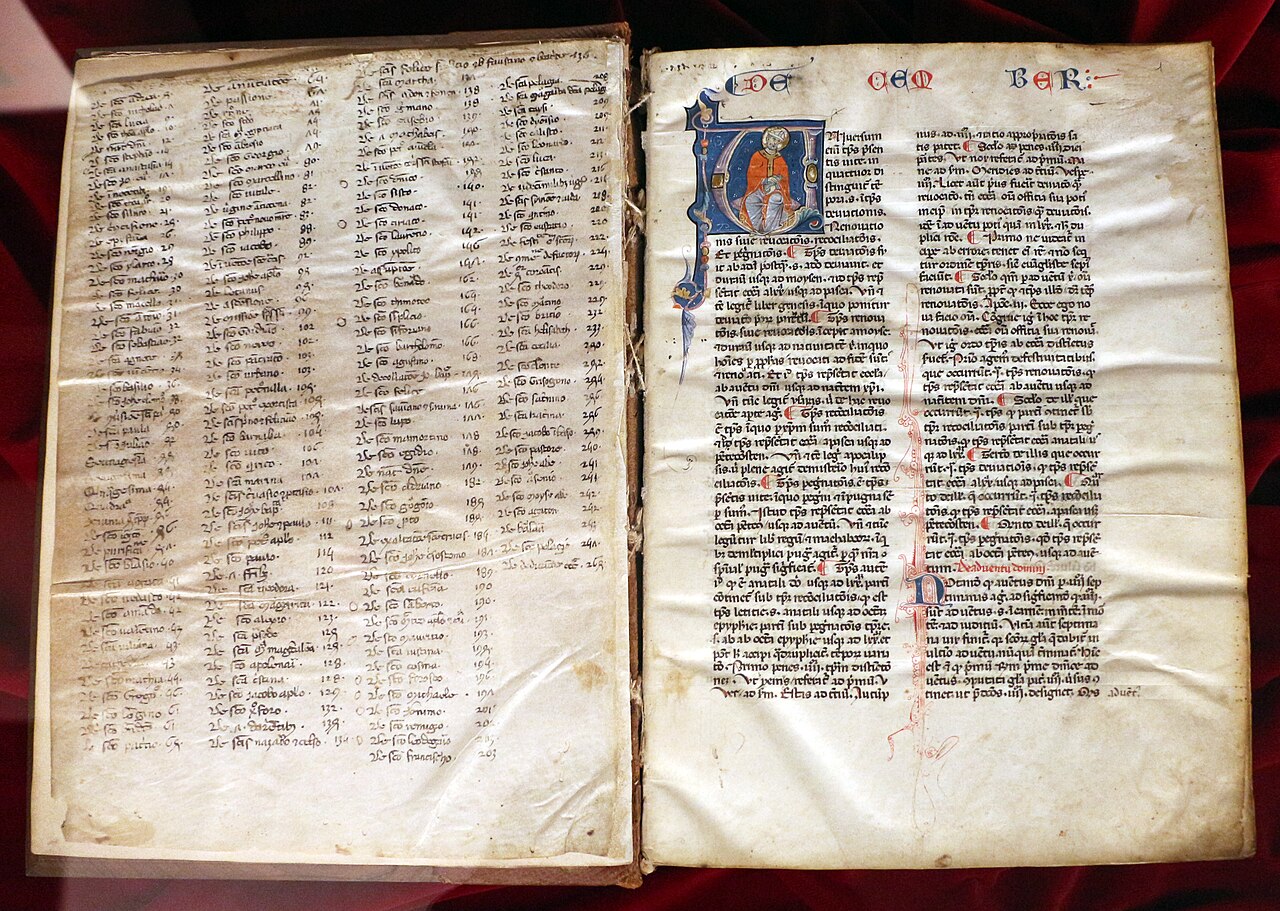
Golden Legend
Jacobus de Voragine · c. 1259–1266
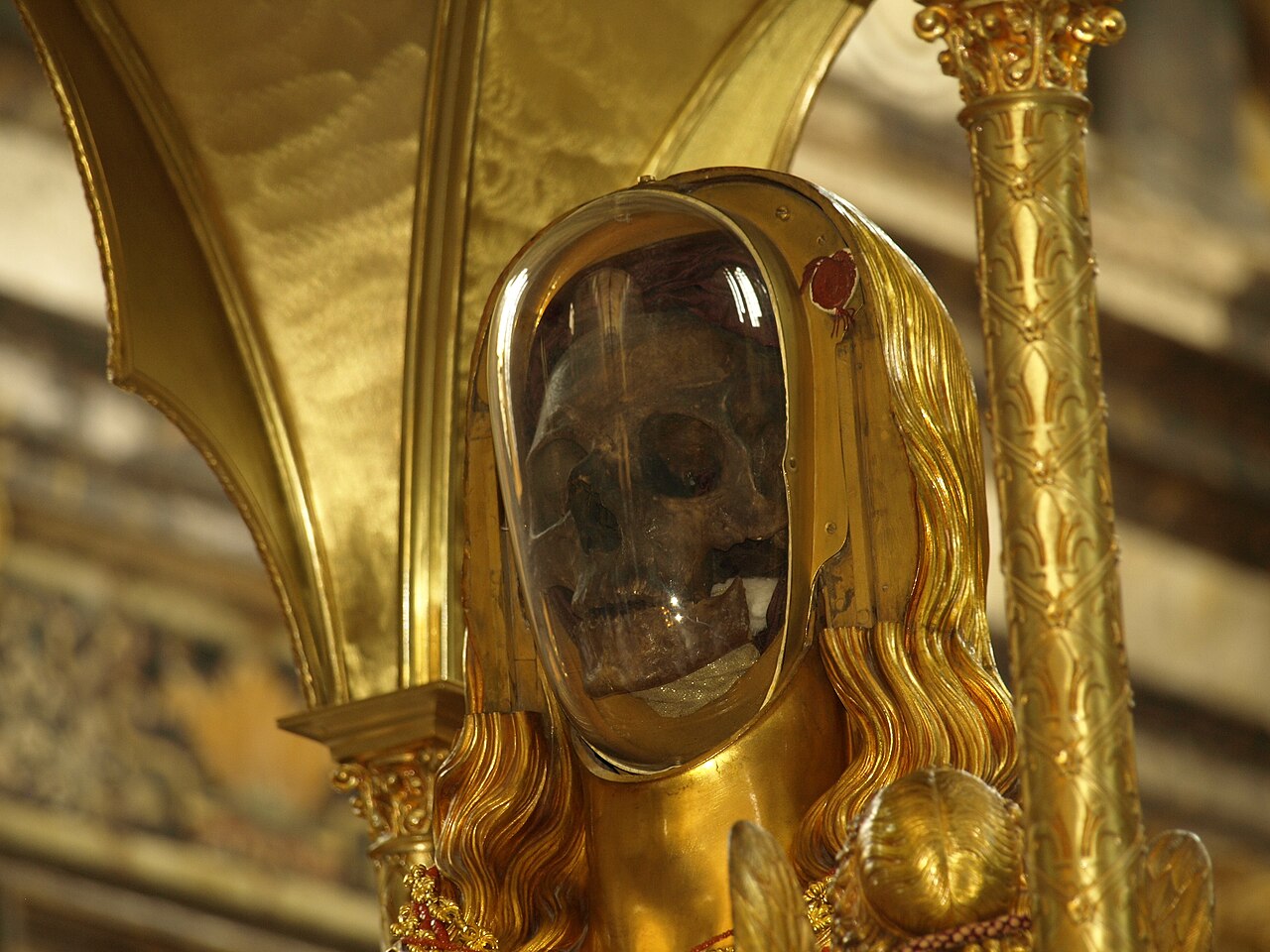 Artifact
Tertiary source
Skull Relic of Mary Magdalene
relic venerated from 1279; reliquary 19th century
Free account
Read every Mary Magdalene source
Sign up free →
Ready when you are
Start chatting with Mary Magdalene now.
20 messages free · No credit card · Available in 50+ languages.