


Secondary sourcePainting16th century
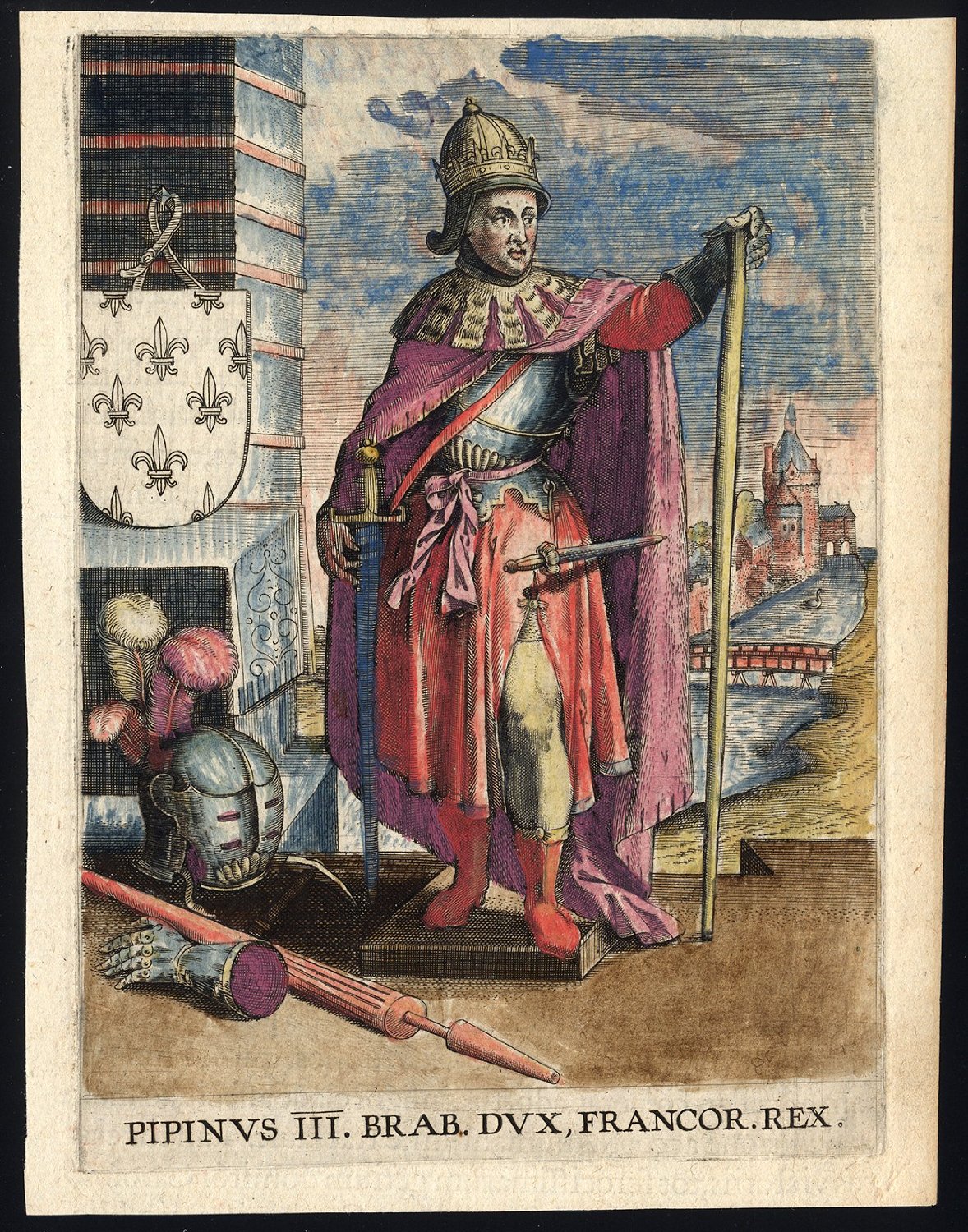
Pepin the Younger, King of France
Adrian Barlandus · 16th century
A 16th-century imagined engraved portrait of Pepin from a chronicle of the Dukes of Brabant, showing how Low Countries dynasties claimed descent from him.
This imagined 16th-century portrait claims Pepin as an ancestor of the Dukes of Brabant.
About this source
What it is
This is a hand-colored engraving by Adrian Barlandus, from his chronicle of the Dukes of Brabant, showing an imagined portrait of Pepin as a crowned, armored ruler holding a sword and staff, with a coat of arms, a castle, and his title given below as 'PIPINVS III. BRAB. DVX, FRANCOR. REX.'
Why it matters
Made centuries after Pepin's death, the print shows how later Low Countries dynasties used his image to claim an ancestral link to the Frankish kings, reinforcing their own legitimacy. It reveals more about 16th-century ideas of royal lineage than about Pepin's true appearance.
Look closer
- Why would a later chronicle of Brabant dukes want to include Pepin among its rulers?
- What symbols in the image are meant to show royal and military power?
- How might this imagined image differ from what Pepin actually looked like?
This painting is part of the curated material that grounds the AI version of Pepin the Short on Humy.ai — when students ask about related events, the AI can quote it and cite it.
More Pepin the Short sources
Browse all 58 →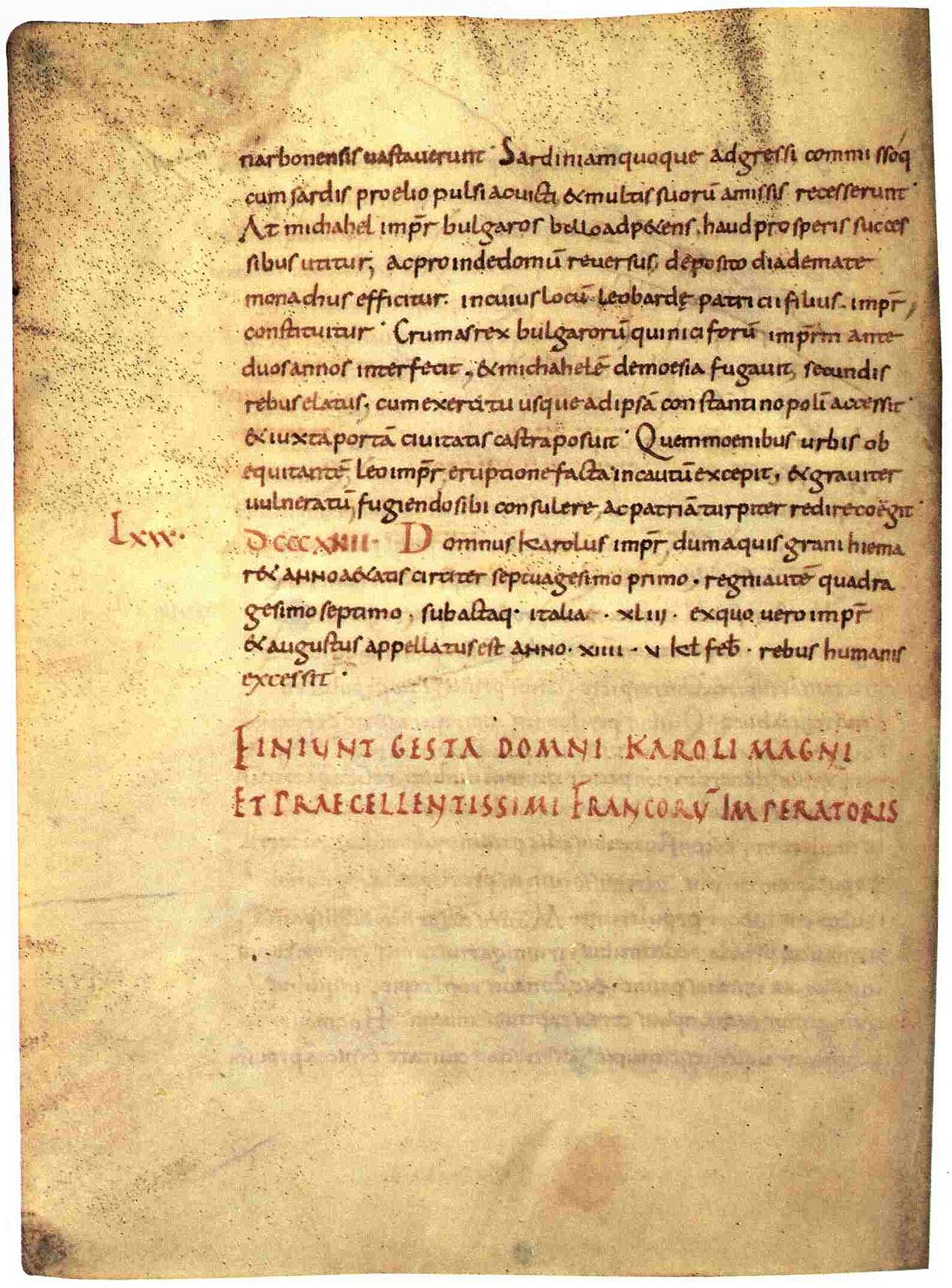 Document
Primary source
Royal Frankish Annals
741-829, this manuscript c. 900
 Document
Primary source
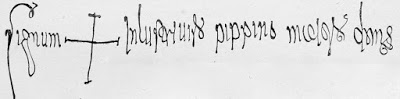
Signature of Pepin the Short
Pepin the Short
 Artifact
Secondary source
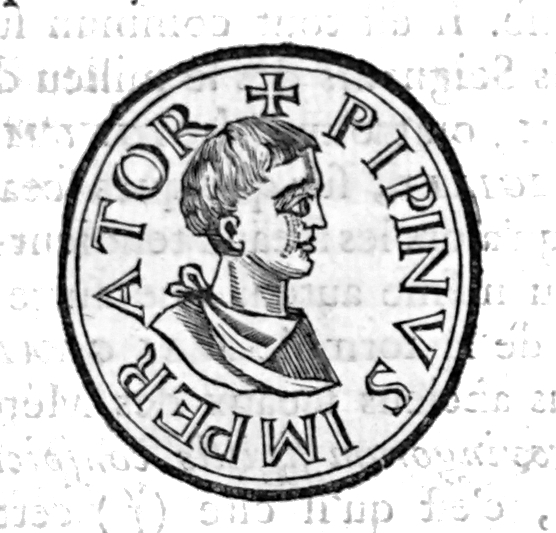
Seal of Pepin the Short
René Tassin
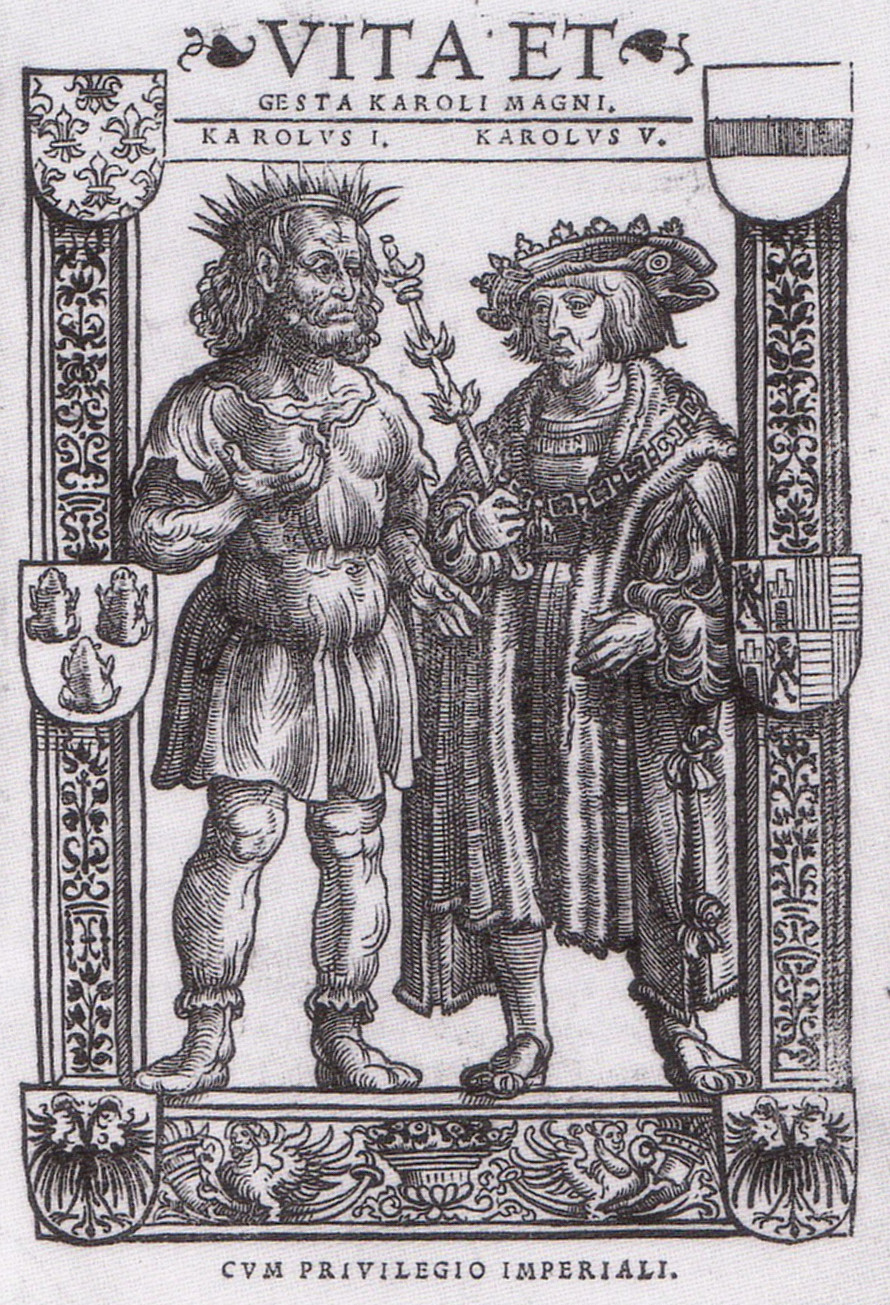 Book
Secondary source
Vita Karoli Magni
Einhard · c. 817-833
Free account
Read every Pepin the Short source
Sign up free →
Ready when you are
Start chatting with Pepin the Short now.
20 messages free · No credit card · Available in 50+ languages.