


Primary sourcePainting1717
Peter I the Great, Tsar of Russia
Charles Boit · 1717
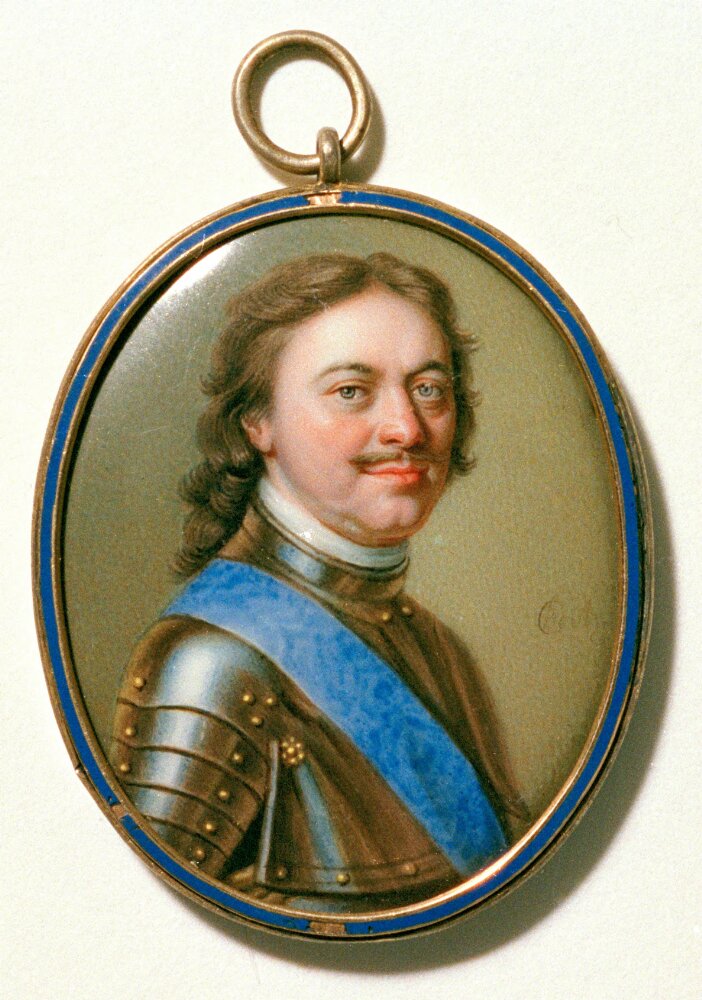
A 1717 oval enamel miniature by Charles Boit showing Peter in armour with a blue sash, set in a gold frame. Small portraits like this were carried for diplomacy.
Peter is the sitter, shown in a small portable portrait that was one of the tools of his diplomatic image.
About this source
What it is
This is an oval enamel miniature painting by Charles Boit, dated 1717, now held by the Nationalmuseum. It is set in a gold frame with a blue enamel border and a loop at the top. It shows a man with curly brown shoulder-length hair, a mustache, and blue eyes, wearing metal armour with gold studs, a white collar and a blue sash, against a grey-green background.
Why it matters
Small portraits of this kind were portable, so a ruler could give them as gifts or send them to other courts. The curator's note describes this miniature as an example of the portable diplomatic portraits of the tsar. It shows how Peter's image was spread across Europe during his reign, and how European painters like Boit shaped the way he was seen.
Look closer
- Why might a portrait be made small enough to carry or give as a gift?
- What do the armour, collar and sash suggest about how the sitter wanted to be seen?
- Who would have seen this miniature, and what might it not show about the tsar?
This painting is part of the curated material that grounds the AI version of Peter the Great on Humy.ai — when students ask about related events, the AI can quote it and cite it.
More Peter the Great sources
Browse all 89 →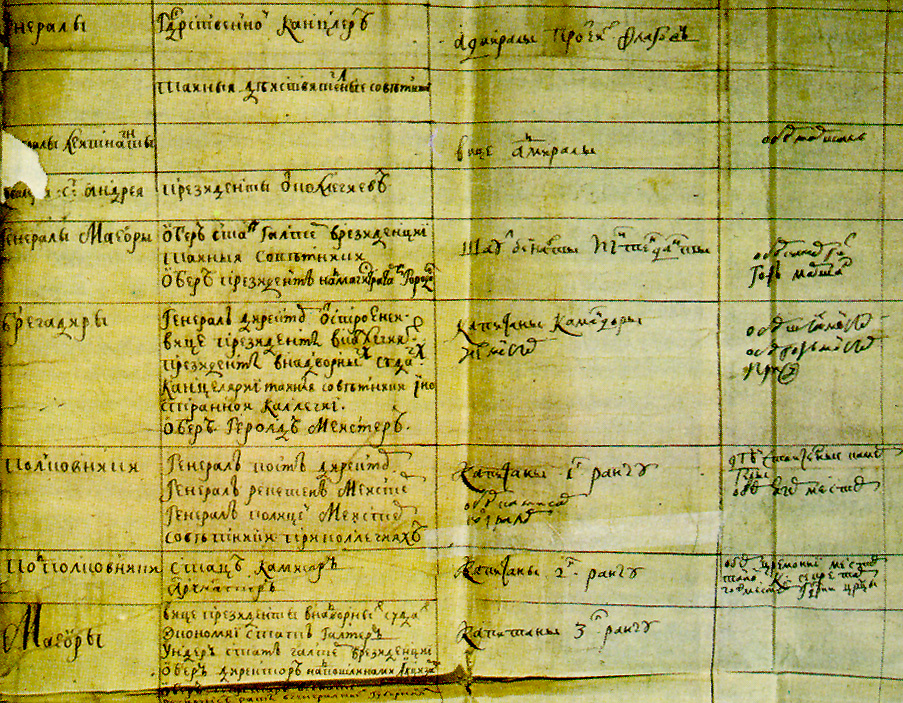 Document
Primary source
Table of Ranks
Peter the Great · 1722
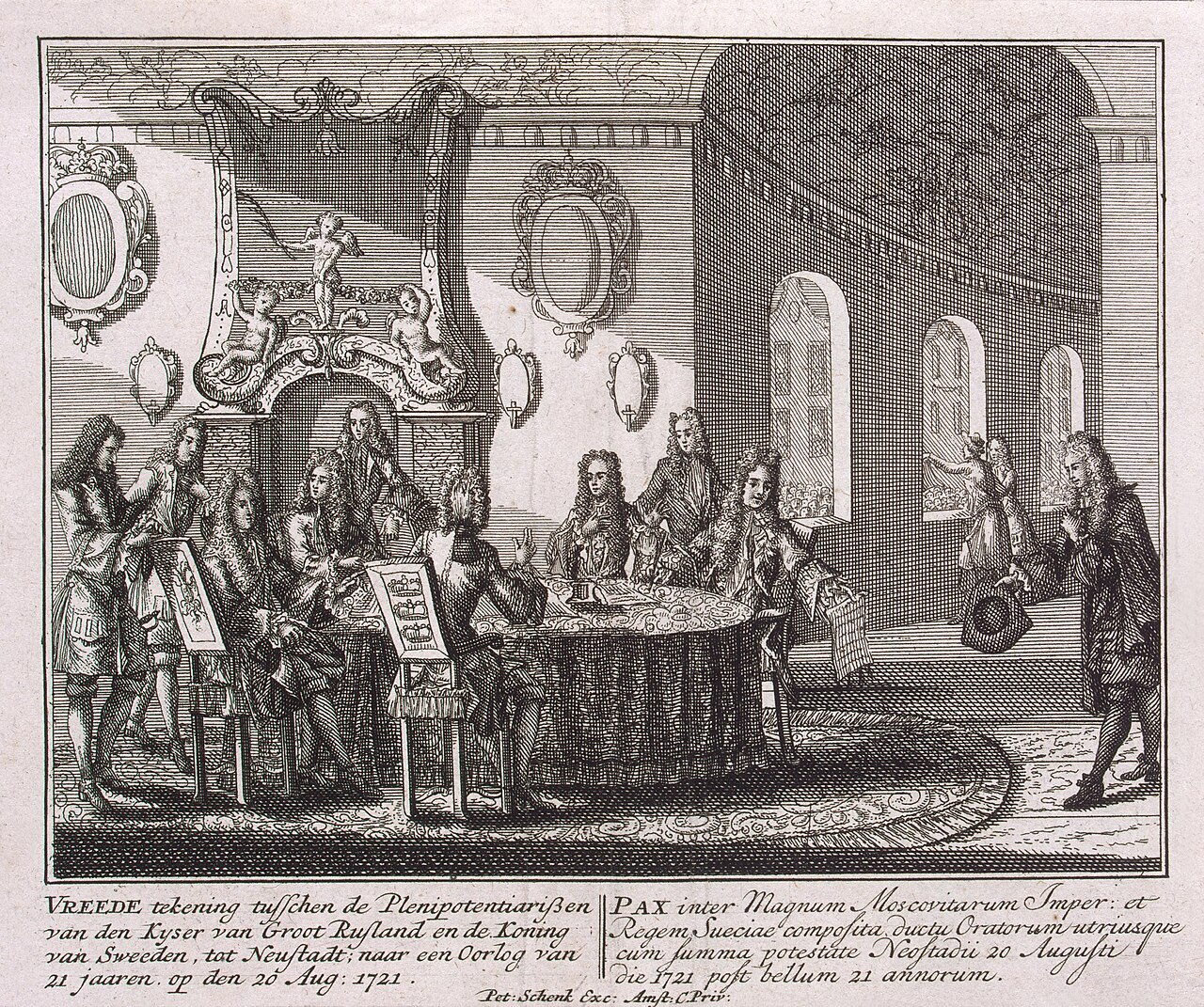 Document
Primary source
Treaty of Nystad
1721
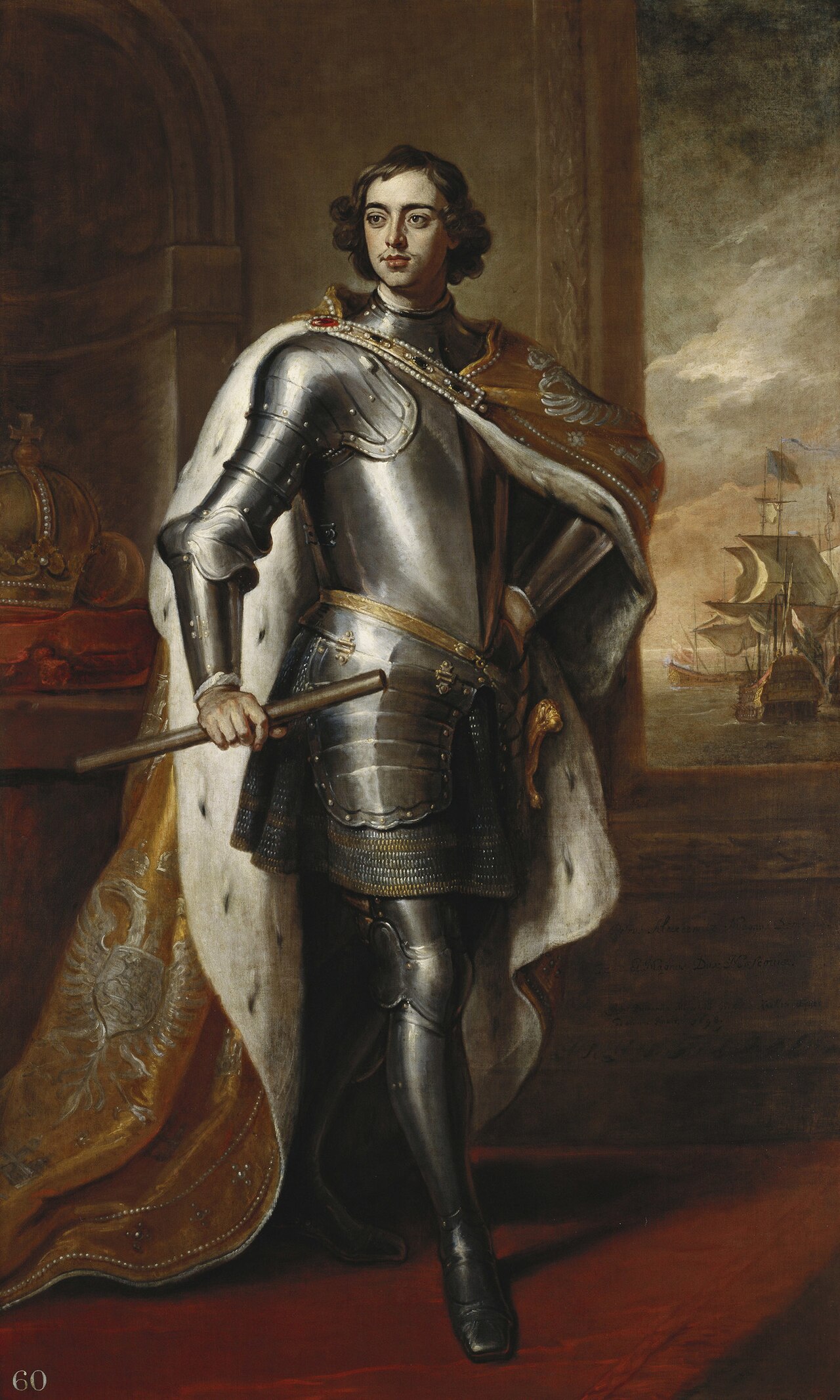 Painting
Primary source
Peter the Great, Tsar of Russia (1672-1725)
Godfrey Kneller · 1698
 Diary entry
Primary source
Diary of an Austrian Secretary of Legation
Johann Georg Korb · 1700

Free account
Read every Peter the Great source
Sign up free →
Ready when you are
Start chatting with Peter the Great now.
20 messages free · No credit card · Available in 50+ languages.