


Primary sourcePainting1773
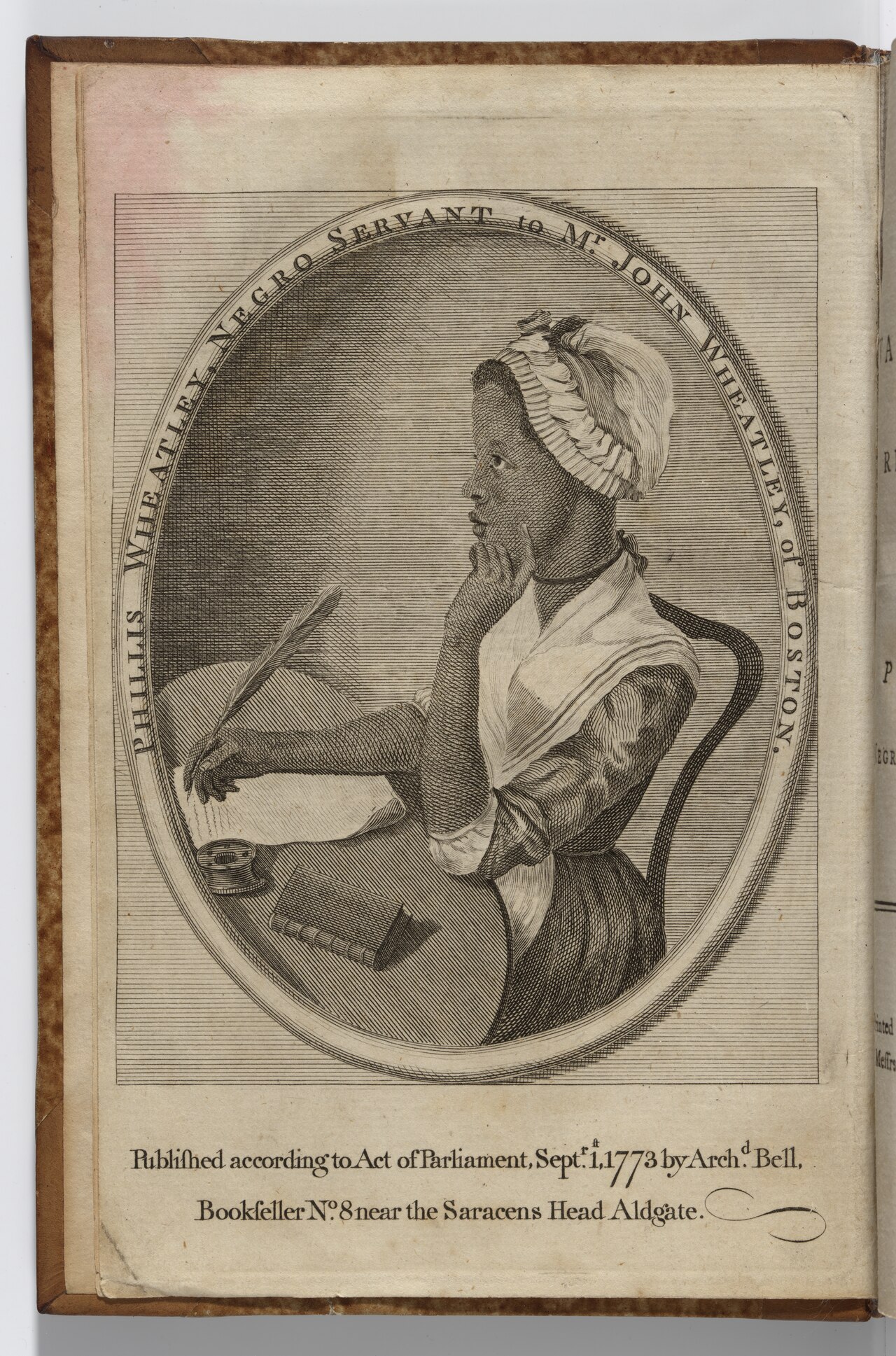
Phillis Wheatley Portrait
Unidentified Artist · 1773
An engraved 1773 frontispiece portrait of Phillis Wheatley, inscribed with her name and her status as enslaved servant to the Wheatley family.
This 1773 portrait of Wheatley, published with her poems, names her both as author and as an enslaved servant.
About this source
What it is
This is an engraved portrait dated 1773, by an unidentified artist, now held by the National Portrait Gallery. It shows a seated woman holding a quill pen, with an inscription identifying her as Phillis Wheatley, "Negro Servant to Mr. John Wheatley, of Boston," and a note that it was published in 1773 by Arch. Bell.
Why it matters
This portrait was created to accompany Wheatley's published poetry and directly names both Wheatley and the Wheatley family who enslaved her. It shows how publishers of the time framed her identity — as both author and enslaved person — for readers.
Look closer
- Why do you think the inscription describes Wheatley by her enslaved status alongside her name?
- What does the image choose to show about her — and what does it leave out?
- How might this portrait have shaped how readers viewed her poetry?
This painting is part of the curated material that grounds the AI version of Phyllis Wheatley on Humy.ai — when students ask about related events, the AI can quote it and cite it.
More Phyllis Wheatley sources
Meet the AI Phyllis Wheatley →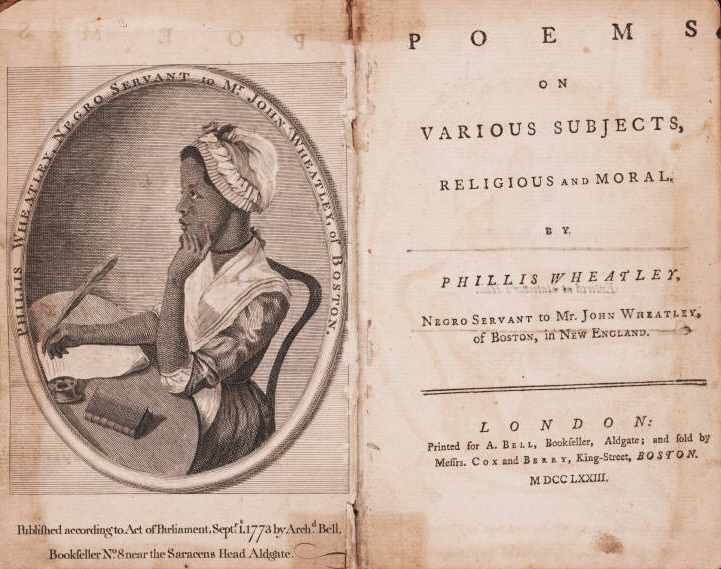 Book
Primary source
Poems on Various Subjects, Religious and Moral
Phillis Wheatley · 1773
 Book
Primary source
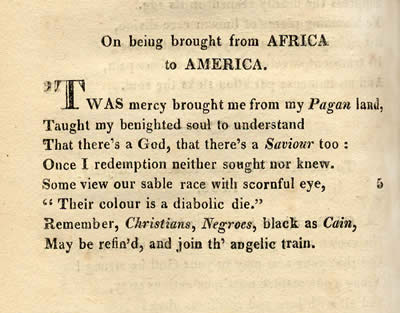
On Being Brought from Africa to America
Phillis Wheatley · 1768 (published 1773)
 Painting
Primary source
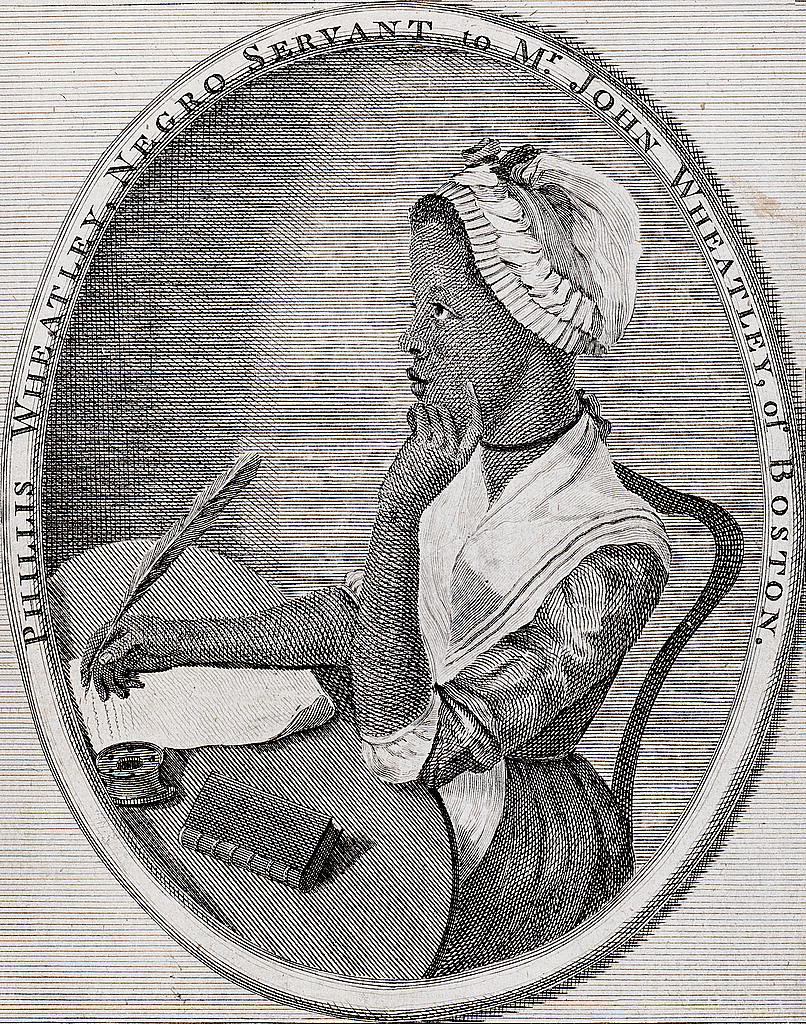
Phillis Wheatley
Scipio Moorhead · 1773
Primary source
To His Excellency General Washington
Phillis Wheatley · 1775
Primary source
Notes on the State of Virginia
Thomas Jefferson · written 1781-1783, published 1785
Ready when you are
Start chatting with Phyllis Wheatley now.
20 messages free · No credit card · Available in 50+ languages.