


Primary sourceArtifact1842
Piano Quintet in E-flat major
Robert Schumann · 1842
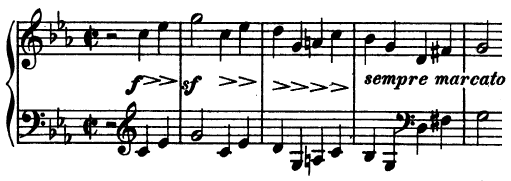
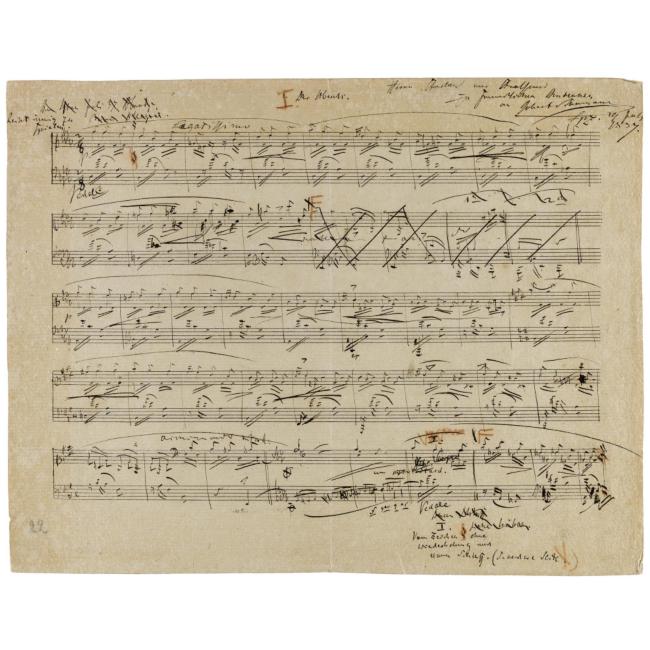
Schumann's Op. 44 piano quintet, composed in 1842, a landmark work that established the modern piano quintet genre.
Schumann composed this quintet and dedicated it to his wife Clara, who performed it publicly in 1843.
About this source
What it is
The Piano Quintet in E♭ major, Op. 44, was composed by Robert Schumann in 1842, during his intense period of chamber-music composition that year. It is written for piano and string quartet, and its autograph manuscript is held at the Universitäts- und Landesbibliothek Bonn.
Why it matters
This work changed how composers combined piano and strings, mixing the grandeur of orchestral writing with intimate chamber music. Schumann dedicated it to his wife, Clara Schumann, who was meant to premiere the piano part; when she fell ill, Felix Mendelssohn stepped in and later offered revisions. The piece shows the close creative partnership between Robert and Clara, as well as Schumann's connections with other leading musicians of his time.
Look closer
- Why might Schumann have dedicated this piece to his wife rather than to a patron?
- What does it tell us that Mendelssohn could sight-read such a difficult piano part?
- What might the dynamic markings in the score (like sempre marcato) tell a performer about how to play it?
This artifact is part of the curated material that grounds the AI version of Robert Schumann on Humy.ai — when students ask about related events, the AI can quote it and cite it.
More Robert Schumann sources
Browse all 94 →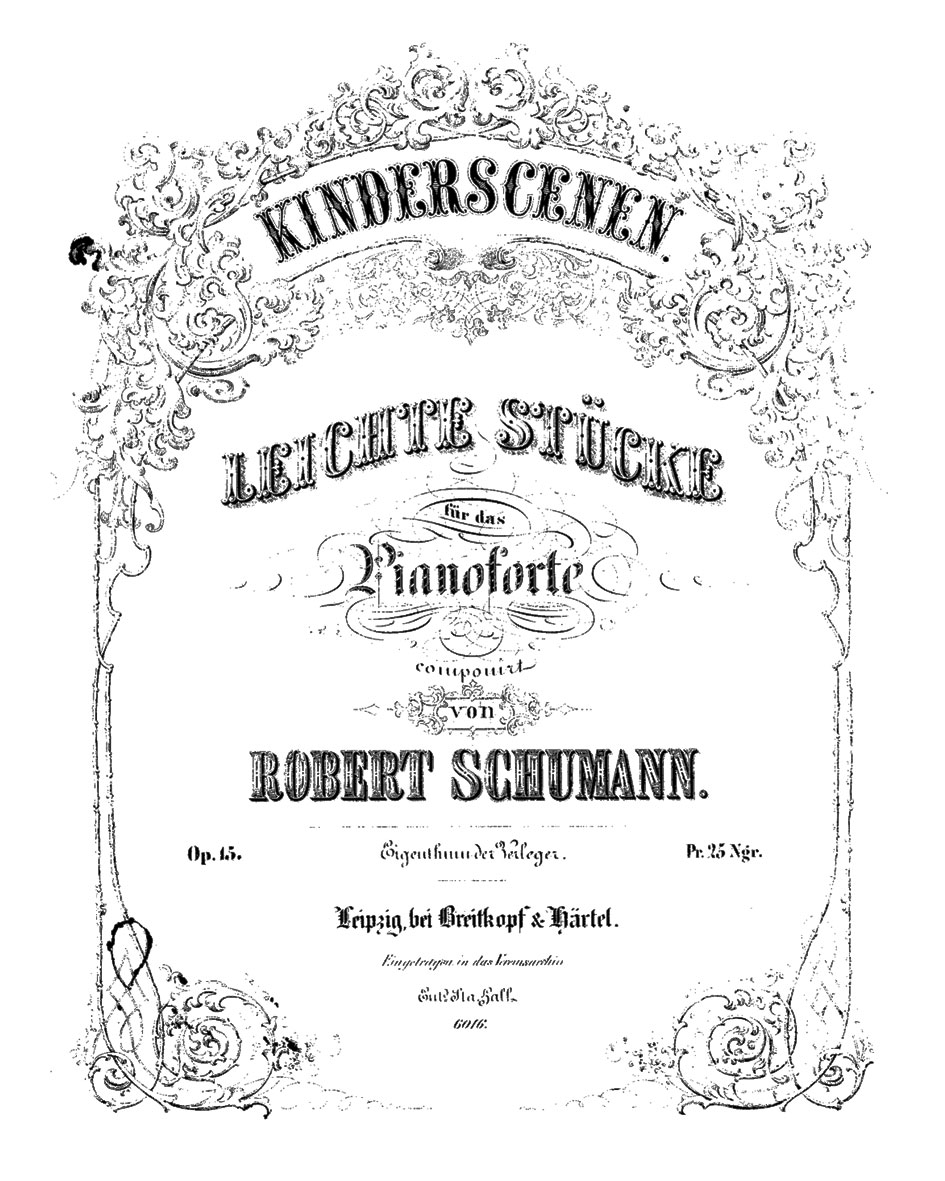 Document
Primary source
Kinderszenen
Robert Schumann · 1838
 Artifact
Secondary source
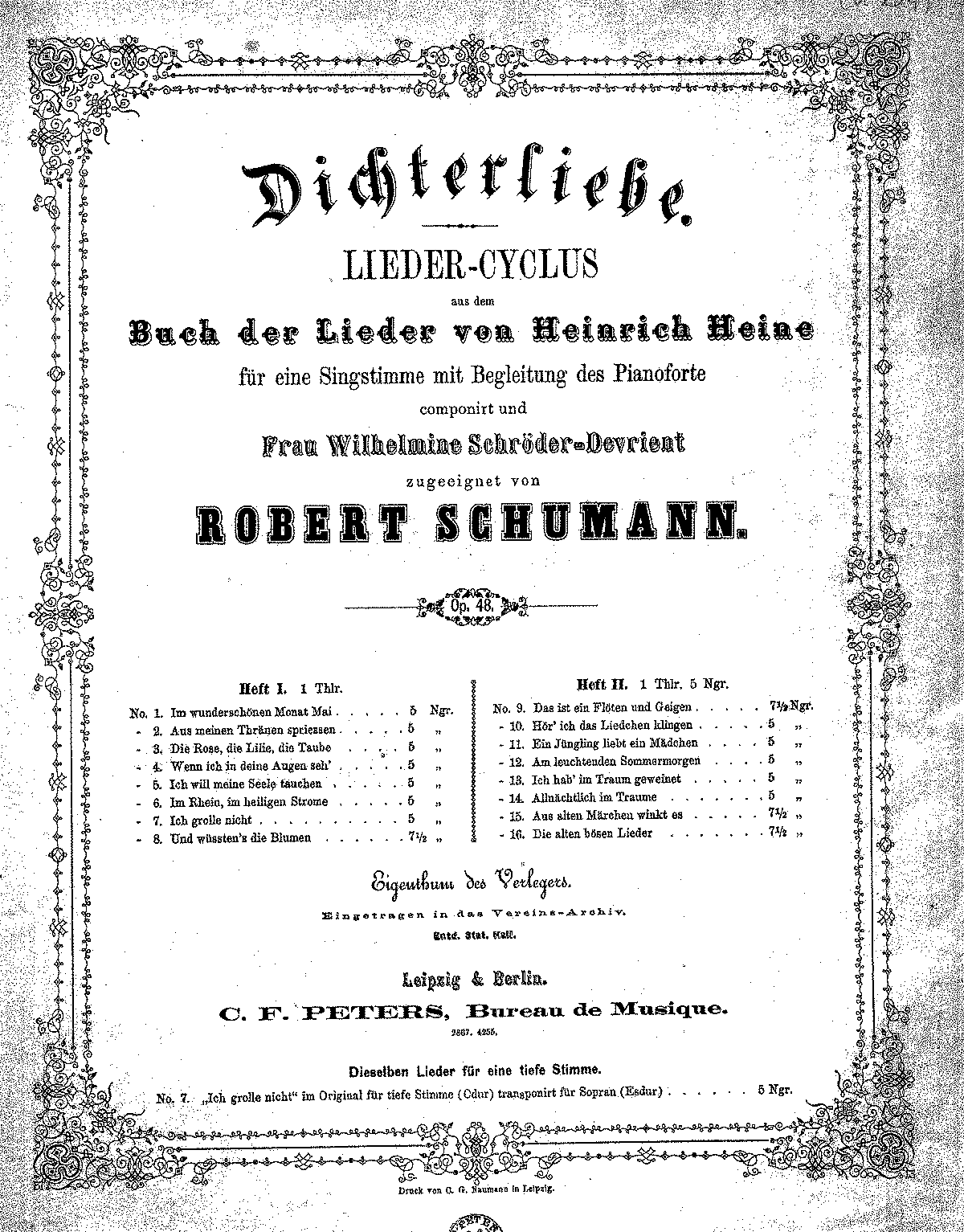
Dichterliebe
Robert Schumann · 1840
 Document
Primary source
Piano Concerto in A minor
Robert Schumann · 1841–1845
Primary source
Neue Bahnen
Robert Schumann · 28 October 1853
Free account
Read every Robert Schumann source
Sign up free →
Ready when you are
Start chatting with Robert Schumann now.
20 messages free · No credit card · Available in 50+ languages.