


Secondary sourceArtifact1934–1937
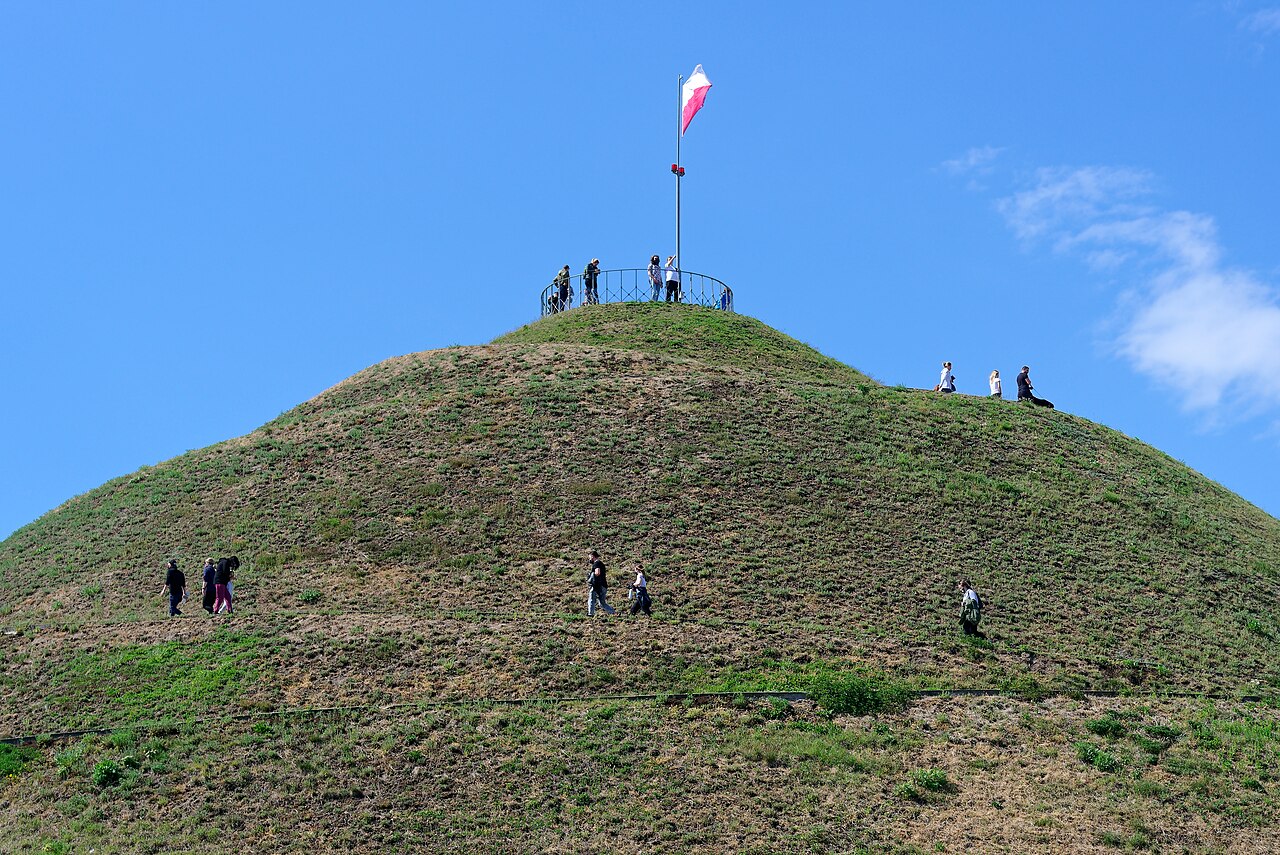
Piłsudski's Mound
1934–1937
A large earthen mound in Kraków, begun in 1934 and completed after Piłsudski's death, named in his honour by the Legionnaires.
Named after Piłsudski by the Legionnaires, the mound honours the man who created the Legions and shows the cult that grew after his death.
Free Humy account · No credit card · 120,288 sources to read
About this source
What it is
Piłsudski's Mound is a grassy, conical earthen mound in Kraków with a railed viewing platform at its top. The Commons description shows a white and red flag on a pole and people walking on its slopes. The mound was begun in 1934 by a committee and completed after Piłsudski's death in 1935. On 12 May 1935 the Legionnaires decided to name it after him, because he had created the Legions.
Why it matters
The mound shows the scale of the public cult that formed around Piłsudski. Building a monument from earth, with contributions from many people, made the memory of the leader a shared civic project. It connects him to the Legions, the military units he created in the First World War.
Look closer
- Why might a mound have been chosen as a memorial rather than a statue?
- Who was able to take part in building it, and who was left out?
- What does the flag in the picture suggest about the meaning people gave the place?
This artifact is part of the curated material that grounds the AI version of Józef Piłsudski on Humy.ai — when students ask about related events, the AI can quote it and cite it.
More Józef Piłsudski sources
Browse all 98 →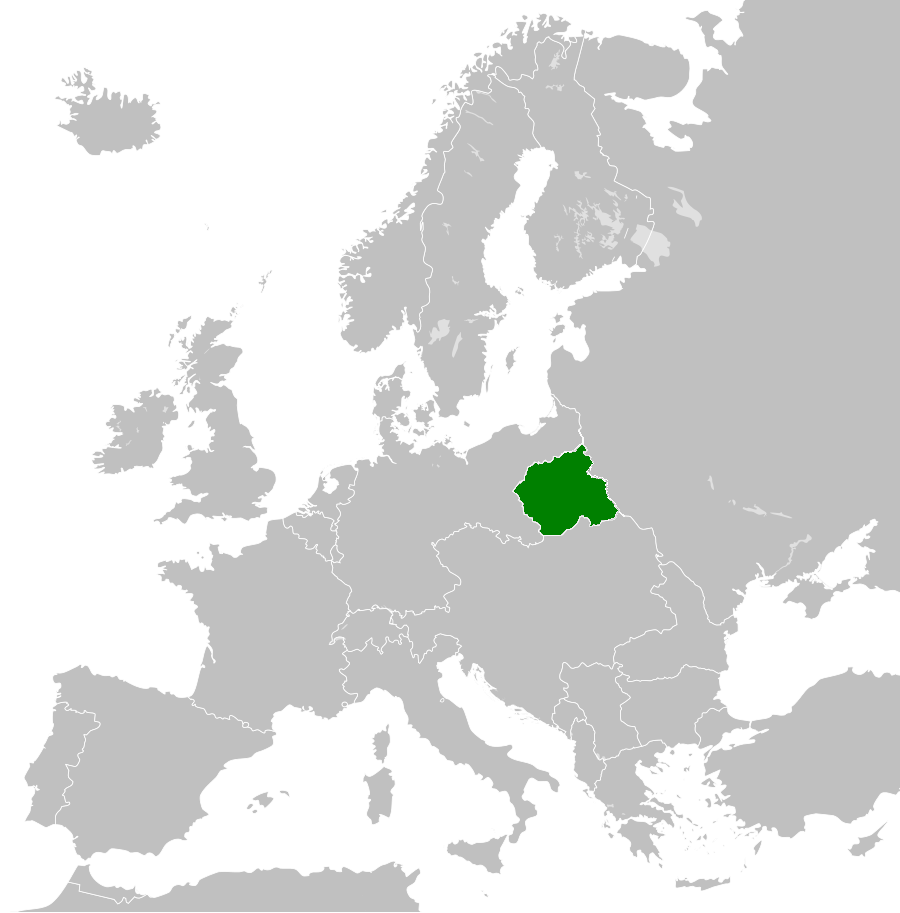 Document
Primary source
Proclamation of the Kingdom of Poland
1916
 Document
Primary source
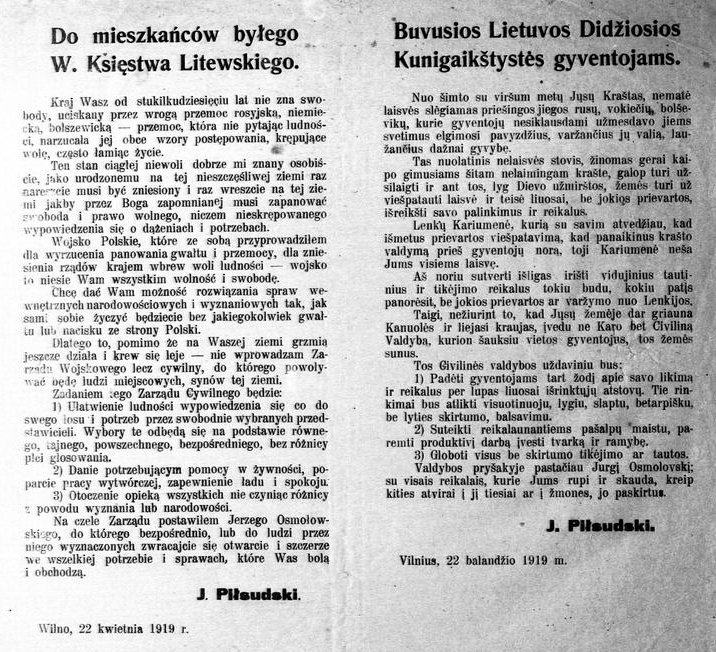
Proclamation to the Inhabitants of the Former Grand Duchy of Lithuania
Józef Piłsudski · 22 April 1919
 Photograph
Primary source
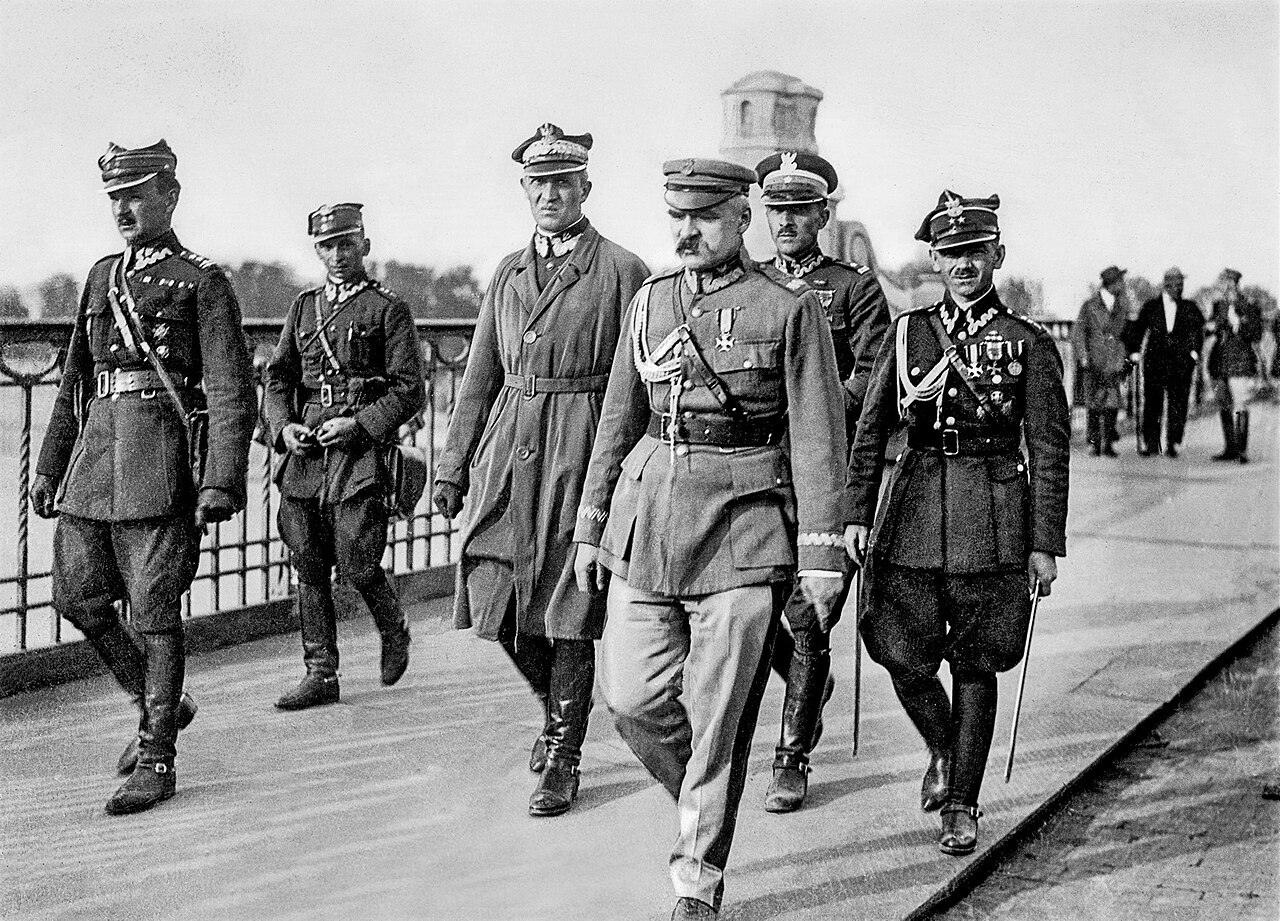
Piłsudski on the Poniatowski Bridge, May 1926
Marian Fuks · May 1926
Primary source
Recording of the Voice of Józef Piłsudski
Józef Piłsudski · 1924
Free account
Read every Józef Piłsudski source
Sign up free →
Ready when you are
Start chatting with Józef Piłsudski now.
20 messages free · No credit card · Available in 50+ languages.