


Primary sourcePainting1836
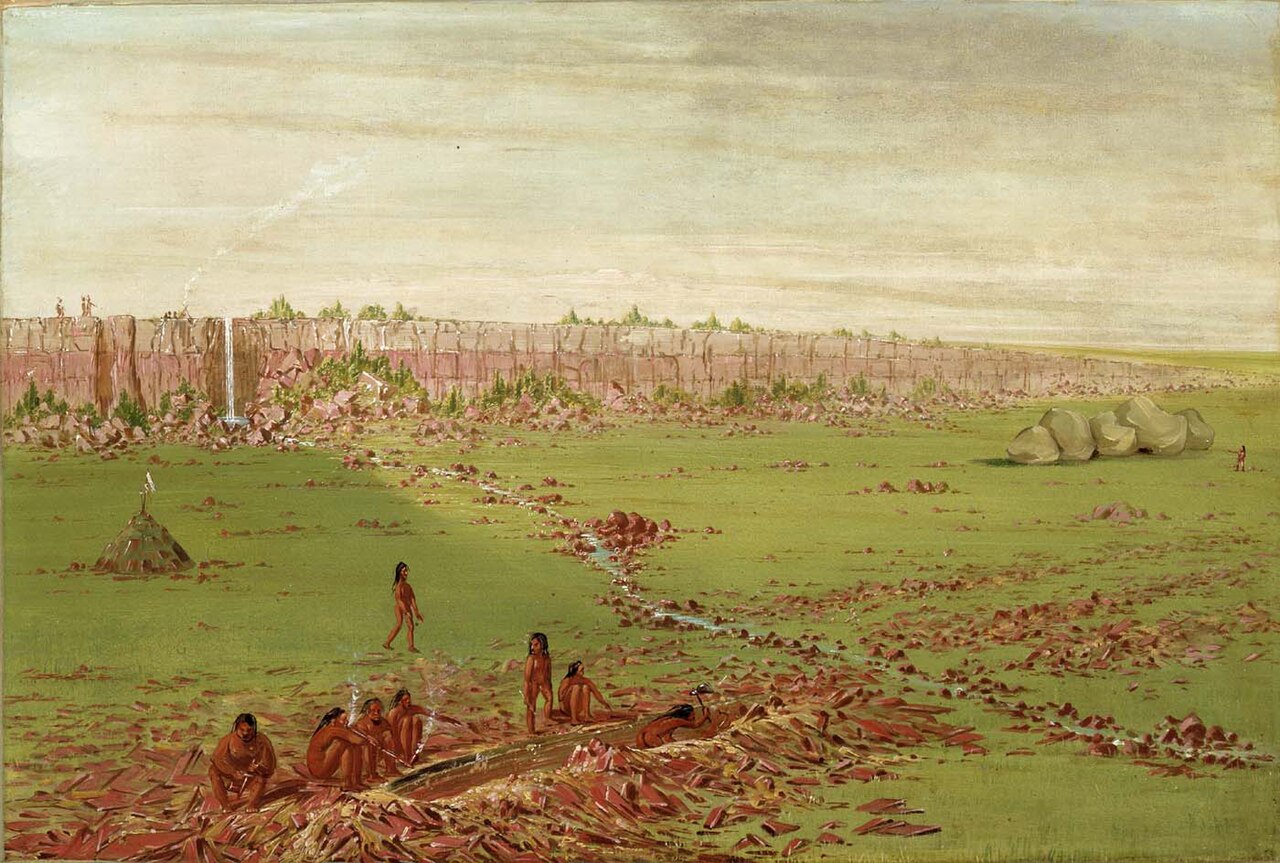
Pipestone Quarry on the Coteau des Prairies
George Catlin · 1836
Catlin's 1836 painting of the sacred pipestone quarry in Minnesota, tied to his disputed claim to have discovered the site.
Catlin painted this scene during his own 1836 visit, central to his disputed claim of 'discovering' the quarry.
About this source
What it is
This 1836 painting by George Catlin shows the pipestone quarries on the Coteau des Prairies in Minnesota, with Native American figures working among the red stone. It is held by the Smithsonian American Art Museum.
Why it matters
The quarry was a sacred site where the red stone used for ceremonial pipes was taken. Catlin's visit in 1836 became the basis for his claim, later disputed, that he had discovered the site; the mineral found there, catlinite, was later named after him. The painting shows how Catlin positioned himself within the story of a place already known to Indigenous peoples.
Look closer
- Why might Catlin have wanted to be remembered as the discoverer of a site Native peoples already knew well?
- What does the painting show about how the stone was gathered?
- What does the naming of catlinite after Catlin reveal about whose names get attached to Indigenous places?
This painting is part of the curated material that grounds the AI version of George Catlin on Humy.ai — when students ask about related events, the AI can quote it and cite it.
More George Catlin sources
Browse all 100 →Secondary source
Letters and Notes on the Manners, Customs, and Condition of the North American Indians
George Catlin · 1841
 Painting
Primary source
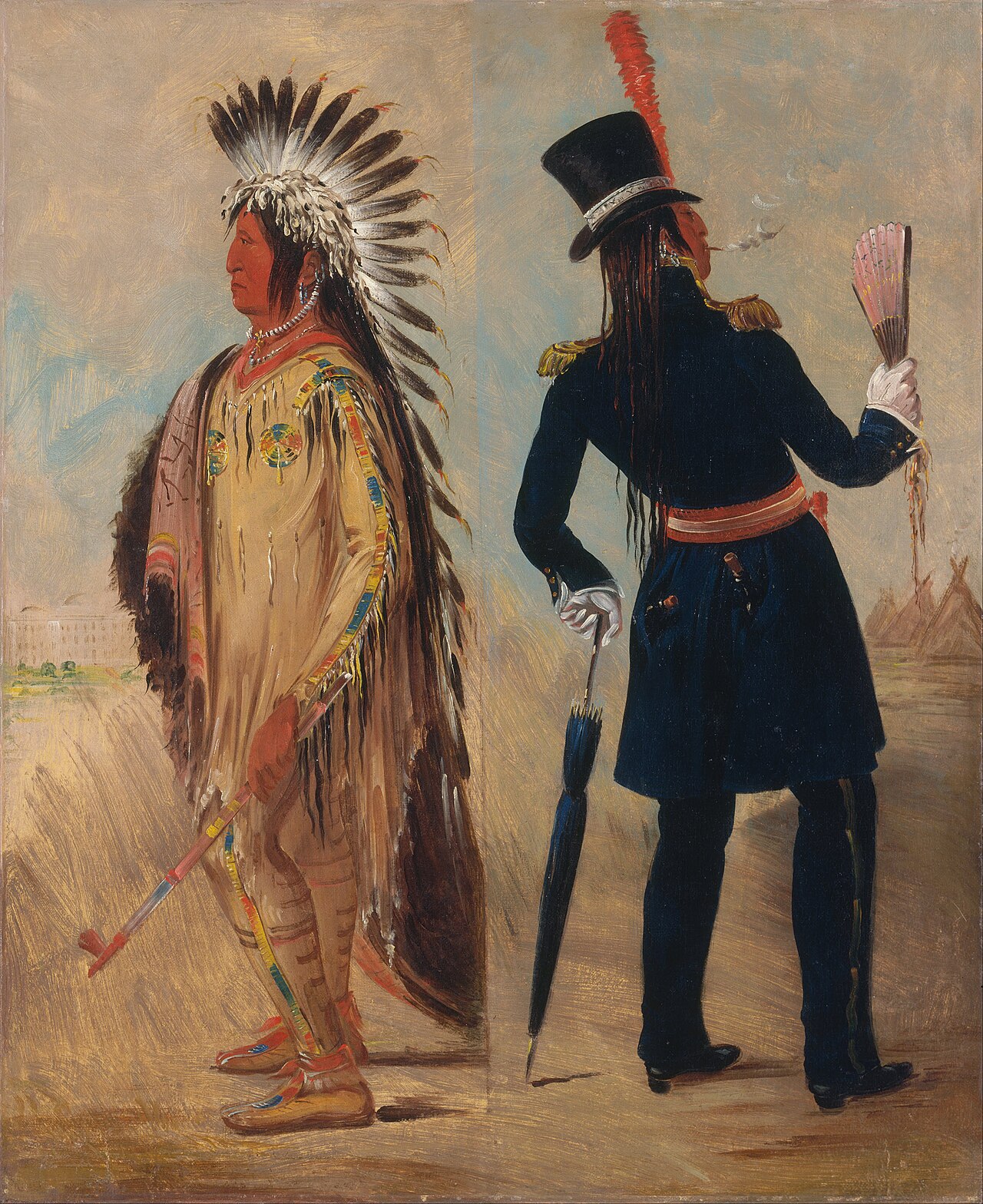
Wi-jún-jon, Pigeon's Egg Head, Going To and Returning From Washington
George Catlin · 1837
 Painting
Primary source
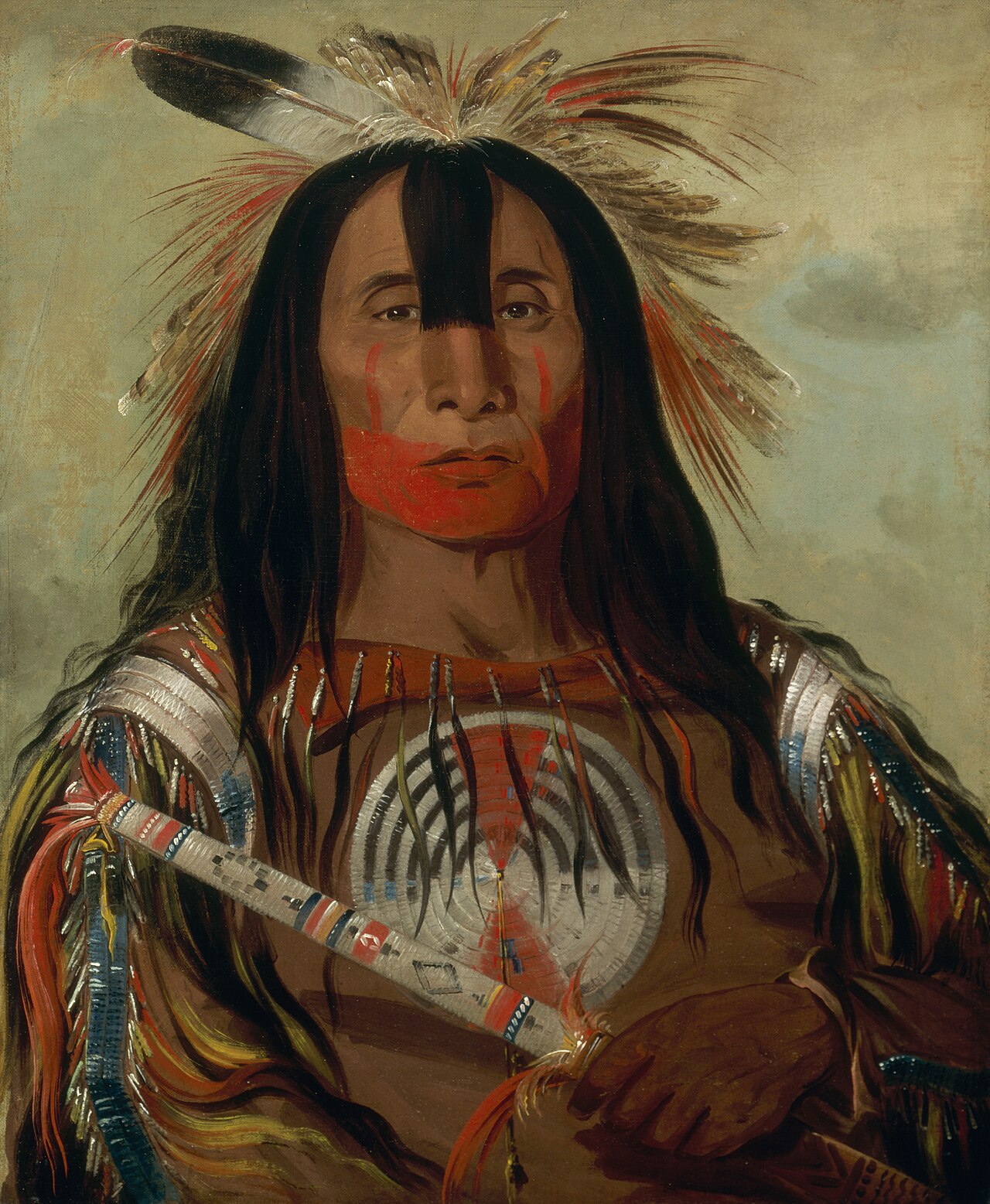
Stu-mick-o-súcks, Buffalo Bull's Back Fat, Head Chief, Blood Tribe
George Catlin · 1832
 Painting
Primary source
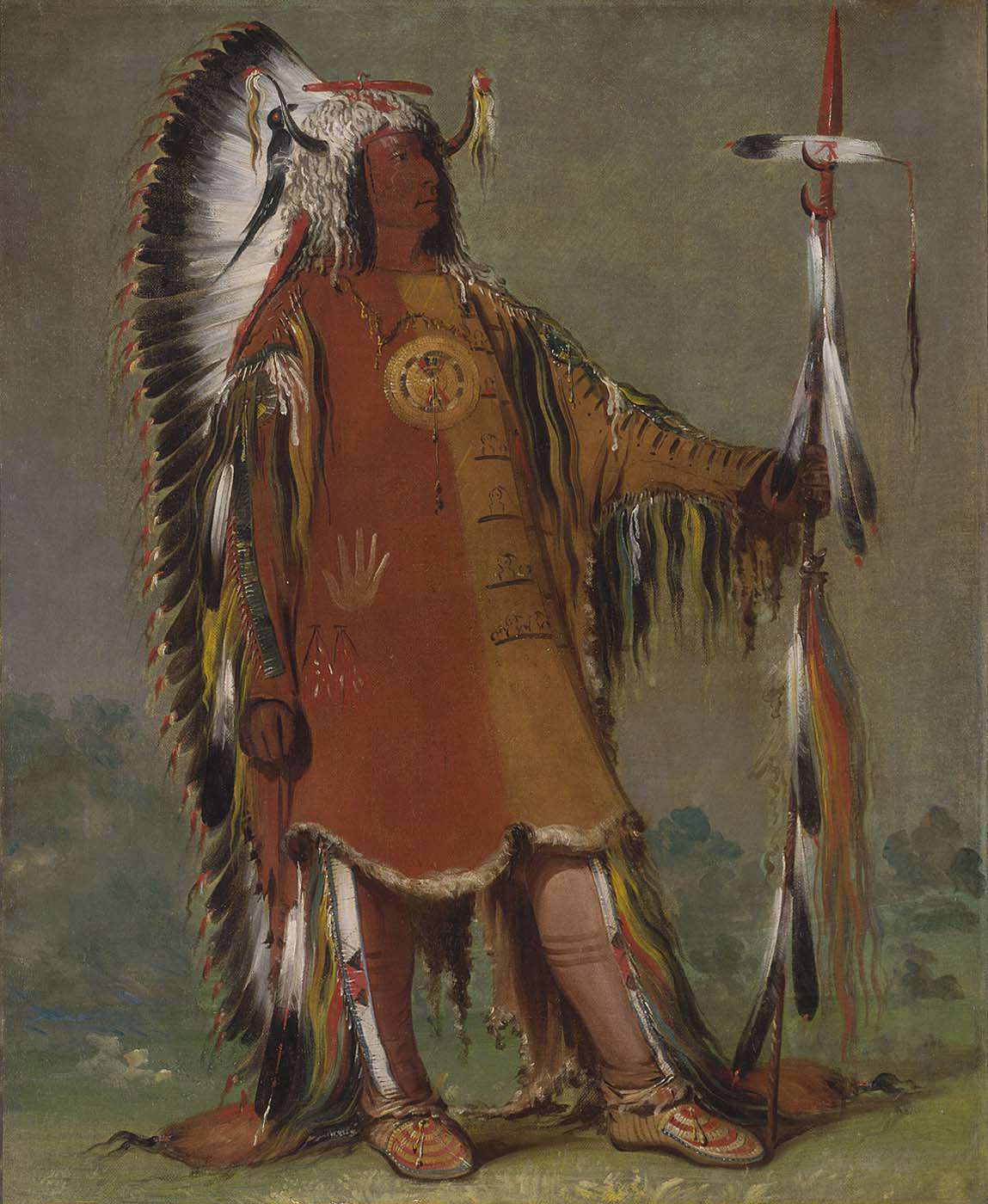
Máh-to-tóh-pa, Four Bears, Second Chief, in Full Dress
George Catlin · 1832
Free account
Read every George Catlin source
Sign up free →
Ready when you are
Start chatting with George Catlin now.
20 messages free · No credit card · Available in 50+ languages.