


Secondary sourcePainting12th century
Pippin in the Imperial Chronicle
12th century
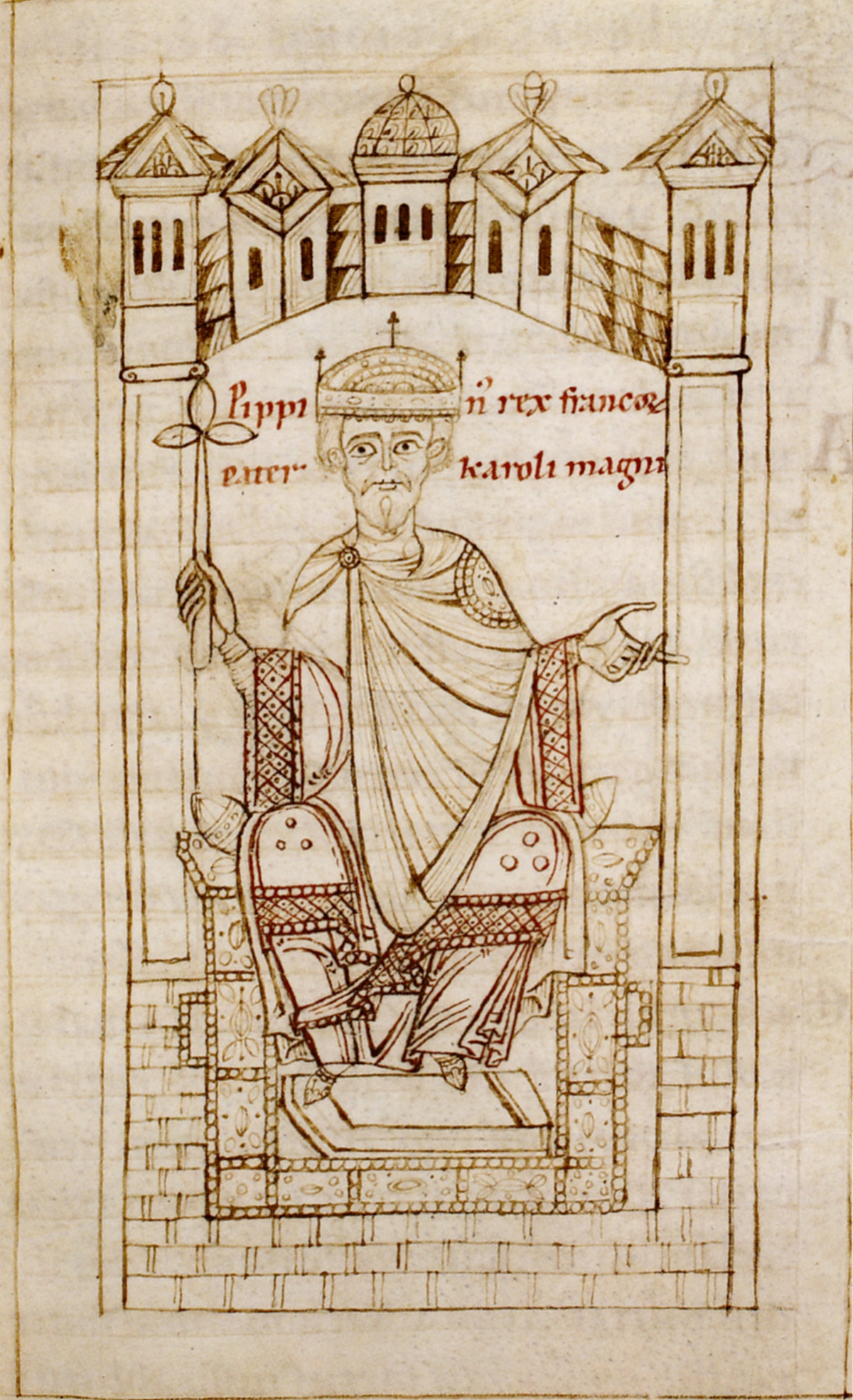
A 12th-century pen-and-ink drawing of Pepin the Short as a crowned king, from the Imperial Chronicle manuscript.
One of the earliest surviving images identifying Pepin by name as a crowned Frankish king.
About this source
What it is
This is a pen-and-ink drawing from a 12th-century manuscript known as the Imperial Chronicle, now held as Corpus Christi College MS 373. It shows a seated, crowned king holding a scepter, labelled in Latin as 'Pippini rex Francorum' (Pepin, king of the Franks).
Why it matters
Made centuries after Pepin's death, this is one of the earliest surviving images of him as a ruler. It shows how medieval chroniclers pictured early Frankish kings, often using a standard royal pose rather than an accurate likeness, and placed him in a chain of rulers leading toward Charlemagne, named nearby in the inscription.
Look closer
- What details tell you this is meant to show a king, even without knowing the inscription?
- Why might the artist use the same style for many different kings in the chronicle?
- What does the Latin label add that the picture alone does not?
This painting is part of the curated material that grounds the AI version of Pepin the Short on Humy.ai — when students ask about related events, the AI can quote it and cite it.
More Pepin the Short sources
Browse all 58 →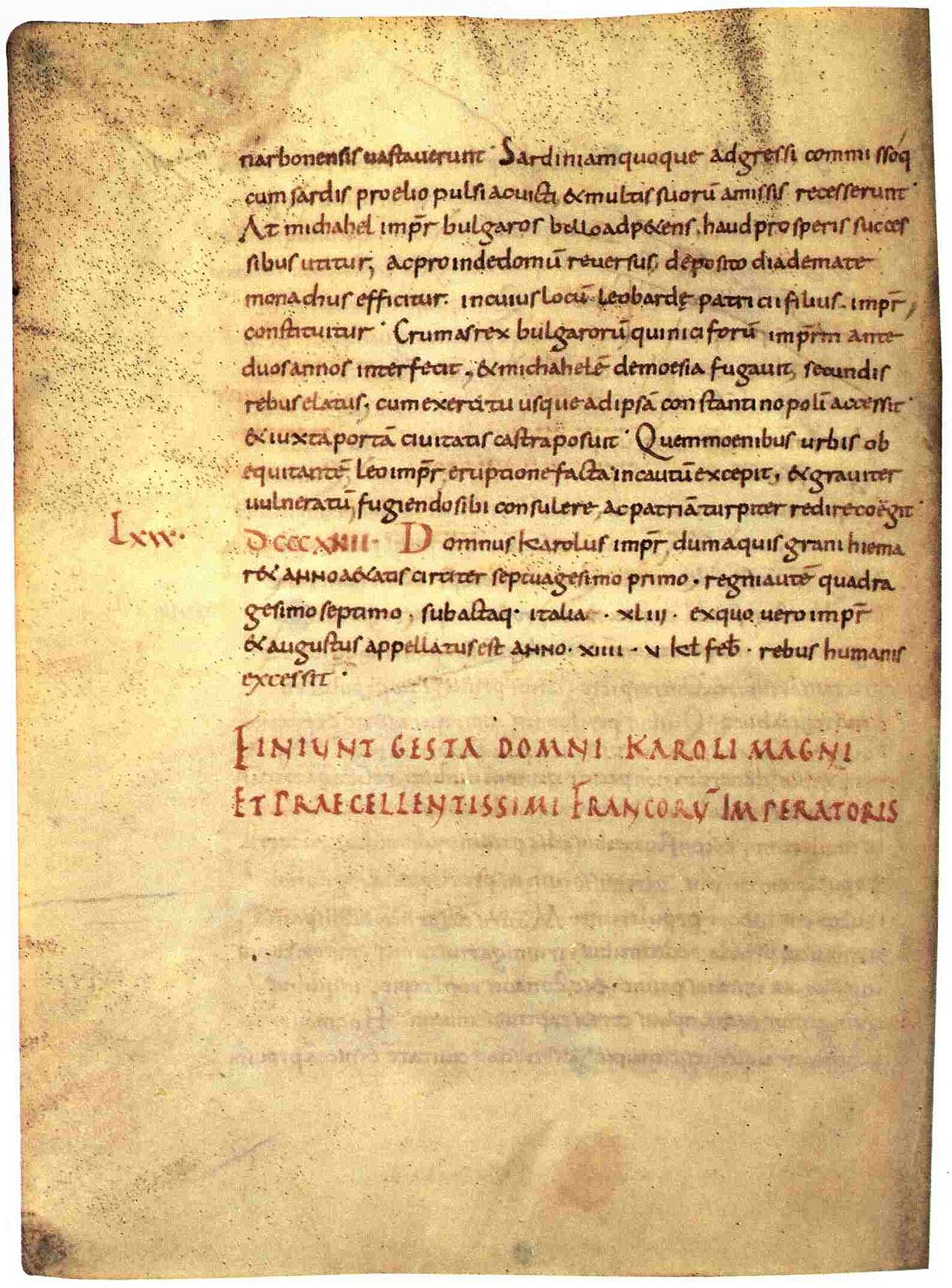 Document
Primary source
Royal Frankish Annals
741-829, this manuscript c. 900
 Document
Primary source
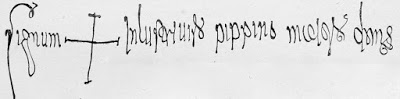
Signature of Pepin the Short
Pepin the Short
 Artifact
Secondary source
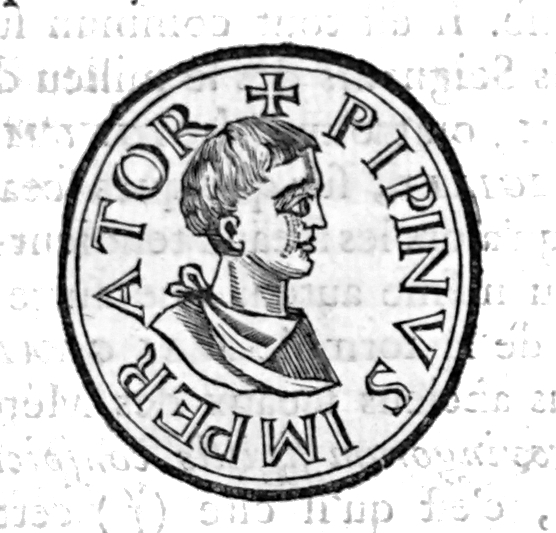
Seal of Pepin the Short
René Tassin
 Book
Secondary source
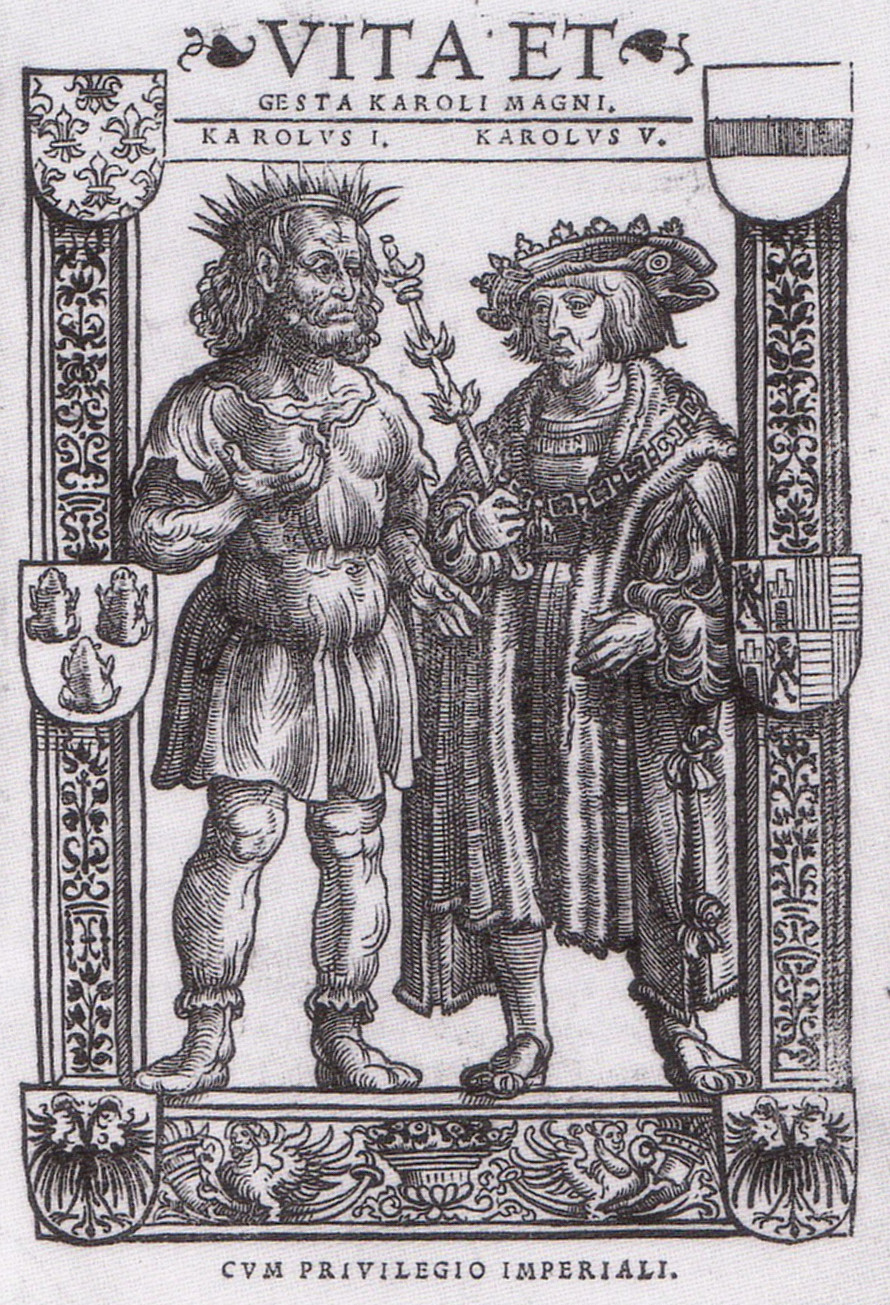
Vita Karoli Magni
Einhard · c. 817-833

Free account
Read every Pepin the Short source
Sign up free →
Ready when you are
Start chatting with Pepin the Short now.
20 messages free · No credit card · Available in 50+ languages.