


Secondary sourcePainting1846
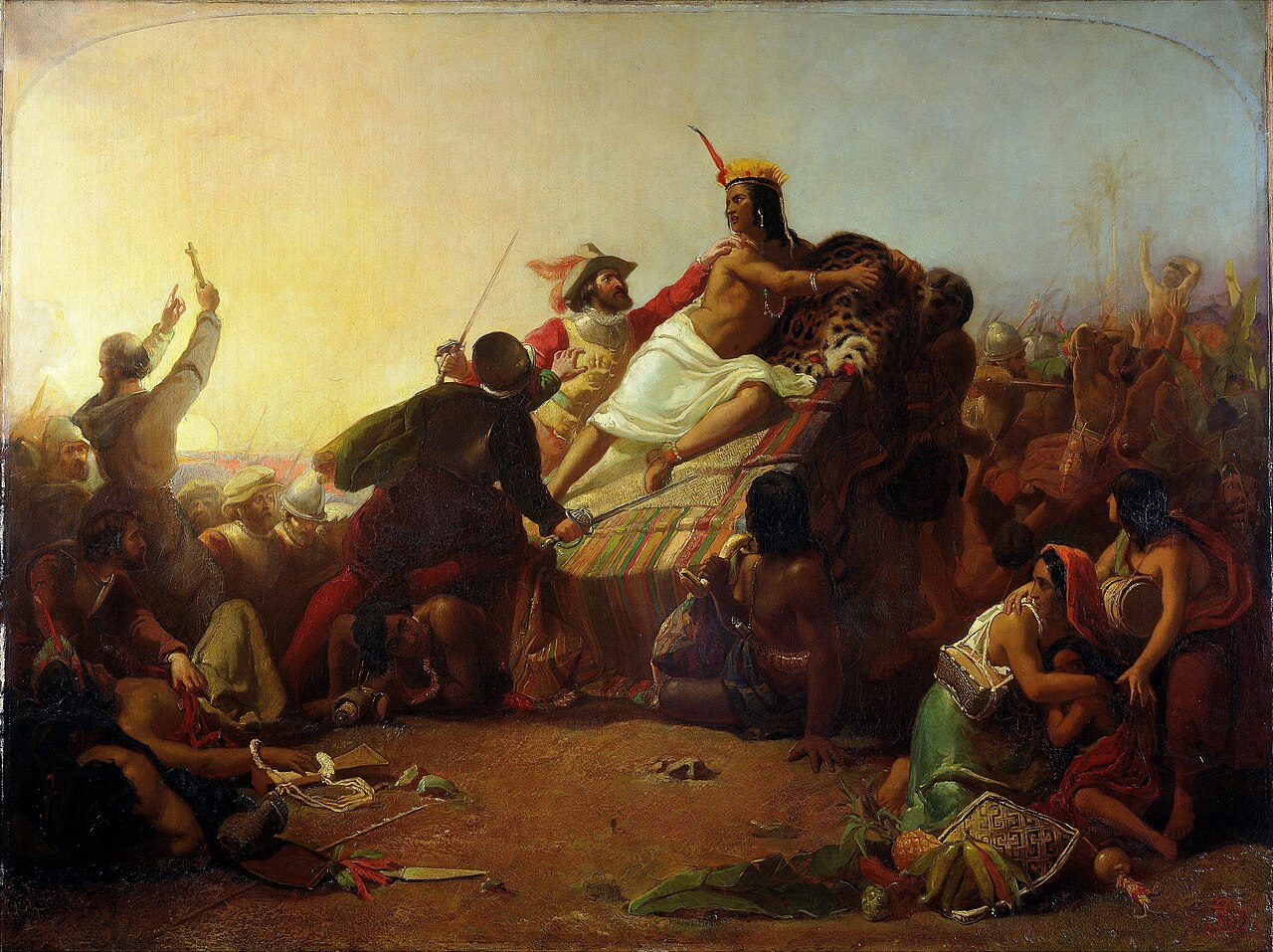
Pizarro Seizing the Inca of Peru
John Everett Millais · 1846
An 1846 history painting by John Everett Millais showing Francisco Pizarro's capture of Atahualpa at Cajamarca.
This painting dramatises the moment of Atahualpa's capture by Pizarro, a turning point in his life and the Inca empire's fall.
About this source
What it is
This oil painting was made in 1846 by the English artist John Everett Millais, who was sixteen years old at the time. It depicts the Spanish conquistador Francisco Pizarro seizing the Inca emperor Atahualpa. It is held at the Victoria and Albert Museum in London.
Why it matters
Millais painted this before joining the Pre-Raphaelite Brotherhood, and it was his first work shown at the Royal Academy. The painting reflects how 19th-century Britain romanticised and dramatised the conquest of the Inca empire, turning a real historical event into a theatrical scene of violence and heroism.
Look closer
- How does the artist use light and composition to direct your attention?
- What does the painting leave out about the real historical event at Cajamarca?
- Why might a British painter in the 1840s choose this dramatic moment from South American history?
This painting is part of the curated material that grounds the AI version of Atahualpa on Humy.ai — when students ask about related events, the AI can quote it and cite it.
More Atahualpa sources
Meet the AI Atahualpa →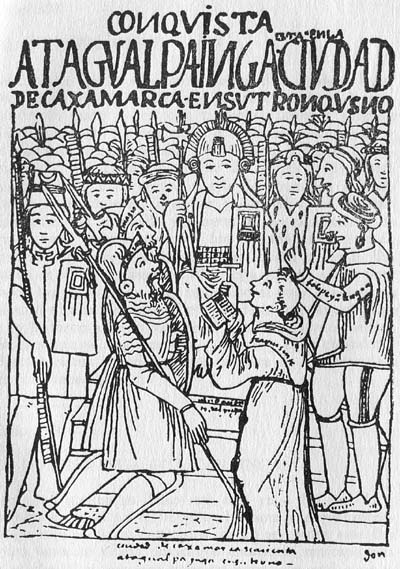 Painting
Secondary source
Atawallpa Pizarro tinkuy
Felipe Guaman Poma de Ayala · 1532 (depicted); drawing later
 Book
Primary source
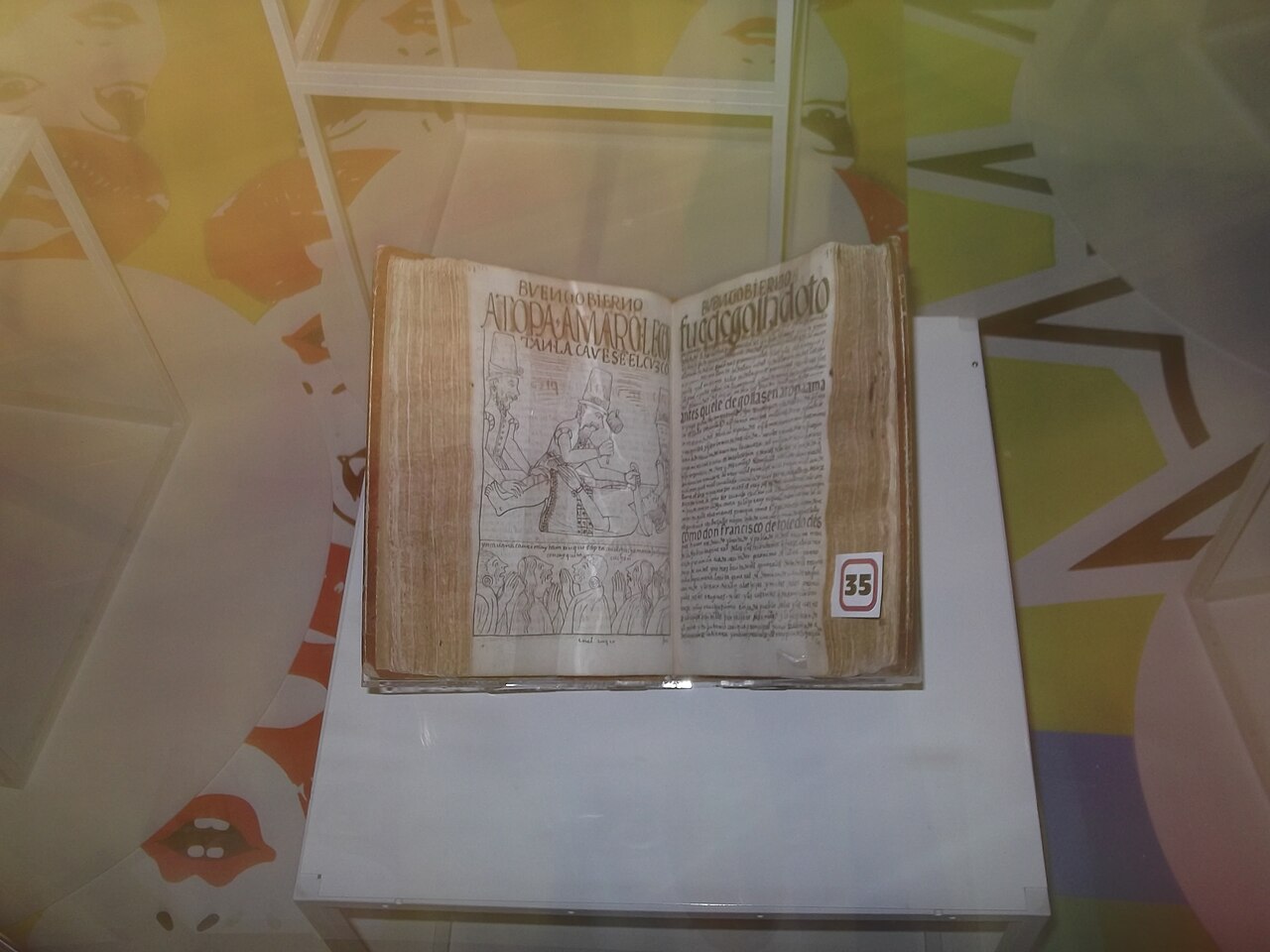
El primer nueva corónica y buen gobierno
Felipe Guaman Poma de Ayala · c. 1615
 Painting
Secondary source
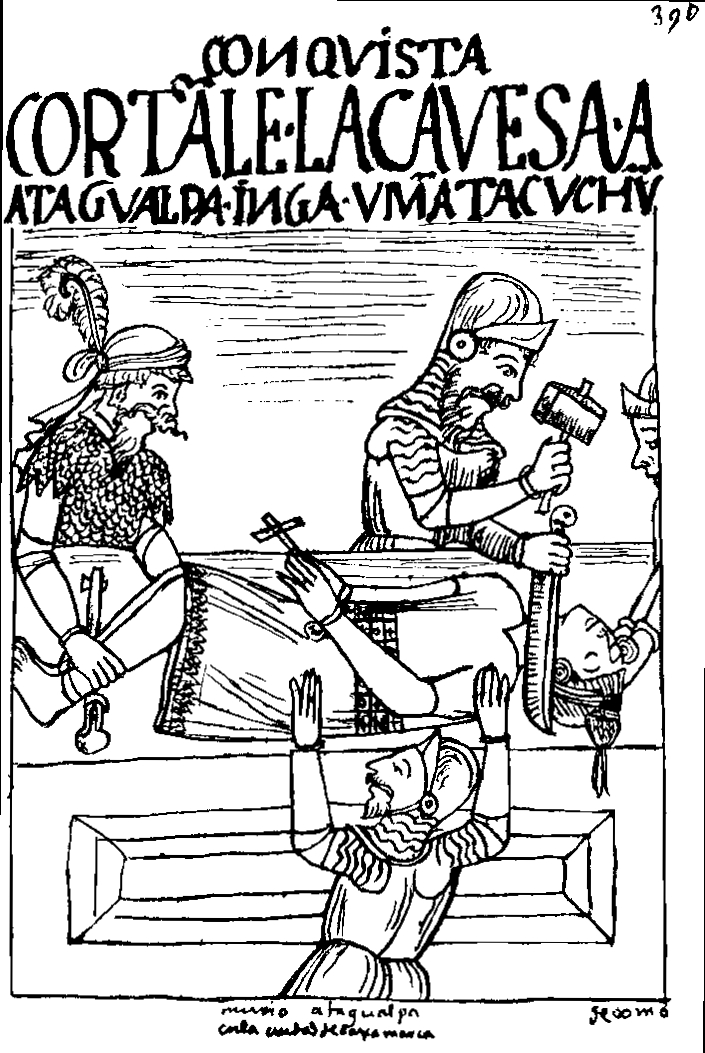
Muerte de Atagualpa Inca
Felipe Huaman Puma de Ayala · c. 1615
 Artifact
Secondary source
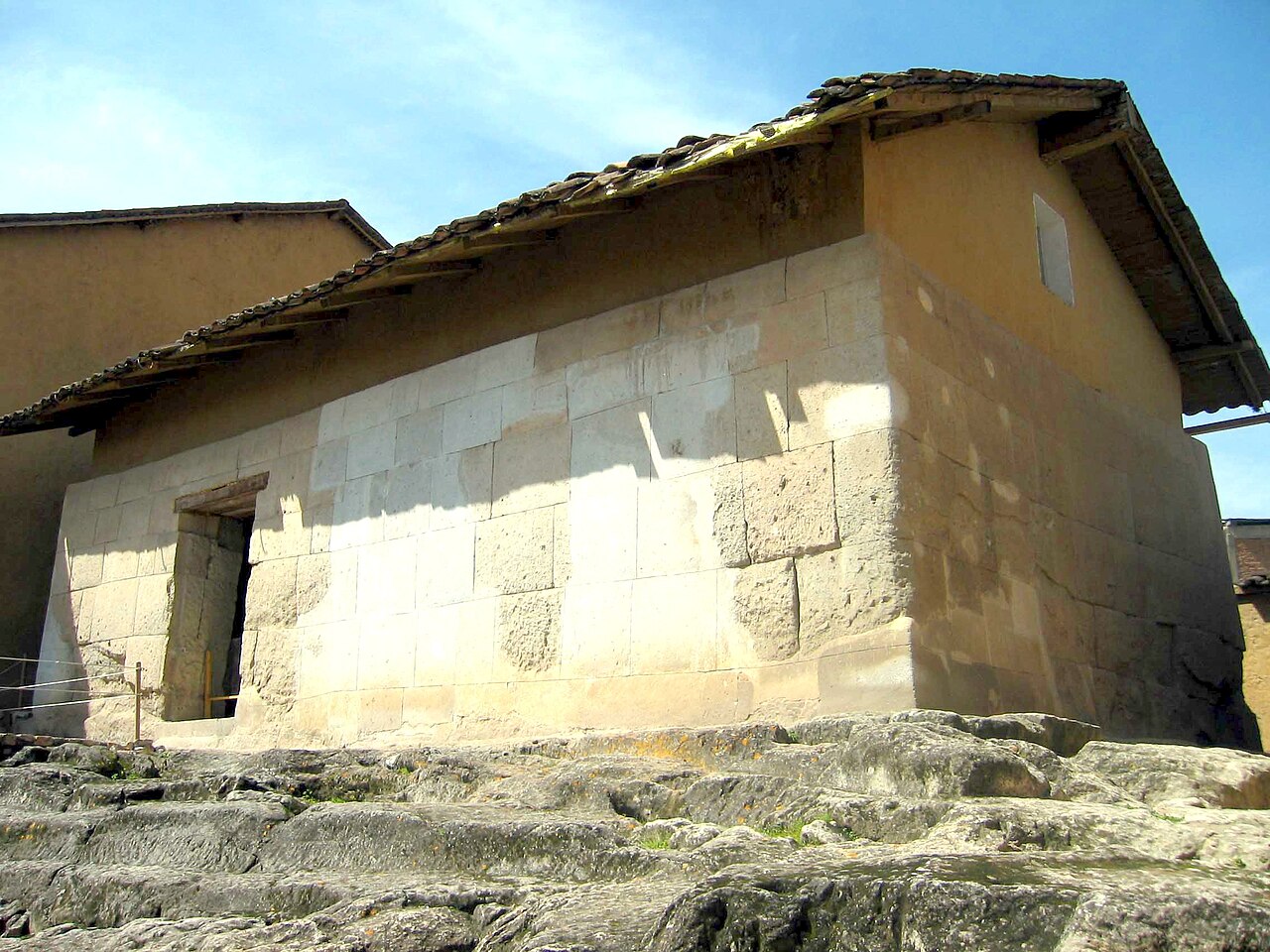
Ransom Room
Secondary source
Suma y Narración de los Incas
Juan de Betanzos · 1551
Ready when you are
Start chatting with Atahualpa now.
20 messages free · No credit card · Available in 50+ languages.