


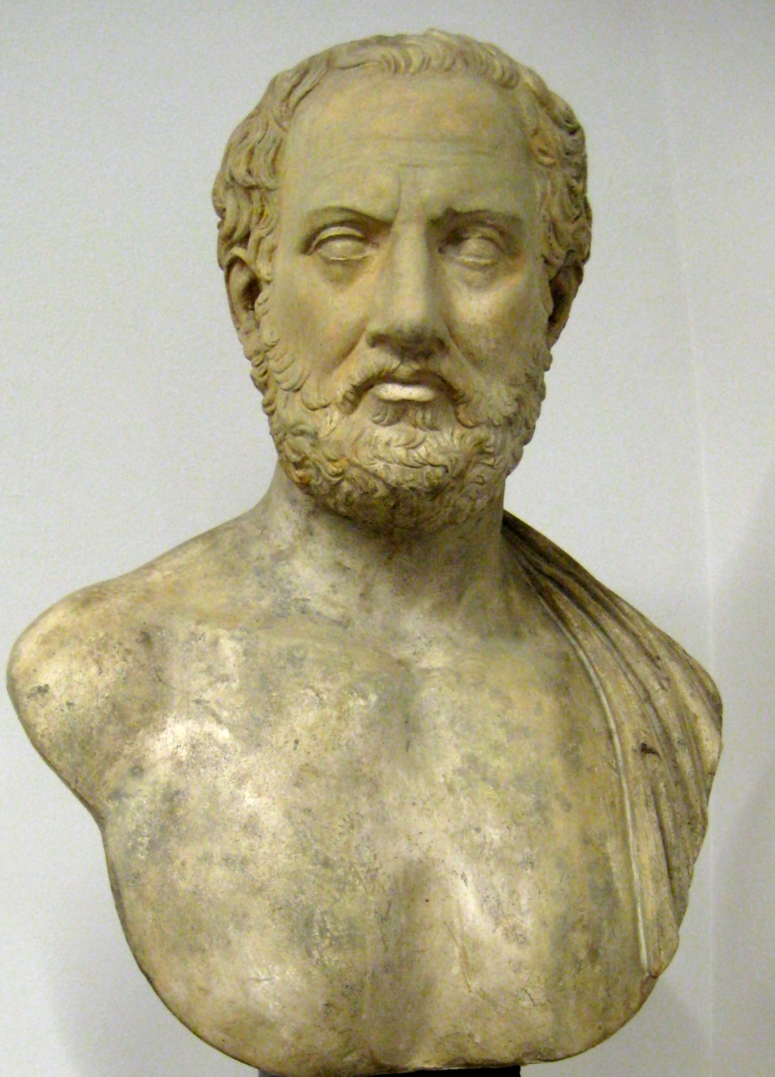
Secondary sourceSculpture2008 (cast); copy of a Roman bust c. 100 CE after a 4th-century BCE Greek original
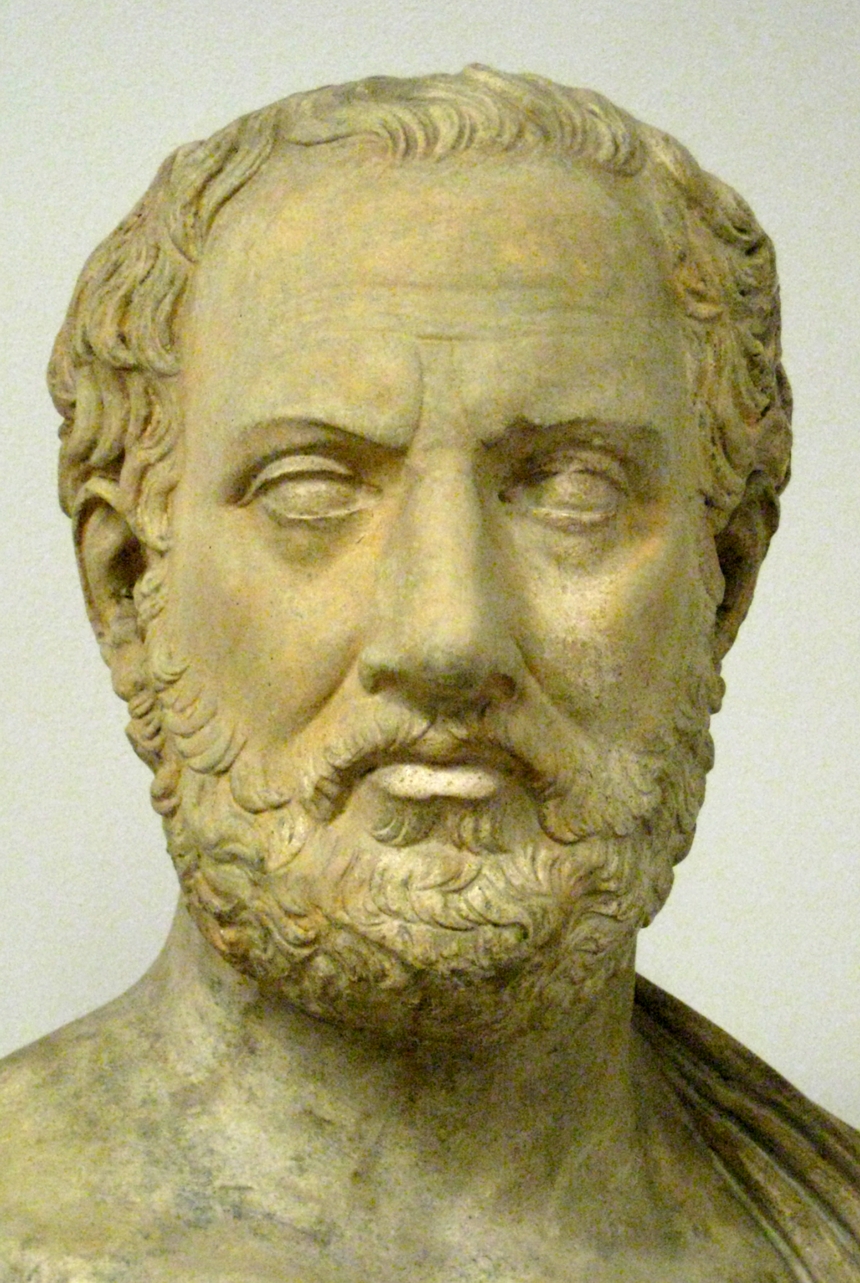
Plaster Cast of the Thucydides Bust, Moscow
2008 (cast); copy of a Roman bust c. 100 CE after a 4th-century BCE Greek original
A plaster cast, made in the early 1900s, of a Roman copy of an ancient bust thought to depict Thucydides.
This cast reproduces an ancient bust traditionally identified as Thucydides, part of the long tradition of imagining his appearance.
About this source
What it is
This is a plaster cast bust held in a Moscow gallery, part of a collection of casts made in the early 1900s-1910s. It copies a Roman-era bust (about 100 CE) which itself copies an earlier Greek original from the 4th century BCE. The actual ancient bust is kept at Holkham Hall in England.
Why it matters
No portrait of Thucydides was made during his own lifetime, so all images of him are later guesses based on tradition. This cast shows how museums and academies reproduced ancient art to study and display it long after the original was made.
Look closer
- Why might a museum want a plaster copy instead of the real ancient bust?
- What details of the face suggest the sculptor wanted to show wisdom or age?
- How many steps of copying separate this object from any real likeness of Thucydides?
This sculpture is part of the curated material that grounds the AI version of Thucydides on Humy.ai — when students ask about related events, the AI can quote it and cite it.
More Thucydides sources
Browse all 71 →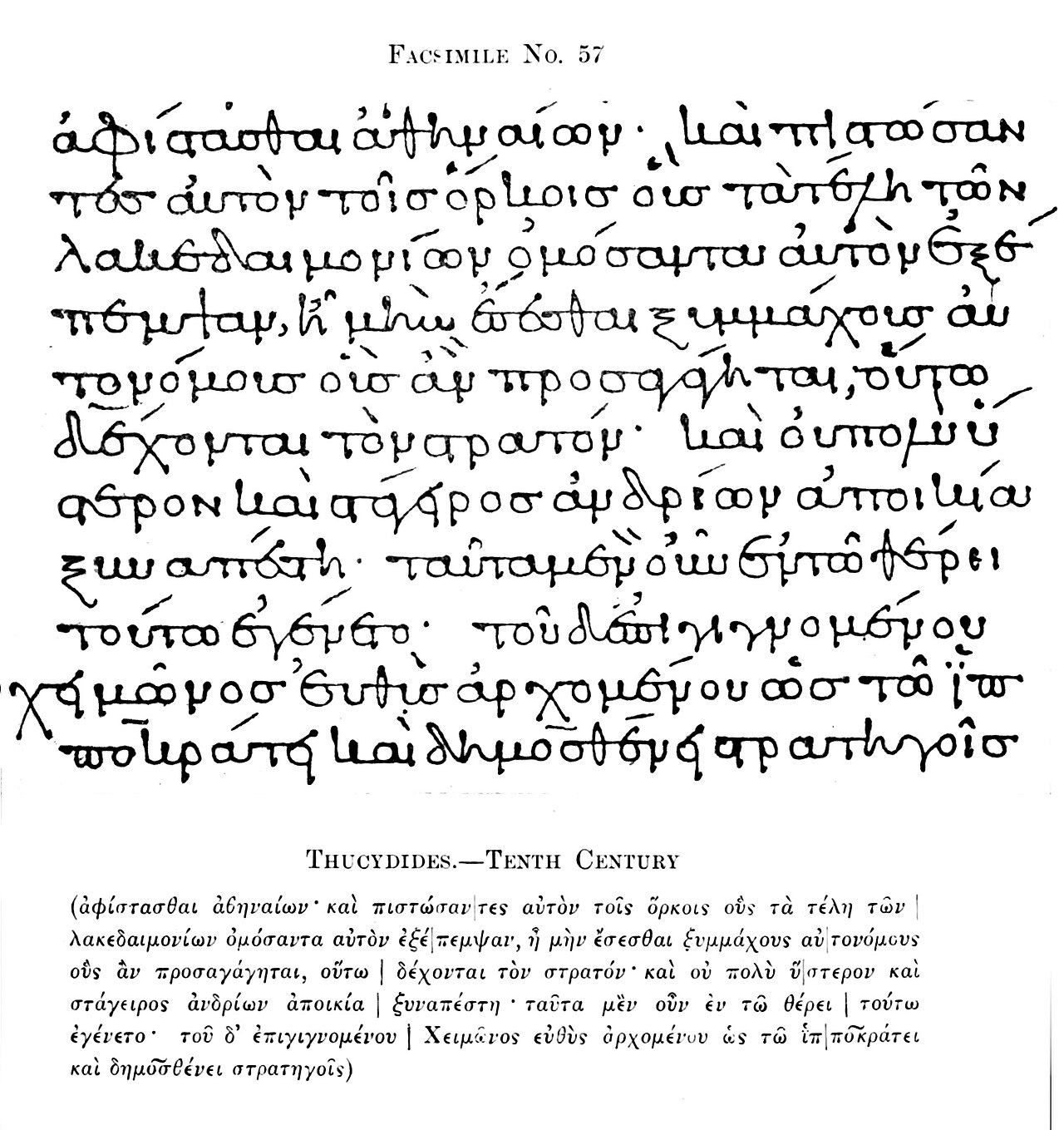 Book
Primary source
History of the Peloponnesian War
Thucydides · 5th century BCE
 Speech
Secondary source
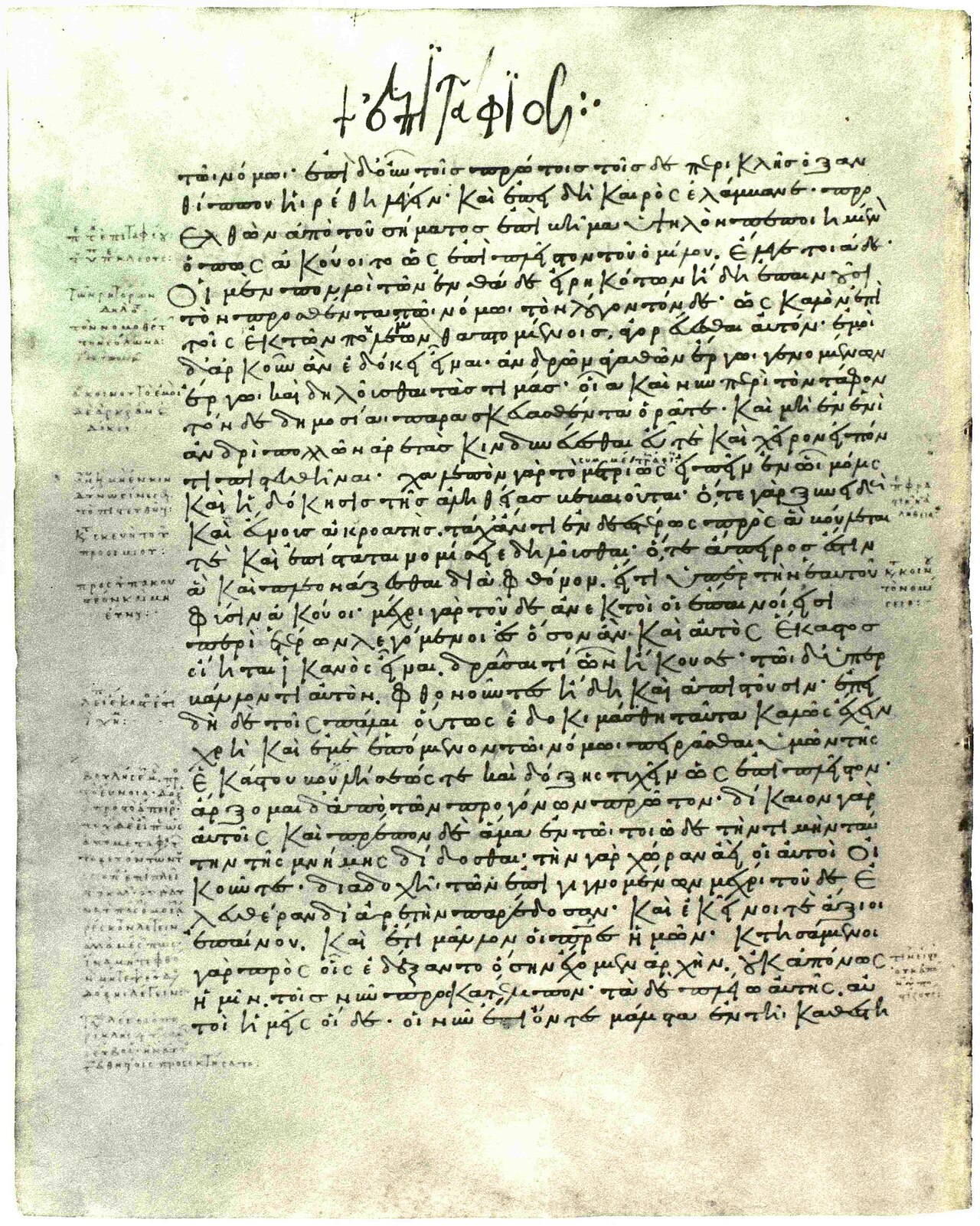
Pericles' Funeral Oration
Thucydides · 431/430 BCE
 Document
Secondary source
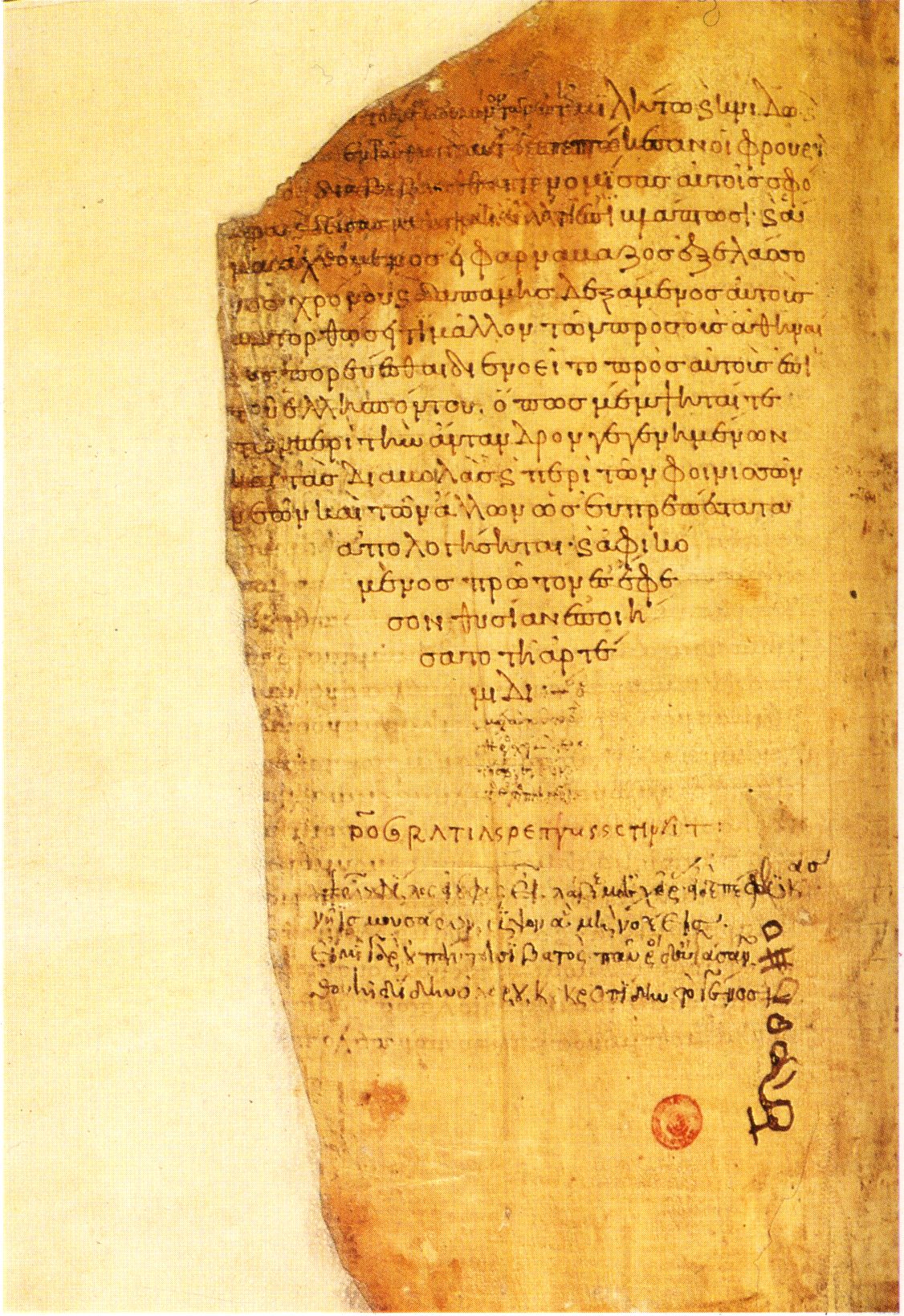
Thucydides, Florence, Plut. 69.2
10th century AD
 Sculpture
Secondary source
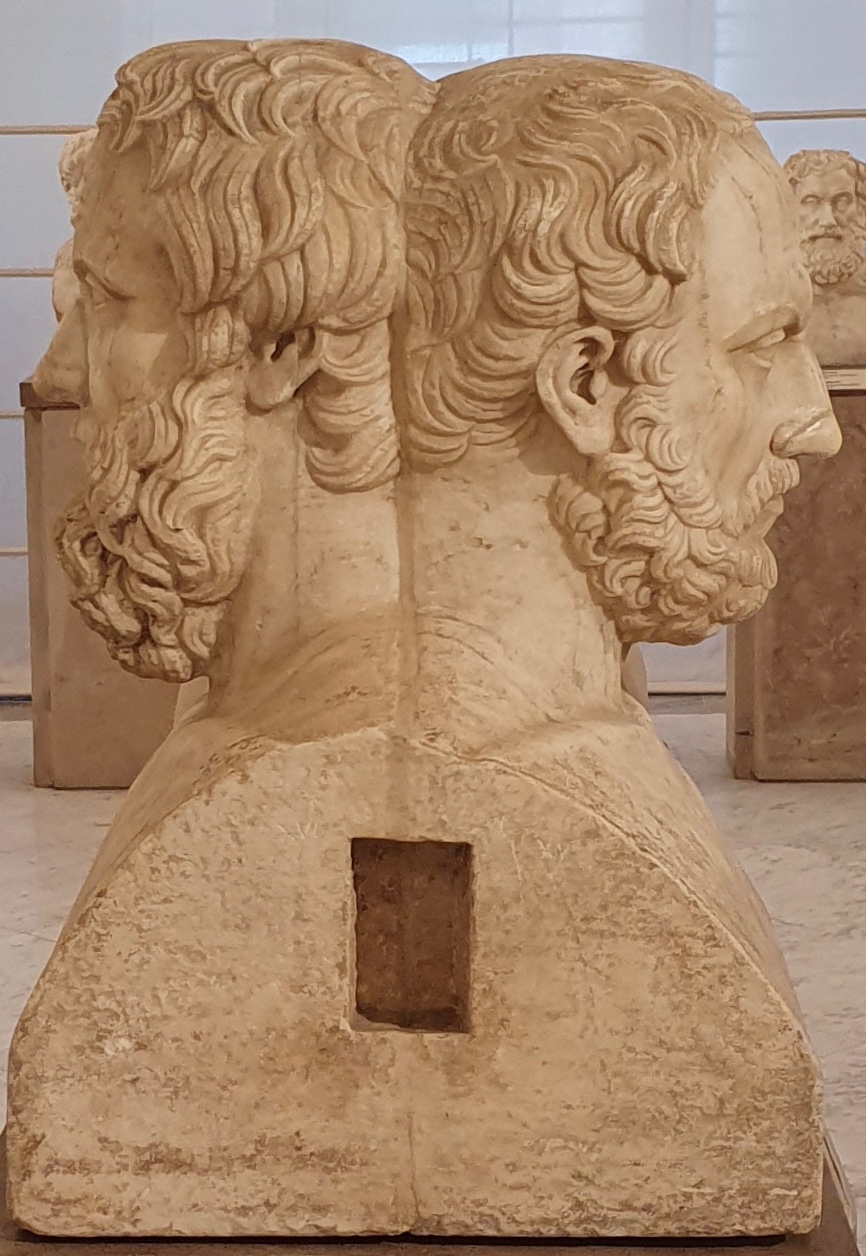
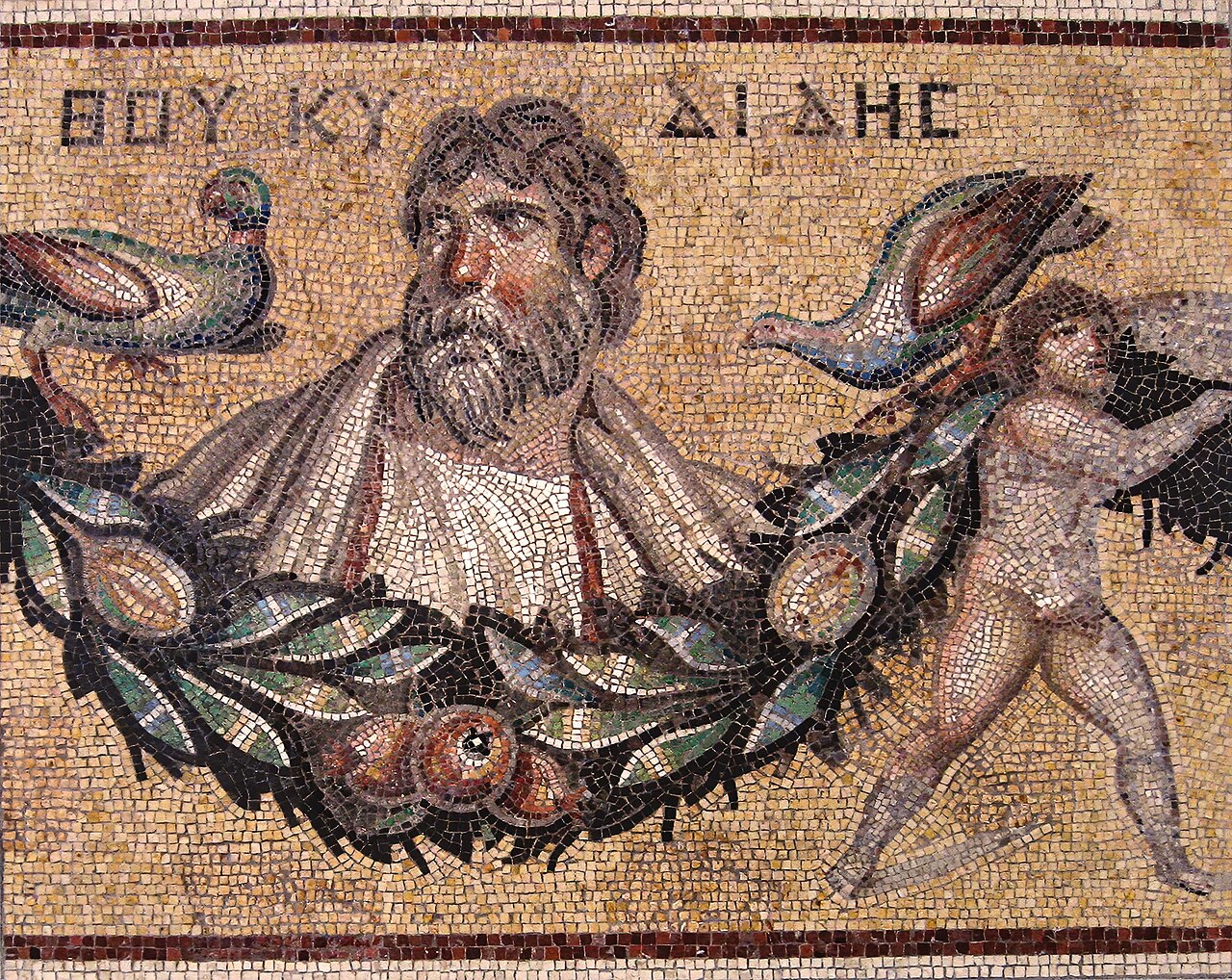
Portrait of Thucydides
Unknown Roman sculptor (after a Greek original) · Roman copy c. 100 CE of a Greek original of the early 4th century BCE; this cast early 20th century
Free account
Read every Thucydides source
Sign up free →
Ready when you are
Start chatting with Thucydides now.
20 messages free · No credit card · Available in 50+ languages.