


Primary sourceArtifactbetween 77 and 78
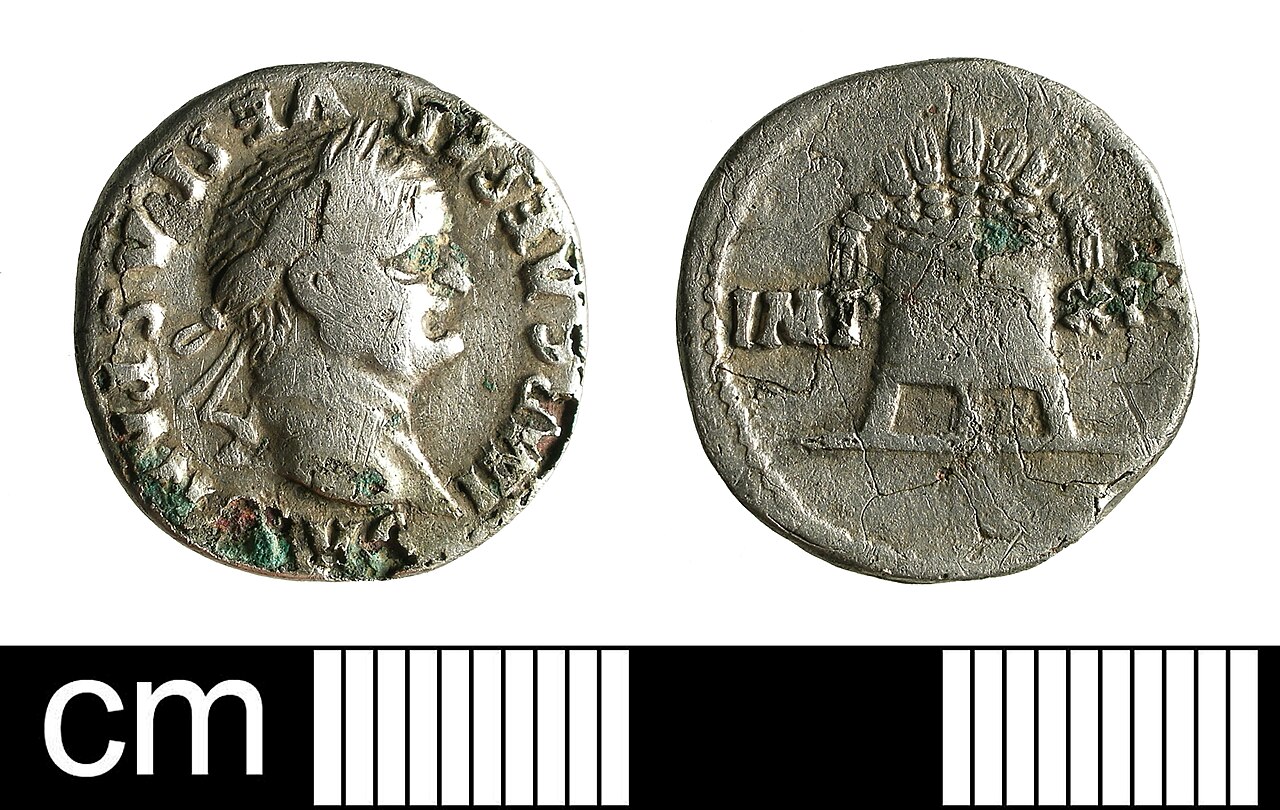
Plated Forgery of a Denarius of Vespasian
between 77 and 78
A photograph of a contemporary forgery of a Roman denarius of Vespasian, made of a copper core covered with silver. It shows that counterfeit coins circulated in his reign.
Shows that counterfeit coins circulated under Vespasian, the emperor whose reign follows the civil war Tacitus describes.
About this source
What it is
This is a photograph of a plated forgery of a Roman denarius of Vespasian, held by the St. Albans District Council. The coin has a copper-alloy core covered with silver. Its reverse shows a modius with corn ears, copying a genuine issue minted at Rome in AD 77–78. The record gives its diameter as 16.8 mm, thickness as 1.4 mm and weight as 2.18 g. Green corrosion spots appear near the edge of the obverse. The record lists the reference RIC Vol. II, p. 27, no. 110.
Why it matters
Forgers copied official coins because people trusted the emperor's money. This forgery shows that counterfeiting happened during Vespasian's reign, a time when Rome was rebuilding after the civil war of 69 that Tacitus describes. It reveals how ordinary people handled money and how trust in coins could be broken.
Look closer
- How does this forgery differ from the genuine coin, and what features would have helped someone spot the difference?
- Why might a forger choose to copy a reverse design like the modius and corn ears?
- What does a single coin not tell us about who made the forgery or who lost money to it?
This artifact is part of the curated material that grounds the AI version of Tacitus and Pliny the Elder on Humy.ai — when students ask about related events, the AI can quote it and cite it.
More Tacitus sources
Browse all 76 →
Ready when you are
Start chatting with Tacitus now.
20 messages free · No credit card · Available in 50+ languages.