


Primary sourceDocument18 May 1896
Plessy v. Ferguson Opinion
John Marshall Harlan · 18 May 1896
The full 1896 Supreme Court opinion, including Justice Harlan's dissent, that decided Homer Plessy's case and legitimized racial segregation laws.
Harlan's dissent in Plessy's own case argued against the ruling that upheld his conviction and legalized segregation.
About this source
What it is
This is the full written opinion of the U.S. Supreme Court in Plessy v. Ferguson, decided on 18 May 1896. It includes the majority opinion by Justice Brown and the dissent by Justice John Marshall Harlan, who argued the Constitution "is color-blind."
Why it matters
The opinion explains the legal reasoning behind upholding Louisiana's Separate Car Act, which Homer Plessy had deliberately violated in 1892 as part of a planned challenge by the Comité des Citoyens. The 7–1 decision legitimized segregation laws across the South for decades. Harlan's dissent later became an important text for civil rights lawyers seeking to overturn "separate but equal."
Look closer
- Why do you think only one justice dissented from this decision?
- How does the majority opinion try to justify segregation as not implying racial inferiority?
- What does Harlan's dissent suggest about how legal opinions can look different generations later?
This document is part of the curated material that grounds the AI version of Homer Plessy on Humy.ai — when students ask about related events, the AI can quote it and cite it.
More Homer Plessy sources
Meet the AI Homer Plessy →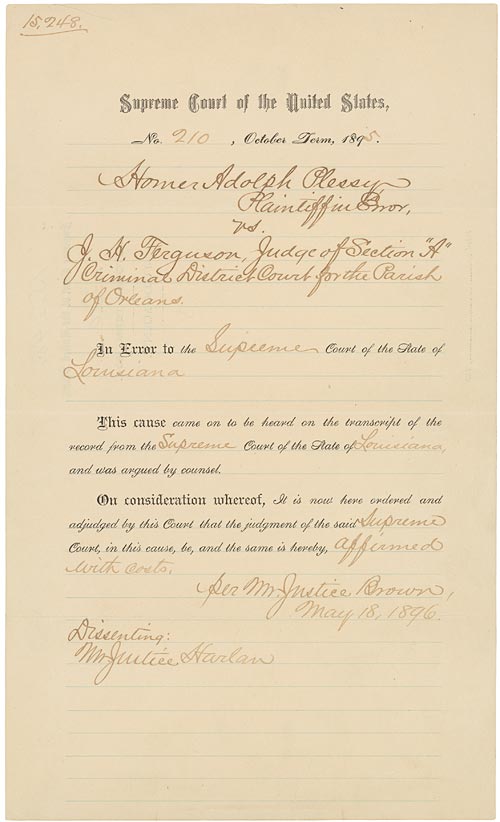 Document
Primary source
Plessy v. Ferguson
Supreme Court of the United States · 18 May 1896
 Newspaper article
Primary source
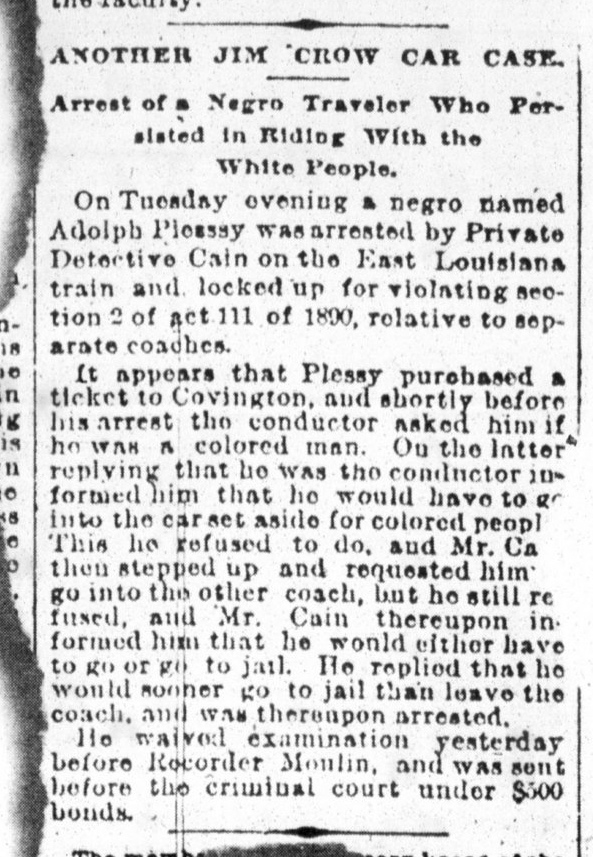
Another Jim Crow Car Case
Staff of the Daily Picayune · 9 June 1892
Secondary source
Nos Hommes et Notre Histoire
Rodolphe Lucien Desdunes · 1911
 Document
Primary source
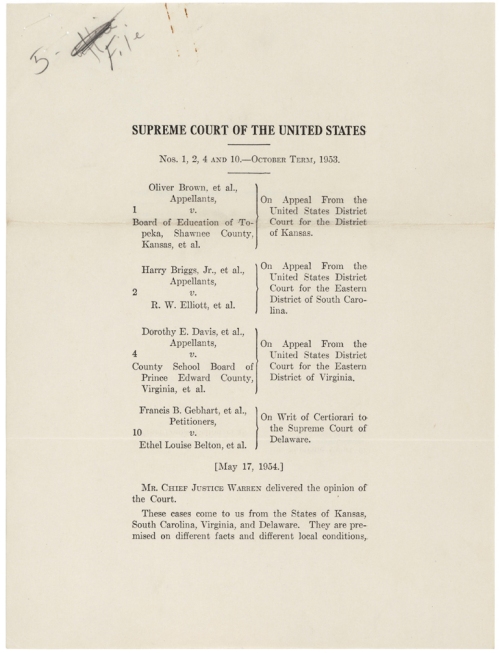
Brown v. Board of Education
Earl Warren · 17 May 1954
 Artifact
Secondary source
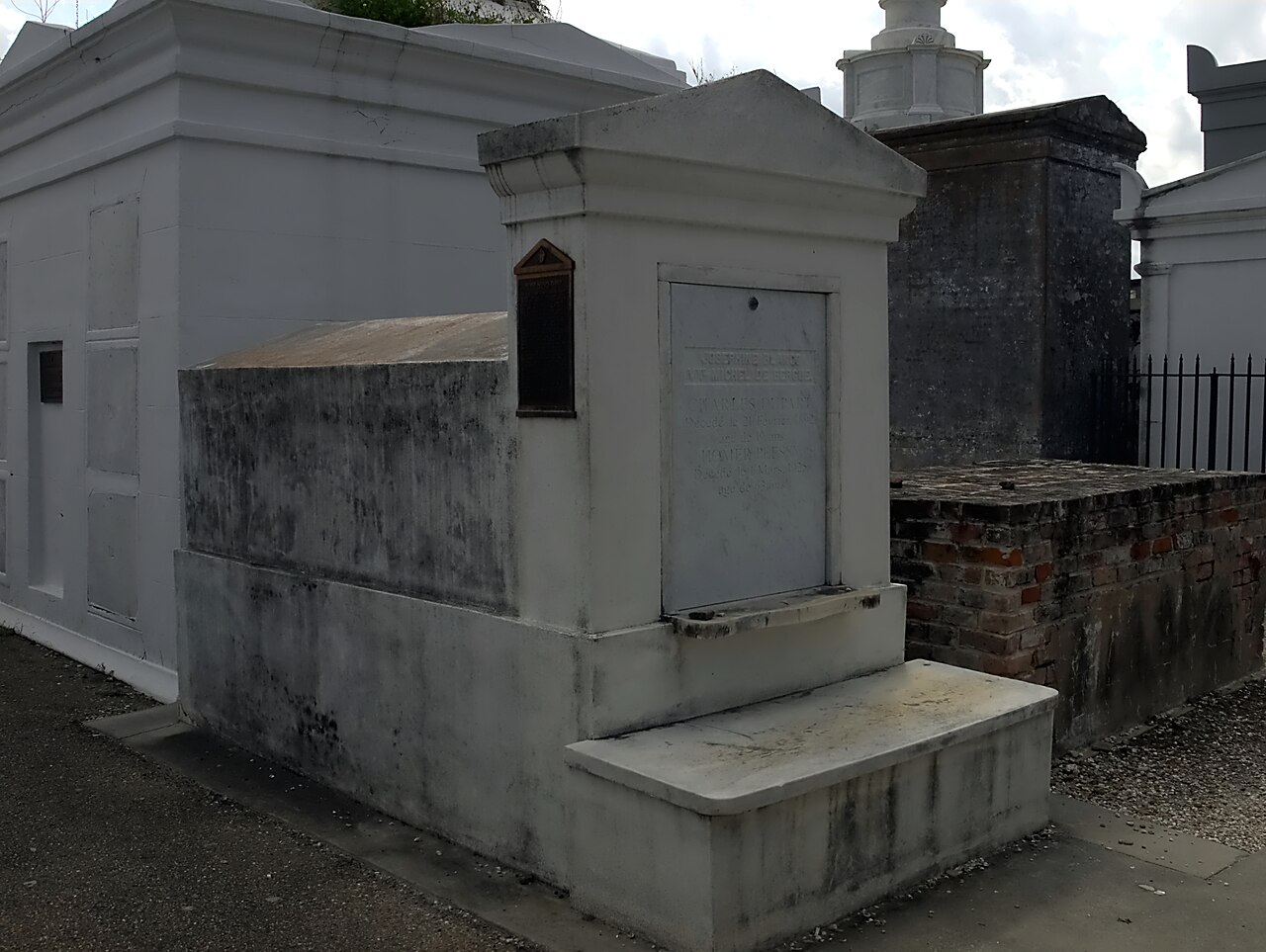
Grave of Homer Plessy
Ready when you are
Start chatting with Homer Plessy now.
20 messages free · No credit card · Available in 50+ languages.