


Secondary sourcePainting1838-1844
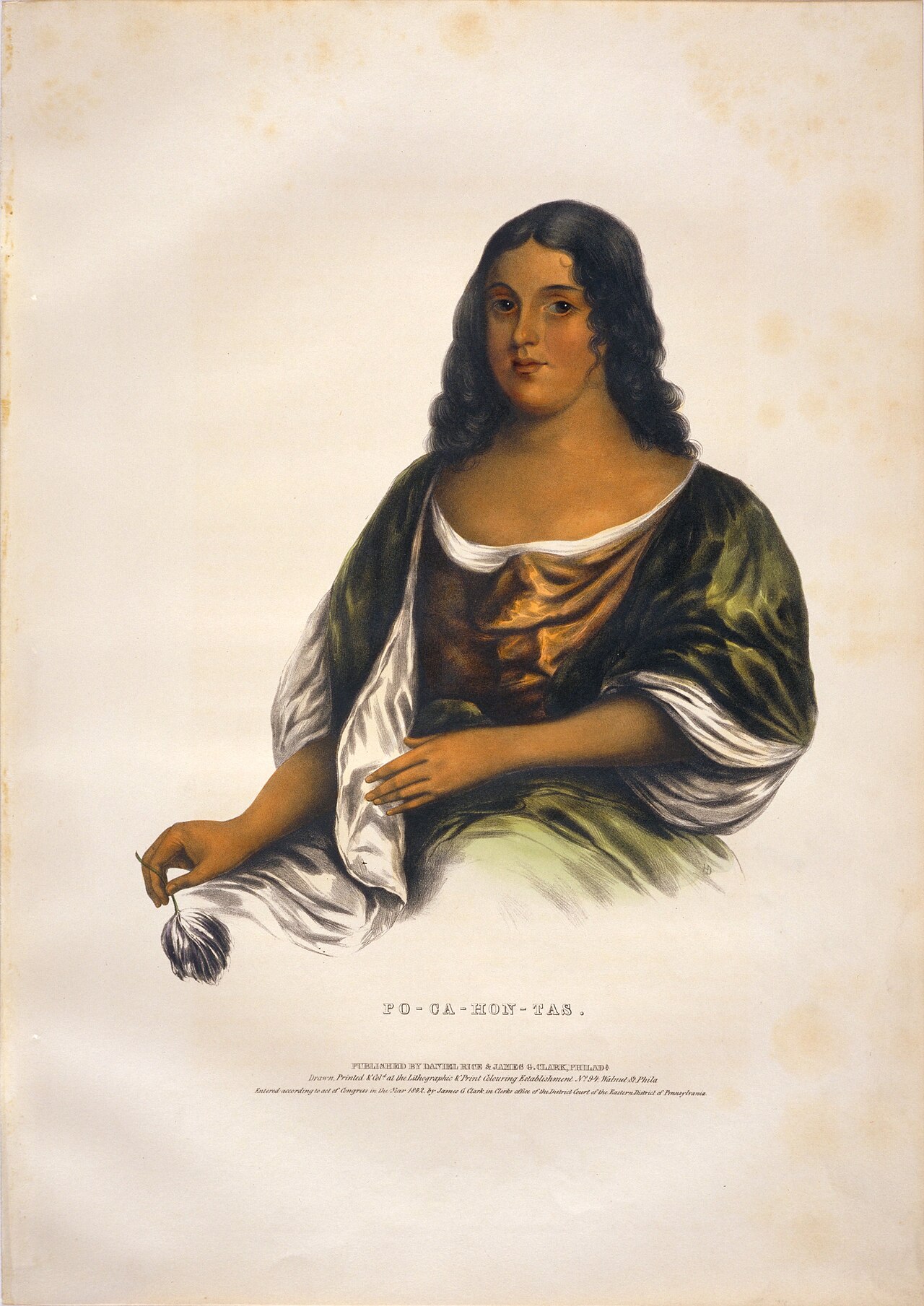
Po-ca-hon-tas portrait, History of the Indian Tribes of North America
Thomas Loraine McKenney and James Hall · 1838-1844
A hand-colored lithograph portrait of Pocahontas from a published history of Native tribes in North America. It was made decades after her death and shows how she was presented in the 1800s.
Shows Pocahontas as presented to readers of a 1800s history of Native tribes, long after her death, and reveals how she was packaged for a public audience.
About this source
What it is
This is a hand-colored lithograph portrait of a woman with long dark wavy hair. She wears a dark green shawl over a brown bodice with a white collar and holds a dark feather fan in her left hand. The caption reads Po-ca-hon-tas. The print comes from History of the Indian Tribes of North America, by Thomas Loraine McKenney and James Hall, published in Philadelphia by F.W. Greenough between 1838 and 1844. The book was embellished with 120 portraits from the Indian Gallery in the Department of War at Washington.
Why it matters
The portrait was made decades after Pocahontas died, so it is not a likeness from her lifetime. A curator's note calls it a useful image of her as presented in the 1800s. The book was built around portraits drawn from a government collection, and this plate shows how McKenney and Hall chose to present a Native woman to their readers. Students can compare this printed image with other pictures of Pocahontas to see how her appearance was imagined over time.
Look closer
- What clothing and objects does the artist use to suggest who this woman was?
- How does the printed caption frame the portrait for readers?
- Where did the portrait's source come from, and what might a government collection have emphasized?
This painting is part of the curated material that grounds the AI version of Pocahontas on Humy.ai — when students ask about related events, the AI can quote it and cite it.
More Pocahontas sources
Browse all 85 →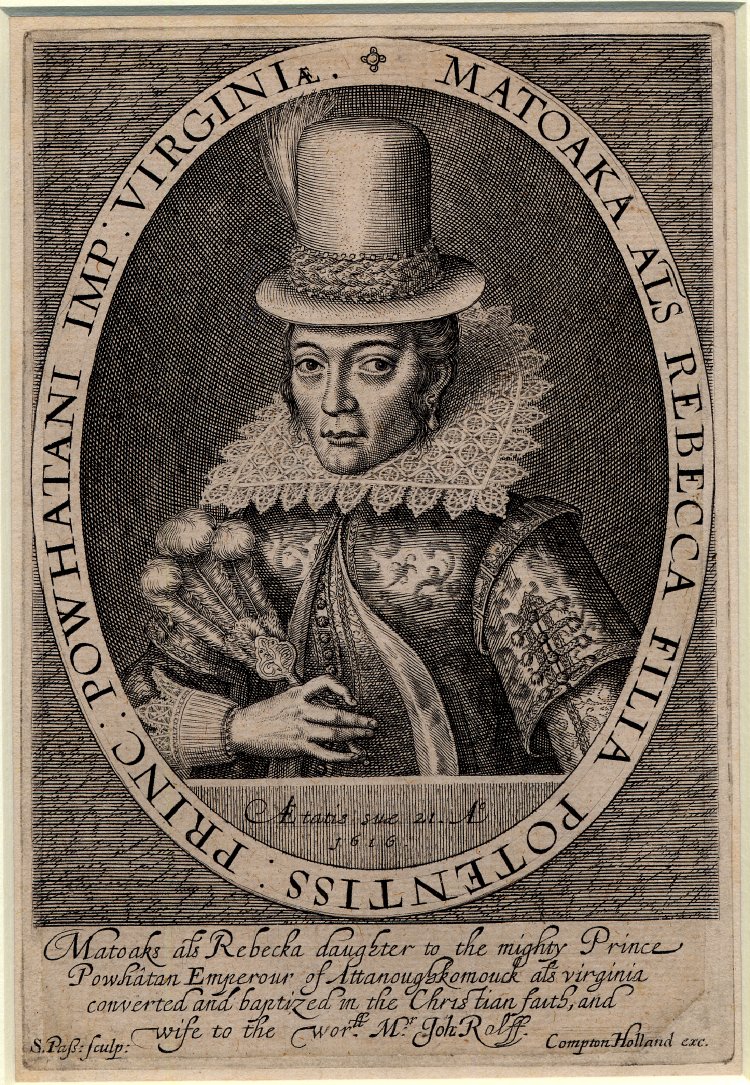 Painting
Primary source
Matoaka alias Rebecca Engraving
Simon van de Passe · 1616
 Painting
Secondary source
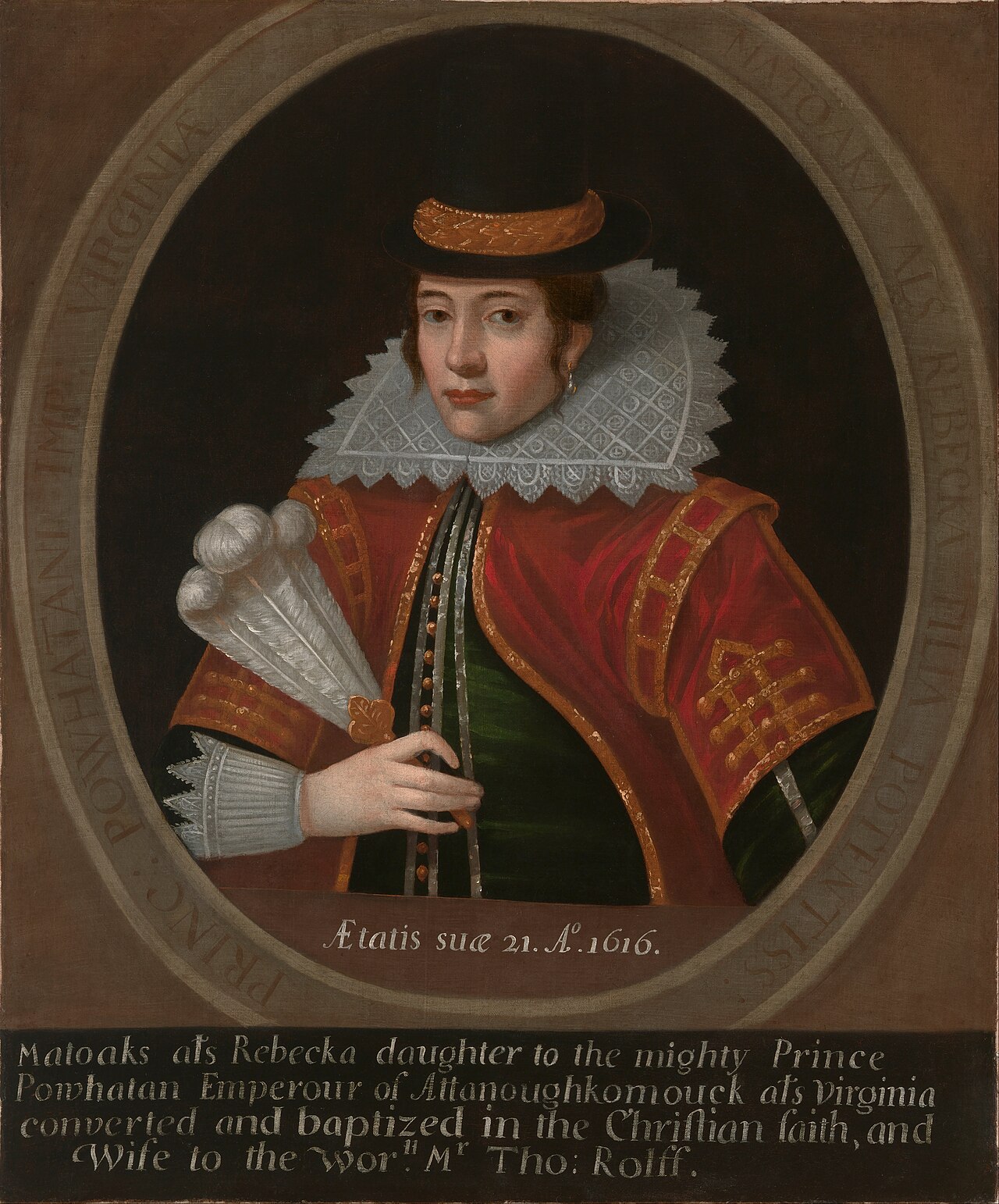
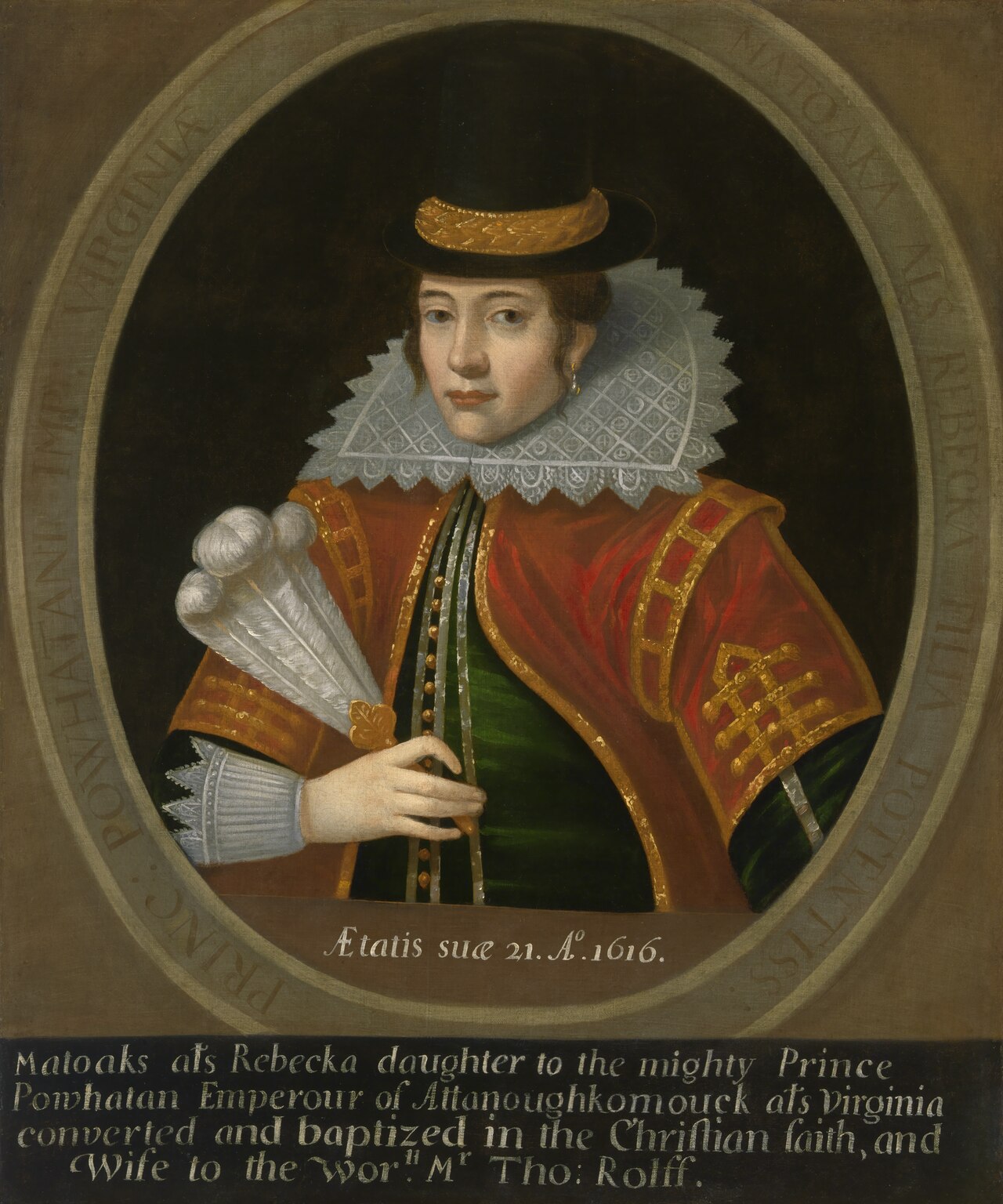
Pocahontas (Oil Portrait after van de Passe)
Unidentified Artist · 1616
 Book
Primary source
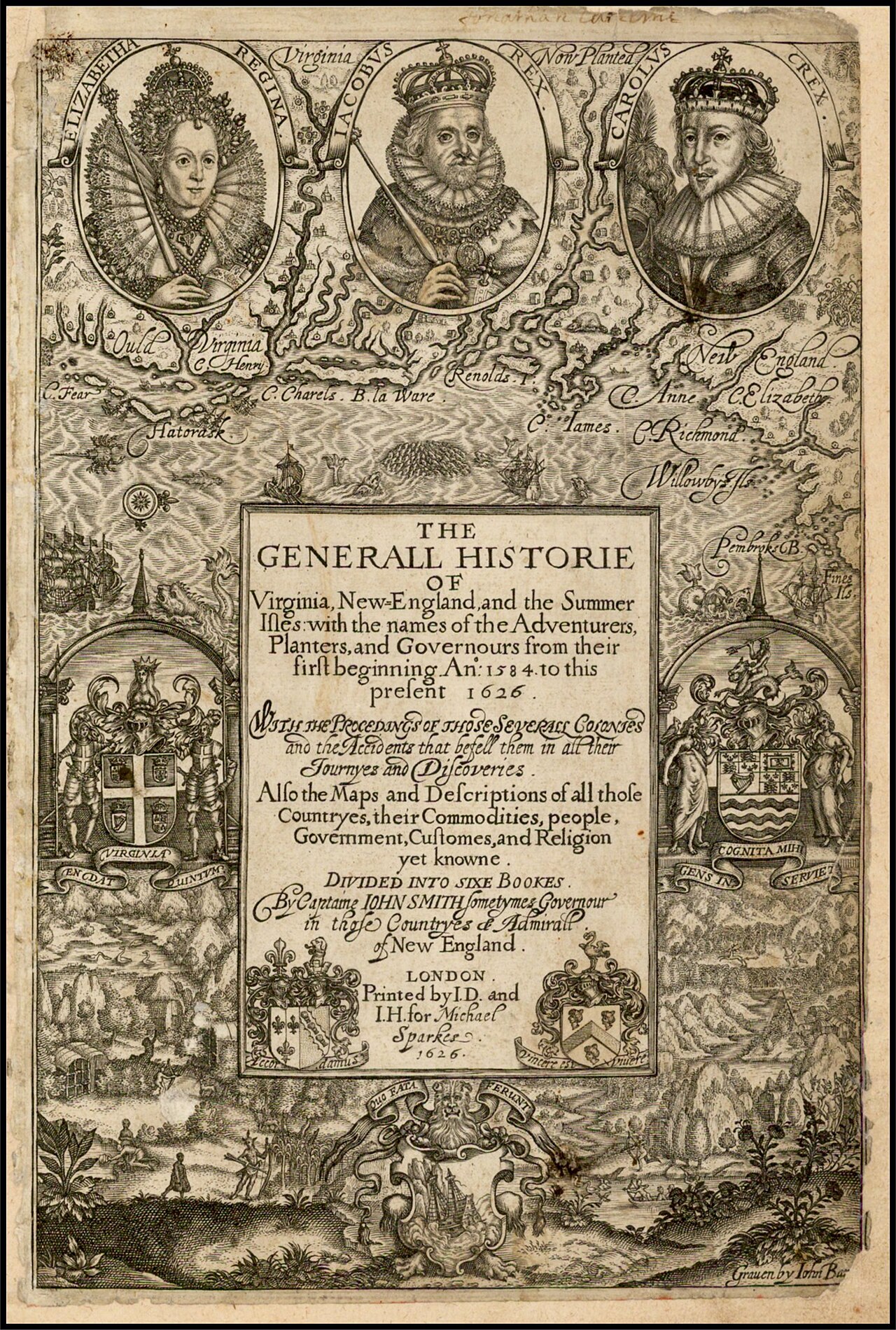
The Generall Historie of Virginia, New-England, and the Summer Isles
John Smith · 1624
 Painting
Secondary source
Portrait of Pocahontas
1616
Free account
Read every Pocahontas source
Sign up free →
Ready when you are
Start chatting with Pocahontas now.
20 messages free · No credit card · Available in 50+ languages.